




I tried a New Year meditation and it completely changed my attitude to 2026
This gentle meditation helped me to welcome in the new year with peace and clarity


I had every intention to move my body and take an energetic step forward in 2026, but that wasn’t what happened.
I have an energy-limiting illness and I woke up tired, despite sleeping for nearly 12 hours (and, unfortunately, missing the New Year celebrations). I could barely drag myself downstairs to make breakfast, so a brisk five-mile walk was out of the question.
Desperate to do something, I looked for New Year meditations to try. Something that would make me feel better about myself, without taxing my dwindling energy supplies.
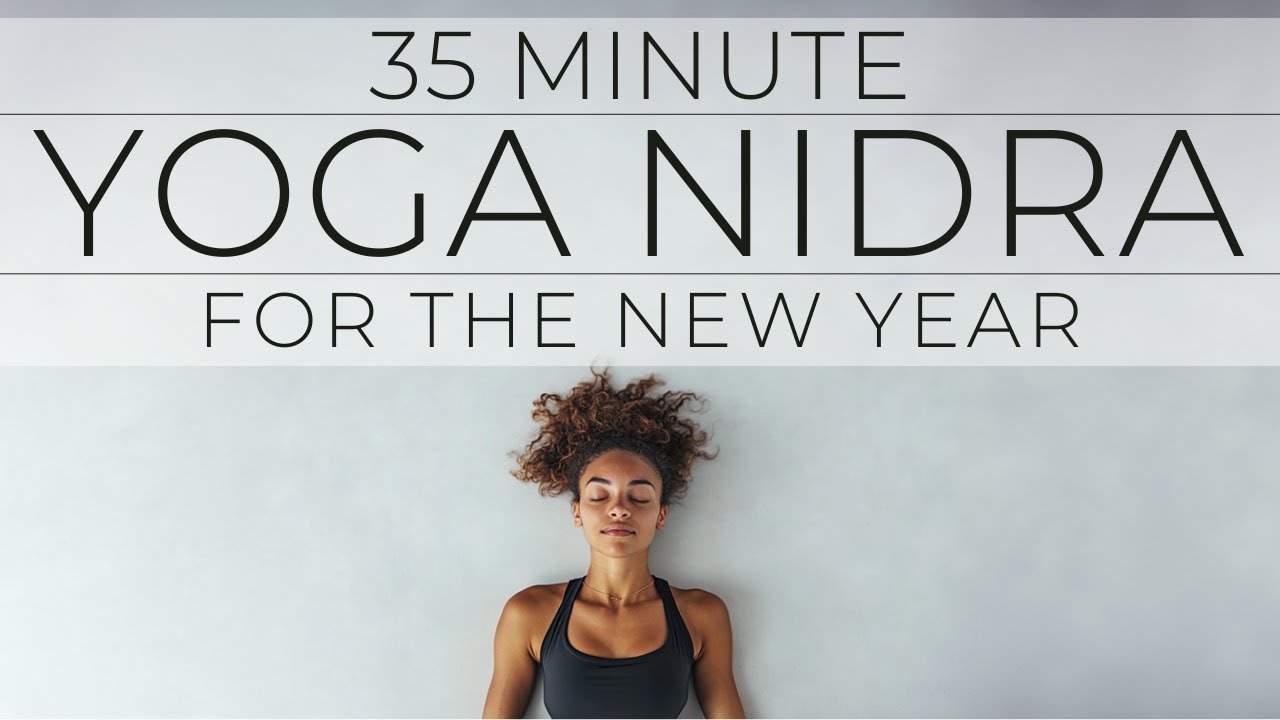
I did this guided meditation by yoga YouTuber Ally Boothroyd on New Year’s day, and it helped me flip the script on a disappointing start to 2026.
Although it’s quite a long meditation (I tend to favor 10-minute mindfulness meditations), I wasn’t pressed for time and was able to focus fully for the 35-minute duration.
How to do the practice
My experience of the practice
It looks back as well as forward
I appreciated the time Boothroyd spent acknowledging the year that had just passed.
I had an unhappy 2025, and my mind is firmly focused on the coming year, but taking a moment to reflect and take stock of what I’d learned was surprisingly valuable. This meditation allowed me to make peace with the previous year as well as set an intention for the new one.
It can feel uncomfortable to try practicing gratitude for something you didn’t enjoy, but Boothroyd frames it as a necessary part of moving forward without ties or regrets. Maybe I’m not grateful for hardship, but I’m grateful to put it behind me.
It honors rest
Often, we look to the new year with a new sense of purpose, but this can be difficult to maintain through the colder months.
Boothroyd makes a point to highlight the value of practicing in a cozy setting and says that the meditation should be warm and comfortable. I listened to the video in my bathtub, giving myself the calming experience of floating in warm water at the same time.
Afterwards, despite not actually sleeping, I felt rested and calm. The time spent breathing deeply and experiencing the gentle meditation allowed my mind to stop racing and settle for the first time since early December.
Sometimes it feels as though sleep is just a portal to the next stressful thing, while time awake spent being mindful, meditating or consciously doing nothing can give you a different kind of rest you’re craving.
Yoga Nidra—the form practiced here—is also known as the yogic sleep, and allowed me to access a deeper level of rest.
The visualization exercises are easy
I sometimes struggle with guided meditations, especially when asked to visualize certain settings—my brain isn’t very good at staying still. Thankfully, I found this meditation easy and accessible.
Boothroyd runs through some basic visualization exercises, with mental pictures of a green sprouting bud and an emerging butterfly, but mostly she just asks the listener to imagine light.
This imagined light is incorporated into a body scan and helps to visualize the things we want for the coming year.
It guides you to another type of New Year’s goal
Boothroyd makes it very clear that this isn’t a practice designed to motivate or energize you. It’s about gratitude, rest, gentle self-acknowledgement, and identifying deeper values and goals.
Instead of setting physical fitness goals, you are invited to consider the deepest desires of your heart.
What characteristics would you like to see more of in the coming year? What values would you like to embody?
Boothroyd suggests holding a single word such as love, trust or vibrancy in your mind and repeating it three times to set the intention firmly in your thoughts.
I chose peace and ease as features I’d like to experience and embody for the coming year.
We are reminded that we are part of a whole
From images of a starry night to bringing your attention to the smallest cells of your body, Boothroyd gently leads us through the different layers of existence in this meditation.
She encourages us to imagine the largest thing we can, then the smallest, and then see ourselves in these things.
I liked this approach. It felt as though my ego was the least important part of the meditation and, more importantly, of next year. This made me feel a little more like a part of something.
In particular, picturing all my cells, all the small fragments of myself that come together to become me as a person, was oddly calming.
Seeing myself as a tiny speck of something larger can help shrink and rationalize my problems. If everything is less important, it becomes less scary.
