A physical therapist says yoga is highly effective for stress management and shares her top three poses for high-stress days
How to use yoga to reduce stress


High-stress situations can impact the body and mental stress can inadvertently lead to physical issues—because our minds and bodies are intrinsically linked, even if we’re not aware of it.
Dr Karen Thomas is a physical therapist and air force veteran, who has worked with front-line personnel and emergency responders for 20 years. She has seen firsthand how the body holds stress, translating it into muscle tension and even increasing injury risk.
She tells Fit&Well that a stress-management practice she has found particularly useful is yoga.
“Yoga is a mind-body technique that helps promote relaxation not only mentally but also physically,” she says.
“Restorative poses, like the three I’ve selected as my favorites, are especially respected for supporting a parasympathetic state in which the nervous system can recover or reset—helping you feel more grounded, balanced and centered.”
The parasympathetic nervous system is in charge when your body is at rest, as opposed to the high-alert “fight or flight” mode when the sympathetic nervous system takes over.
When we experience times of high pressure or stress, it can be difficult for the body to switch back into a relaxed, recovery state, leaving us feeling wired, jittery and uncomfortable as the sympathetic nervous system stays in charge.
Even if you’re not dealing with the stress levels of soldiers or paramedics, you can still get stuck in a stress response. Holding tension in your body over a prolonged period can lead to sleep problems, digestive issues and more.
Thomas recommends these three yoga poses to help calm your mind and body, and soothe your nervous system, switching it back into a more restful state.
1. Child’s pose
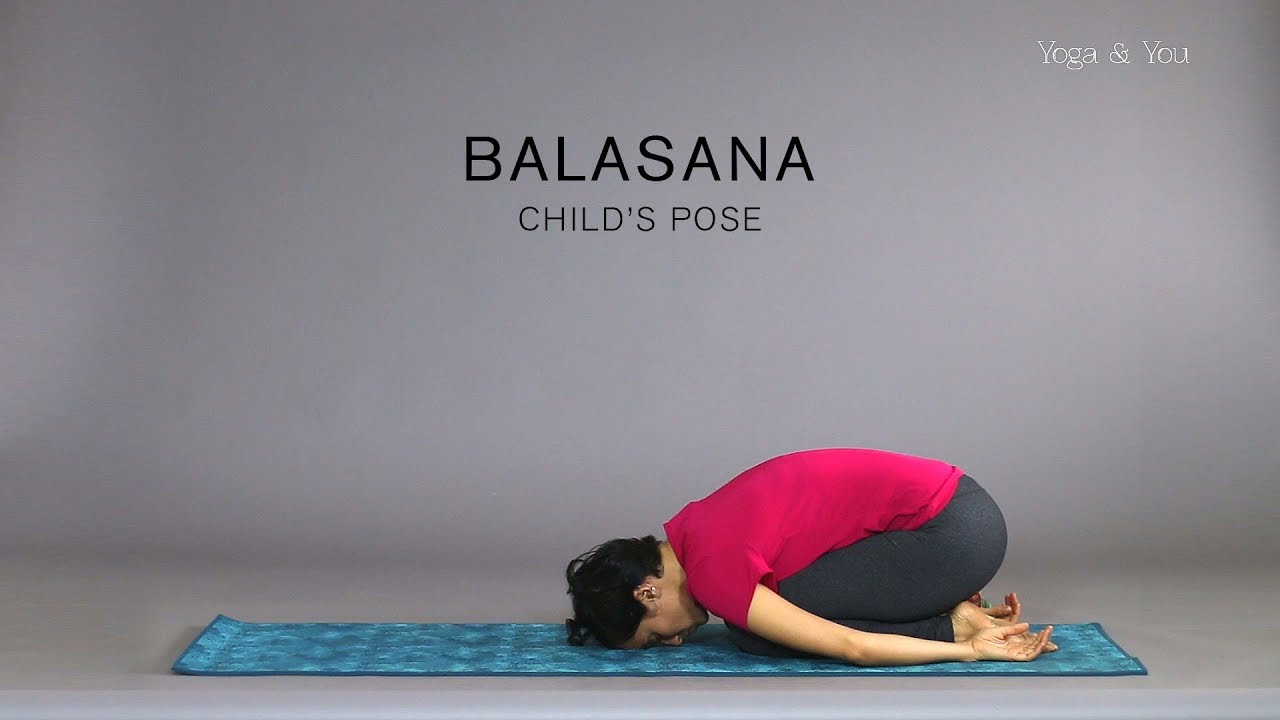
Sets: 2-3 Hold: 60sec
Why Thomas recommends it: “This pose offers a very grounding benefit to the nervous system, helping it transition into a more parasympathetic state—the rest and digest state—in which we can begin recovering from the day.”
How to do it:
- Get on your hands and knees, then move your knees out to the sides—the wider they are, the more intense the stretch will be for your lower back, hips and inner thighs.
- Move your hips toward your heels, resting your forehead on the floor or on a pillow.
- Reach your arms forward, palms down, or rest them by your sides.
- Practice slow, deep breaths for one minute or more.
2. Happy baby

Sets: 2-3 Hold: 60sec
Why Thomas recommends it: “If you hold a lot of tension in your shoulders, low back, and/or hips during the day, the happy baby pose is wonderful for promoting a release of muscle tension in addition to downregulating the nervous system for an added stress-relief benefit.
“Adding some gentle rhythmic rocking back and forth while in this pose further gently mobilizes or massages the spine, which can feel really good after a long day of seated or standing work. It also acts as a self-soothing mechanism by tapping into the vestibular system [located in the inner ear and responsible for balance] and engaging the parasympathetic system.”
“Performing happy baby pose sends signals to your brain that reduce anxiety, stress and communicate that all is well—letting the brain know you’re safe.”
How to do it:
- Lie on your back, with your knees bent and feet flat on the floor.
- Bring your knees up toward your chest, one at a time.
- Hold your big toes or the insides or outsides of your feet. Alternatively, hold onto your ankles or shins.
- Gently draw your knees toward your armpits, allowing your legs to widen and the soles of your feet to face up.
- For an added spinal massage, gently rock back and forth in this pose.
- Hold for 30-60 seconds, continuing to breathe slowly and deeply.
3. Legs up the wall
Sets: 2-3 Hold: 1-3min
“By lying on your back and elevating your legs against a wall or couch, you’re using gravity to help promote relaxation,” says Thomas.
“This pose not only activates the parasympathetic nervous system, but it also aids in the recovery of low-back pain and tension relief, reduces swelling in the lower legs, and fosters improved lymphatic drainage. This pose also offers an optimal position for practicing diaphragmatic breathing to further support mental and physical relaxation.”
Thomas advises those diagnosed with glaucoma, or conditions that cause excessive fluid retention (such as congestive heart failure, kidney failure, liver failure, or high blood pressure), to avoid this pose.
How to do it:
- Sit side on to a wall.
- Swing your legs up as you gently lower your back and head to the floor.
- Place a pillow under your head for spinal alignment and comfort.
- Adjust your distance from the wall to allow for a bend in your knees if needed.
- Rest your hands on your belly or by your sides, breathing slowly and deeply for one to three minutes.
- Release the pose by bending your knees, rolling onto one side and coming into a seated position.
