An expert coach recommends these three exercises if you keep tripping over yourself when you run
Run smoother with stronger glutes, adductors and abs


There are sprinters, plodders, slouchers and over-striders. Me? I'm a heel-clipper.
Whether I’m feeling fresh or fatigued, I often catch my feet against each other when I run—no doubt slowing myself down in the process.
So when I recently interviewed Emmanuel Ovola, an expert running coach, physiotherapist and Technogym ambassador with a lightning-fast 5K time (16min 40sec), I asked where I was going wrong.
Ovola told me I had a classic case of cross-over gait, a running style that causes my feet to cross the midline of my body, like running on a tightrope.
“Often the issue stems from a weakness in the glutes and adductors,” he says.
These are the muscle groups responsible for internal and external rotation of the legs and stabilization of the pelvis.
Weaknesses or imbalances here can result in what’s called a narrow-knee window, which basically means my knees sit close together.
Ovola advises that strengthening the glutes should make it easier for my legs to perform hip abduction, which is when the leg moves away from the midline of the body.
This should create more space between my knees, so my stride doesn’t cross over as much.
“I'd also suggest looking at the adductors to help stabilize the hips,” he adds.
Here are three exercises Ovola prescribed me to strengthen my posterior chain (glutes, hamstrings and lower back) and help widen my narrow knee window.
He suggests starting with 6-8 repetitions of each exercise, building up to 10-12.
1. Copenhagen hold
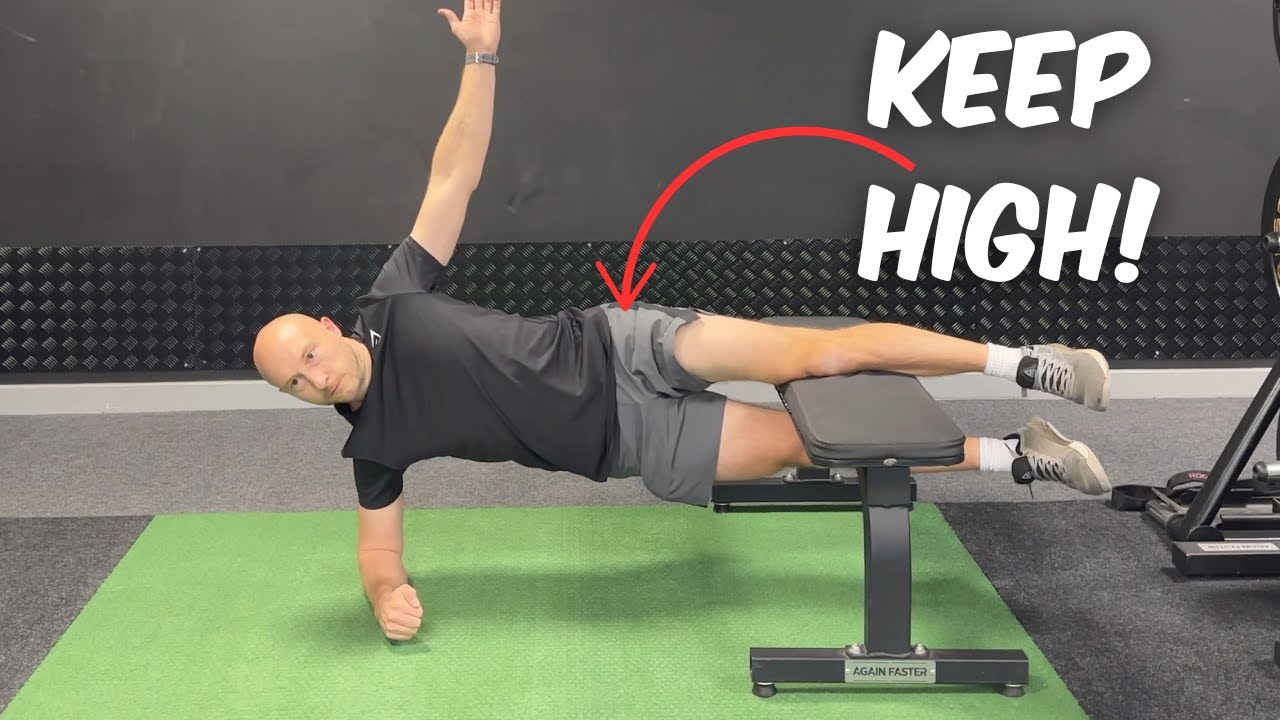
Sets: 2-3 Time: 20-30sec
Ovola recommends experimenting with short- and long-lever versions of this challenging core and adductor exercise, which are both explained below.
How to do the short-lever Copenhagen hold:
- Position yourself side on to a bench.
- Lie down and place one knee and upper calf on top of the bench, keeping your lower leg underneath.
- Prop yourself up on your forearm, with your elbow directly under your shoulder so that you're in a side plank position.
- Lift your hips so you're in a straight line from your shoulders to your ankles.
- Hold for 20-30 seconds, tightening your inner top thigh to maintain your position.
How to do the long-lever version:
You can progress to the long-lever version by placing just the ankle of your top leg on the bench and leaving your lower leg bent underneath you.
2. Hip thrust
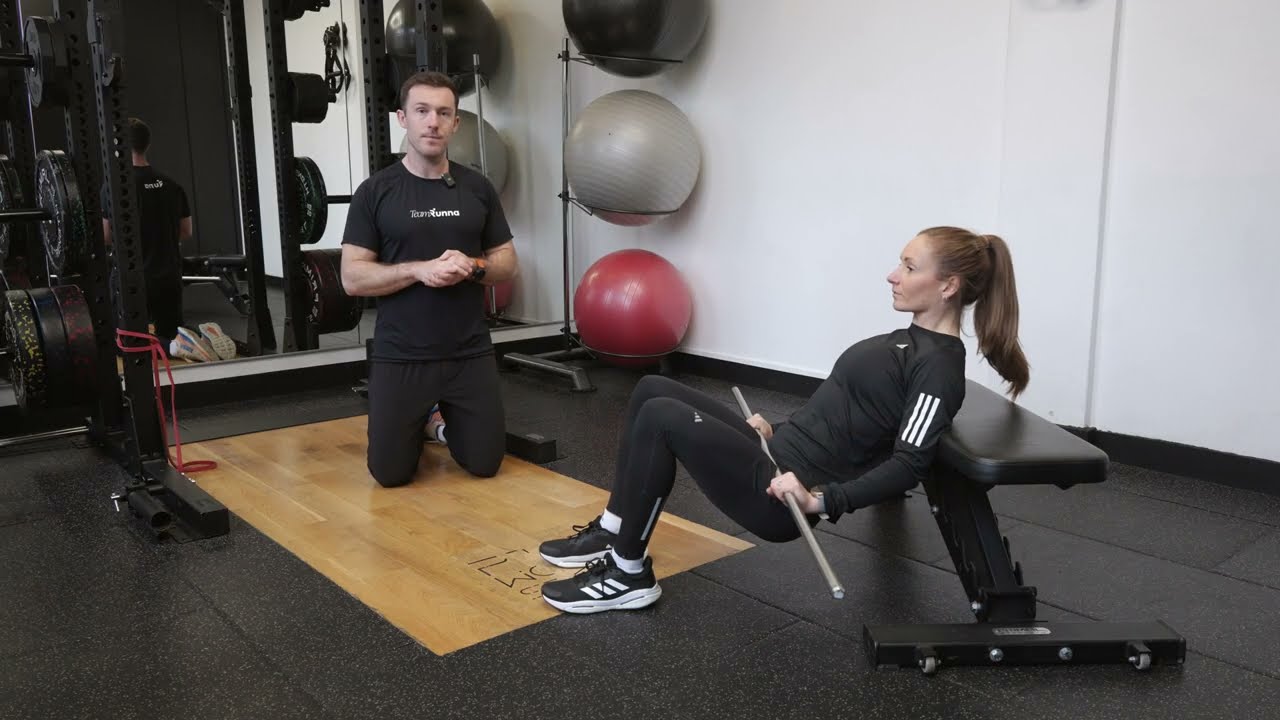
Sets 2-3 Reps 6-8
- Sit on the floor and rest your upper back on a bench or couch, with your knees bent and feet flat on the floor.
- Lift your hips high to engage your glutes.
- Slowly lower to tap the floor with your buttocks and repeat.
- Keep your feet and knees hip-width apart throughout.
- To make it harder, rest a weight plate or bar across your hip crease.
3. Single-leg glute bridge
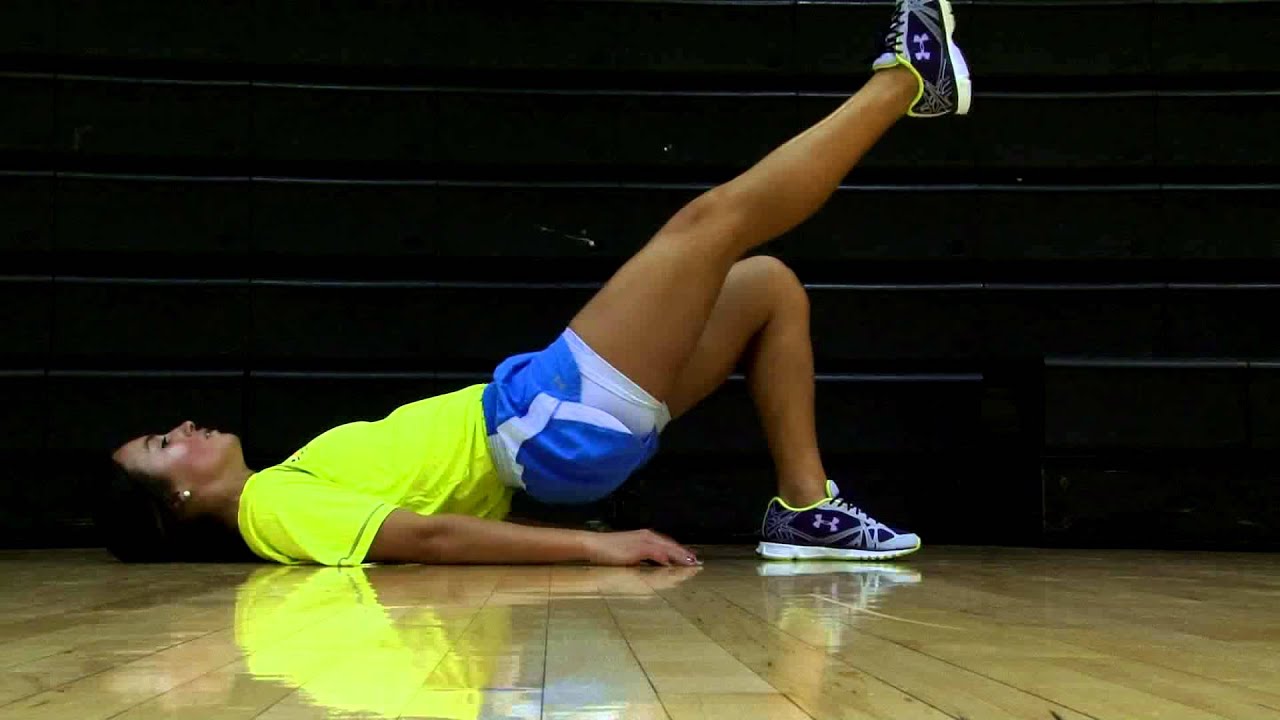
Sets 2-3 Reps 6-8 each side
- Lie on the floor with your knees bent and feet flat, hip-width apart.
- Extend one leg straight, so that it's at a 45° angle from the floor.
- Lift your hips, keeping them level throughout, until they form a straight line with your shoulders and knees.
- Slowly lower your buttocks to tap the floor, then repeat.
- Perform all repetitions on one side, then repeat on the other.
