A trainer says you can strengthen your core while protecting your spine with these three crunch alternatives
Beginner-friendly core moves to try instead of crunches


Crunches are perhaps the most well-known core exercise, but arguably not always the most effective—they’re also not suitable for everyone, particularly beginners.
Rachel MacPherson, a personal trainer, strength and conditioning coach, and certified pain-free performance specialist, says she doesn’t program crunches for people who are just starting out.
“Instead, I focus on exercises that teach the core to stabilize the spine, through resisting movement, because that’s how it works in real life when you walk, lift, push and carry things,” she explains.
MacPherson points to several reasons why someone might want to skip traditional crunches.
“Crunches require spinal flexion, and after several reps, this can become taxing and irritate the lower back,” she says. “People often use incorrect form, which makes things worse.”
She adds that crunches don’t prepare your core for the demands of everyday life.
“To protect the spine, your core needs to resist bending, twisting, arching and so on, which is best trained using anti-rotation and anti-extension drills like the dead bug, plank and bird dog. Crunches still have their place, but they aren't the optimal exercise, especially for beginners.”
MacPherson has shared her three favorite crunch alternatives, explaining that they work more like real-world movement.
“Dead bug, side planks, and bird dog all challenge your core to brace the spine and transfer force between the upper and lower body, which is exactly what you need for walking, running, lifting and sports.”
1. Dead bug
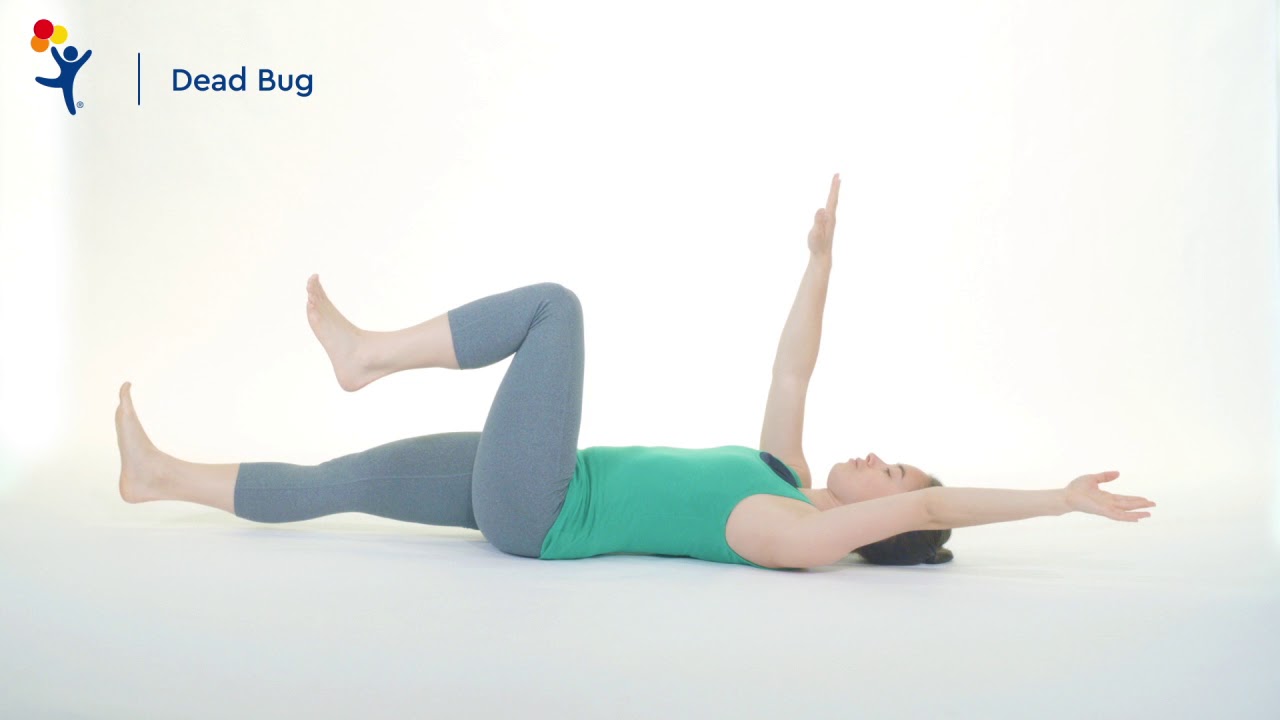
Sets: 2-3 Reps: 6-10 Rest: 30-45sec
During the dead bug, you are required to keep your spine stable while you move your arms and legs.
“It hits the deep stabilizers (like the transverse abdominis) and is much friendlier on the lower back than repeated spinal flexion [like with crunches],” says MacPherson. “It’s often used by spine specialists as a safe core-strengthening drill.”
How to do it:
- Lie on your back, knees bent and feet flat on the floor.
- Press your lower back into the floor and bend your hips and knees to 90° angles, with your knees over your hips.
- Extend your arms straight up over your chest.
- Inhale to prepare, then exhale and brace your core as if someone is going to poke your stomach.
- Lower your right arm overhead toward the floor behind you, and your left leg toward the floor in front.
- Pause just before your lower back wants to arch.
- Return to the starting position with control, then repeat with your opposite arm and leg.
- Continue, alternating sides with each rep.
Form tip: Keep your movements slow and controlled—about three seconds to lower and three seconds to return to the start. If coordinating arms and legs feels too challenging, just move your legs, keeping your arms by your sides.
2. Kneeling side plank
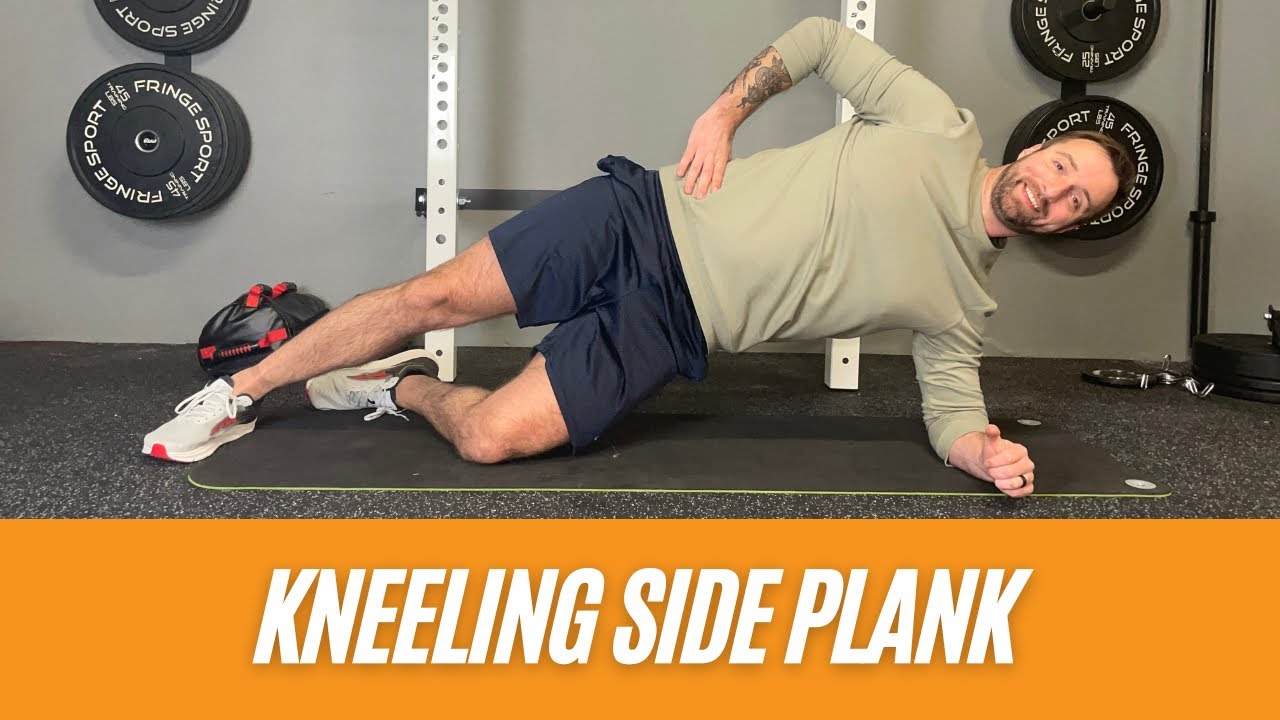
Sets: 2-3 Hold: 15-30sec each side, building up to 30-45sec Rest: 30-45sec
“The side plank trains the lateral core—obliques, deep stabilizers and hip muscles—to resist side bending and rotation,” says MacPherson.
“That’s crucial for protecting the spine during everyday activities like carrying shopping bags or holding a child on one hip. It’s isometric (a hold), so beginners can focus on alignment rather than complicated movement, and there’s zero spinal crunching involved.”
How to do it:
- Lie on your side, propped on your forearm, with your elbow under your shoulder.
- Bend your knees to about 90° with your feet behind you.
- Press your forearm into the floor and lift your hips to form a straight line from your knees to your head.
- Keep your neck neutral, gazing ahead or slightly down.
- Hold for time, then switch sides.
Make it harder: Once you’re comfortable holding the position for 30 seconds on each side, you can straighten your legs and stack one foot on top of the other to perform a full side plank.
3. Bird dog
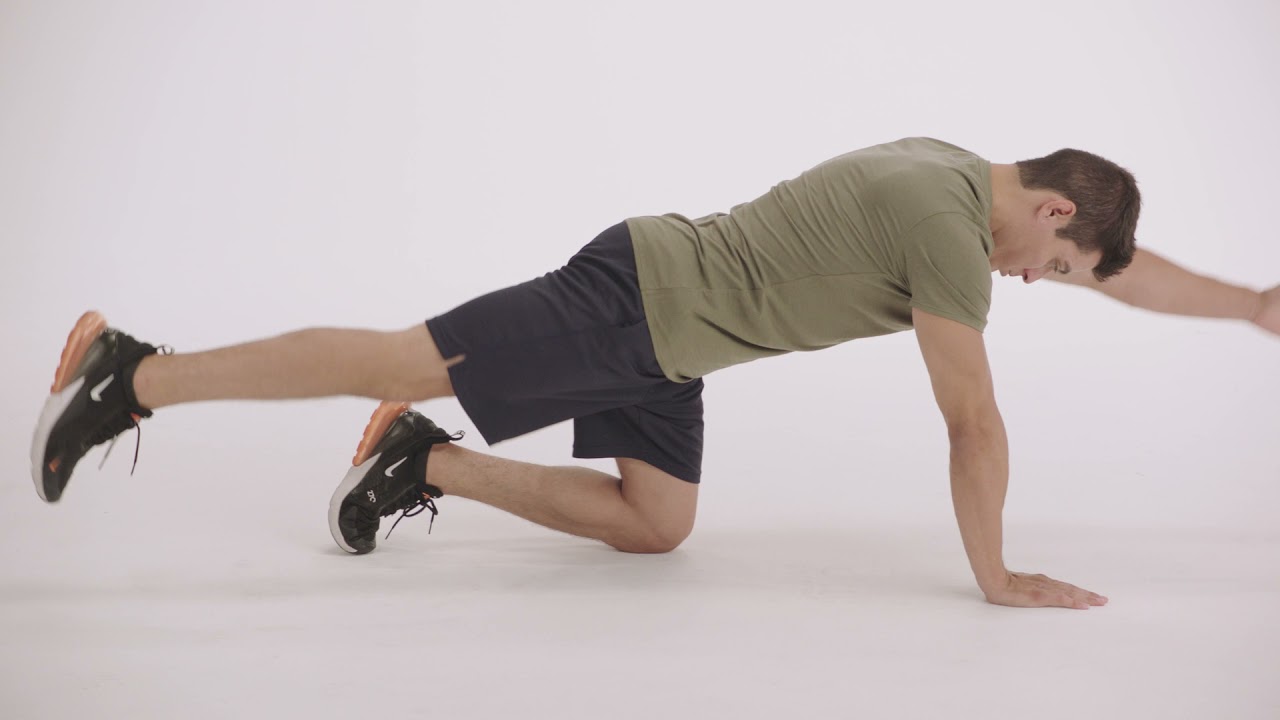
Sets: 2-3 Reps: 6-10 each side Rest: 30-45sec
“The bird dog is a classic spine-friendly core exercise. It trains the back, glutes and deep core together, while teaching balance and control,” says MacPherson.
“You’re resisting extension and rotation rather than curling the spine, which makes it appropriate for many people who find traditional crunches uncomfortable.
How to do it:
- Start on your hands and knees, with your knees under your hips and wrists under shoulders, keeping your spine and neck neutral.
- Gently draw your belly button in to brace your core.
- Slowly extend one leg behind while extending the opposite arm forward, keeping your hips and shoulders level and stable.
- Pause when your extended arm and leg are parallel to the floor, then return slowly to the starting position.
- Keep to a tempo of about three seconds out and three seconds back.
- Complete all the repetitions on one side, then switch sides.
Make it easier: Focus on extending one limb at a time before moving an arm and leg together, or limit how far you extend them until you build balance and strength.
