





When I train a new client I always use these two abs exercises to teach rock-solid core control
Strip your core workouts back to these two foundational exercises to improve stability and protect your spine


There are two abdominal exercises I believe should always form the building blocks of any exercise plan—whether you’re new to strength training or you've been lifting all your life.
It’s something I was recently reminded of when reflecting on how I used to train clients when I first started out.
Without fail, I would begin on an exercise mat, testing if they could effectively engage the deep core muscles responsible for protecting and stabilizing the spine and pelvis.
The two moves in question were the bird dog and dead bug exercises. Here's why I believe they are so effective, along with a few pointers on how to introduce them into your practice.
Why I always teach bird dog and dead bug
These two core exercises are commonly overlooked for seemingly more challenging alternatives, like planks and crunches.
But while those moves might feel more demanding, they rarely recruit the deep-lying core muscles we rely on to support and protect the spine.
Bird dog, which involves alternately lifting and extending your opposite arm and leg from all fours, teaches postural alignment, co-ordination and balance.
Dead bug, which involves alternately lowering and extending your opposite arm and leg while lying on your back, trains you to recruit and brace your deep core muscles through the full range of movement.
Vitally, they are low-impact and beginner-friendly, yet consistently effective, whatever your skill or strength level.
How to perform these two essential abs exercises
You can use these two core exercises to switch on your deep-lying abdominal muscles at the start of a workout, and/or at the end of the session as an abs finisher.
At the start, I suggest performing one or two sets of each for around 30-60 seconds to effectively switch your core muscles on so it's easier to brace your core later on in your workout.
For a finisher, I recommend performing them back-to-back as a superset. Aim for one minute per set, keeping the pace slow and controlled throughout.
Rest for 30 seconds, then repeat two or three times in total.
How to do the bird dog exercise
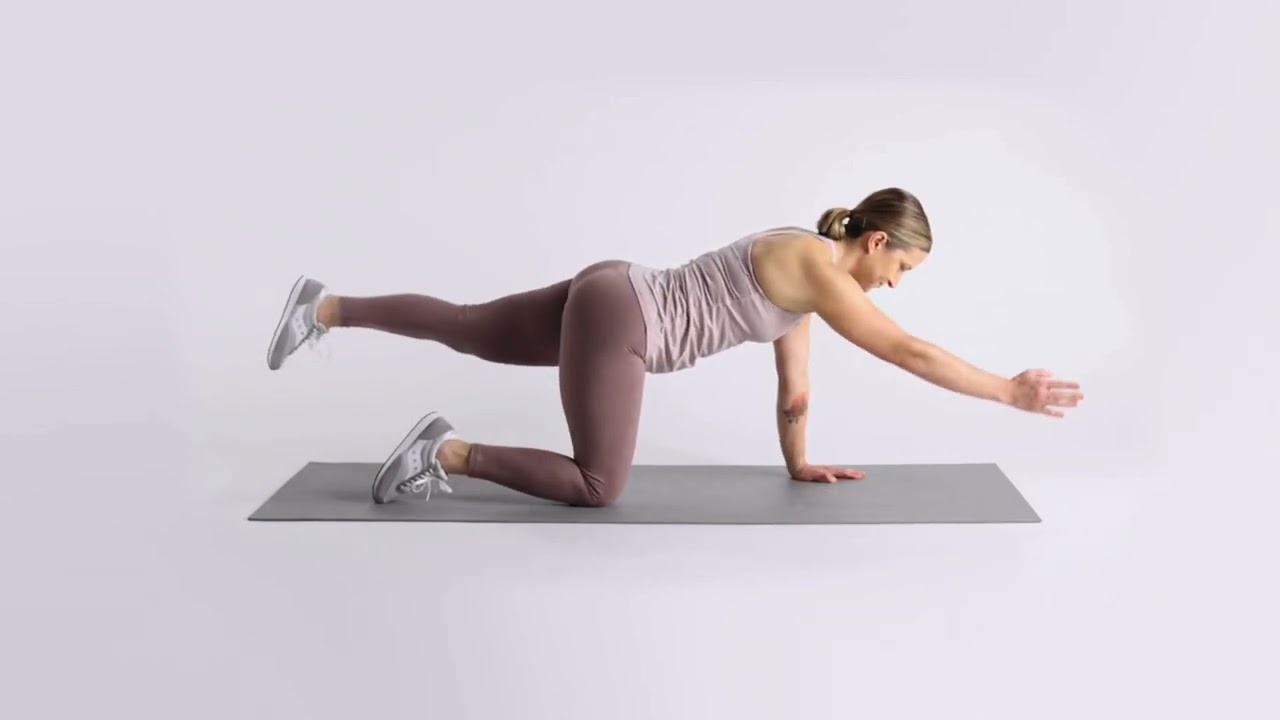
- Get on your hands and knees with your hands directly underneath your shoulders and your knees directly underneath your hips.
- Maintaining a neutral spine, engage your core.
- Keeping your gaze on the floor, and your hips and shoulders stable throughout, lift and extend one arm in front of you and the opposite leg behind you.
- Pause when your lifted arm and leg form a straight line with your torso.
- Slowly return to the starting position and repeat on the other side, alternating sides with each rep.
I like to cue my clients with a visual reference to keep their torso dead still: “Imagine you have a tray of martinis on your back!” That usually does the trick.
How to do the dead bug exercise
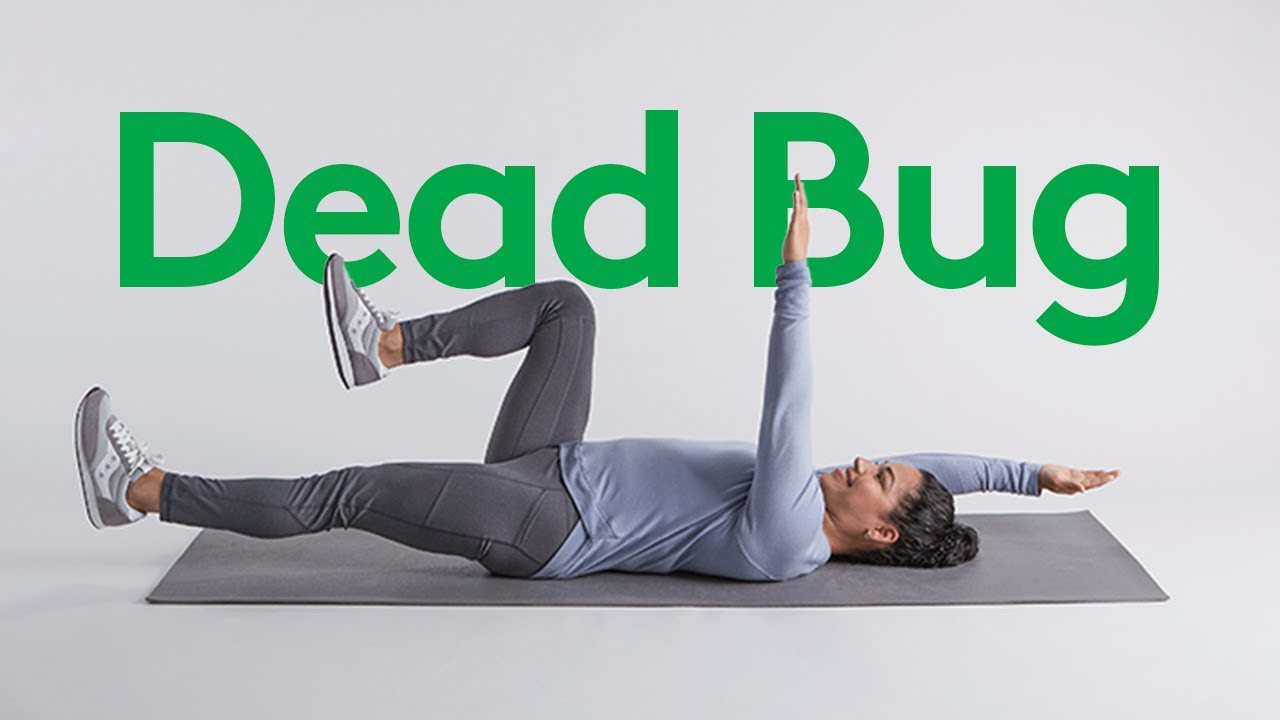
- Lie on your back with your arms extended straight up.
- Lift your knees so they’re directly above your hips and bent to 90˚.
- Gently press your lower back into the floor to help engage your deep-lying core muscles.
- Maintaining this tension in your abdominals throughout to protect your lower back, slowly lower one arm behind you and extend and lower the opposite leg, stopping when your heel is just above the floor.
- As with the bird dog exercise, focus on reaching your arm and leg away from each other to create length through your body.
- Return your arm and leg to the start position with control and repeat on the opposite side, alternating sides with each rep.
If you feel your lower back arching off the floor, pause and reset, or regress this exercise by moving one arm or leg at a time.
