I tried doing prone spinal rotations every day for two weeks and my posture improved almost instantly
Doing this simple exercise opened up my mid-back and made it easier to sit taller


My posture has never been great, but after months of holding my toddler all day, I started to notice that it was getting even worse.
When my go-to exercises weren’t doing the trick, and my mid-back would ache by afternoon, I knew it was time to get serious about addressing my poor posture.
I’m a certified personal trainer and I know of the benefits of prone spinal rotations, and thought they could be a game-changer for my back health.
So, I decided to try an experiment: I’d do the exercise every day for two weeks, hoping it would improve my posture and pain.
I wanted to make sure my experiment was safe to do, so I checked in with Bill McGehee, PT, PhD, a physical therapist and clinical professor at Tufts University School of Medicine, for his thoughts.
“Prone spinal rotations are a fantastic low-load exercise for improving thoracic mobility, which is one of the most overlooked contributors to poor posture,” he told me.
“Done daily, prone spinal rotations can help counteract the stiffness that comes with prolonged sitting, encourage better alignment of the upper back and shoulders, and support the kind of segmental mobility that keeps the spine healthy and resilient.”
How to do prone spinal rotations
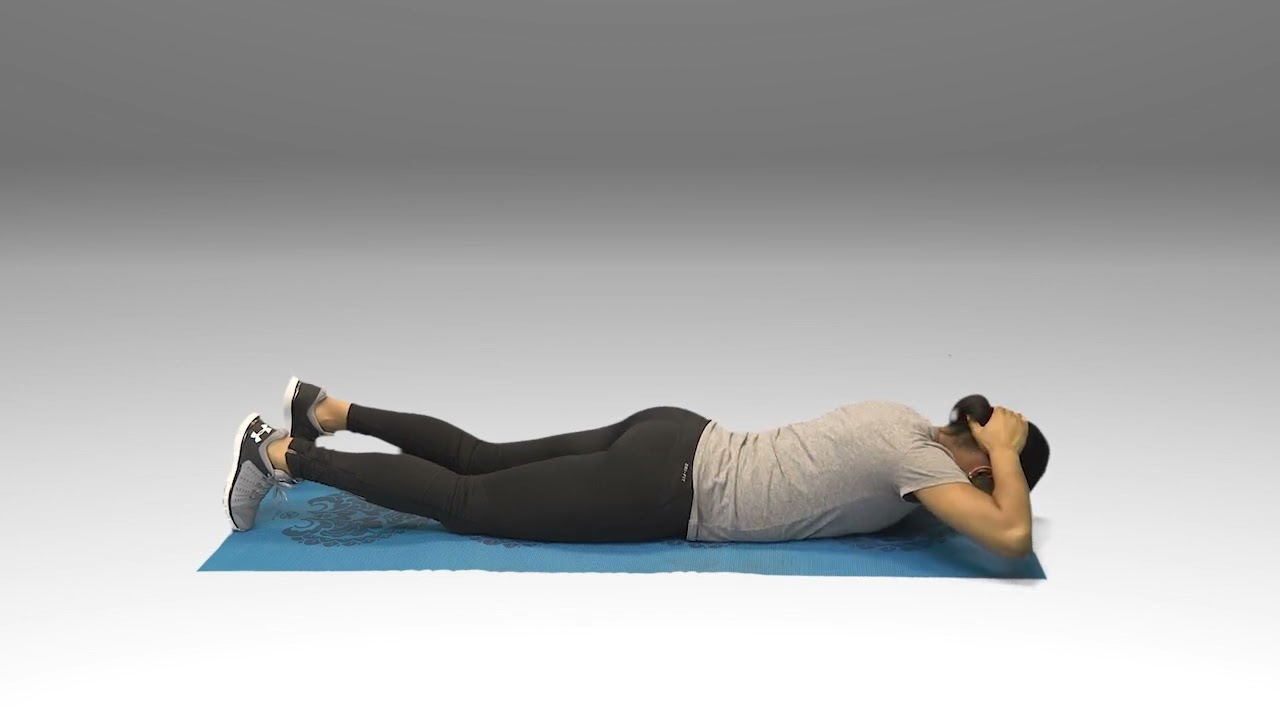
You should always consult with a physician before trying any new activity. A certified personal trainer or physical therapist can also provide guidance on proper form and provide modifications, if needed.
Sets: 1-2 Reps: 10-12 each side
You’ll need a yoga mat for this exercise. If you’re unable to get onto the floor, consider lying on your bed, couch, or a massage table instead.
- Lie face down on your mat.
- Bend your elbows and place your hands on the mat next to your shoulders.
- Place your right hand behind the back of your head.
- Slowly lift your right shoulder off the mat, rotating your right elbow towards the sky.
- Pause briefly.
- Lower the right shoulder back to the starting position.
- Continue for the desired number of reps, then repeat on the left side.
What you should know before performing prone spinal rotations
McGehee points out that while prone spinal rotations are appropriate for most, there are certain situations that make the move ill-advised.
“People with known disc herniations, particularly those with active nerve root irritation or radiating symptoms, should avoid rotational loading of the spine, as it can aggravate their condition,” he advises.
“Anyone with osteoporosis, a recent vertebral fracture, spinal instability such as spondylolisthesis, or an active spinal infection or tumor should also steer clear.
“Pregnant individuals, especially in later stages, may find the prone position uncomfortable or inadvisable. If you have any acute back or neck pain that worsens with twisting, that's a signal to stop and consult a physical therapist or physician before continuing.”
My experience
I started my experiment by adding one set of 10 repetitions on each side to my warm-up before my daily workout.
After one week, I was starting to see some improvements, so I increased my reps to 12 to see if that would have an even greater effect.
The last three days, I was feeling stiff again (more on that later), so I added in an additional set of 12 reps in the morning after waking up.
I then did two sets a day until the end of the two-week period.
Here are my three main observations after doing prone spinal rotations every day for two weeks.
1. At first, my spine opened up and my posture improved
Whether it was purely psychological or not, by day three, my entire spine felt much more mobile.
I’d wake up in the mornings without my usual achy back, and I didn’t feel as stiff or sore as the day progressed. This helped me to sit a little taller on the floor while playing with my son.
I’d done spinal rotations before, but I had mostly done them in a standing position. I noticed that doing them prone was opening up the upper, lower and mid-back, whereas the standing position would only really affect my mid and upper back.
“Performing rotations from a prone position takes gravitational load off the spine, which can promote greater spinal extension and mobility compared to upright positions,” explains McGehee.
“This means the exercise lets you access rotation through a fuller, more comfortable range.”
With less stiffness and pain, it was easier to stay in a proper spinal alignment throughout the day. I did catch myself slouching a few times when sitting, but I corrected myself and didn’t feel much fatigue in my mid-back.
2. I started feeling stiffness again toward the end of my two weeks
A few days before the end of my experiment, I had to hunker down at my desk for a long day behind the computer.
It didn’t surprise me that the next morning I was stiff and sore again, although I was expecting less impact due to my recent routine.
McGehee explains that our bodies are designed to twist, but long periods of sitting can mean we lose that ability.
“Many of us spend hours in a flexed, rounded position at a desk or over a phone, and over time the thoracic spine stiffens,” he says.
“Research shows that thoracic range of motion is greatest during axial rotation compared to other directions of movement, yet this motion is significantly reduced when the spine is held in a flexed posture.”
Since I was feeling stiff again, I decided to close out my experiment with an additional daily set of prone spinal rotations.
As well as doing them before my daily workout, I added another set as soon as I woke up. This helped to open things up again—and by the final day, I was back to standing taller.
3. Holding my son felt easier
I didn’t expect that my daily prone spinal rotations would translate to more strength and stamina, but when it came to carrying around my son all day, that’s what happened.
By day 13, holding him while walking through the store didn’t feel nearly as taxing as it usually does.
I made it through about half an hour of shopping, and closed out the trip with my mid-back feeling strong and stable. I even sat a little more upright in the car on the way home.
“Posture is less about holding a perfect position and more about having the ability to move in and out of positions comfortably throughout the day,” McGehee notes.
My two-week experiment made it clear: I was in desperate need of spinal mobility work for my poor posture, and even if it’s not a daily habit, I’ll continue doing this exercise for the foreseeable future.

Bill McGehee, PT, PhD, is a clinical professor at Tufts University School of Medicine, Department of Rehabilitation Sciences. He has been a licensed physical therapist since 1995 and a full-time physical therapist educator since 1998. Over the last 23 years, Dr McGehee has taught courses in introductory therapeutic exercise principles, cardiovascular and pulmonary physical therapy, management and administration, professional issues, and clinical education.
