I tried doing the 90/90 hip mobility exercise every day for two weeks and now I can squat and lunge without pain
Doing this move opened up my hips right away


After the birth of my son, the two exercises I struggled with the most were squats and lunges.
My hips were tight, my form felt off, and no matter what adjustments I made, I still felt pain during the movements.
I’m a certified personal trainer and a corrective movement and pre- and postnatal exercise specialist, so I’m well-versed in addressing form and mobility issues, especially during the postpartum period.
When the usual tricks weren’t fixing my squats and lunges, I decided to try something new—I did the 90/90 hip mobility exercise every day for two weeks to see if it would help.
Before I started, I checked in with Dr Michael Wang, a physical therapist with New Care Physical Therapy, for his thoughts on my experiment.
“The 90/90 exercise is an excellent exercise to help the hips move freely,” he says.
He explains that sitting for long periods forces our hips to stay in one position, which can negatively impact their range of movement. This can lead to stiffness, irritation and muscle cramping—so doing some mobility exercises to counteract this is a good idea.
“The 90/90 exercise is safe to do daily if it can be done without sharp pain or if there are no pre-existing conditions,” says Wang.
Though I’d been sitting a lot since my son was born, I was able to do the movement without pain, so I was good to go.
I hoped that a fortnight of 90/90 exercises would be a beneficial addition to my routine.
How to do the 90/90 hip mobility exercise
“People who have hip conditions like hip impingement, sciatica or history of hip surgery should consult an expert before attempting this exercise,” cautions Wang.
If you’re injury-free you can consult a certified personal trainer or physical therapist to ensure you’re doing the move correctly.
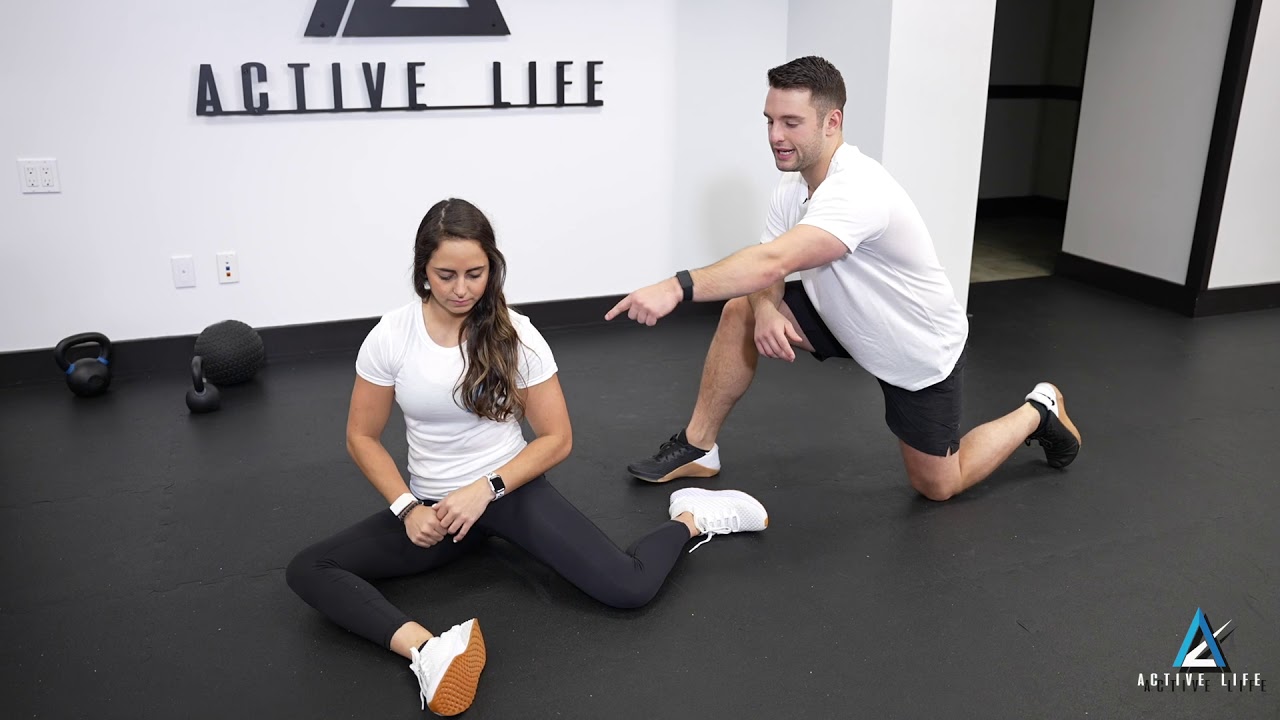
How to do the move:
Sets: 1-2 Reps: 5-10 each side
- Sit on the floor with your left knee resting in front at a 90° angle.
- Place your right knee at a 90° angle on the floor to your right side.
- Raise your right knee, then your left, rotating from your hips, until your feet are flat on the floor.
- Continue rotating until your right knee is in front and your left knee to your side.
- Reverse the movement to return to your starting position.
How I built mobility
Knowing my hips were exceptionally tight, I began my two-week experiment with just one set of five reps on each side.
Even this was a struggle at first, but by day four I started to move with more ease.
On day five, I upped my reps to eight, which felt great.
After a week, I was up to 10 reps and performing the exercise easily and smoothly.
Towards the end of the challenge, I decided to pay more attention to my pace.
I moved more slowly and intentionally through each part of the movement. This helped me identify trouble spots in my range that I’d previously missed.
On day 11, I added another set of 10 reps and by day 14, my final day, my hips felt looser and more limber.
Here’s what I observed after doing this 90/90 hip exercise every day for two weeks.
1. Squats and lunges got easier
Poor squats and lunges were what motivated me to try this 90/90 hip mobility challenge, so I’m happy to report that both have improved.
The tightness and discomfort I was experiencing at the bottom of the squat and on the descent were easing by day three. I also noticed I wasn’t shifting my torso forward as much—with more space and comfort in my hips, I was able to sink lower and keep my back more upright and chest lifted.
Lunges felt smoother too and I was able to get my knee closer to the floor.
By day 14, I was even able to use heavier weights during both movements.
2. My back pain improved
Due to a degenerative disk issue, I live with chronic lower-back pain, but by day seven of my experiment, my usual ache wasn’t as bothersome.
While my pain didn’t disappear completely, the improvement was enough to make my lower-body workouts feel easier than they had in a long time.
3. Running felt better
Running is my favorite form of exercise but tight hips can make it feel awkward and painful.
I’m aware my recurring bouts of IT band syndrome—that show up as pain on the outside of my knee when I run—has its root causes in my hips.
I ran on four days during the challenge, and while the first two runs felt typical with some discomfort and pain toward the end, the third and fourth runs were noticeably different.
I ran without the usual tightness at the start and was able to reach my top speed sooner.
On my fourth run, I even finished 10 seconds faster than usual with a pain-free knee.
That’s all the evidence I need to keep doing this exercise regularly.

Dr Michael Wang earned his Doctor of Physical Therapy and MBA from Emory University, and has a DIP in Osteopractic Physical Therapy with advanced training in dry needling and spinal manipulation. Additionally, Wang was a CrossFit Level 1 trainer for over 10 years, and treats CrossFit Games competitors as well as USPA powerlifting competitors.
