A yoga teacher says these are the three poses you should do after a long walk to ease muscle soreness and recover faster
Retrain the hips, hamstrings and spine to move through their full range of motion


We know that walking is great for us; from improving cardio fitness, bone and joint strength to boosting mood and metabolism, there are many well-known benefits of walking.
However, relying solely on walking for exercise has some downsides, explains Melissa Leach, a yoga instructor and strength and conditioning coach with Yoga-Go.
“Walking and running are repetitive linear movements, with the body moving almost exclusively forward, loading the same muscles and joints over and over,” she says.
“With time, this builds strength in a narrow range of motion, but for some, it also creates tightness and imbalances.”
She explains that practicing yoga can help by working the body through multiple planes of motion.
She suggests trying three particular moves: runner's lunge with twist, pyramid pose and seated twist.
“These three poses target the exact areas hiking and walking stress most,” says Leach.
“Together, they retrain the hips, hamstrings and spine to move through their full range, which helps improve balance, as balance depends as much on joint mobility as it does on strength.”
Three yoga poses for walkers:
The three poses that Leach suggests are:
- Runner's lunge with twist
- Pyramid pose
- Seated twist
She advises running through them one after another and if you have time, doing two rounds. She also offers a couple of tips:
- Rest 10-15 seconds between sides and rounds, just enough to reset your posture, but not a full recovery break.
- All poses are best performed post-hike, when your muscles are still warm.
Below she breaks down how to do the three poses.
1. Runner’s lunge with twist
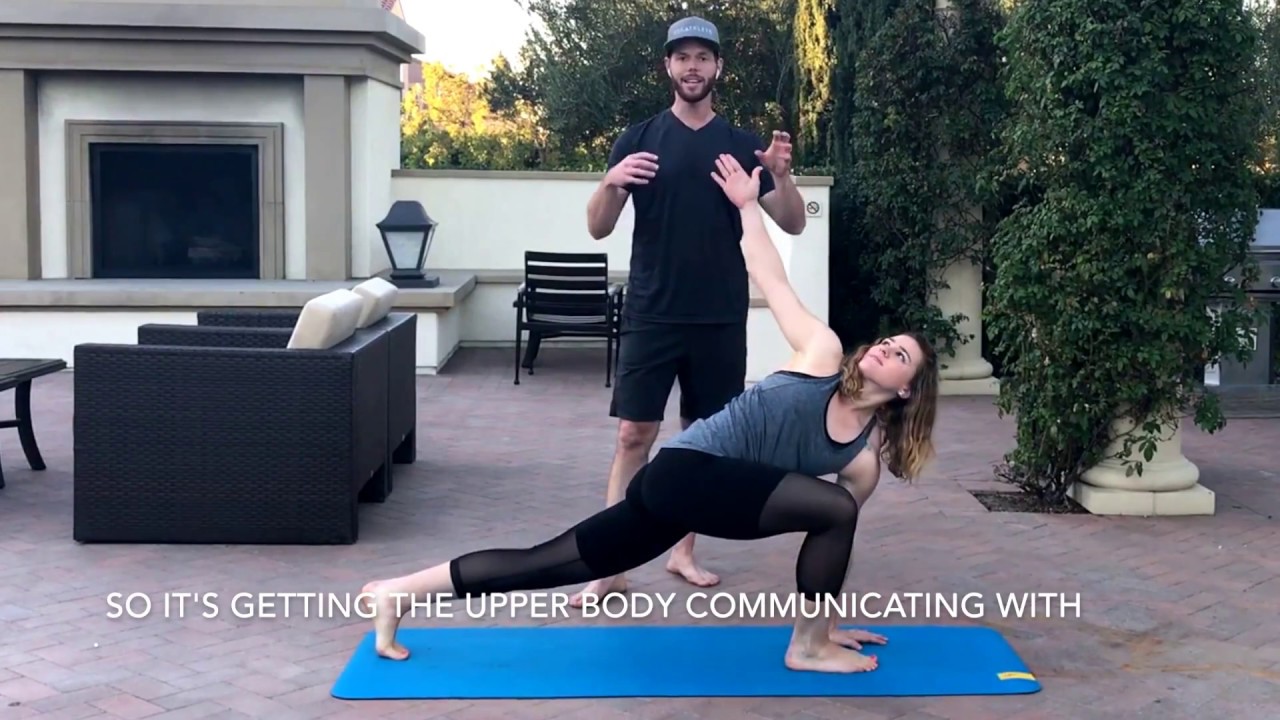
Hold: 30-45sec each side
This move can soothe and stretch out tight hip flexors, which can be a side effect of long walks and runs.
How to do it:
- Start in a low lunge position with your right foot forward, your right knee bent and your left leg extended behind.
- Place your left hand on the floor under your shoulder.
- Rotate your chest to the right and reach your right arm towards the ceiling. Look toward your raised hand if comfortable.
- Hold the rotation for 30-45 seconds, then release and switch sides.
Form tip: Keep your front knee over your ankle and your back leg stable. This can be a dynamic movement such as in the video but for this move try the static version first.
2. Pyramid pose
Hold: 30-45sec each side
If you've tackled a few hills during your walk, this should help.
“Pyramid pose lengthens the hamstrings and calves, which absorb most of the eccentric load on descents,” says Leach.
How to do it:
- Stand with one foot forward and the other about 2-3ft behind it. Keep both legs straight and your hips facing forward.
- Hinge at your hips and fold over your leading leg.
- Place your hands on the floor or on yoga blocks on either side of your forward foot, or on the shin of that leg.
- Pull your shoulders back and straighten your spine, then inhale and deepen the fold as you exhale.
- Hold for 30-45 seconds, rise slowly and switch sides.
3. Seated twist
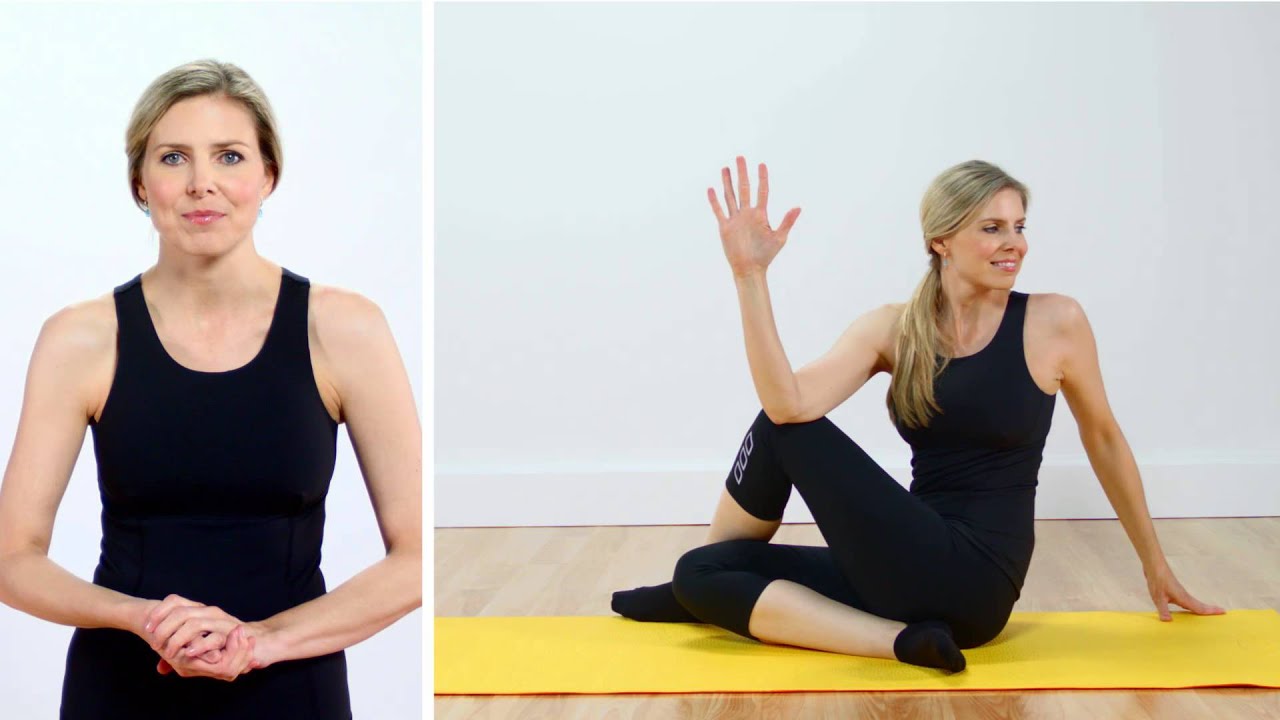
Hold: 20-30sec each side
“Although spine rotations are barely used when walking or hiking, reintroducing them post-hike helps prevent stiffness,” says Leach.
How to do it:
- Sit with a straight back and both legs extended in front of you.
- Bend your right knee and place your right foot outside of your left thigh.
- If comfortable, you can bend your left knee too and bring your left foot close to your glutes.
- Drop your shoulders and straighten your back as you inhale.
- Twist to the right as you exhale, placing your right hand behind you and your left elbow against your right knee.
- Hold for 20-30 seconds, deepening slightly on each exhale, then release with control.

Melissa Leach is a certified yoga instructor and strength and conditioning coach working at Yoga-Go. She specializes in yoga education, teacher training and holistic lifestyle coaching, drawing from styles such as vinyasa and ashtanga.
