




Three of the best exercises for tech neck—and you can do them all at your desk
Holding the same position for long periods can lead to tightness, limited range of motion and neck pain


If you spend extended periods looking down at a device or slouching forward in front of a screen, you might have experienced discomfort in your neck—now widely known as tech neck.
Raj Suppiah, a physical therapist at Foundation Physical Therapy and Wellness, says this is the “strain of neck muscles as a result of a prolonged flexed [looking down] posture”.
“Spending a lot of time hunched over phones and computers can cause the muscles of the neck to become tight and overloaded, which can cause stiffness, pain or headaches,” he says.
To avoid developing tech neck, Suppiah recommends the following four points:
- Take short movement breaks, every 30 to 45 minutes.
- Adjust your screen so the top third aligns with your eyes or forehead.
- Keep your keyboard and mouse close enough that you’re not forced to look down or reach forward.
- Commit to regular exercise—specifically walking, strength training and mobility work for your neck, shoulders and upper back.
While you adopt Suppiah’s preventative measures, I asked Ashley Katzenback, a doctor of physical therapy and the owner of Cape Concierge Physical Therapy, what are the best exercises to ease screen-related neck discomfort and why they work.
1. Side neck stretch
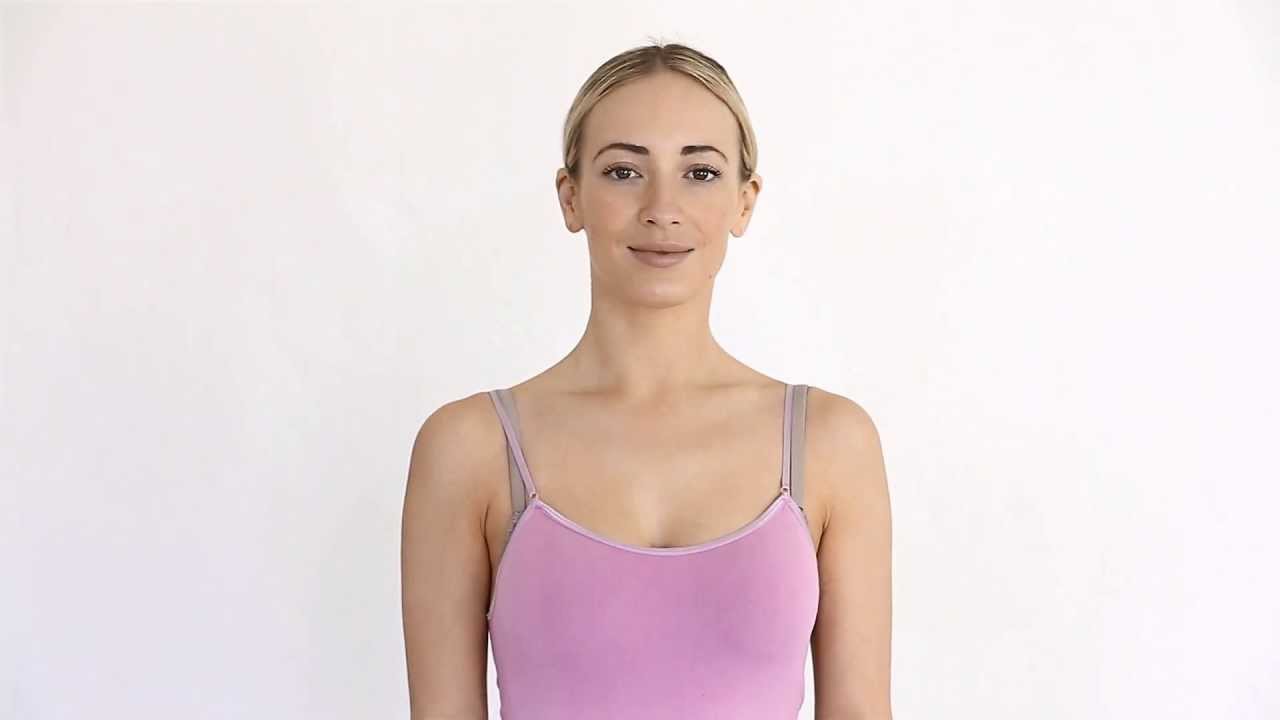
The side neck stretch can ease tightness between your neck and shoulder, encouraging comfortable sideways movement.
Reps: 3 Hold: 5sec each side
- Sit on a chair with your feet flat on the floor and shoulders relaxed.
- Hold the right side of your chair with your right hand.
- Carefully move your left ear toward your left shoulder, keeping your chest facing forward.
- Feel a gentle stretch down the right side of your neck.
- Hold for five seconds, repeat twice more.
- Move gently within a comfortable range and stop if there’s any pain.
Why it helps: “The side neck stretch works on your upper traps, levator scapulae, scalenes and sternocleidomastoid,” says Katzenback. “When these muscles are tight, your head migrates forward, leading to headaches, jaw pain and upper-back pain.
“I encourage this stretch to be done actively rather than passively because you work on recruiting the opposite side muscles while stretching the side in question.”
Active stretching is when you use your neck muscles to move your head into the stretch, rather than pulling it with your hand.
“For example, when you actively side-bend your neck to the right you are stretching the left side, while strengthening the right side,” says Katzenback. “This has been shown to be more effective than pulling on your neck.”
2. Chin back tuck
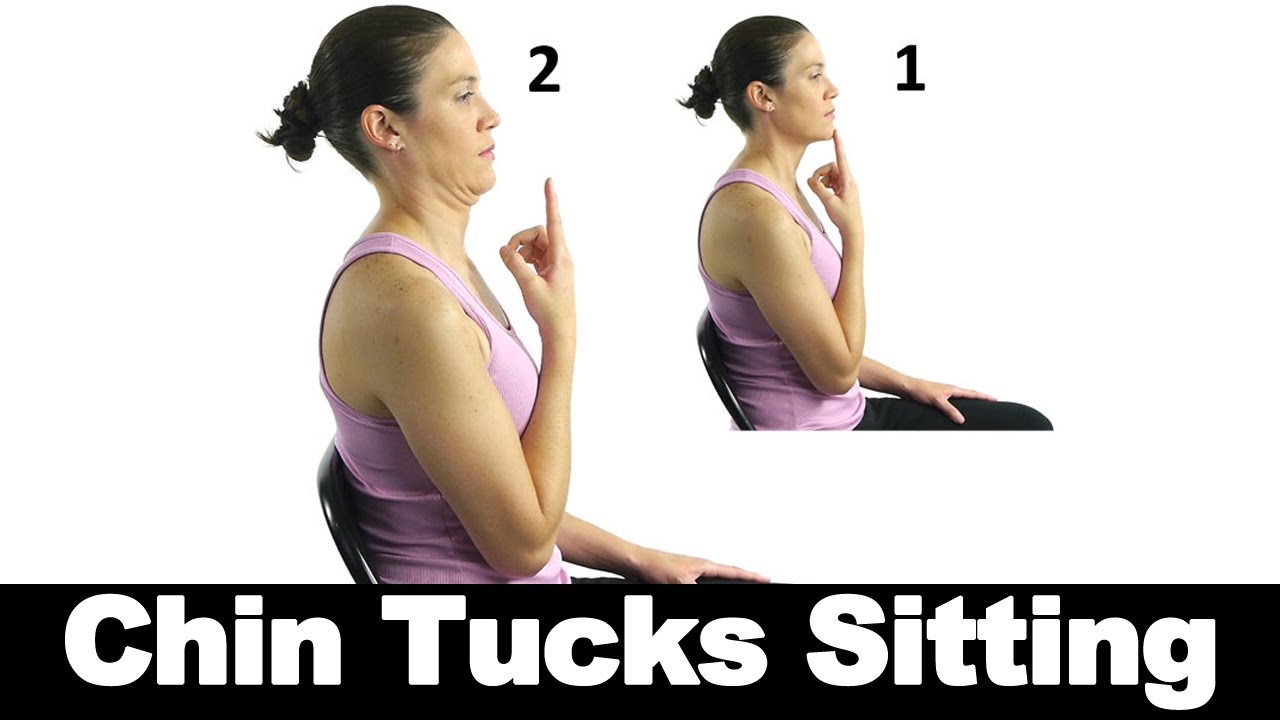
Reps: 5-10 Hold: 2sec
- Sit on a chair with your feet flat on the floor and shoulders relaxed.
- Place your finger on your chin.
- Move your neck and head backward, moving your chin away from your finger.
- Hold for a couple of seconds.
- Release the position and repeat.
Why it helps: The chin tuck helps to gently lengthen the back of your neck, and draws your head back from a forward position. It’s a movement exercise as well as a stretch.
“This exercise activates the deep neck flexors that become weak and shortened from excessive sitting with forward head posture,” Katzenback says. “It also stretches tight suboccipital muscles that tend to cause headaches and tension radiating down into your shoulder blades.”
3. Seated chest stretch
Reps: 5 Hold: 5-10sec
- Sit on a chair with your feet flat on the floor and shoulders relaxed.
- Extend your arms down by your sides, palms facing forward.
- Lift your chest slightly to feel a stretch across the front, without arching your lower back.
- Hold for 5-10sec, then release.
Why it helps: The chest stretch targets tightness rather than pain, stretching chest muscles to counteract the forward slouch towards a keyboard or device.
“Sometimes no matter how hard we try to strengthen the posterior chain [muscles in the back of your body including the neck and upper back], if your anterior chain [muscles in the front of your body including the chest and shoulders] is too tight, it's like pushing against a brick wall,” Katzenback says.
“When you do this stretch while seated at your desk, you must actively recruit your mid-back muscles [rhomboids, lats, mid traps, delts] to help pull your shoulders back.
“As the day progresses while you work at your computer, your lower back tires of supporting you, causing the thoracic spine to round, pulling everything forward. These stretches are all geared toward keeping your spine in optimal position.”
