These three moves can relax your back muscles more effectively than stretching, according to a physical therapist
If your back feels tight, stretching may not be the best solution


Stiff, achy backs are a common complaint. In fact, the CDC reports that almost 40% of adults over 18 have experienced back pain.
While you may be tempted to end a long workday with a few back stretches, Dr Andrew Gorecki, DPT, FAFS, a physical therapist and cofounder of MovementRX, says that stretching may not fix the problem.
“Stretching isn’t useless, but it is the tool everyone reaches for first and it’s the one least suited to a back that feels locked up,” he explains. “The muscles around a stiff lumbar spine are guarded. Stretching a guarded muscle asks it to let go while you’re actively pulling on it, which is close to the opposite of how a nervous system decides something is safe.”
Instead, he suggests the following three exercises to relax your spine: cat/cow, seated spinal rotations and lumbar rocks. “What these movements all share is that they are active and repeated. Guarding backs off when the brain watches a movement happen 15 times without anything bad following it.”
How to do the three exercises
Before starting any new activity, consult your medical team. “None of these are dangerous movements, but two of the three move in a direction that can be wrong for specific people,” says Gorecki.
He cautions that those with osteoporosis or a known vertebral compression fracture, acute disc herniation, spondylolisthesis, pars stress fractures, spinal stenosis, or recent spine surgery should avoid the exercises and work with a doctor on alternatives.
These exercises can be done by all fitness levels, but if you’re a beginner, consider meeting with a certified personal trainer or physical therapist to learn proper form.
The only equipment you’ll need for these exercises is a chair and a yoga mat.
Gorecki suggests doing 10 reps of cat/cow twice a day, 8-10 reps of seated spinal rotations once a day, and 10-15 reps of lumbar rocks twice a day, in the morning and evening.
Here’s how to do the exercises.
1. Cat/cow

How to do it:
- Get on your hands and knees on an exercise mat.
- Round your spine towards the ceiling.
- Pause briefly.
- Arch your spine, lowering your belly button.
- Pause briefly.
- Continue, alternating between the two positions for 10 reps.
Therapist tips: “Start from a flat, neutral back rather than from a slump,” suggests Gorecki. “Start the motion at the tailbone and let it travel up the spine one segment at a time. Most people rock the pelvis, arch the neck, and leave everything between the shoulder blades completely still. That middle section is the part that needs it.”
He says that going slow and breathing with the movement is crucial. “Exhale into the rounded cat, inhale into the arched cow. The ribcage moves better when the breath cooperates.”
“Do not chase the biggest possible arch,” he cautions. “Extra range at the ends almost always comes from the neck and the lowest lumbar segment, the two places that already move too much.”
2. Seated spinal rotation
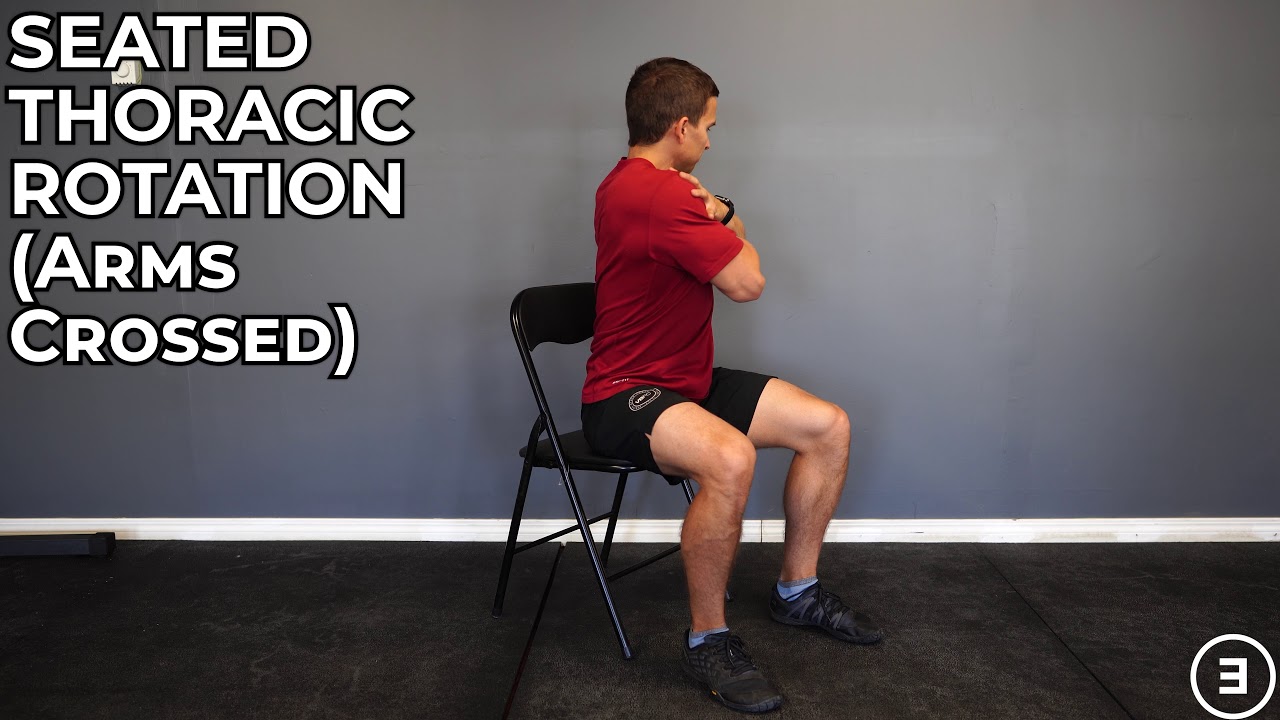
How to do it:
- Sit in a chair and extend your spine, becoming as tall as you can.
- Cross your arms across your chest.
- Gently twist your torso to the left.
- Pause briefly.
- Gently twist your torso to the right.
- Pause briefly.
- Continue for 8-10 reps in each direction.
Therapist tips: “Seated rotation is not really a low back exercise,” says Gorecki. “Almost all of the turn is happening in the thoracic spine above it. Most low backs that feel stiff are doing work the mid back and hips have stopped doing. Give that motion back to the parts built for it and the low back stops being the compensator.”
“If a hip lifts as you turn, you are rotating the pelvis instead of the spine,” he continues. “Squeeze a small ball or a rolled towel between the knees, or sit with the outside of the knees against a wall. Now the turn has to come from the ribcage.”
“Lead with the sternum, not the head. Let the eyes and neck follow last. Cranking the head first gives the illusion of range without producing any,” advises Gorecki.
Again, breathing makes a difference. “Exhale as you rotate. There is another 10° or 15° available once the ribcage empties.”
3. Lumbar rock
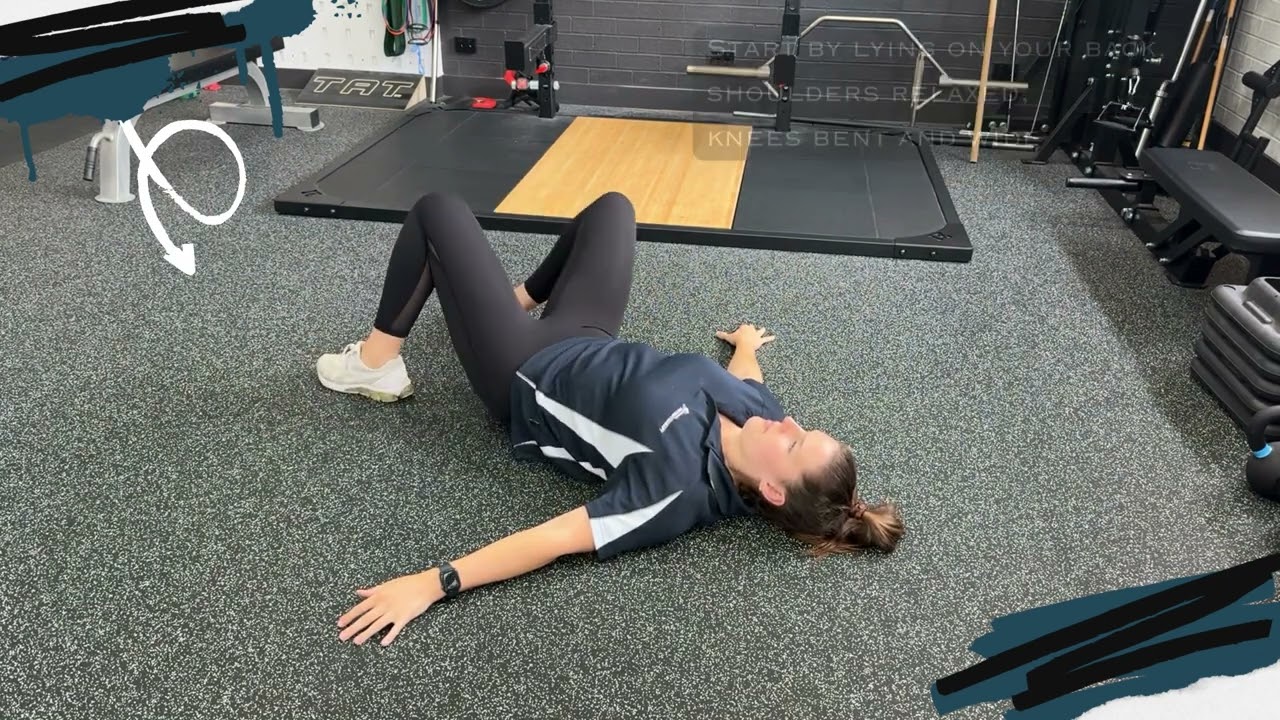
How to do it:
- Lie on your back with your knees bent and feet flat on the floor.
- Carefully drop your knees to the left side, moving with control.
- Pause briefly.
- Return to the start and repeat on the right side.
- Continue alternating between the two sides for 10-15 reps
Therapist tips: “Start small,” says Gorecki. “In the first few reps, your knees should barely leave the center. Range comes from repetition, not from forcing the first rep.”
“Keep both shoulder blades on the floor,” he continues. “When one peels up, you have gone past where the spine is actually moving.”
“Create a smooth arc in both directions,” Gorecki concludes. “No dropping the legs and catching them. The catching is where people tweak themselves.”

Dr Andrew Gorecki is a doctor of physical therapy with 15 years of clinical practice, holding a bachelor of science in exercise physiology from Northern Michigan University and a DPT from Central Michigan University. He is a fellow and adjunct faculty at the Gray Institute, owns Superior Physical Therapy in Traverse City, Michigan, and is cofounder and CEO of MovementRx, a remote therapeutic monitoring platform used by physical therapy clinics nationwide.
