




All you need is 10 minutes to do this trainer’s beginner-friendly HIIT workout—no equipment needed
Can high-intensity interval training be beginner-friendly? This trainer thinks it can


High-intensity interval training (HIIT) sounds, well, intense.
With a name like that, you may think it is only suitable for seasoned exercisers, but it can easily be tailored to beginners.
Angela Brooks, a NASM-certified personal trainer from VASA Fitness, explains that the goal of HIIT is to push your heart rate up using bursts of high effort.
What gets my heart rate up will be less than what it takes for an Olympic athlete doing HIIT, but as long as I put the appropriate amount of effort in at the appropriate amount, I’ll benefit.
And HIIT offers some great benefits. “HIIT produces outsized results relative to the time invested,” Brooks explains.
“Steady-state cardio—like a 30- to 45-minute jog—has its place, especially for active recovery and aerobic base-building.
“But for people pressed for time who want to build cardiovascular fitness, improve metabolic health, and see measurable body composition changes, HIIT consistently outperforms [steady-state cardio and takes] less time.”
Brooks shared the following 10-minute, equipment-free, beginner-friendly HIIT workout for you to try.
10-minute beginner HIIT workout
“This workout was designed around two principles: accessibility and scalability. Each movement is low-impact at its base level, and I’ve included a progression for those ready to push further,” says Brooks.
Perform each of the following five exercises for 45 seconds, resting for 15 seconds between exercises, to complete one round. Perform two rounds in total.
- Overhead march
- Squat to calf raise
- Reverse lunge to knee drive
- Bear crawl hold
- Lateral shuffle to rotational punch
Exercise guides
1. Overhead march
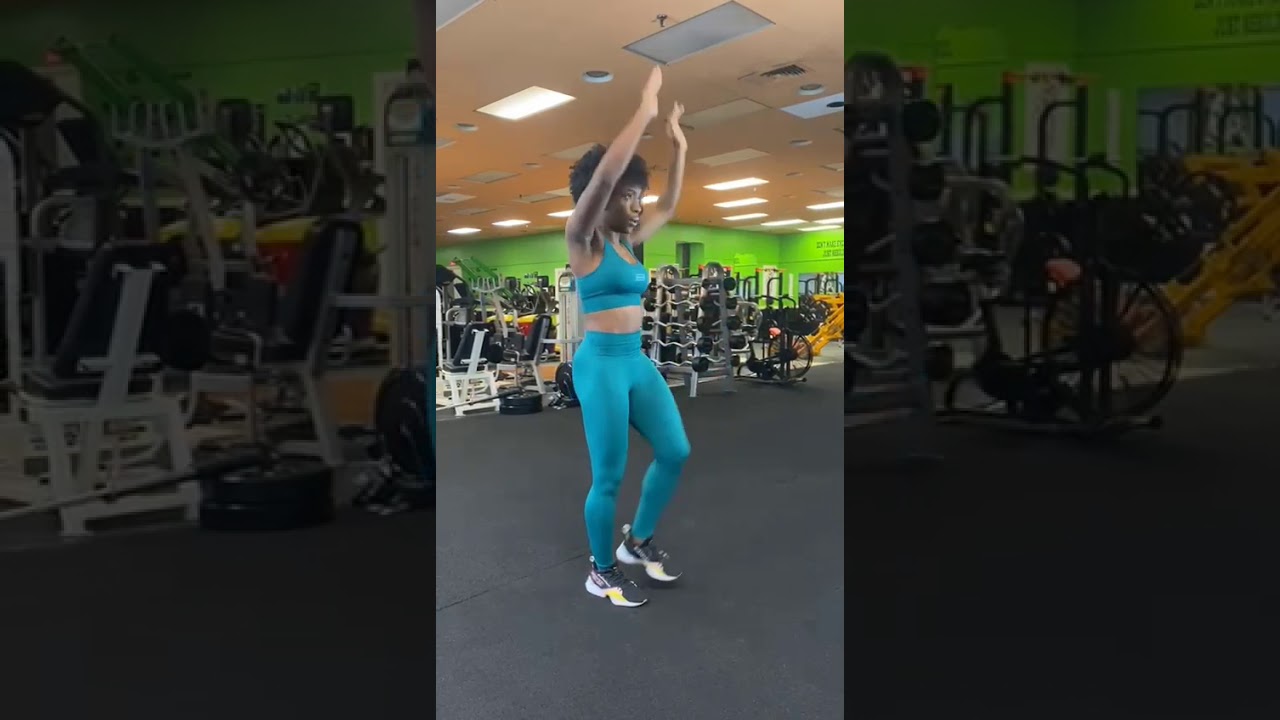
Time: 45sec Rest: 15sec
How to do it:
- Stand with your feet hip-width apart and your arms extended overhead.
- Bend and lift your right knee to hip height and lower your hands to tap your knee.
- Return to the starting position then repeat on the other side.
- As you warm up, increase your speed.
Add a challenge: Continue moving through the full 60 seconds without rest.
“An overhead march is the perfect opener,” says Brooks.
“It elevates your heart rate gently, warms your hip flexors and core, and forces overhead shoulder stability.
“Plus, it’s a low-impact movement pattern that works for every fitness level. Marching with arms raised also cues proper posture.”
2. Squat to calf raise
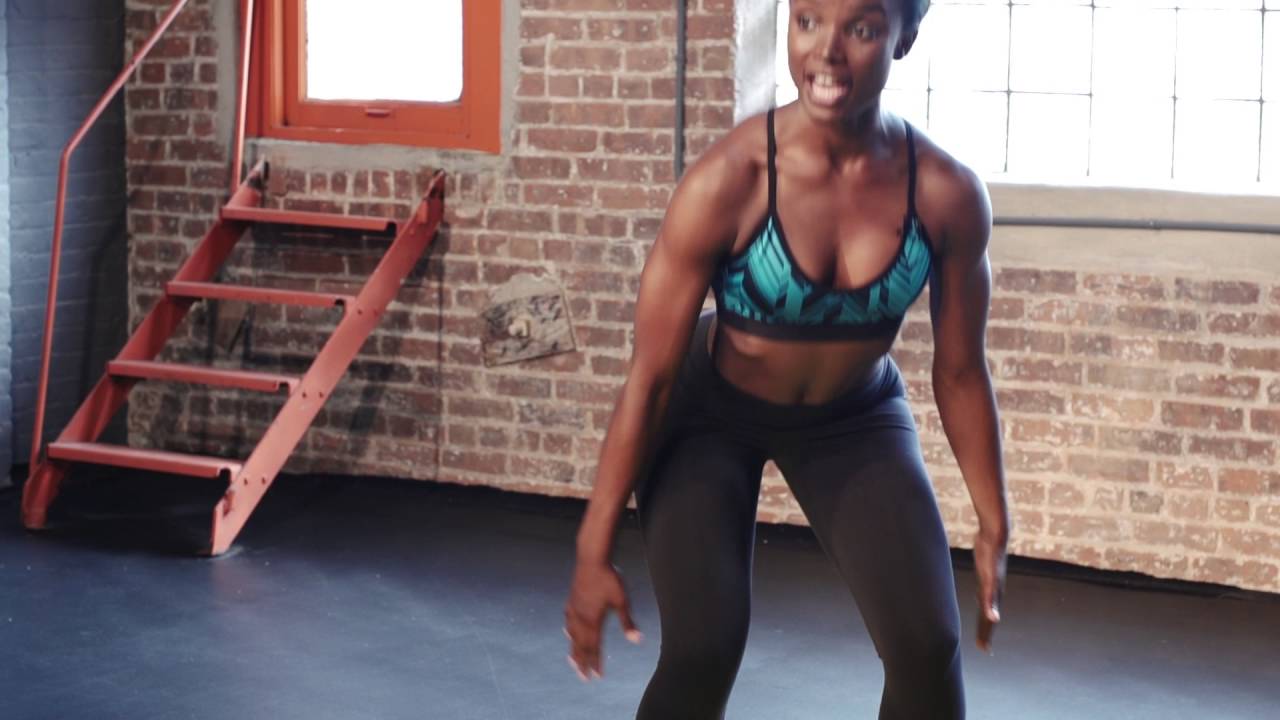
Time: 45sec Rest: 15sec
How to do it:
- Stand with your feet shoulder-width apart.
- Bend your knees and push your hips back to lower until your thighs are parallel with the floor, or as low as your mobility allows. Keep your chest facing forward and your knees aligned over your feet.
- Press through your heels to stand.
- Once you are stanging upright, shift your weight forward, lift your heels and raise both arms overhead.
- Return to the starting position.
Add a challenge: Replace the calf raise with a jump squat by pushing explosively off the floor at the top of each rep.
“This compound movement targets the primary lower-body muscles in a single fluid motion,” says Brooks.
“The squat builds glute and quad strength, and the calf raise at the top adds an ankle stability and calf endurance component.”
3. Reverse lunge to knee drive
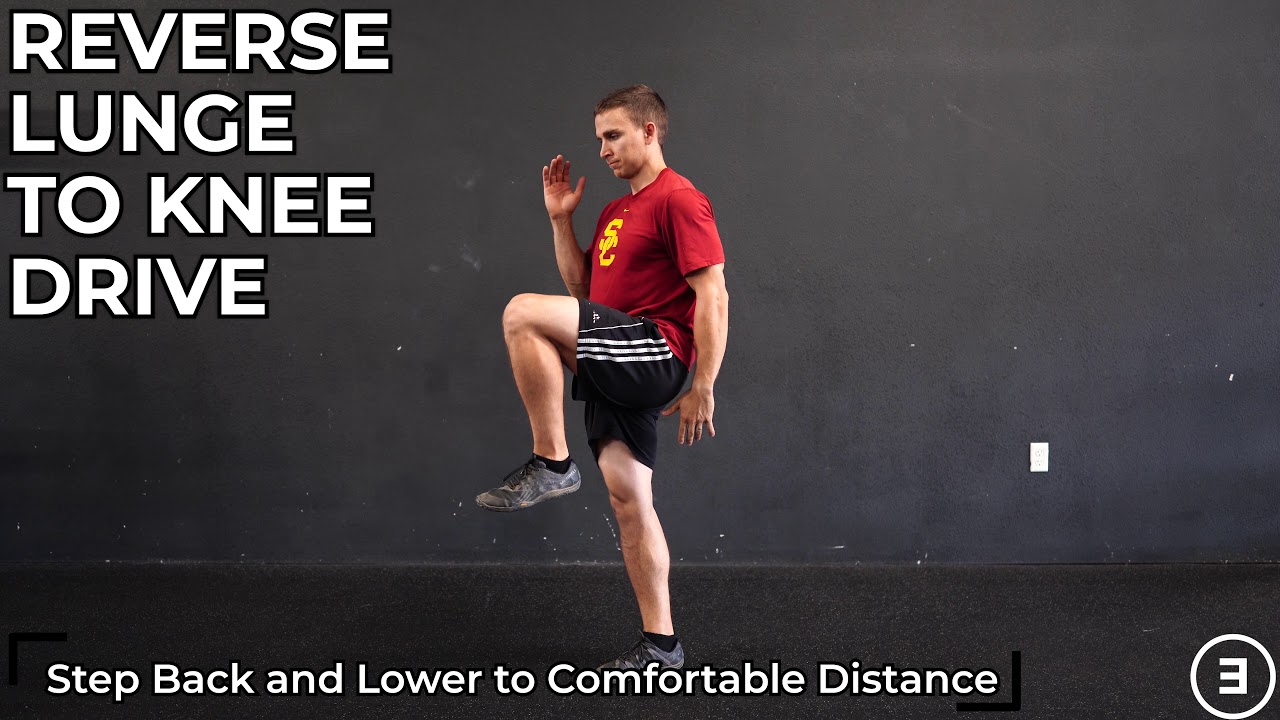
Time: 45sec Rest: 15sec
How to do it:
- Stand with your feet shoulder-width apart.
- Step your right foot back and bend both knees to lower until both knees are bent to 90°.
- Push through your left heel to rise, bringing your right leg forward, raising your right knee to hip height.
- Pause, then return to the starting position.
- Repeat on the other side, alternating sides with each rep.
Add a challenge: After the knee drive, transition directly into three fast high knees before switching sides.
“The reverse lunge is one of the safest lunge variations for beginners because it places less shear force on the knee,” says Brooks.
“Adding the knee drive at the top turns it into a balance and hip flexor challenge, and a natural progression into more dynamic movements. It’s unilateral (single-leg), which also develops stability and corrects side-to-side imbalances.”
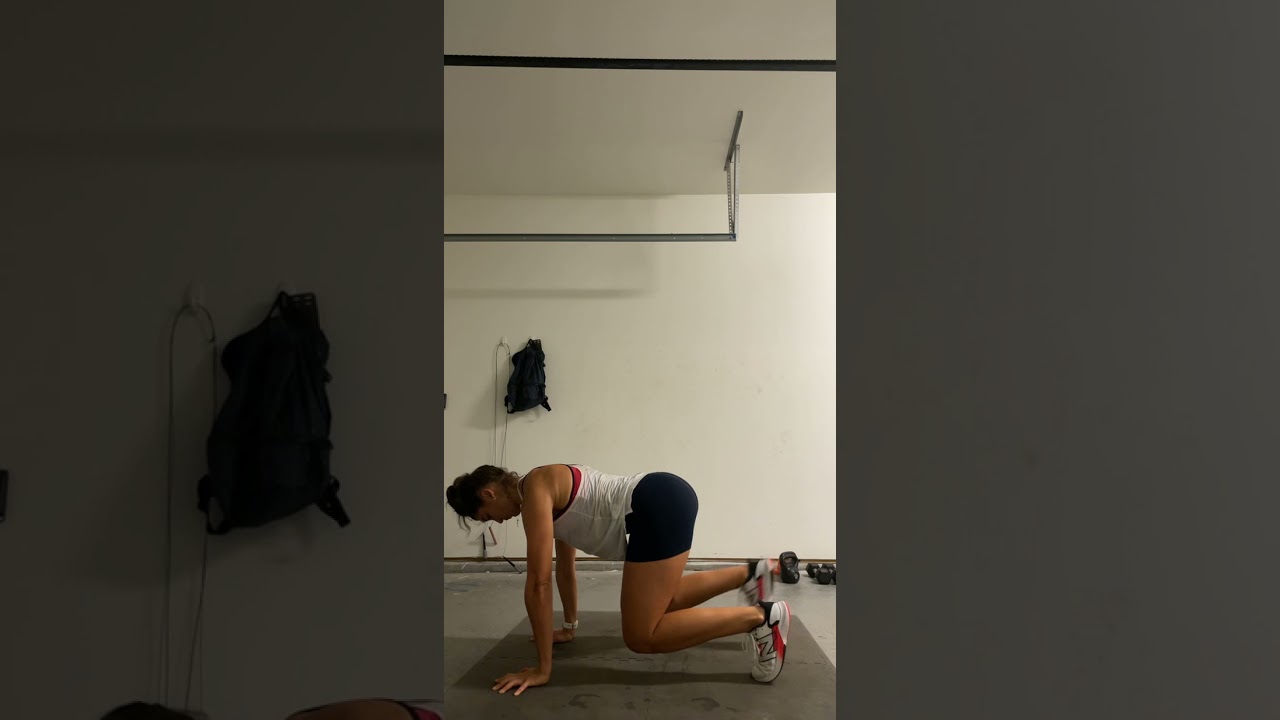
4. Bear crawl hold
Time: 45sec Rest: 15sec
How to do it:
- Begin in a high plank position with your hands under your shoulders and your legs extended behind you. Your body should form a straight line.
- Step your feet forward so that your knees are bent to 90° and are directly under your hips.
- Hold this position for a breath, then step your feet back out to high plank.
- Hold the plank for a breath, then step your feet forward into a bear hold.
- Continue, alternating between these two positions.
Modification: You can place your hands on a bench or elevated surface to reduce the pressure on your wrists and shoulders.
Add a challenge: Add a push-up each time you return to the high plank position.
“This movement trains both the superficial core—the muscles you can see—and the deep stabilizing core—the muscles that protect your spine,” says Brooks.
“Moving between a high plank and a bear crawl position demands full-body tension and coordination. It's deceptively challenging without any jumping or joint impact.”
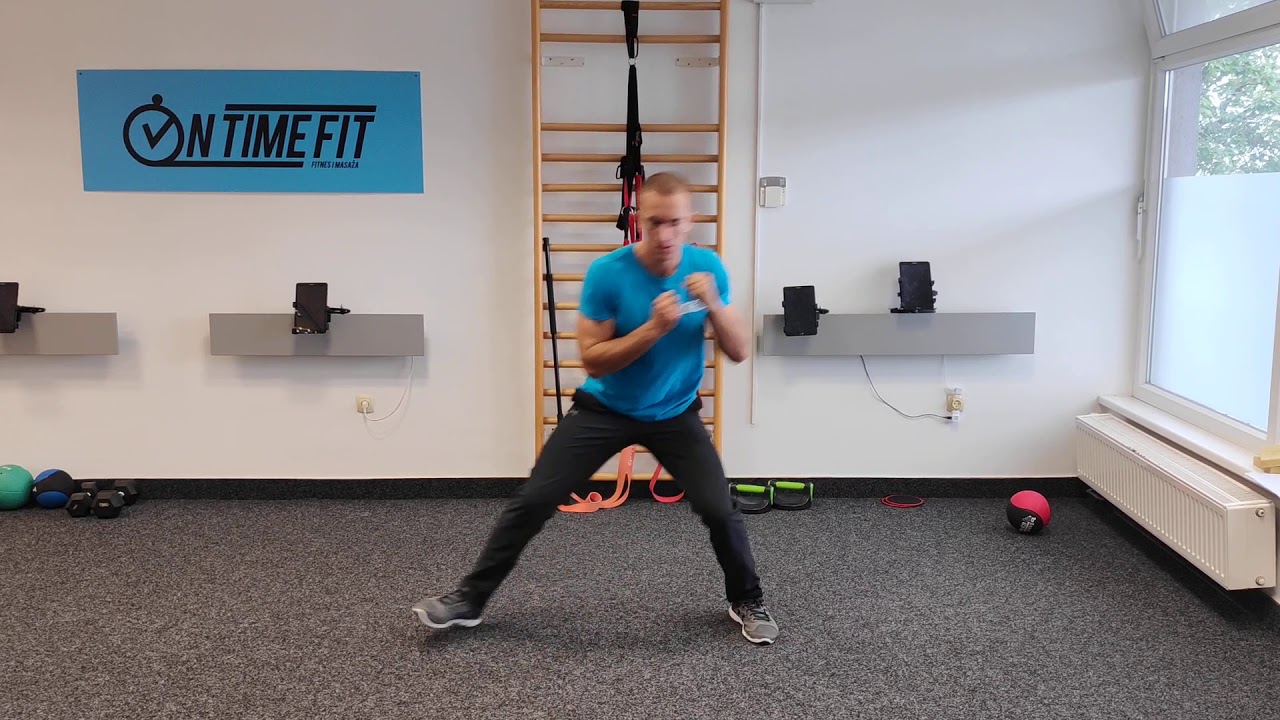
5. Lateral shuffle to rotational punch
Time: 45sec Rest: 15sec
How to do it:
- Stand in an athletic stance, with your feet hip-width apart, your knees slightly bent and your hips pushed back slightly, and your hands raised to eye level.
- Take two side steps to the right.
- Punch to the left with your left hand, pivoting on your left foot and turning your hips and torso to face right.
- Shuffle back to the left and repeat on the other side.
- Continue, alternating sides with each rep.
Add a challenge: In the final 15 seconds, drop into fast feet with alternating jabs so you are making rapid-fire punches on both sides.
“The lateral shuffle activates the glutes and inner/outer thighs in a way most exercises miss,” says Brooks.
“This exercise trains the side-to-side movement patterns that are essential for athletic function and injury prevention.
“The rotational punch at the end of each shuffle activates the obliques and trains the body to generate rotational power from the hips.”
