




Bad posture at your desk is showing up behind the wheel, warns this physical therapist—here’s how to fix it
Try these stretches to relieve muscle tension from driving


The slouching and screen-hunching habits you might pick up at your desk and on the couch could be creeping into your driving posture, warns a physical therapist.
With an estimated 242 million drivers in the US—that’s 91% of the population—it’s no surprise that so many people are suffering from musculoskeletal issues from sitting for too long, both at home and in the car.
“Driving for long periods of time can take a toll on the body in multiple ways,” physical therapist and Balanced Body educator Lindy Royer tells Fit&Well. “Reduced movement because of a sedentary lifestyle impairs circulation and gradually weakens core and hip muscles, increasing injury risk when returning to activity.
“Sitting for extended periods of time places sustained stress on the spine, reduces mobility—particularly in the postural muscles, hips and shoulders—which can lead to chronic musculoskeletal issues. Prolonged sitting has also been linked to an increase in metabolic disorders.”
Royer says she commonly sees drivers with tight hip flexors and hamstrings from sitting, as well as tight chest (pectorals) from holding the wheel. Neck muscles are commonly strained too, due to the forward position of the head and arms, she adds.
All of this can lead to weakened muscles, reduced mobility and pain, says Royer. Prolonged driving can even impact your ability to breathe, she adds.
“When the hands grip the steering wheel too tightly, tension is created up the system—from the forearms, front of the arm, chest, upper shoulders, neck, and into the jaw,” she explains.
“With sustained and prolonged periods of driving, the shoulders elevate, the head moves forward and there are more compressive forces on the neck.
“This pattern contributes to forward head posture, and shortening in the chest and neck. The deep neck flexors and postural muscles of the thoracic spine become less active and shoulder mechanics are compromised. Breathing becomes less efficient—a contributing factor in cardiovascular and nervous system regulation problems.”
Royer suggests trying the exercises below to counteract some of the damage from sitting for too long. She also recommends taking breaks from driving every 90 minutes.
Articulated bridge with ball
Sets: 1 Reps: 5, followed by 10 pulses
How to do it:
- Lie on the mat with your knees bent and feet flat on the floor.
- Move your right arm out to the side and keep a neutral spine (imagine you have a slight arch which is only big enough for a ladybug to fit under).
- Push through your heels and raise your hips, making a straight line with your body from your shoulders to your knees.
- Slowly lower down to the floor and repeat for five reps. Then come back up and pulse - do micro movements up and down - while holding that straight line position. Lower down and hug the knees.
- Then put a small Pilates ball under your butt and press into the ball with your tailbone and do gentle pulses up and down (5 reps).
- Then do the pelvic clock by rocking your pelvis back and forth, then around in a circle like the numbers on a clock. Aim for three reps in each direction.
“This bridge series counteracts the position of sitting by opening the front of the hips, pelvis and torso and strengthens the back of the body,” says Royer. “The pelvic mobility work creates movement in the hips, pelvis and lower back—areas that remain in a fixed position when driving.”

Modified swimmers
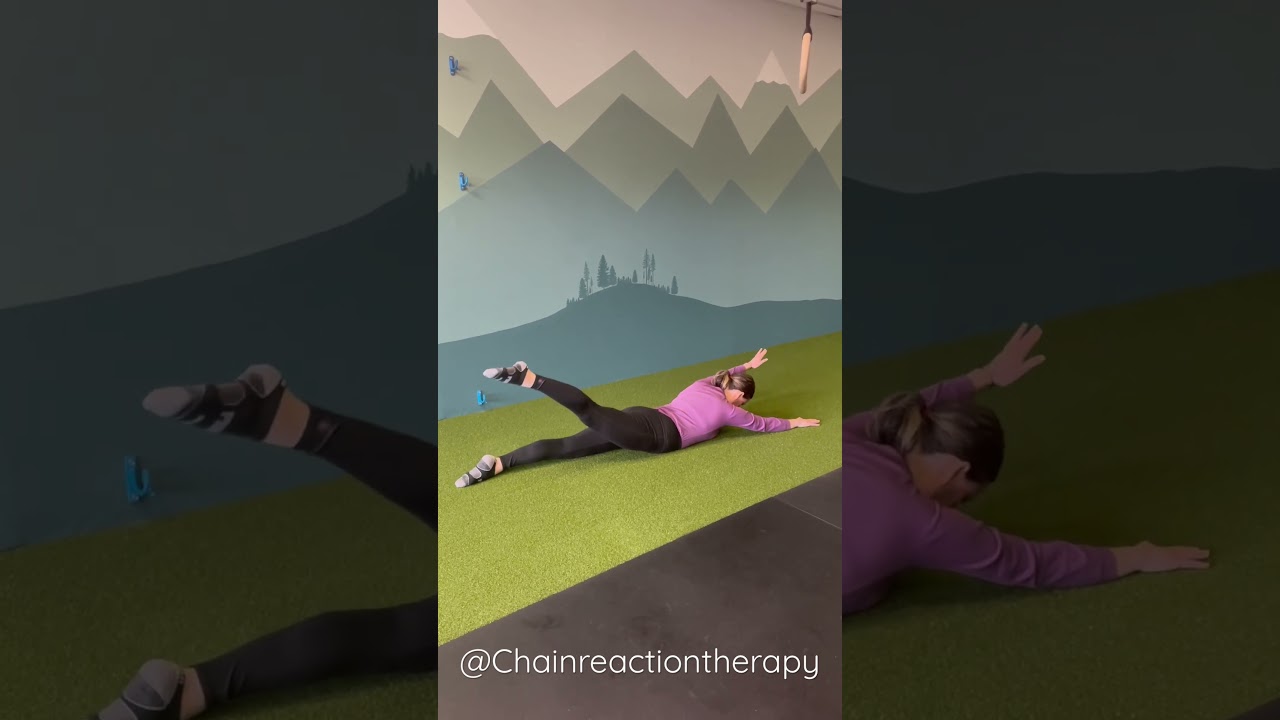
Sets: 2 Reps: 8-10 each side
How to do it:
- Lie face down on a mat with your arms extended in front of you, with your hands wider than shoulder-width apart and thumbs pointing up.
- Set your legs as wide as needed to ensure your lower back is comfortable.
- Align your head with your upper back, and direct your gaze toward the front of the mat.
- Raise your right arm and left leg just off the floor.
- Pause for a second, then lower with control.
- Repeat on the other side.
- Continue, alternating sides with each rep.
“This exercise lengthens the muscles in the front of the body and opens the back of the knees,” says Royer, “a perfect counter-balance to driving.
“Because the exercise is done face down, the back of the body is strengthened as it works against gravity. Additionally, the swimming exercise adds an element of rotation—a movement lacking when sitting.”
Hip flexor stretch
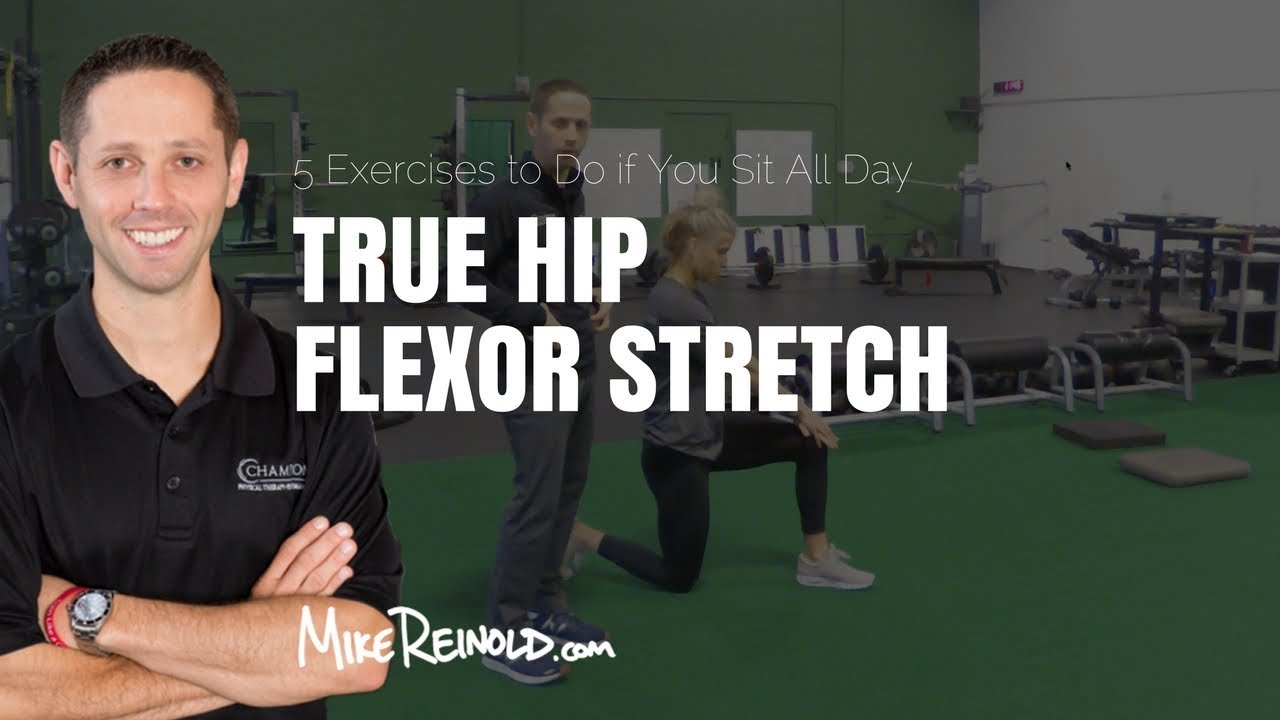
Sets: 2 Hold: 30sec
How to do it:
- Kneel on the floor and step your left foot forward.
- Put your hands on top of your left knee.
- Tilt your pelvic forward, and squeeze your glutes and abs as you lean forward, feeling a stretch in the front of your right hip.
“Keep the pelvis slightly tucked to prevent the lower back from excessive extension and to increase the stretch in the front of the hip,” says Royer.
“The hip flexor stretch opens the front of the pelvis, hip and thigh. These areas become shortened with prolonged driving.”
Posterior shoulder band activation
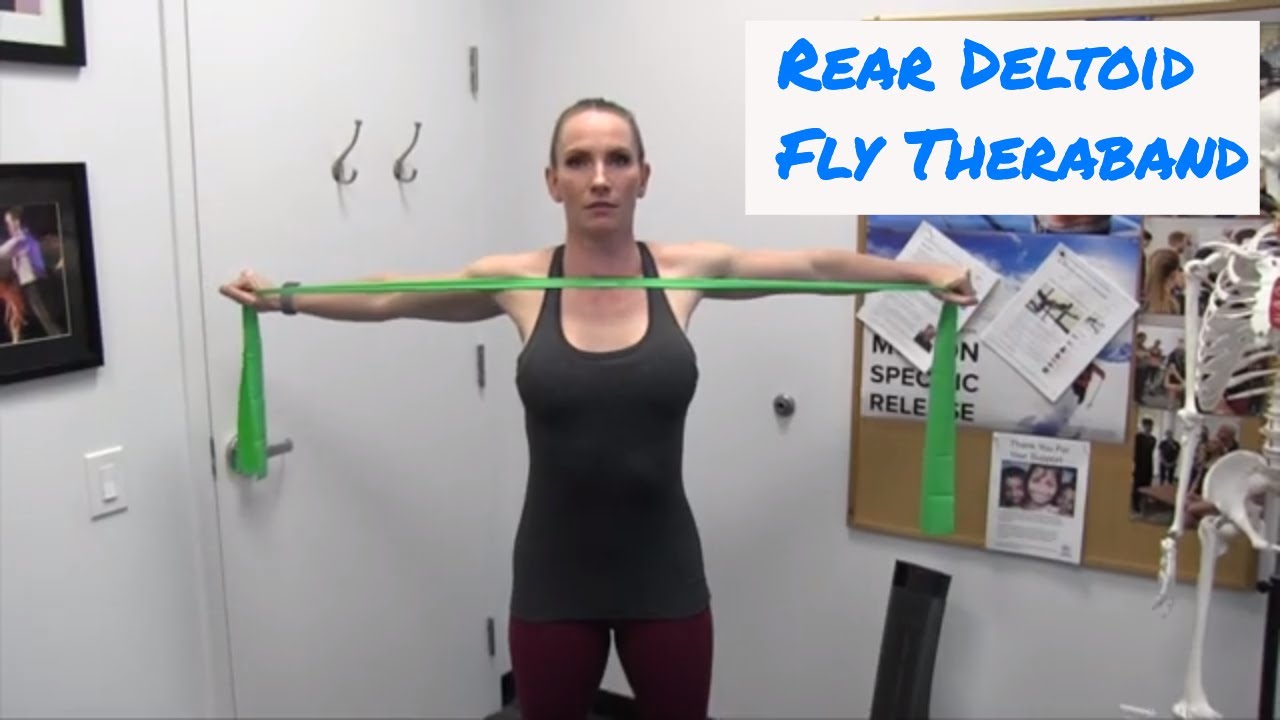
Sets: 2 Reps: 5-10, working up to 15-20
How to do it:
- Hold a long resistance band in both hands about shoulder-width apart at chest height.
- Move your arms out to the sides to pull the band apart slowly.
- Squeeze your shoulder blades together as you pull the band apart—imagine you are trying to pinch a pencil with them in the middle of your back.
- Reverse the movement back to the start with control.
“Choose a resistance that allows you to fully open the arms with some challenge,” says Royer. “Wrap the resistance band around the hands a couple of times for safety.
“This exercise, which can be done sitting or standing, counter-balances bad posture from driving by opening and lengthening the chest, front of the shoulders and elbows.
“It strengthens the back of the shoulder, scapula and thoracic spine, which helps to improve posture.”

