I’m a yoga therapist and I love using this one restorative pose for better sleep
One simple pose is able to calm my anxious mind in minutes


It’s easy to think of yoga as just another workout, but this ancient practice was developed as a complete system for managing both body and mind. Although its roots go back thousands of years, it’s still something that can make a positive impact on our lives today.
If I’m having trouble sleeping or an anxious mind means I can’t settle, there’s one gentle pose I often use and recommend to my yoga therapy clients: flapping fish (matsya kridasana in Sanskrit).
This restorative bed pose is like a secret fix for calming my nervous system, especially when my mind won’t quiet down.
Physically, this pose lengthens and relaxes the front of your body while releasing tension from your lower back and hips. But the more profound effect happens through your breath—creating space in your chest allows for deeper breathing that signals to your nervous system that it’s safe to relax.
I discovered this pose about a decade ago when I was still attending in-person classes. My practice was rooted in classical yoga and my teacher would use flapping fish as a closing pose or to counter more dynamic movements and backbends.
The effect was transformative. After five or six rounds of slow breaths on each side, I experienced a nervous system settling that was almost like a natural sedative.
Since then, it’s become my go-to pose for managing sleeplessness, stress and tension, both physically and mentally. And research backs this up now, showing that yoga can improve sleep quality by activating your parasympathetic nervous system.
How to do flapping fish pose
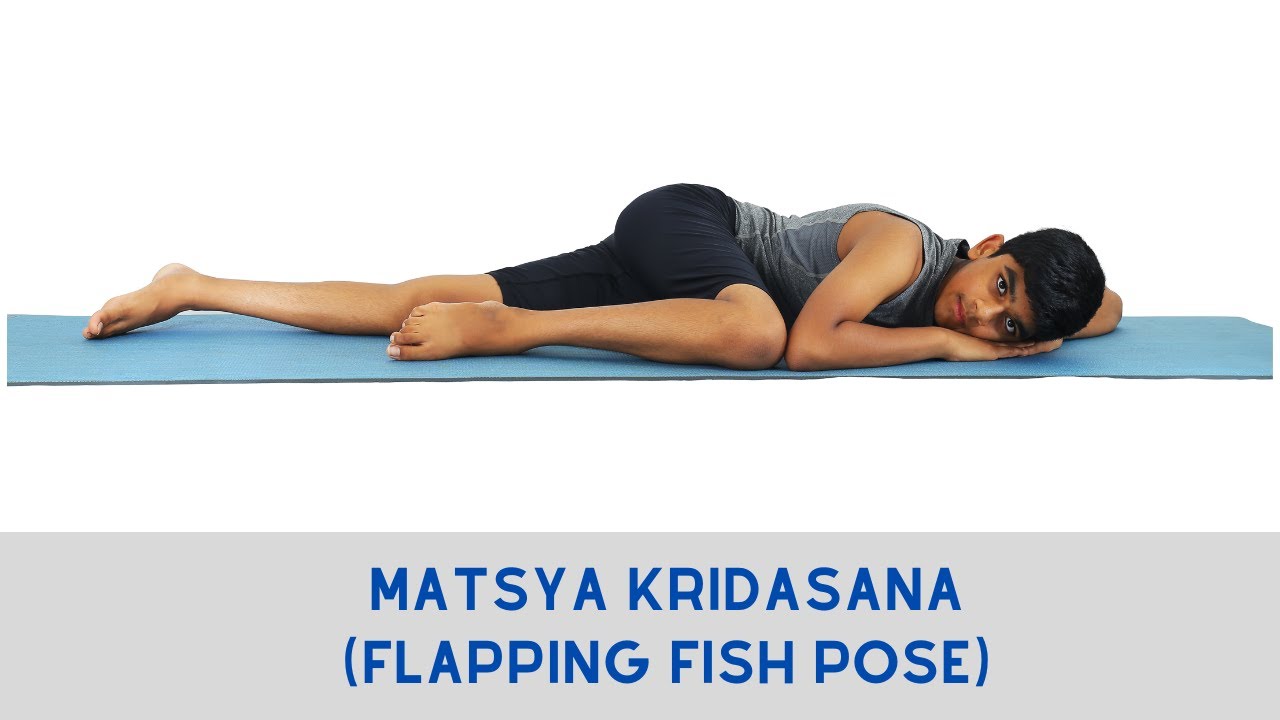
Hold: 5-6 breaths or more each side
- Lie on your front with your forehead resting on your hands.
- Bend your right knee up to the side of your body, close to your chest.
- Keep your hips connected to the floor (or bed).
- With your hands interlocked or one palm over the other as a pillow, turn your head to the right.
- Angle your right elbow down so it’s close to your right knee, while your left elbow points up.
- Make any small adjustments you need to be comfortable and close your eyes.
- Hold for five or six rounds of breath, or longer if you prefer.
- Release the posture by returning your head and hands to the starting position then releasing your leg.
- Repeat on the other side.
Teacher tips: Once in the pose, focus on the front-of-body connection and slow, deep and long breaths. Aim for the same duration or number of breaths on each side.
“The effect of chronic yoga interventions on sleep quality in people with sleep disorders: a scoping review” in Frontiers in Neurology
