


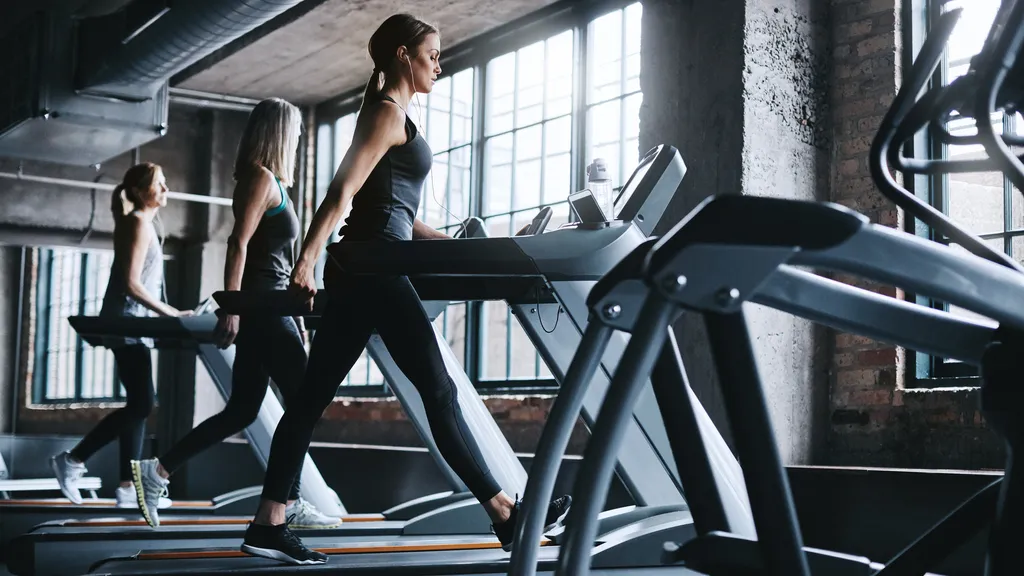


“Balance training is one of the most effective strategies for preserving independence”—a certified personal trainer shows you how
Boost core stability in just 15 minutes with this simple balance training circuit


Standing on one leg might serve as a handy method to assess your balance, but how do you improve it?
You can start to work on it with this beginner-friendly circuit designed to improve stability, designed by Jacque Crockford of the American Council on Exercise (ACE).
Fundamental to this workout—and any routine intended to boost balance—is strengthening the core, challenging coordination and working the body unilaterally (one side at a time) in a safe and controlled manner.
“A strong core helps stabilize your spine and pelvis during daily activities such as walking, climbing stairs, carrying groceries and getting up from the floor,” the ACE-certified personal trainer tells Fit&Well.
And good balance helps people “react quickly to changes in terrain or unexpected movements”, reducing the likelihood of falls and injuries as we age so we can “confidently and comfortably move through daily life”.
Crockford says this workout will develop the “multiple systems” needed to improve balance, including “muscular strength, neurological function and mobility”.
How to do the workout
All you need is a sturdy chair, bench or box to perform this balance and core circuit, making it accessible to practice at home or in the gym.
Crockford suggests aiming for two or three rounds. Each round should take approximately seven minutes, but avoid rushing and rest as required.
1. Single-leg stand

Time: 20-30sec each side
This exercise is similar to the one-legged stance test used to assess balance.
- Stand upright with your arms relaxed by your sides, looking straight ahead.
- Raise one foot off the floor, resting it against your upper calf on your standing leg.
- Aim to maintain your balance for 20-30 seconds.
Make it easier: use a wall, chair or counter for support.
Make it harder: raise your leg higher until your knee is level with your hip.
2. Heel-to-toe walk
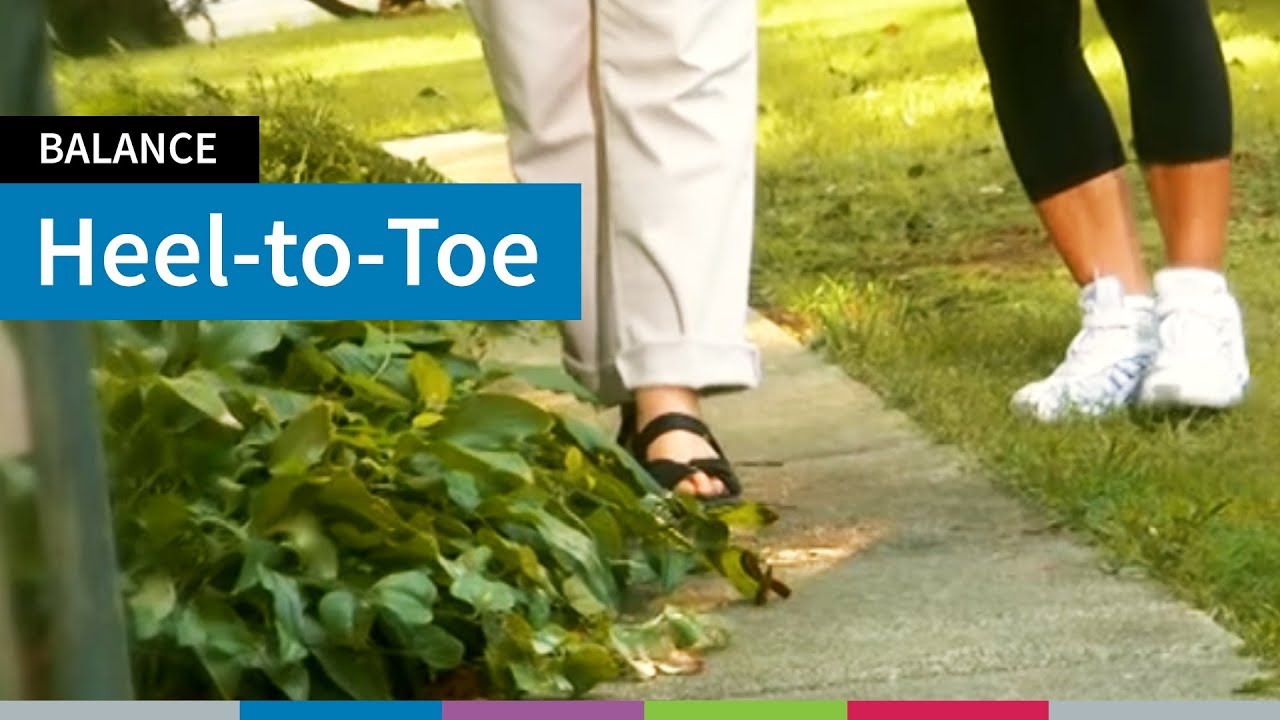
Reps: 10-15 steps
- Stand with a clear space in front of you.
- Step one foot directly in front of the other, placing your heel just in front of the toes of your other foot.
- Walk forward for 10 to 15 steps in this manner, keeping your heels and toes touching with every step.
- Move slowly and with control, maintaining an upright posture and looking straight ahead.
Make it easier: use a wall for support.
Make it harder: walk forward for 10 to 15 steps, then back to return to the start.
3. Bird dog
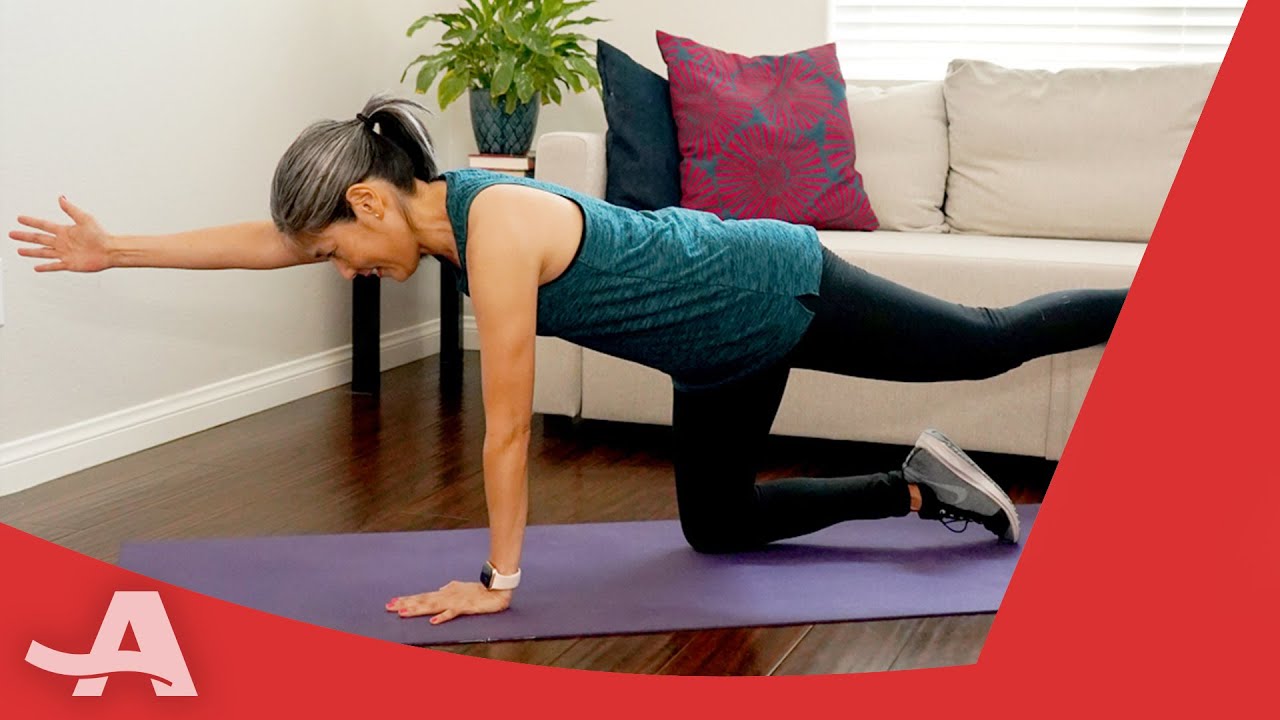
Reps: 8-10 each side
- Start on your hands and knees with your hands directly below your shoulders and your knees directly below your hips.
- Keep your spine neutral, looking at the floor between your hands.
- Extend one arm forward and your opposite leg back, to form a straight line from your hand to your heel.
- Keep your hips stable and parallel to the floor.
- Return to the starting position and repeat on the other side.
Make it easier: Extend one arm or leg at a time.
Make it harder: Pause for two seconds at the top of the movement with each rep.
4. Glute bridge
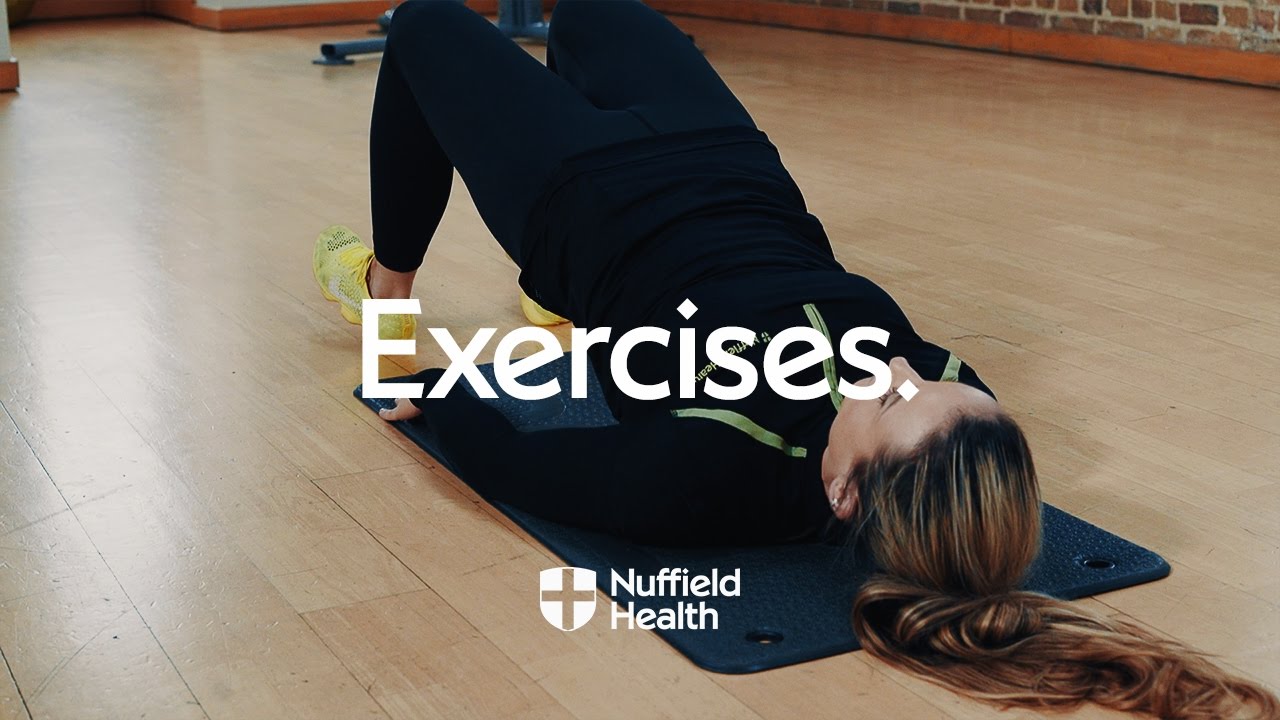
Reps: 12-15
- Lie on your back with your knees bent, with your feet flat on the floor close to your buttocks.
- Place your hands by your sides, palms facing down for extra stability.
- Gently press your lower back into the floor to engage your deep core muscles.
- Push through your feet to lift your hips until your body forms a straing line from your shoulders to your knees.
- Pause at the top of the movement, then lower with control.
Make it easier: Position your arms wider on the floor to increase stability.
Make it harder: Hold the top of the movement and alternate lifting your legs, as if marching.
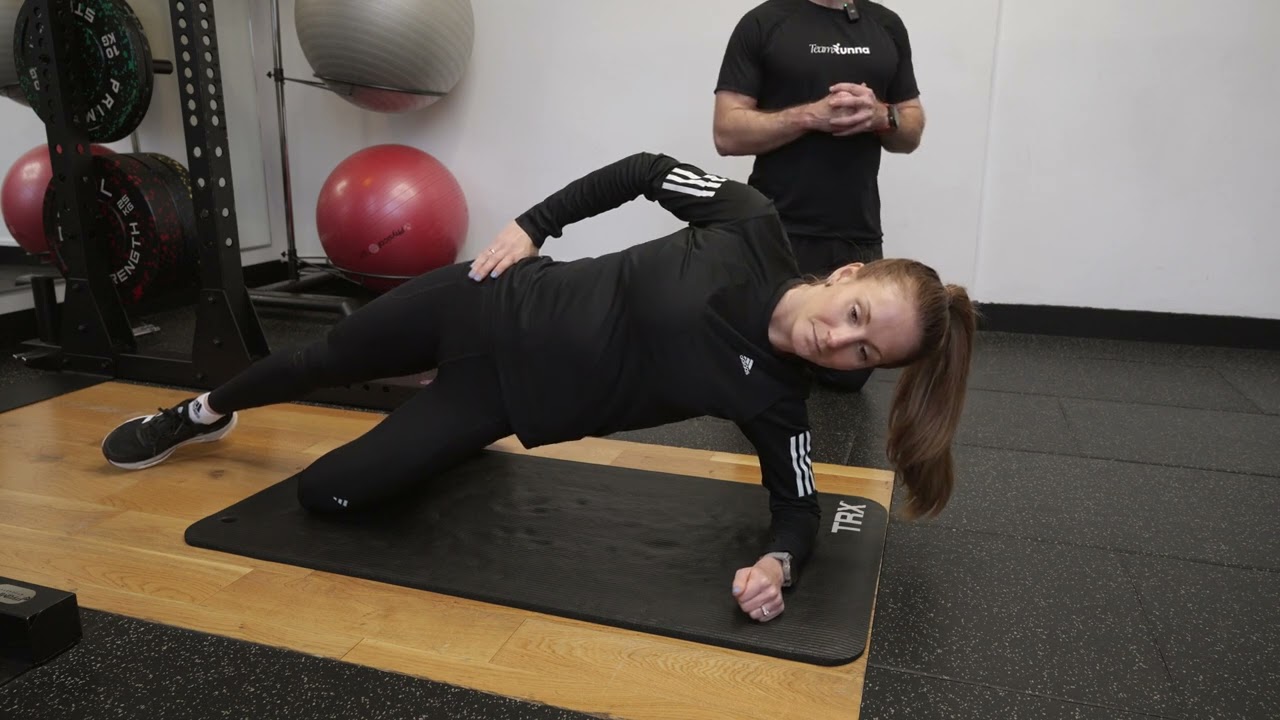
5. Side plank
Time: 15-30sec each side
- Lie on your side with your weight supported on your forearm and your legs together.
- Lift your hips to form a straight line from your head to your heels.
- Breathe normally and engage your core muscles to avoid letting your hips drop.
Make it easier: Perform this on your knees, keeping a straight line from your head to knees.
Make it harder: Lift and lower your hips for the time, while maintaining core stability.
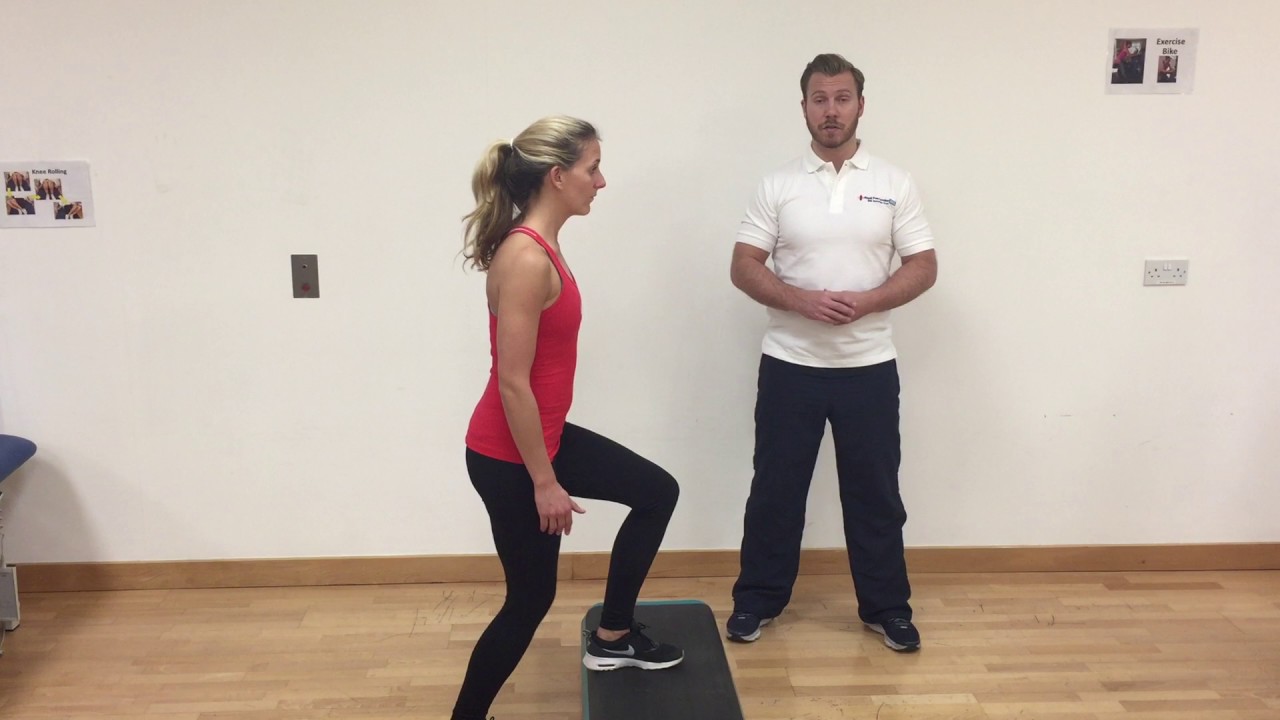
6. Step-up
Reps: 10 each side
- Stand facing a sturdy chair, bench or box.
- Place your right foot on the platform, press through your midfoot to extend your right leg and bring your left foot onto the platform.
- Step down, leading with the right foot.
- Complete all the repetitions on one side, then switch sides.
Make it easier: Use a lower step, such as the first or second step on a staircase.
Make it harder: As you step up, lift your other knee to hip height, pause briefly, then lower with control.
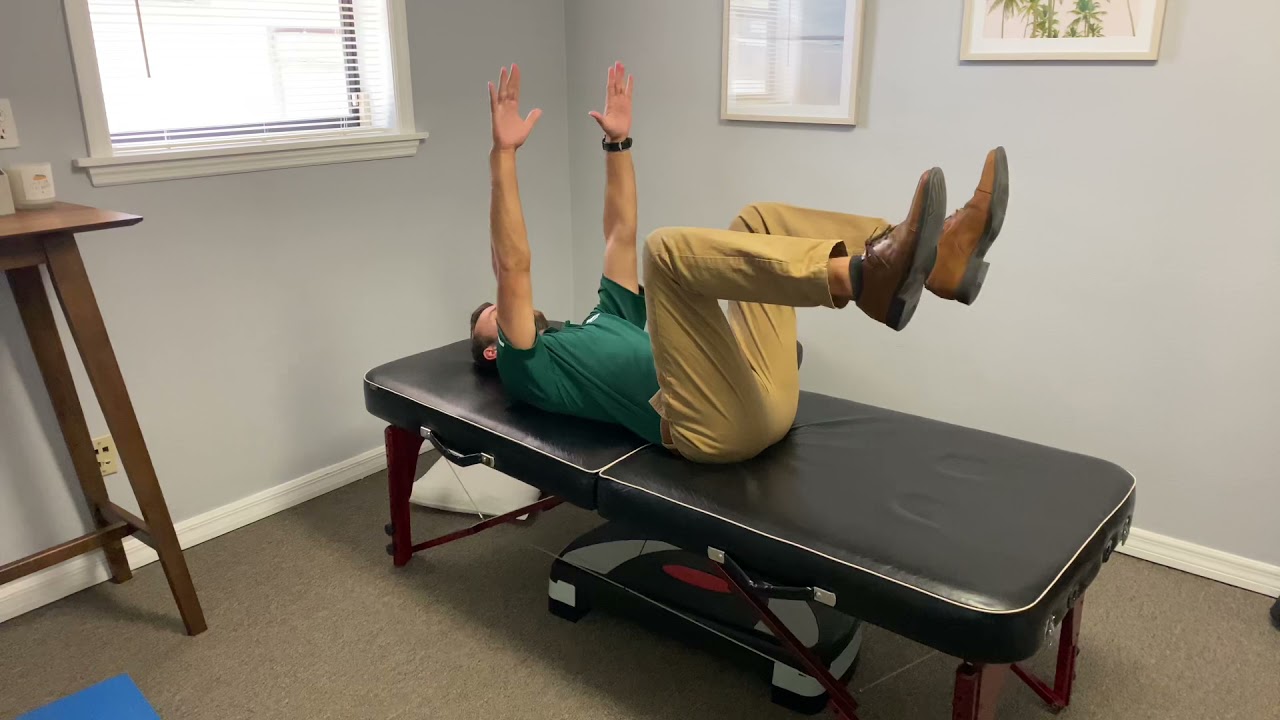
7. Dead bug
Reps: 8-10 each side
- Lie on your back with arms extended straight up and your knees above your hips, with your shins parallel with the floor.
- Keep your lower back pressed into the floor to engage your deep core muscles.
- Lower one arm behind you, until it’s just above the floor while you extend your opposite leg away from you.
- Return your arm and leg to the starting position, then repeat on the other side.
Make it easier: Extend only one arm or leg at a time.
Make it harder: Extend both arms and legs at the same time.
