Doing this one core exercise daily can improve your stability and enhance balance, according to a personal trainer
Hollow holds strengthen the deepest muscles in your core


Maintaining good full-body stability and balance becomes crucial as we get older. If you’re nearing your senior years or have just recently entered them, now is the time to focus on these vital aspects of your overall health.
The hollow hold is an exercise that addresses both stability and balance by targeting muscles that help keep us upright and supported. When I meet with a personal training client for the first time, I usually start with some version of this move.
“Hollow holds strengthen the abdominals, hip flexors, and trunk stabilizers, which work together to increase movement efficiency,” says Laura Baehr, DPT, PhD, a rehabilitation scientist, physical therapist and assistant professor at Drexel University.
“They can be incorporated as a warm-up before lifting, walking or running.”
Once you’ve built up the appropriate level of strength, hollow holds can be done daily to protect your balance and stability.
How to do a hollow hold
Clear any new activity with your medical team. “Hollow holds are appropriate for most people, but those who are in acute back pain or later stages of pregnancy might want to avoid or modify this exercise,” cautions Baehr.
If you’ve never tried the exercise before, consider meeting with a certified personal trainer or physical therapist for guidance. They can correct improper form, provide modifications, and progress the exercise appropriately when you’re ready.
You’ll just need a yoga mat for this exercise. If you have difficulty getting onto the floor, consider using your bed, couch or a massage table instead.
You should also know how to engage your core before trying hollow holds.
Beginners should start by holding the position for 15 seconds, for two to three attempts, three to four times per week. When 15 seconds starts to feel easy, increase your time in five-second increments, aiming for 30 seconds in time.
As you get stronger, you can continue to gradually add both time and days. Eventually, aim to do this exercise for at least one 30-60 second attempt, five to seven times a week.
Form guide
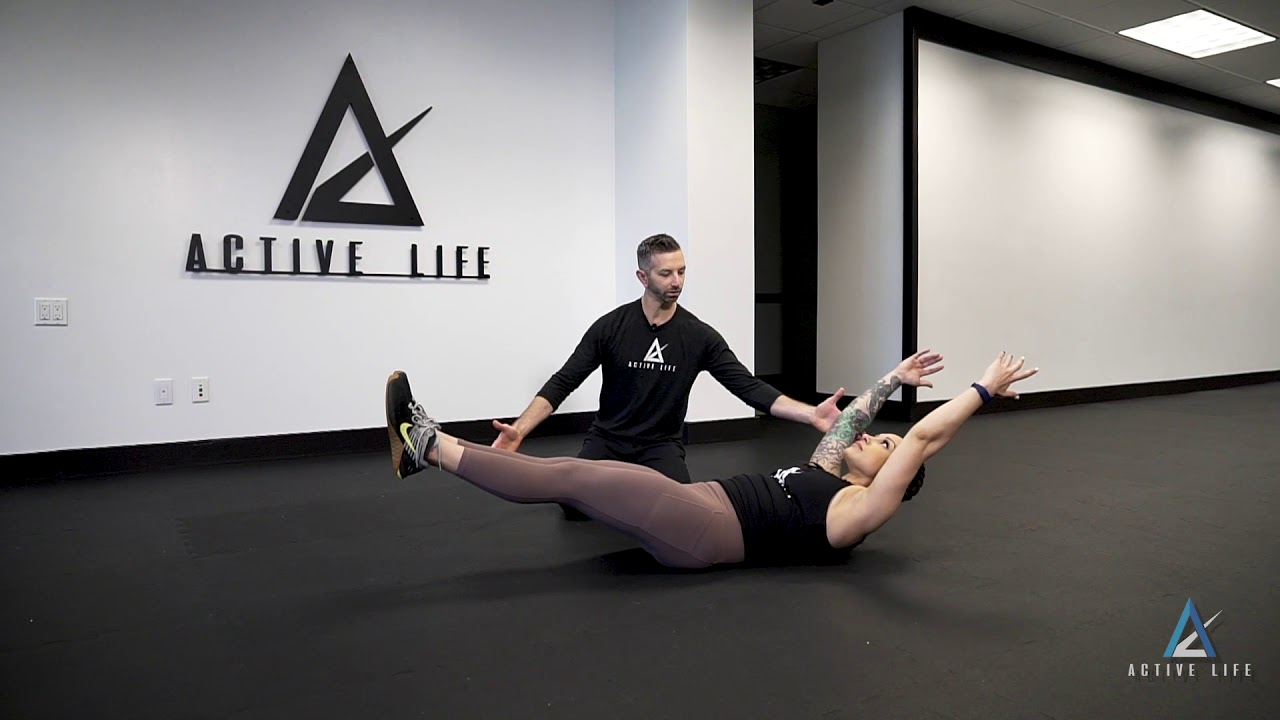
- Lie on your back with your legs extended and arms at your sides.
- Engage your core.
- Extend your arms behind your head.
- Press your lower back into the mat.
- Lift your legs off the floor, keeping them extended.
- Lift your arms, head and shoulders off the floor.
- Hold this position for time.
Tips: Avoid any excessive arching in your lower back. Keep your ribs drawn in towards the belly button. Your shoulders and neck should stay relaxed throughout the exercise. Keep your upper arms next to your ears and your chin slightly tucked.
How to modify the hollow hold
Beginners may have to work up to the standard version of the exercise.
“If you’re new to hollow holds, modify by keeping your head down and legs in tabletop position [with your knees bent to 90° and your knees directly about your hips] or extended toward the ceiling,” suggests Baehr.
You can also choose to shorten the hold time, instead of trying to hold the position for 15 seconds, start with 10 seconds. Gradually increase your time by five-second increments when you feel ready.
How to progress the hollow hold
After a while, the hollow hold may not feel as challenging. You can add a few progressions to make the exercise harder.
First, add time to your hold. Start with an additional 10 seconds, making sure that you maintain good form.
You can also try adding weight. Hold a 3-5lb dumbbell in your hands as you perform the exercise. This increases the load on your core, forcing your muscles to work harder in order to maintain the position.

Laura Baehr, PT, DPT, PhD is a physical therapist, researcher, and movement educator who is passionate about helping people move with embodied confidence. She is informed by her interdisciplinary training in rehabilitation science, physical therapy, neuroscience, and dance to center the benefits of exercise on an individual’s lived experience. Laura earned her PhD in Health and Rehabilitation Science from Drexel University, Doctor of Physical Therapy (DPT) from Temple University and dual Bachelor of Arts and Sciences in Dance and Neuroscience from Muhlenberg College.
