




I asked a Tai Chi expert for the first two things he teaches every beginner
These simple lessons will prepare you to unlock the benefits of Tai Chi


I once thought Tai Chi was just gentle exercise for old people. That was until I spoke to Mark Peters.
Peters is a Tai Chi and qigong expert based in the UK who has taught many health and fitness professionals how to apply these practices as rehabilitative tools.
He explained that Tai Chi is fundamentally a martial art, underpinned by mindful movement, breathwork and a complex system of biomechanics.
He pointed out that most people—including myself—don’t think about what their bodies are doing when they’re still or moving.
To illustrate his point, he had me try rising onto my toes in two different ways: first by simply lifting my heels and then by imagining I was pushing the floor away with my toes.
“When you think about pushing down, although you're still lifting your body, your brain tends to think more towards your feet and it often feels more stable,” Peters explains.
I noticed the difference. When I focused on pushing the floor away rather than lifting myself, my body didn’t tip as far forward.
With my first lesson learned, I asked Peters how he teaches beginners to access the level of physical awareness they need for Tai Chi.
Two Tai Chi lessons for beginners
1. Lower your center
“Where attention goes, energy flows,” says Peters.
“When people think of themselves, they imagine themselves in their head and their center shifts up,” he explains. “It puts you slightly off balance. If you lower your center, your body adjusts.
“Your knees soften, your neck feels long and it lowers the physical center of gravity and improves stability.”
2. Synchronize your movement with your breath
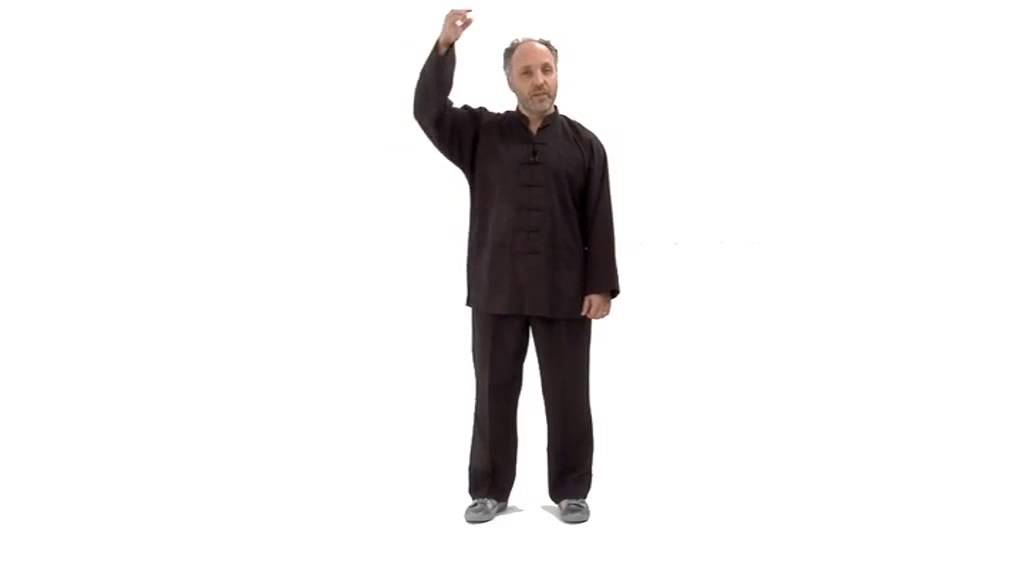
Once you have located your stable center, Peters suggests you try floating your hands up and down in sync with your breath.
“As you breathe in, your hands should gently float up as if you're in water or holding a balloon under your hand,” he explains.
“I teach that as a starting movement because people often float down and bend over rather than just floating down upright,” says Peters.
The idea is that the exercise should teach you to align your movement with the rhythm of your breath.
Once you have mastered this, you are ready to begin.
Mark Peters is a CIMSPA-accredited Tai Chi & Qigong trainer, working with the UK’s National Health Service (NHS) to implement Tai Chi as a rehabilitative practice.
He teaches Tai Chi for fall prevention and also offers it as a rehabilitative practice for those recovering from cardiac issues and those with chronic obstructive pulmonary disease (COPD).
He wrote the Tai Chi and qigong CPD standards for the Register of Exercise Professionals (REPs) in 2010 and led the team developing the national standards with the Chartered Institute for the Management of Sport and Physical Activity (CIMSPA) in 2022.
