





I’m a personal trainer who works with seniors, and this is the one core exercise I think people in their 30s and 40s should do more often for healthy aging
Doing dead bugs with a Swiss ball trains the deepest muscles of your core, those responsible for stability and balance


I work with many clients aged over 65 in my role as a certified personal trainer, and I’ve learned that no matter your current age, one of the best things you can do is train with healthy aging in mind.
Focusing on core strength and stability before you reach your senior years is crucial.
But I see plenty of people in their 30s and 40s just doing standard abdominal moves like crunches and sit-ups, rather than exercises that more efficiently target deeper core muscles like the transverse abdominis and internal obliques. Dead bugs with a Swiss ball is one such exercise.
“Dead bugs with a Swiss ball are a great option for training the core, building positional awareness, and improving motor control,” says Jason Levine, PT, DPT, SMA, founder and doctor of physical therapy at Focused Physio.
“I like this exercise especially for people in their 30s and 40s because it gives them another way to add variability into their routines,” he continues.
“The Swiss ball gives the body feedback and creates a slightly different challenge. You have to maintain pressure into the ball while moving opposite limbs, controlling your breath, and keeping your spine and pelvis steady.
“It makes the movement more about coordination and control rather than just pushing through reps.”
If you’ve got a yoga mat and a Swiss ball, you can give this exercise a try for yourself.
How to do dead bugs with a Swiss ball
Inform your doctor before trying any new exercise. Depending on your specific health history, your medical team may suggest alternatives or advise you to skip it altogether. “This exercise should be modified or avoided by anyone with acute low back pain, symptoms traveling down the leg, recent abdominal, hip, or spine surgery, significant pelvic floor symptoms, or anyone who has been advised not to lie on their back,” cautions Levine. “Pregnant and early postpartum individuals may also need modifications. As with any exercise, it should feel like controlled effort — not pain, pressure, or pinching.” Dead bugs with a Swiss ball may not be appropriate for all fitness levels. If you’re a beginner, consider meeting with a certified personal trainer first to learn proper form. They will be able to offer modifications if necessary, and give you guidance on how to build strength and endurance.
You’ll need a yoga mat and medium-sized Swiss ball, like Trideer ball on Amazon.
The ball should be a size that allows you to keep your arms aligned over the shoulders and your knees aligned over the hips.
A 19-24in diameter ball should work for most people, but you may need to adjust that depending on your anatomy.
Be sure you know how to engage your core before attempting this exercise.
Start by doing one set of 8-10 repetitions on each side, two to three times per week. As you get stronger, you can aim for up to three sets of 12-15 repetitions on each side.
Dead bugs with a Swiss ball can be done on their own, as part of a full core-focused workout, or as a warm-up for other exercises.
How to do it
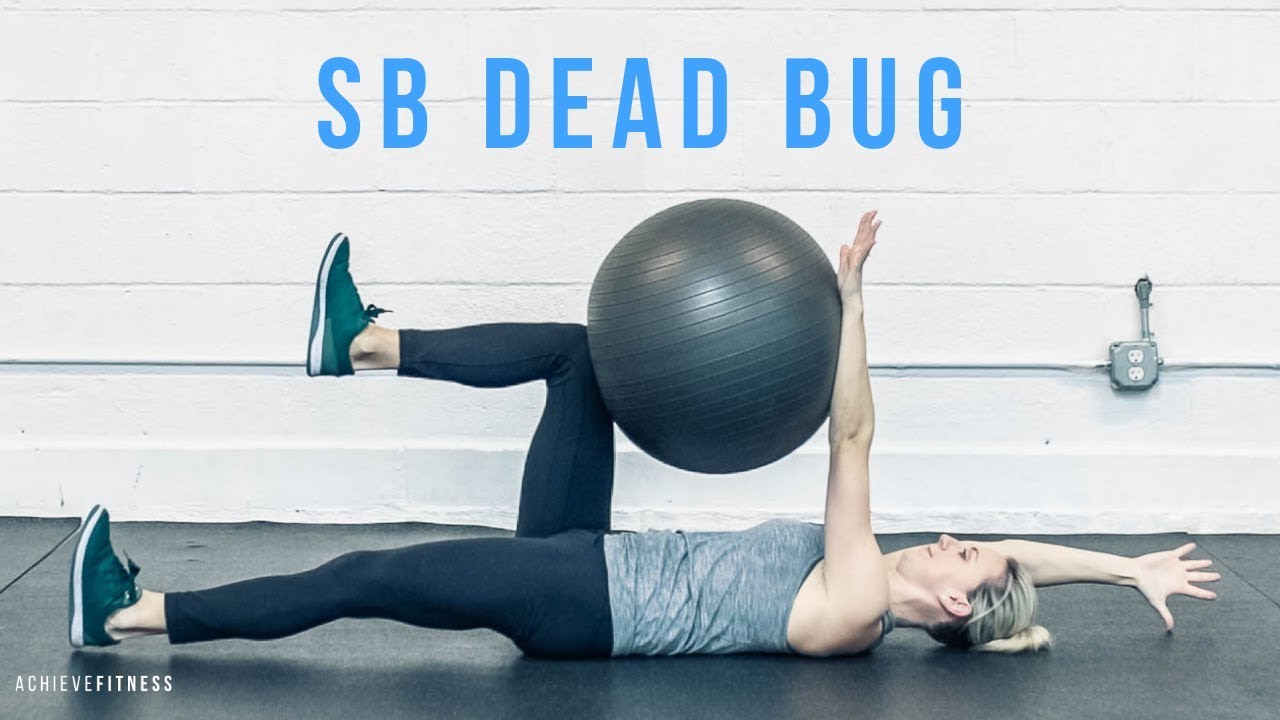
Sets: 1-3 Reps: 8-15 each side
- Lie on your back with your arms and legs raised, with a 90° bend at your hips and knees.
- Place a Swiss ball between your thighs and arms so it’s held above your torso.
- Engage your core.
- Lower your left arm and, lower and extend your right leg until they are just above the mat, keeping the ball in place between your right arm and left leg.
- Pause briefly.
- Bring your left arm and right leg back to the starting position.
- Lower your right arm and left leg towards the mat, keeping the ball in place with your left arm and right leg.
- Pause briefly.
- Bring your right arm and left leg back to the starting position.
- Continue alternating between the two sides.
Tips: “Keep your ribs relaxed down, lightly brace through the core, and avoid letting the low back arch away from the floor,” Levine says.
“Move slowly, and only go as far as you can while staying controlled. The movement should feel smooth and connected, not forced.
"If you lose pressure on the ball, your back arches, or you feel tension in your neck or hips, shorten the range of motion.”
Modifications for Swiss ball dead bugs
If you’re unable to keep proper form, you can try the exercise without alternating between sides. Complete all repetitions on one side before moving to the other.
You may find it hard to keep the ball in place on your initial attempts. Try doing a standard dead bug without the ball first to get the hang of the movement.
You can also practice heel taps and supine marches to build strength in the deep core, then move on to the dead bug with Swiss ball when you’re ready.
Progressions for Swiss ball dead bugs
Once the Swiss ball dead bug starts to feel easy, you can add a looped resistance band around your feet to increase the demands placed on your core.
You can also try swapping the Swiss ball for a weighted medicine ball, or try the dead bug holding light dumbbells instead.

Jason Levine, PT, DPT, SFMA, is the founder and Doctor of Physical Therapy at Focused Physio. He helps active adults move better, recover from pain and injury, and build the strength and mobility they need to stay active.
