A personal trainer recommends this three-move stretch routine to all her senior clients, and they can all be done either seated or standing
Improve your mobility and flexibility without having to get on the floor


Many of my over-60s clients struggle with stiff muscles and restricted joints, but getting onto the floor for traditional stretches can often be difficult. Fortunately, there are ways you can improve your mobility, increase your flexibility and prevent injury while staying upright.
When I work with a senior client who has mobility concerns, I always recommend the following three standing and seated stretches that open up common stiff spots. Doing them on a regular basis can improve your range of motion and prevent pain and injury.
Best of all, you don’t have to be over 60 to benefit. If you’ve got a chair nearby, you can give them a try for yourself—no matter your age.
How to do the stretches
These stretches are appropriate for all fitness levels, but check in with your doctor before trying them, especially if you’re dealing with any current or chronic injuries.
Proper positioning is important when stretching, so if the stretch doesn’t feel right, consider meeting with a certified personal trainer for guidance.
You’ll just need a chair and an open doorframe for these moves.
Start by holding each stretch for 15 seconds. When the area starts to feel less stiff, you can increase your hold time to 30-45 seconds.
These stretches are safe to do every day, but try them three or four times a week at first. Add on additional days gradually as your flexibility improves.
Stretching should feel slightly intense but never painful. If you feel pain when doing any of these stretches, stop and see your doctor before proceeding.
1. Standing hamstring stretch
Time: 15-45sec each side
- Stand with your feet hip-width apart.
- Bend your left knee slightly and place your right heel on the floor in front of you.
- Hinge forward from your hips and carefully move your butt back.
- You should feel a stretch in the back of your right thigh.
- Hold for time, then repeat on the other side.
Trainer tips: You should feel this stretch in the hamstring and calf muscle of your front leg. If you’re in the right position but don’t feel a stretch, bend your back knee further until you feel the stretch.
Hold on to a chair or the wall for balance, if needed. This stretch can also be done with the foot elevated on a raised platform, or in a seated position.
2. Doorway chest stretch
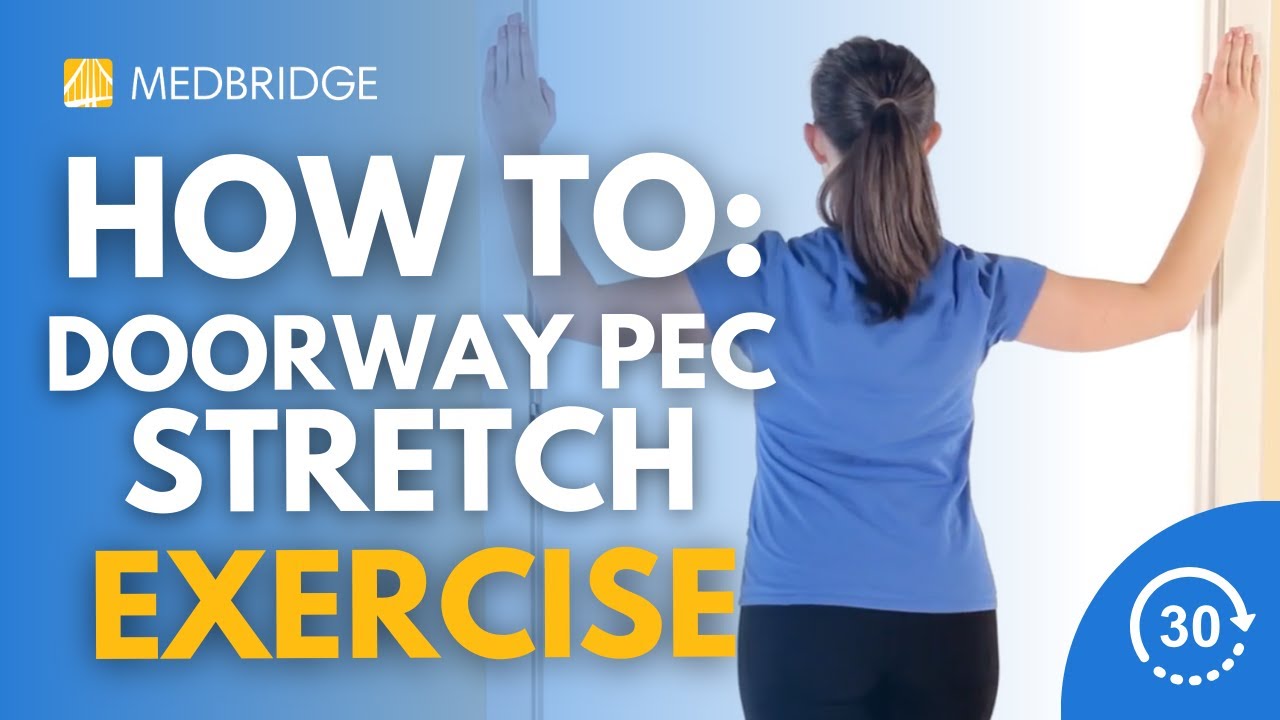
Time: 15-45sec
- Stand in front of an open doorway.
- Place your forearms on either side of the doorframe, with your elbows bent at 90°.
- Step forward until you feel a stretch in your chest.
Trainer tips: Keep your elbows slightly below the shoulder joint. Relax your shoulders and neck. Avoid any arching through your lower back.
3. Seated figure four stretch
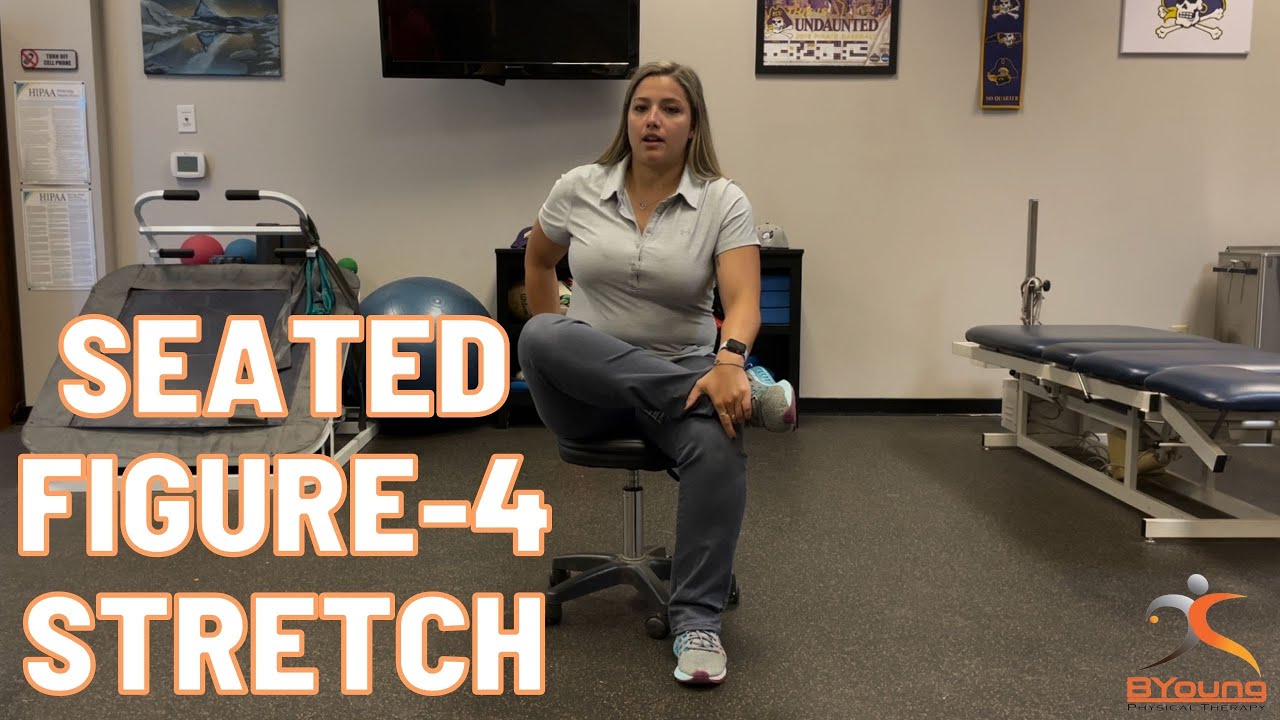
Time: 15-45sec each side
- Sit in a chair with your feet hip-width apart.
- Lift your left leg and place your left shank on your thigh just above your right knee.
- Press down gently on your left knee.
- Lean your chest and torso forward.
- Hold for time, then repeat on the other side.
Trainer tips: You should feel this stretch in the hip of the crossed leg. If you feel the stretch before pressing down on the knee or leaning forward, skip these steps and hold in this position. When your flexibility improves, you can add those steps back for a deeper stretch.
