


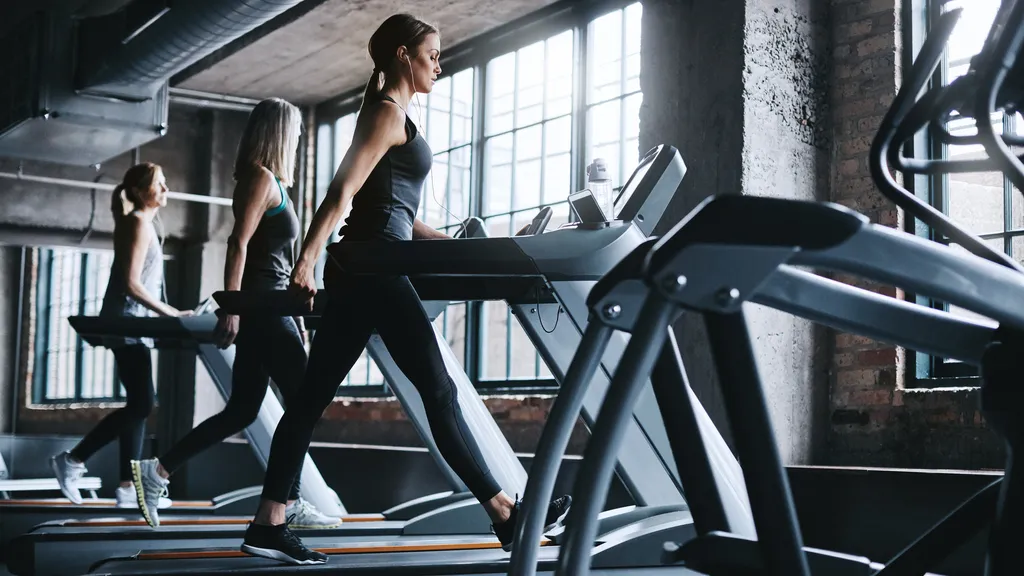


Over 60? A personal trainer says these are the core exercises you should be doing every day to stay stable
Lessen the risk of falls with these three moves


Balance is a major concern for my personal training clients aged 60 and above. While serious falls become more common as we age, there are ways to lessen the risks.
Core training is essential for maintaining proper balance, which can help prevent falls and injury.
The muscles of our core support our pelvis and spine, keep us upright, and stabilize the entire body during movement. The stronger and more conditioned they are, the steadier we’ll be.
Getting onto the floor for traditional core exercises, like sit-ups and planks, can be difficult for many of my senior clients. In those cases, I give them the following three moves that work the core while standing.
They’re appropriate for all fitness levels, can be done daily, and just require a light or moderately heavy resistance band, like the ones in this resistance band set on Amazon.
Before you start
It’s important that you know how to engage your core before attempting this workout. In addition to a resistance band, you’ll also need a section of bare wall. You may want a chair close by for balance, as well.
Be sure to check in with your medical team before starting any new activity.
It’s very important to do these exercises with correct form. If you’re unsure of how to perform the movements, consider meeting with a certified personal trainer. They can provide guidance, modifications and progressions where necessary.
How to do this standing core workout
Aim to do one set of these exercises three or four times per week at first. When that starts to feel easy, keep adding another day until you’re able to do the exercises every day.
You can then progress the difficulty of the individual exercises. Start by holding the wall plank for 15-30 seconds, as you build strength and stamina, slowly increase your plank to 30-45 seconds.
For the Pallof press, start with eight to 10 reps using a light resistance band (15lb or lighter), working up to 12-15 reps, then start using a moderately heavy resistance band (15-35lb).
With the standing bird dog, start with eight to 10 reps and work up to 12-15 reps. As your strength improves, you can stay balanced on one foot for longer, or hold small weights in each hand.
The next step with all the exercises is to increase the number of sets you’re doing to two, and then three.
1. Wall plank
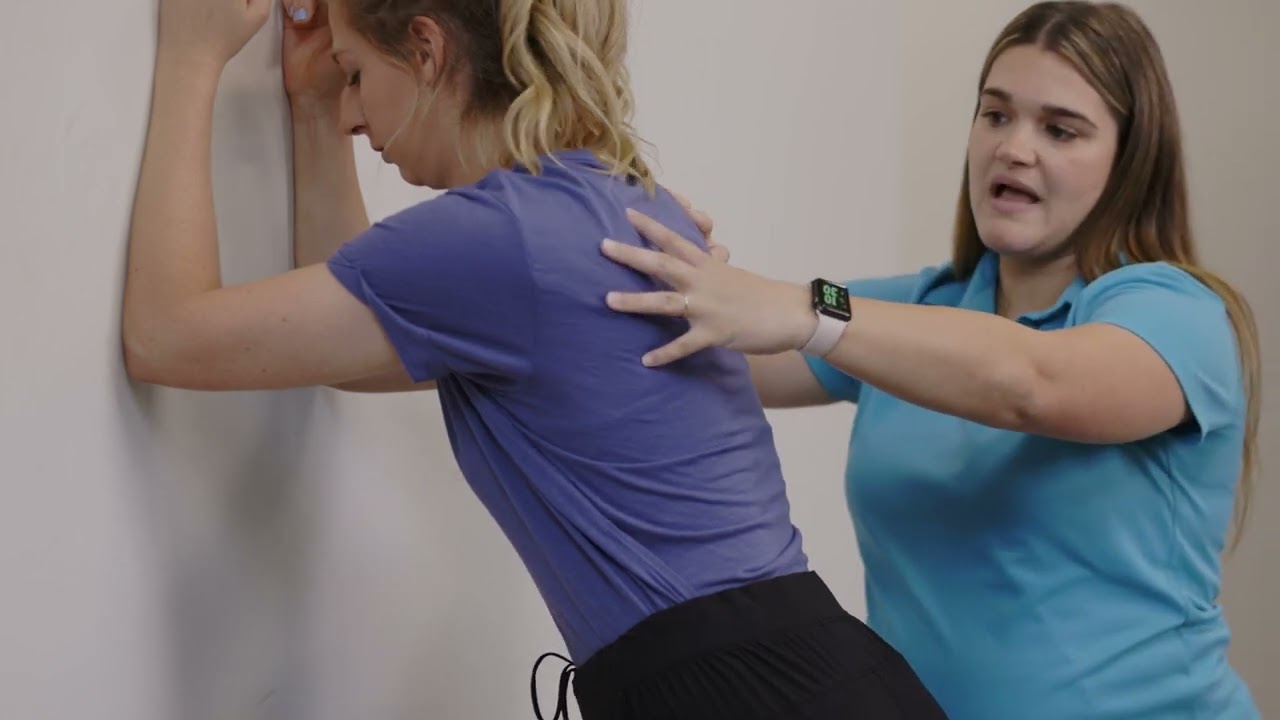
Sets: 1-3 Time: 15-45sec
- Stand facing the wall with your feet hip-width apart.
- Take a step back away from the wall.
- Engage your core.
- Lean forward and place your forearms against the wall, with your elbows aligned with your shoulders.
- Align your shoulders, hips and ankles, so your body forms a straight line from your head to your feet.
- Hold for your target time.
Trainer tips: The plank is one of the most basic yet effective deep core exercises. Don’t let your hips stick out behind you, keep them in line with the rest of your body.
If the standard position feels too challenging, straighten your arms and place your hands against the wall instead. You can also widen your stance.
If the standard form doesn’t feel challenging enough, you can step your feet further away from the wall. You can also bring your feet closer together for a more narrow base of support.
2. Pallof press
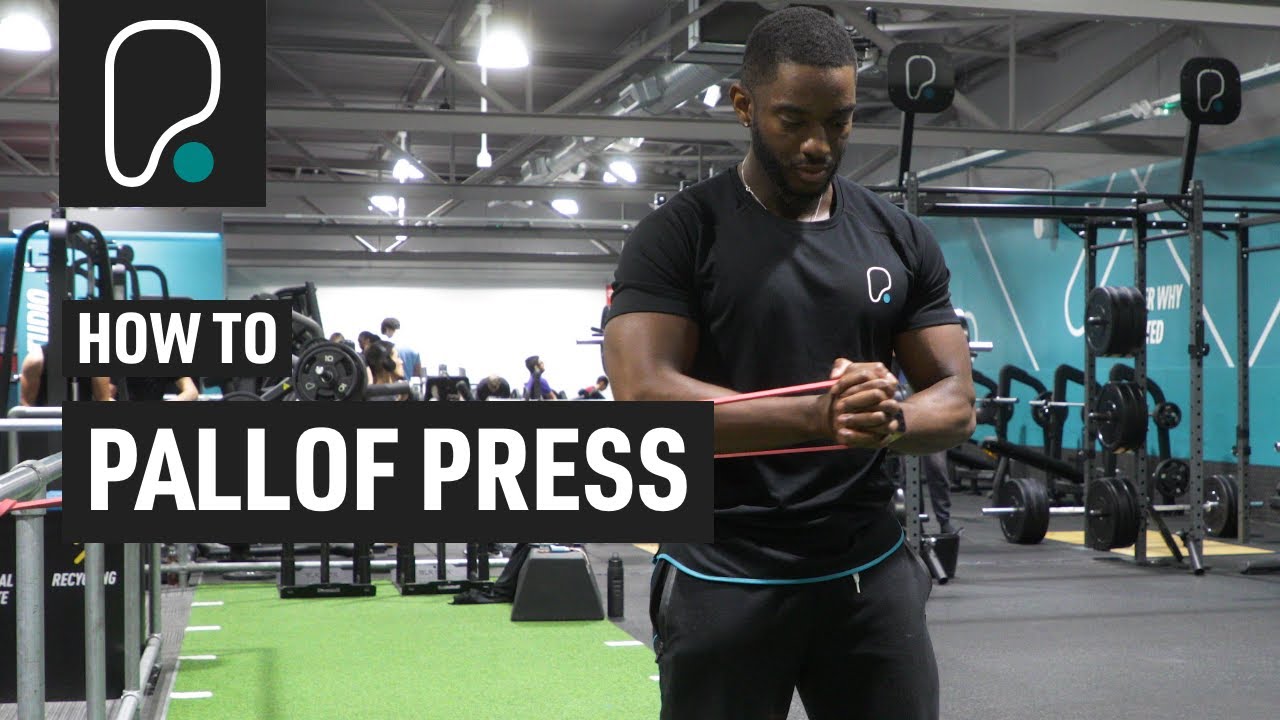
Sets: 1-3 Reps: 8-15 each side
- Loop a long resistance band around a strong anchor point, like a stair railing.
- Stand side on to the anchor point, holding the ends of the band in both hands in front of your chest, underneath your breastbone.
- Step away from the anchor point until the band is taut.
- Engage your core.
- Extend your arms in front of you, keeping your torso still, resisting the rotational pull of the band.
- Pause briefly.
- Bring your hands back to your torso.
- Complete all your reps on one side, then switch sides.
Trainer tips: This is an anti-rotational exercise, meaning it trains your core to resist rotational forces and stops your body from twisting to one side.
As you extend your arms in front of you, you’ll feel the pull from the resistance band get stronger. Be sure to keep your body square and don’t allow the hips or torso to twist towards the anchor point.
If you’re having trouble, step closer to the anchor point. This will lessen the resistance on the band. As you get stronger, step further away from the anchor point or use a heavier band.
3. Standing bird dog
Sets: 1-3 Reps: 8-15
- Stand tall and engage your core.
- Step your left foot in front of your right.
- Lean forward, placing most of your body weight into your left foot.
- Lift your right leg behind you, and at the same time reach your left arm overhead.
- Pause briefly.
- Lower your right leg and left arm.
- Complete all your reps on one side, then switch sides.
Trainer tips: The bird dog trains balance, coordination, and the core all at once. Stay steady over your standing leg and keep your hips and shoulders aligned. If balance is an issue, grab onto a chair for support. You can also choose to gently tap your back toe onto the floor instead of lifting the leg.
