I’m a personal trainer who works with seniors—these three moves can help protect your hips and spine
Strengthening your lower body and core can help prevent injury


Hip and back injuries become more prevalent as we age, but strengthening the appropriate areas of the body can help prevent some common issues.
When I start working with a beginner-level senior client, I always include the following three exercises as a part of their routine.
These moves target the glutes, legs, and deep core muscles—all of which support the pelvis and spine, and stabilize the entire body during movement.
Additionally, these exercises can counteract bone density loss, muscle atrophy and poor balance—all pressing concerns for those over 60.
The exercises are appropriate for all fitness levels and easy to adjust based on your abilities. If you’ve been curious about starting a fitness regimen, these exercises are a good place to start—even if you’re not a senior.
While these exercises are doable for most, you should always get clearance from your doctor before introducing new activity. Proper form is also crucial. Consider meeting with a certified personal trainer to learn the moves correctly. A trainer can also provide further modifications and progressions when necessary.
How to do this workout
Before trying this workout, make sure you know how to engage your core muscles.
Start by performing one set of 10 reps for each of the exercises. Once that starts to feel easy, bump your reps up by one at a time until you reach 15, then graduate to two sets of 10. Slowly work your way up over time to two to three sets of 12-15 reps, two or three times per week.
All you need is a yoga mat and a chair for this workout. After you’ve built up some strength, you can try using a loop resistance band (like one of these) for the glute bridges, and light dumbbells (like this) for the chair squats and supine heel taps.
The three exercises are as follows:
1. Glute bridge
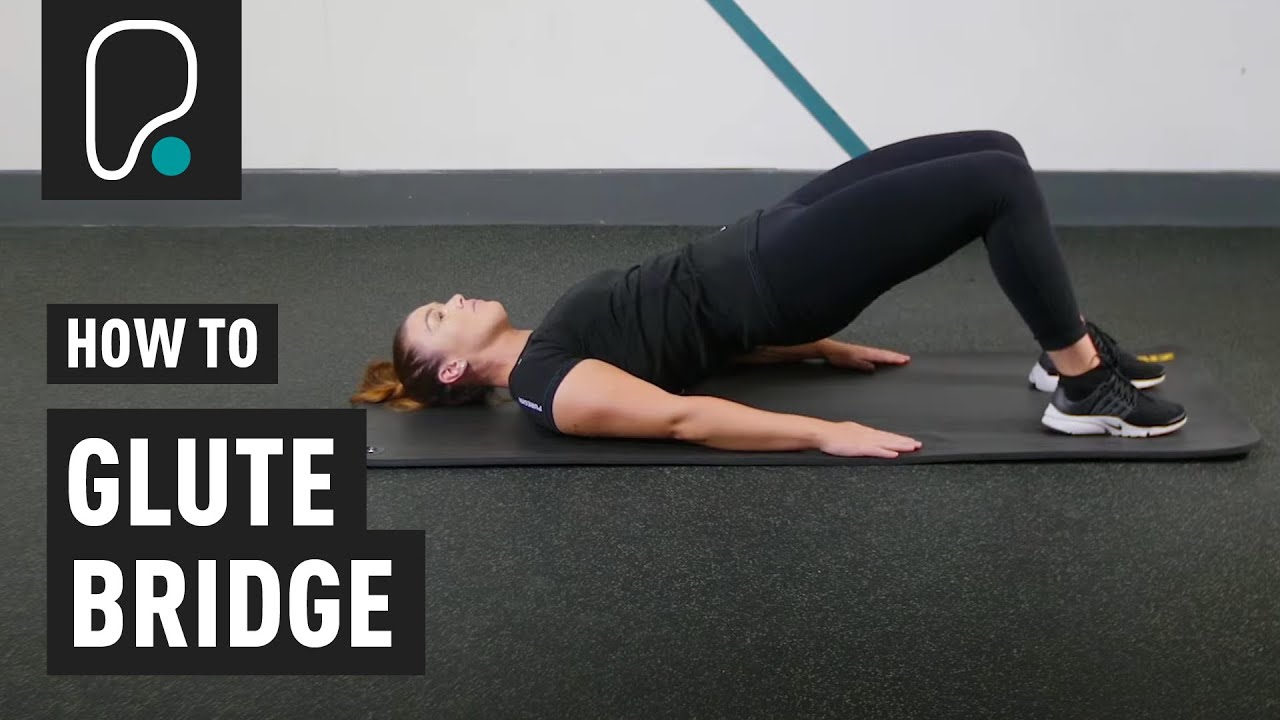
Sets: 1-3 Reps: 10-15
How to do it:
- Lie on your back with your knees bent and feet flat on the floor and your arms by your sides.
- Engage your core and squeeze your glutes, then press through your feet and lift your hips until your body is in a straight line from shoulders to knees.
- Hold briefly, then slowly lower your hips to the floor.
Trainer tips: Avoid arching your lower back when lifting your hips. Don’t let your knees collapse inward during the movement.
Make it easier: If you’re unable to get down onto the floor, try doing the glute bridge on your couch or bed. You can also reduce your range of motion, only lifting the hips to a comfortable height.
Make it harder: Place a looped resistance band around your legs, slightly above your knees. As you lift your hips, press your legs out against the band so that it stays taut throughout the movement. You can also place a light dumbbell across your hips.
2. Chair squat

Sets: 1-3 Reps: 10-15
How to do it:
- Stand with a chair behind you.
- Engage your core.
- Sit back, moving your hips behind you and bending your knees.
- Tap your butt on the seat and stand back up.
Trainer tips: Always move your hips behind you before bending your knees. Keep your chest tall and avoid leaning your torso forward. Keep your feet flat on the floor throughout the movement. Don’t let your knees collapse inward as you move.
Make it easier: Instead of tapping your butt on the chair, sit down fully before standing back up. Place another chair in front of you and hold onto the backrest for support.
Make it harder: Hold one or two light dumbbells on your chest while performing the exercise.
3. Supine heel taps
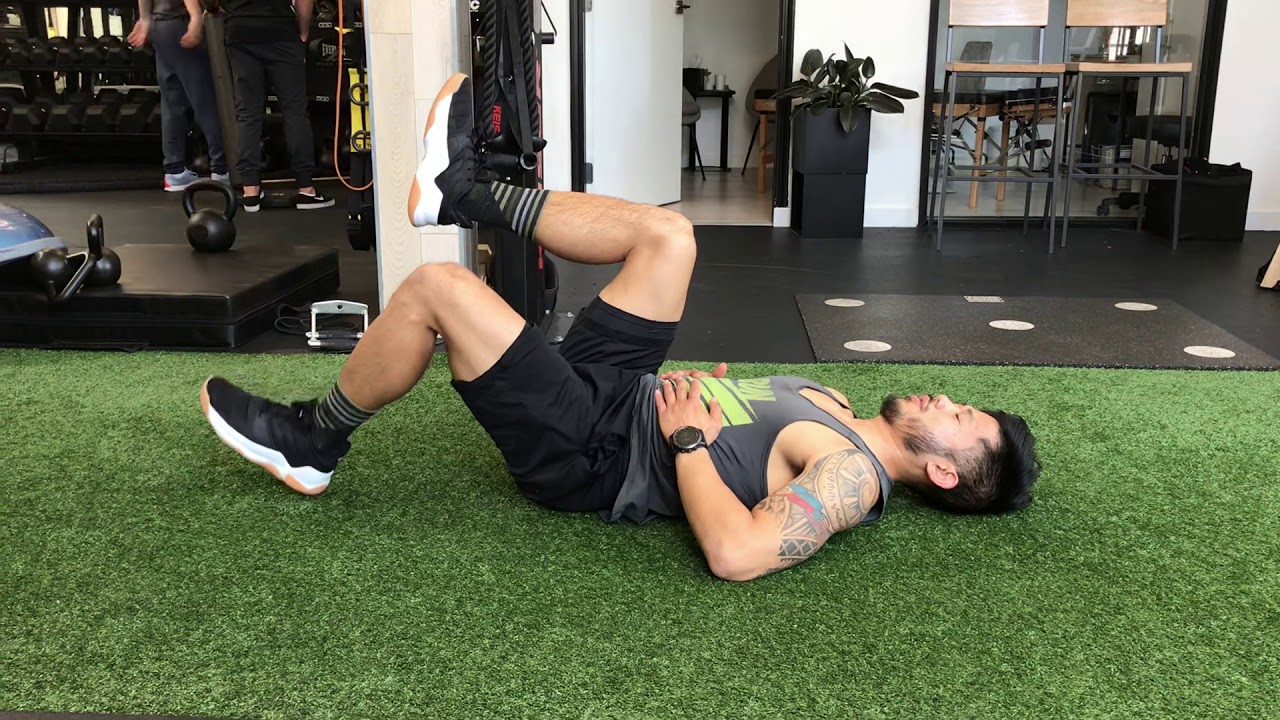
Sets: 1-3 Reps: 10-15 on each side
How to do it:
- Lie on your back with your legs raised, knees bent to 90° and shins parallel to the floor.
- Engage your core and, keeping the 90° bend in your knee, lower your left leg and tap your left heel on the floor.
- Lift your left leg back to the starting position, then repeat on the other side.
- Continue, alternating sides with each rep.
Trainer tips: Draw your belly button towards your spine as you lower each leg. Keep your lower back in a neutral position as you lower each leg.
Make it easier: If you’re unable to get down onto the floor, try supine heel taps on your bed or couch. Keep your feet on the floor and lift one knee to a tabletop position at a time, alternating between your left and right side.
Make it harder: Extend your arms above your chest, holding a light dumbbell, while you perform the exercise, as in this YouTube video.
Shop home fitness equipment
