A trainer says this is the strengthening resistance band workout you should do if you only have 20 minutes to spare
Build muscle all over without stepping near a gym


When you only have 20 minutes to work out, the last thing you want to do is waste any time traveling to the gym.
But training at home doesn’t mean you can’t get in a good strength session.
Resistance bands offer the perfect solution for those who don’t have the space for a home gym, or even dumbbells, but want to perform traditional strength training moves.
Bands use tension—instead of weight—to create the resistance needed to put stress on your muscles. They offer a compact but effective solution.
Personal trainer Logan Herlihy designed this workout for those days when you’re looking forward to the endorphin boost of a workout, but find yourself pressed for time.
All you need is a set of bands—of different levels of resistance—and a door anchor to perform this workout. You will also need a bench or a chair for the seated exercises.
Follow the order of the exercises as set out below for the best results, and aim for one set of each exercise if you only have 20 minutes with a very short rest between each move. On days with more time, aim for two sets.
1. Split squat
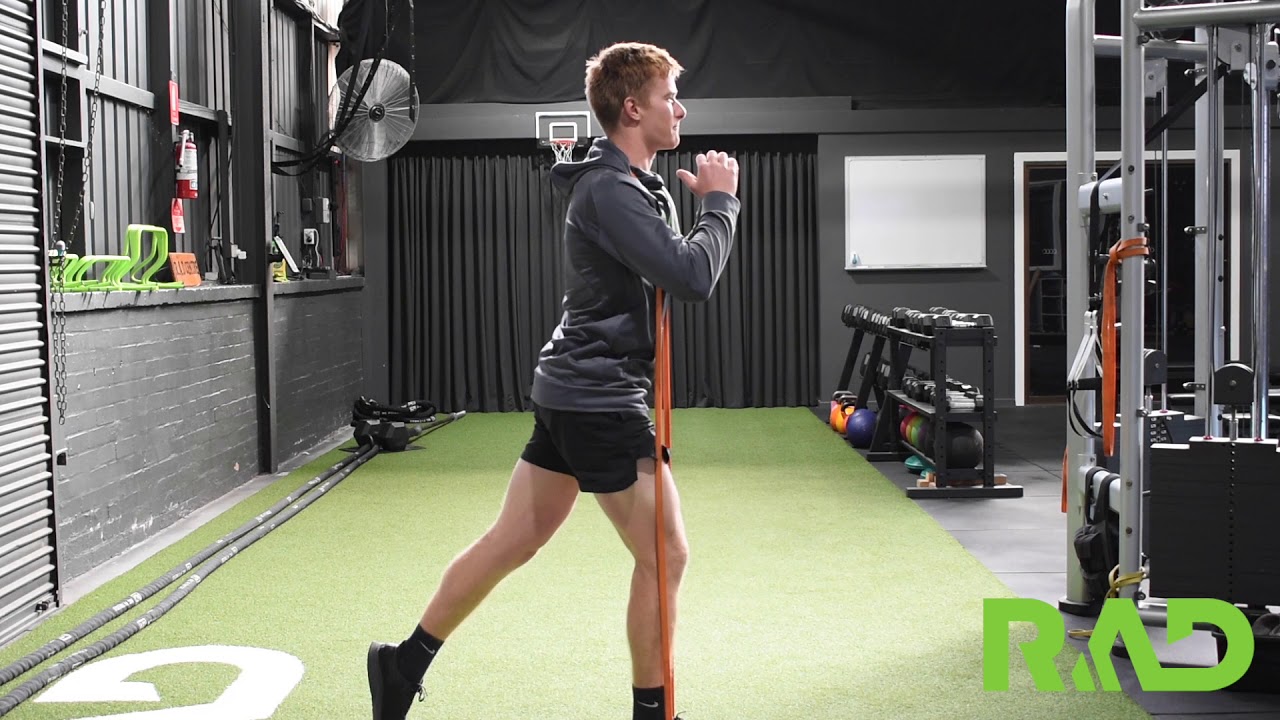
Sets: 1-2 Reps: 10-15 each side
- Stand with your feet hip-width apart, your right foot standing on the band, and your hands holding the band in front of your shoulders—with strong tension in the band.
- Step your left foot back, with your heel raised.
- Bend your knees to lower, until your left knee is just above the floor, keeping your right knee above your right foot.
- Push through your right foot to return to standing, working against the resistance of the band.
- Stop just before your right knee locks out, then go straight into your next rep.
- Complete all your reps on one side, then switch sides.
Herlihy says: “The lunge is a foundational leg movement. It targets all your muscles from the waist down, and because it is performed iso-laterally (one leg at a time), it can help correct any muscular imbalances over time.”
2. Seated band abduction
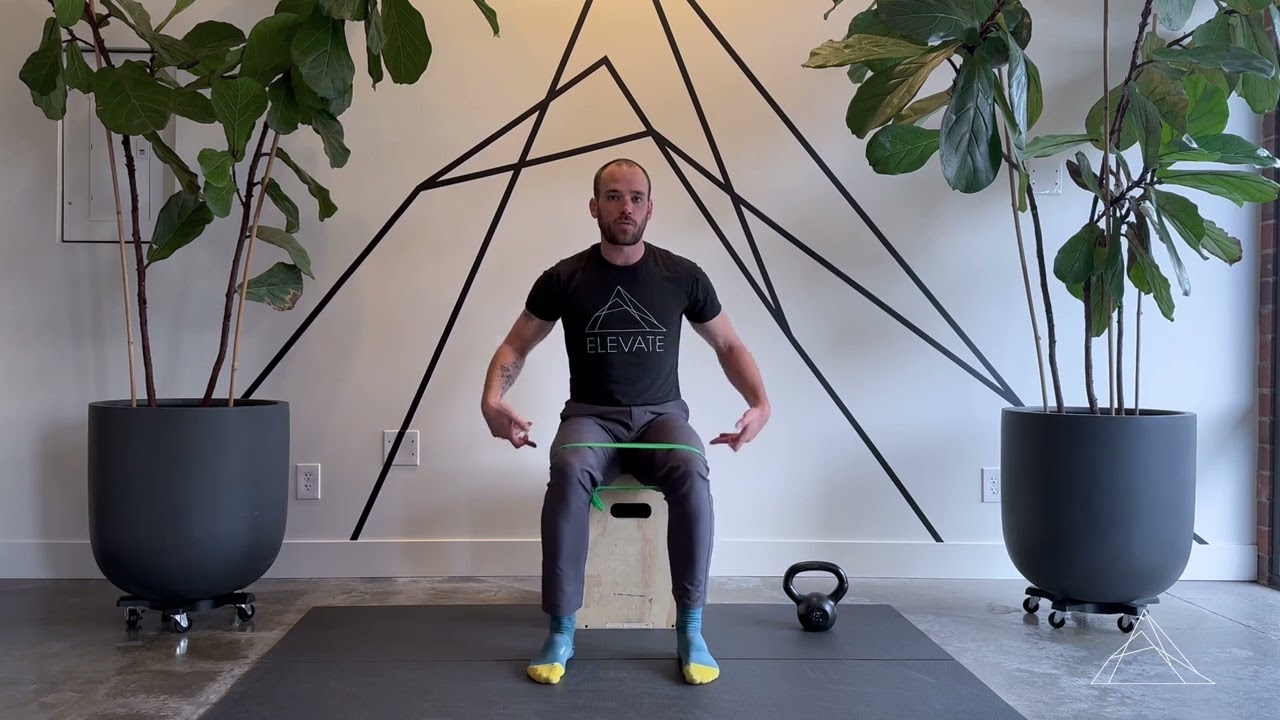
Sets: 1-2 Reps: 15-20
- Sit on a bench with your feet hip-distance apart and your feet flat on the floor, and wrap a medium to heavy resistance band just above your knees.
- Move your knees out to the sides, pulling the band apart as far as you can, while keeping your feet flat on the floor.
- Pause for a few seconds in this position, then return to the start with control.
Herlihy says: “Band abduction is a fantastic way to target your glutes, specifically the medial glute, which helps with balance.”
3. Band walk
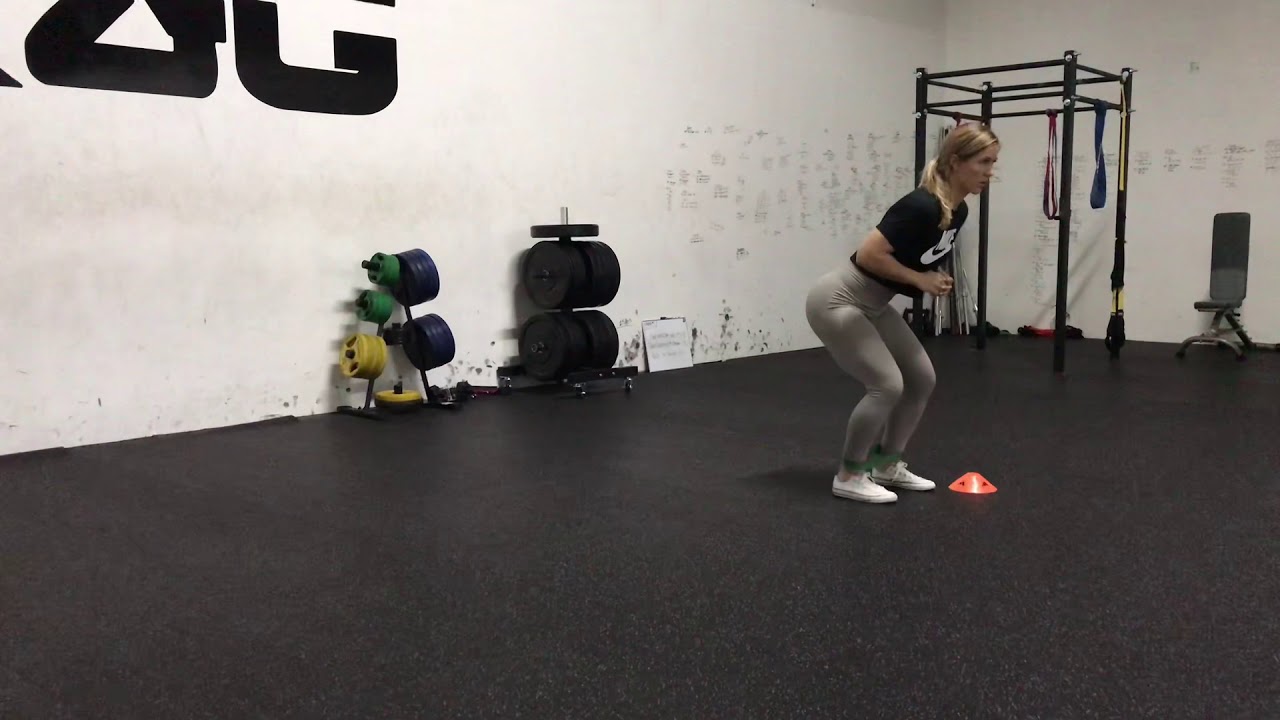
Sets: 1-2 Time: 1min
- Stand with your feet hip-width apart, with a small looped band wrapped just above your ankles. There should be light resistance in the band.
- Push your hips back and bend your knees to lower into a half squat.
- Step out to the right with your right foot as far as you can.
- Step your left foot to the right side, so you return to the hip-width stance.
- Continue stepping right until you run out of room, then move left.
- Continue for time.
Herlihy says: “The band hip abductor walk is a great follow-up to a seated abduction. It also targets the medial glute, but at the same time engages other parts of the front and back of the thighs while you maintain a squat position.
“It’s a fantastic exercise for all of the leg muscles—with a glute focus if performed correctly.”
4. Banded squat
Sets: 1-2 Reps: 15-20
- parallelStand with both feet on a long band and your feet shoulder-width apart.
- Hold the ends of the band at shoulder height, or loop the band around your shoulders—the band should be taut and offering a high degree of resistance.
- Push your hips back and bend your knees to lower, keeping your chest facing forward.
- Once your thighs are parrallel to the floor, or as close as your mobility allows, push through your feet to stand back up, working against the resistance of the band.
Expert tips: Don’t lock out your knees when you stand up to avoid unloading the movement.
Herlihy says: “Squats target everything from your waist down. They are extremely important for balance, mobility and activities of daily living as we age. Leg strength is directly correlated with longevity, and squats are the gold standard for building strong legs.”
“Banded squats are a great variation because they match the resistance curve of a typical squat pattern. The resistance of the band lessens as you get to the bottom of the squat (where you are weaker), and increases as you get to the top of the squat (where you are stronger).”
5. Squat to shoulder press
Sets: 1-2 sets Reps: 10-15
- Swap for a lighter long resistance band than you used for the squat.
- Stand with both feet on a long band and your feet shoulder-width apart.
- Hold the ends of the band at shoulder height, or loop the band around your shoulders—the band should be taut and offering a high degree of resistance.
- Push your hips back and bend your knees to lower, keeping your chest facing forward.
- Once your thighs are parallel to the floor, or as close as your mobility allows, push through your feet to stand back up, working against the resistance of the band.
- As you reach standing, extend your arms to press the band over your head in one smooth motion.
- Lower the band to your shoulders with control.
Herlihy says: “This is a great full-body movement, which will help to finish off your legs, while also warming up your upper body for the next few exercises.”
6. Seated row
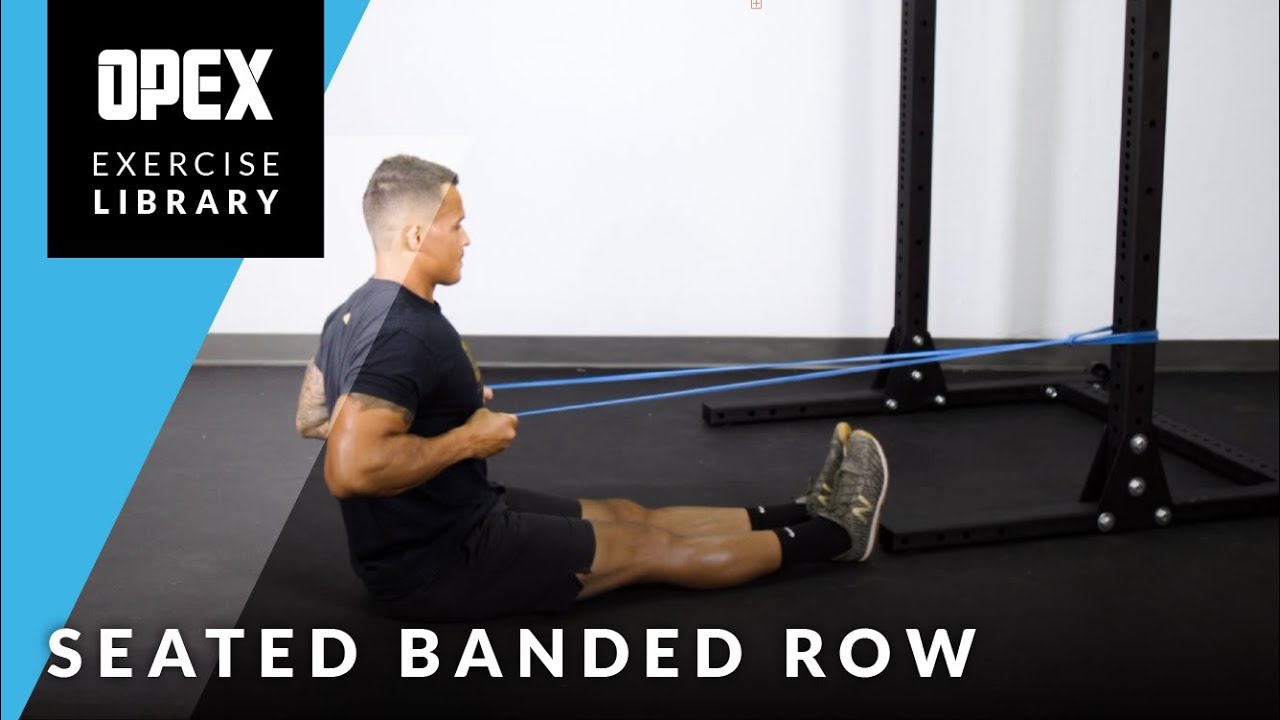
Sets: 1-2 Reps: 10-15
- Secure your band to a low anchor and hold the other end in both hands.
- Sit far enough away from the anchor that your arms are extended and there is slight tension in the band.
- Extend your spine with your legs fully extended.
- Pull the ends of the band towards you, drawing your elbows back and down toward your hips (this will help to engage your lats).
- Pause for a full second in this position, then return slowly to the start. Be careful not to lean forward at the bottom of the movement, or overstretch your arms to remove tension from the band.
Expert tips:
- Occasionally, the pressure from the bands can cause your butt to slide forward. If you have something you can brace your feet against so your butt doesn’t move, that is ideal.
- Start with your palms neutral (facing each other), but feel free to experiment with different grip positions to find what feels best for you.
Herlihy says: “The seated row is a powerhouse movement for the posterior chain (the back of the body). It targets your lats—the largest back muscles—as well as your rear delts, rhomboids, biceps and even your traps.”
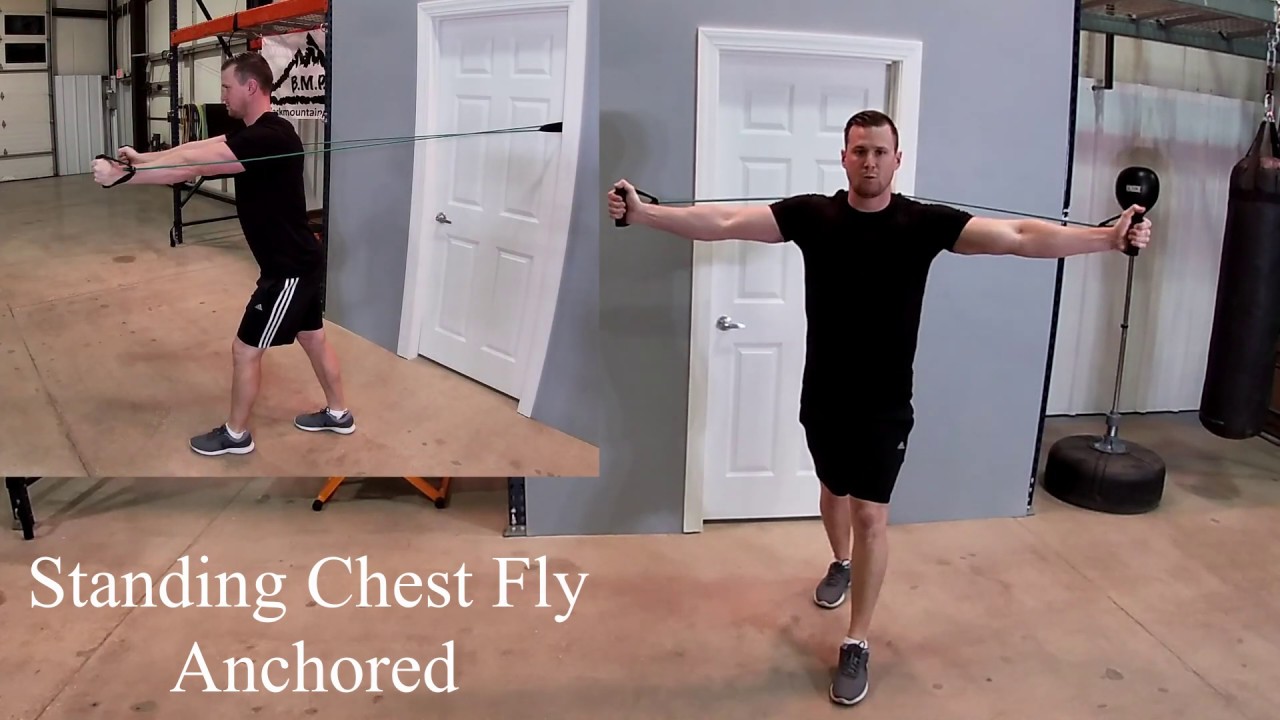
7. Pec flye
Sets: 1-2 Reps: 10-15
- Secure your band to an anchor at shoulder height.
- Facing away from the anchor, take hold of the ends of the band in each hand and step away from the anchor, adopting a staggered stance with one foot in front of the other.
- Extend your arms out to the sides with a slight bend in your elbows—this is your starting position.
- Keeping a slight bend in your elbows throughout—bring your hands together in front of you.
- Pause for a full second, then slowly reverse the movement back to the starting position.
Expert tips: If the resistance doesn’t feel heavy enough, take another small step forward.
Herlihy says: “This is a great single joint exercise for the chest muscles. With the banded movement, you’ll also get a little engagement in the front deltoids.”
8. Standing chest press
Sets: 1-2 Reps: 10-15
- Secure your band to an anchor at shoulder height.
- Facing away from the anchor, take hold of the ends of the band in each hand and step away from the anchor, adopting a staggered stance with one foot in front of the other.
- Hold the ends of the band either side of your chest, with your elbows bent behind your torso.
- Press the ends of the band forward, extending your arms.
- Pause for a full second, squeezing the muscles in your chest, then slowly return to the starting position.
Herlihy says: “Another great chest movement that also engages the shoulders and the triceps.”
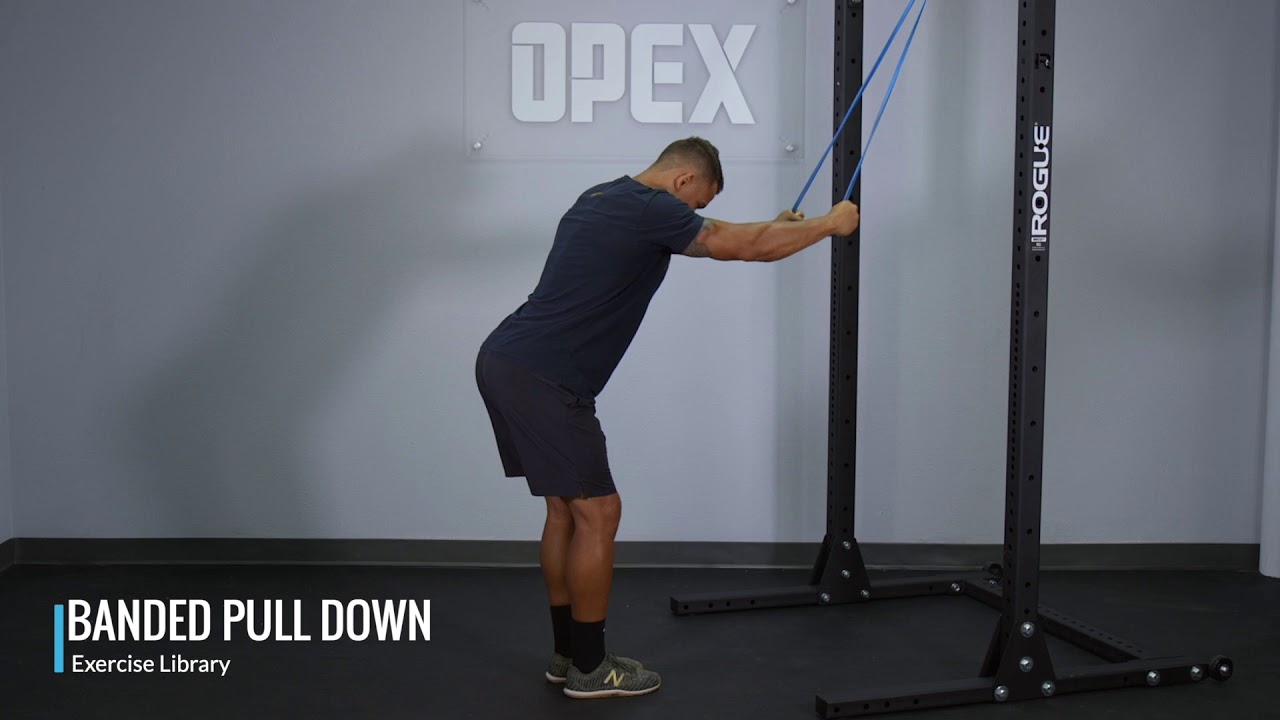
9. Pulldown
Sets: 1-2 Reps: 10-15
- Secure the band to a high anchor above head height.
- Facing the anchor point, hold the ends of the band in both hands, palms facing down, and step away until your arms are extended and your hands are at shoulder height.
- Engage your core and push your hips back—this is your starting position.
- Keeping your arms extended, pull the ends of the band to your hips (this will help to engage your lats).
- Pause for a full second in the contracted position and return slowly to the start.
Expert tips: Be careful not to lean forward at the bottom of the movement or lock out your arms, as this will release tension in the band.
Herlihy says: “The pulldown is similar to the seated row. The muscles targeted will allow you to strengthen from a different plane of motion, which is great for well-rounded muscular development.”
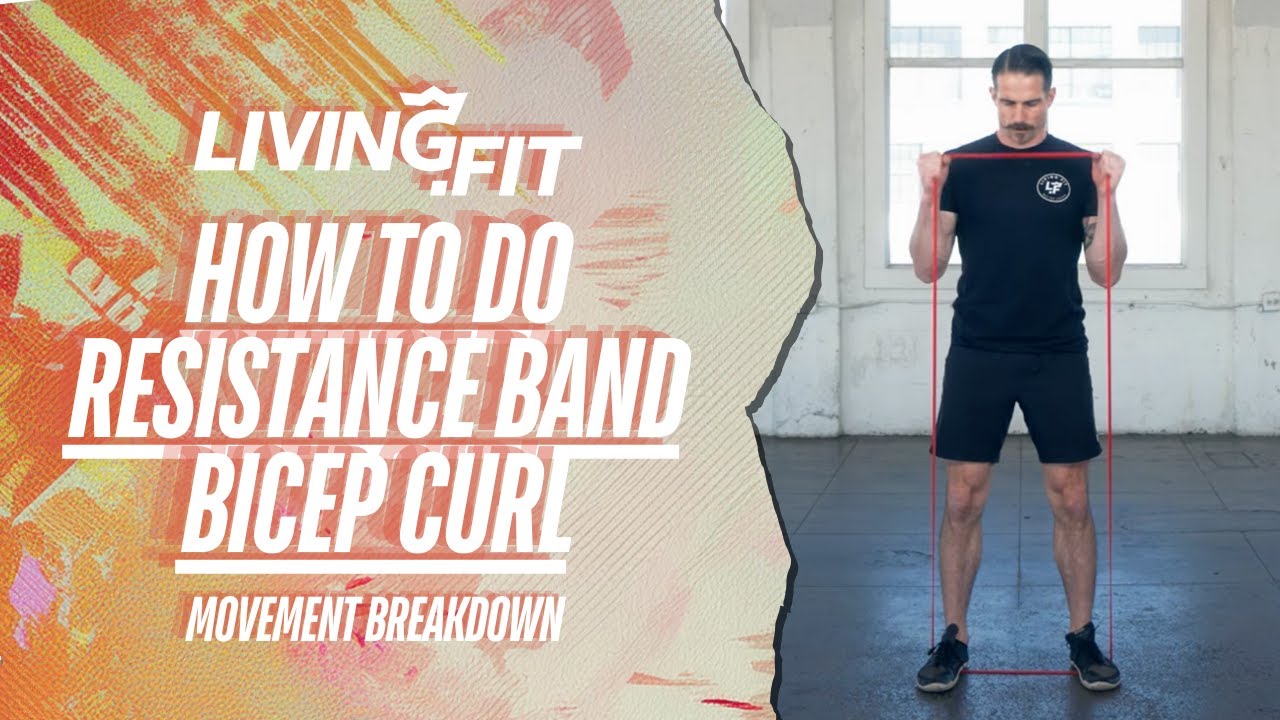
10. Standing biceps curl
Sets: 1-2 Reps: 10-15
- Stand with both feet on the band, hip-width apart, holding the band in both hands, in front of your thighs, palms facing. There should be light tension in.
- Keeping your elbows pinned at your sides, bend your elbows to lift the ends of the band to your shoulders.
- Pause for a second at the top of the movement, then slowly lower the ends of the band to the start.
Herlihy says: “Finally, a classic single joint movement for the biceps. This foundational gym exercise hits both heads of the biceps as well as targeting some of the forearm muscles.”

Logan Herlihy is a certified personal trainer who has been working in the fitness industry for almost a decade. In that time, he has run almost 25,000 personal and small group training sessions. He is a high-intensity training specialist, but also covers bodybuilding, and strength and conditioning. In 2022, he obtained his strength and conditioning certification.
Shop resistance bands


