




A Pilates master trainer says anyone who works at a desk should use these three moves to promote a pain-free posture
Use these gentle stretches to mobilize your spine, chest and shoulders


Sitting hunched over a laptop, phone and tablet for hours every day is often unavoidable due to the demands and habits of our modern way of life.
But over time, this compromised posture can lead to an excessive rounding of the thoracic spine and upper back, known as kyphotic posture or hyperkyphosis.
Typically, it is coupled with muscle weakness, reduced mobility and back pain—but Pilates represents the perfect gentle remedy.
“Pilates—and the improved body awareness and control it provides you with—helps to create better balance and mobility around your joints,” explains Luke Meessmann, founder and master trainer at Absolute Studios in London, U.K.
“It enables you to move with more freedom and strength through a broad range of motion.”
For modern living and modern sports you need a spine that is able to rotate, flex forward, flex laterally and extend, he tells Fit&Well.
Regular practice on the mat or reformer machine will help iron out strength imbalances, but Meessmann says you can also slot three Pilates-inspired exercises into your daily routine to help mobilize your back and straighten your posture.
Best Pilates exercises for posture
Meessmann’s answer to the question of which Pilates moves best treat a hunched posture is simple. “Anything that applies the opposite forces on your body,” he says.
Meessmann says these three gentle exercises, performed in sequence, will help restore rotation to the thoracic spine, introduce extension, and then help stretch the shortened muscles around the chest and shoulders.
He suggests using these moves to mobilize your body as required throughout the day or to incorporate it into a full-body warm-up before a workout to improve range of motion.
1. Open the book
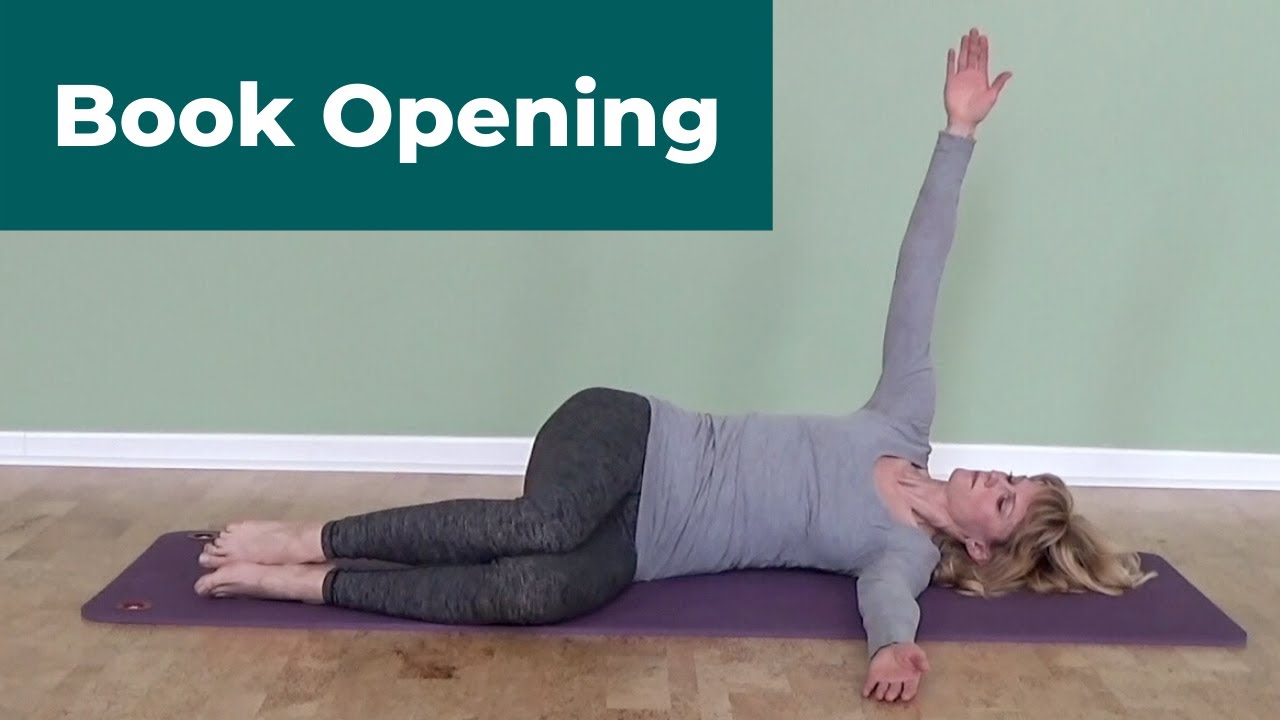
Time: 60sec each side
- Lie on your side with your knees bent and your arms extended in front of you.
- Keeping your bottom arm and leg in contact with the floor throughout, slowly lift your top arm over and across your body toward the floor on your other side, rotating your torso.
- Allow your gaze to follow your hand as you go, and only lower as far as you can without lifting your knees or other arm off the floor.
- Rotate back to the start and continue this movement for time. Then repeat on the other side.
- As your spine gets used to the movement, your range should gradually increase.
Meessmann says: “The lumbar and thoracic spine loves rotation and this is like a gentle warm-up for it. I’d use it to get the spine a little more pliable before asking it to straighten.”
2. Cobra
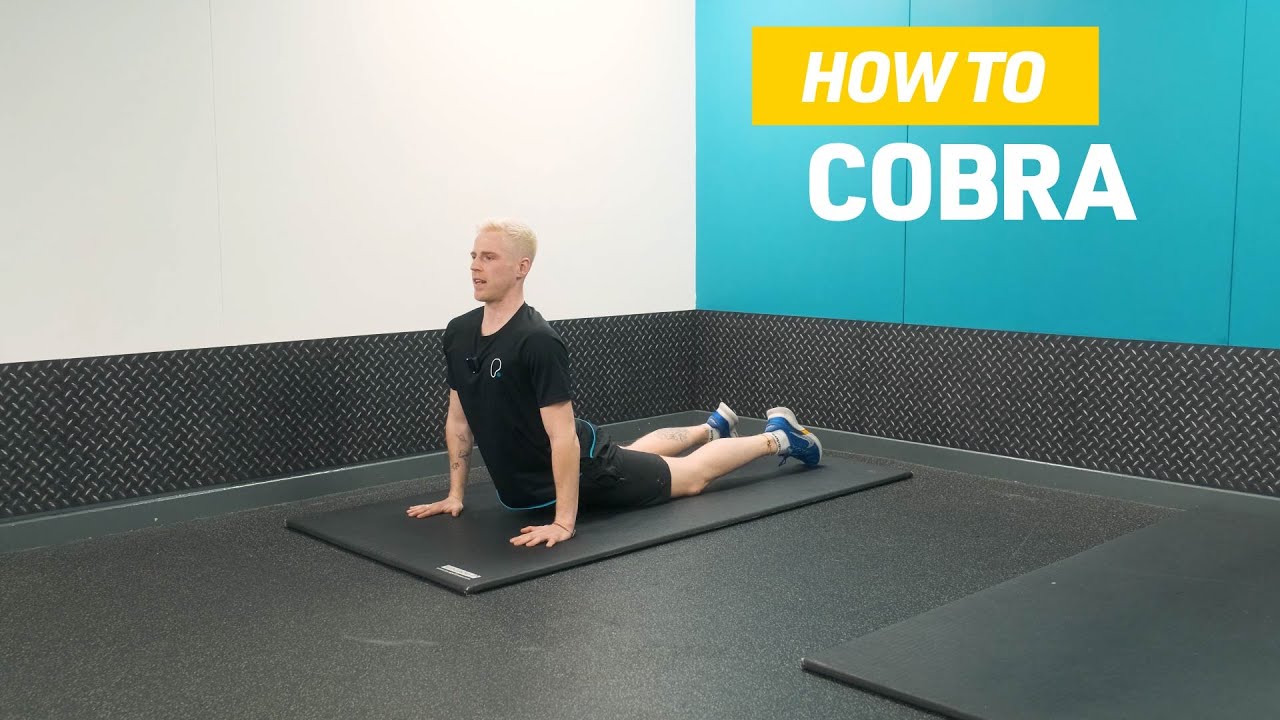
Time: 30-60sec
- Lie face down with your legs extended, the tops of your feet on the floor and your hands under your shoulders with your elbows tucked into your torso.
- Draw your shoulders down and away from your ears, and lightly engage your upper back muscles.
- Gently press through your hands to peel your head, chest and upper ribs off the floor, keeping your hips and thighs on the floor.
- Lengthen your spine forward and up (rather than just bending sharply into your lower back), keeping your gaze forward or down.
- Breathe slowly and evenly, holding this position for 10 seconds, then lower with control and repeat for time.
Meessmann says: “Now the spine is warmer, you can introduce some gentle extension. This action treats the spine to the opposite action that causes a hunched posture.”
3. Doorway stretch
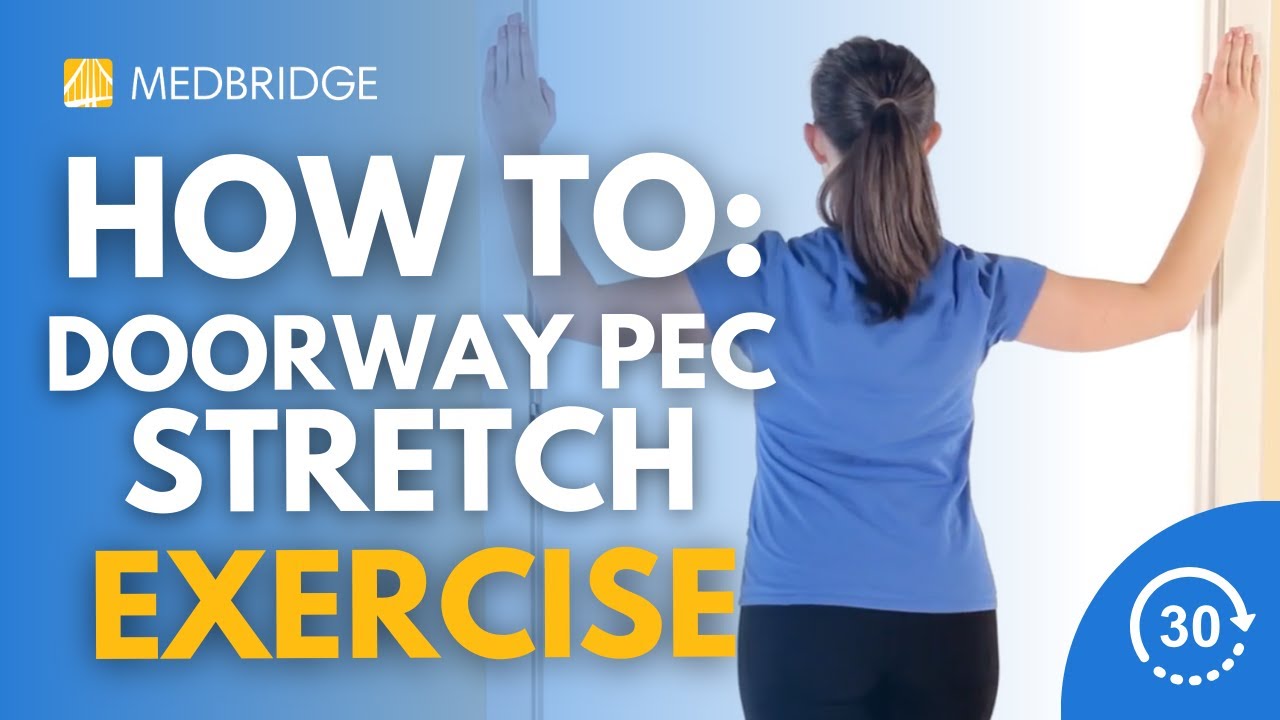
Time: 30-60sec
- Stand in an open doorway with one foot slightly in front of the other, placing your forearms on the doorframe at shoulder height, elbows bent to 90°.
- Gently roll your shoulders down and back so your chest is open and your shoulder blades are lightly drawn together.
- Lightly brace your core and glutes to protect your lower back.
- Keep your neck extended and in a neutral position, looking straight ahead rather than pushing your head forward.
- Slowly lean your body forward through the doorway until you feel a light stretch across your chest and the front of your shoulders.
- Stop or ease off before you feel any pinching or sharpness.
- Hold the stretch for 10 seconds while breathing steadily, then step back to release.
- Repeat for time, adjusting your arm height slightly to find the best angle of stretch.
Meessmann says: “This provides a really nice pec and anterior shoulder stretch. Lean in, keep the glutes and abs on so the lower back isn’t extending, and try to subtly lift the breastbone as you come forward to target the thoracic spine.”

Luke Meessmann is the founder and master trainer at Absolute Studios in London, U.K. Since earning a graduate diploma in science for exercise rehabilitation from the University of Wollongong in Australia, he has amassed over 20 years of experience in the health and fitness industry and spent thousands of hours coaching clients and training other professionals. Meessmann is an APPI-certified matwork Pilates instructor and has been working with Dynamic Reformer Pilates since its early days in the U.K., helping shape how it is taught through developing training programmes and mentoring instructors along the way. Having dealt with his own challenges around mobility and back pain, he knows first-hand how powerful this method can be when it’s done properly.
