





New to strength training? A personal trainer recommends four simple moves to get you started
Try these beginner-friendly exercises for a full-body workout


Strength training is one of the best things you can do for your health and longevity. It boosts your muscle mass, protects your bones, increases your metabolism and improves your overall stability.
Understandably, many people don’t know how to begin a strength training routine. Trying to incorporate dumbbells, kettlebells and weight machines can be taxing, but truthfully, you don’t need them to get started. A moderately-heavy resistance band, of the sort found in this set on Amazon, will suffice.
I give my beginner-level personal training clients these four simple moves to kick off their strength training programs. Taken together, they work muscles in every part of the body, from the legs and glutes to the core, back, chest, shoulders and arms.
You can do these exercises pretty much anywhere and get a well-rounded full-body workout in about 10 minutes.
Notify your doctor before beginning any new activity. Exercising with correct form is crucial to prevent injuries and ensure you’re targeting the correct muscle groups. A certified personal trainer can give you form pointers, offer modifications if necessary, and progress exercises when they’re no longer challenging.
How to do the 10-minute full-body workout
Learn how to engage your core before trying this workout. In addition to a resistance band, you may also want to use a yoga mat for cushioning.
Perform these exercises as a circuit. That means performing one set of the first exercise, then moving on to the next exercise. Complete one set of each exercise to complete one round. Complete three rounds in total.
If you’ve just started exercising regularly, start with 10 reps of the squat, push-up and row, and 15 seconds of the plank.
As you get stronger, gradually work your way up to 12-15 reps of the squat, push-up and row, and 30-45 seconds of the plank. You may also choose to add additional sets to the workout. Rest briefly between each exercise and each set.
Start with a 10 or 20lbs resistance band for the rows. When you’ve built up some strength, you can increase your weight to 30lbs. You can keep moving to higher resistances, the stronger you get.
Try this workout two or three times per week when starting out. Add on another day once you feel comfortable, eventually aiming for three or four times per week.
The four exercises are as follows.
1. Squat
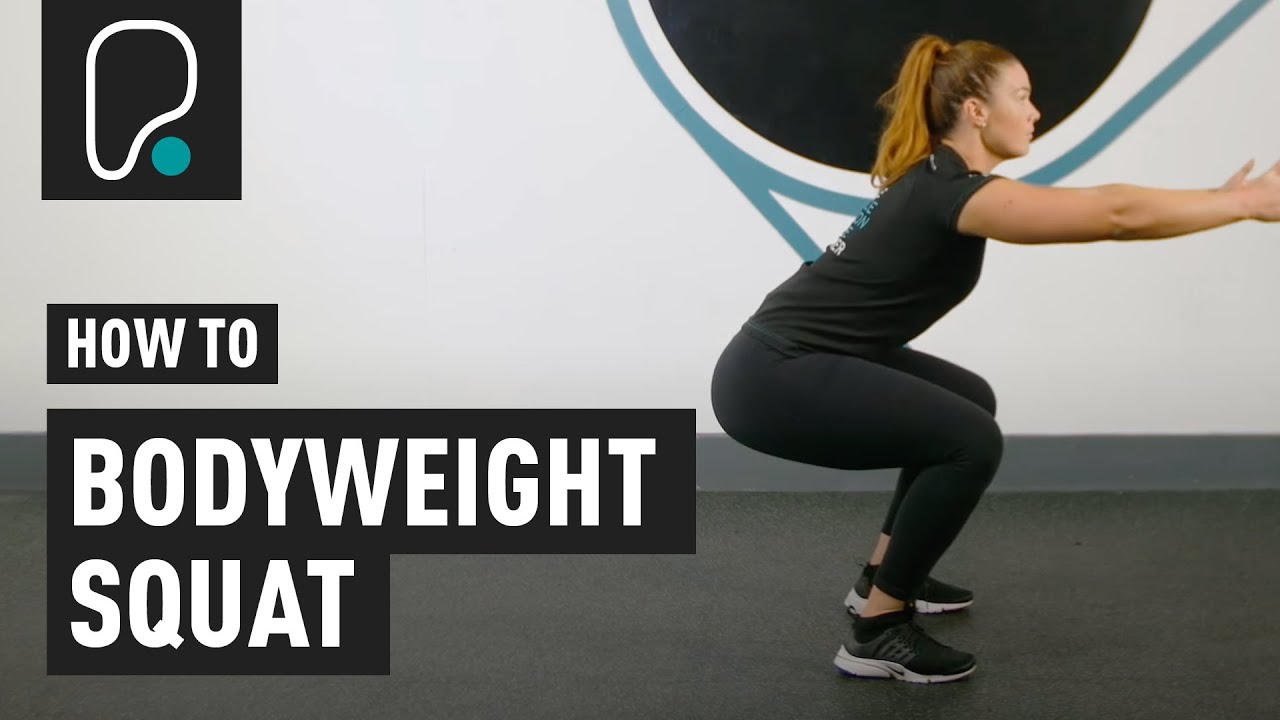
Reps: 10-15
- Stand with your feet hip-width apart.
- Engage your core.
- Push your hips back, as if you were about to sit down.
- Bend your knees to lower, continuing to move your hips back, until your hips are in line with your knees.
- Push through your feet to stand back up.
Trainer tips: Keep your chest facing forward and spine extended throughout the exercise, and don’t allow your back to round. Keep your center of gravity over the middle of your foot, and don’t let your heels rise off the floor.
Use a box or chair behind you as a target, if needed. You can also choose to sit all the way down on the box or chair before standing back up.
2. Push-up
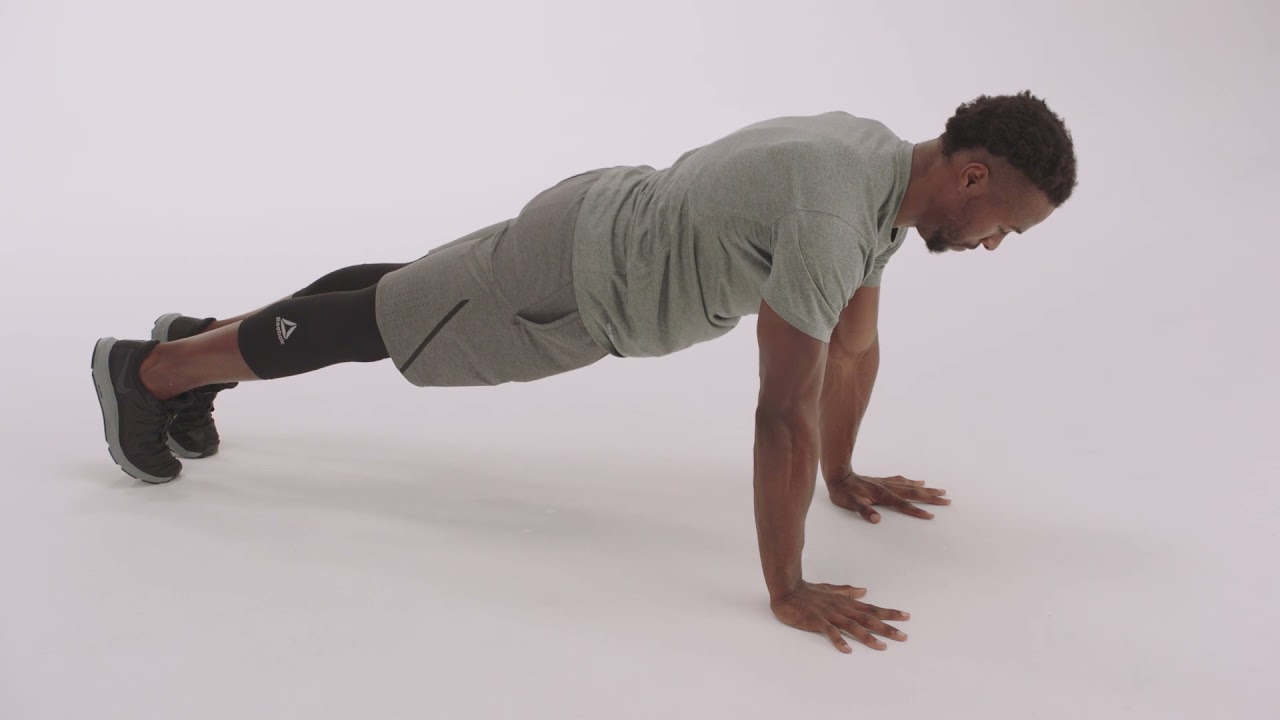
Reps: 10-15
- Get on your hands and knees with your hands underneath your shoulders and your knees underneath your hips.
- Engage your core.
- Step your feet behind you, forming a straight line with your body.
- Bend your elbows and lower your chest, torso and hips until they are just above the floor.
- Push back up to the starting position.
Trainer tips: Don’t allow your lower back to arch excessively. Keep your shoulders, hips and feet aligned, and avoid lifting your hips into the air or sinking them towards the floor.
Lower your knees to the floor for an easier version. Other push-up modifications include a wall push-up or elevated push-up.
3. Banded row
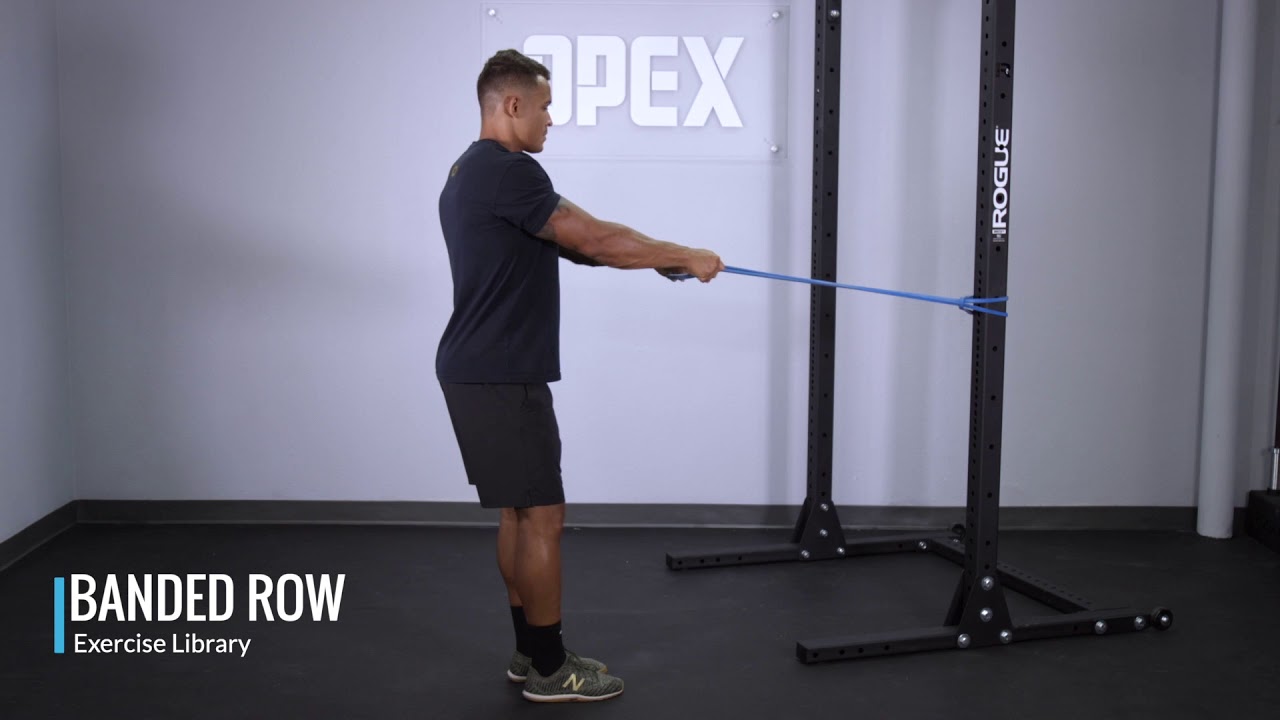
Reps: 10-15
- Loop a resistance band around a strong anchor point, like a stair railing.
- Take the ends of the band in each hand.
- Step back from the anchor point until your arms are extended and the band is taut.
- Engage your core.
- Squeeze your shoulder blades together and pull the band toward you, keeping your elbows close to your torso.
- Pause briefly.
- Extend your arms back in front of you, moving with control.
Trainer tips: Keep your shoulders relaxed as you pull the band toward you. Don’t let your lower back arch excessively. If you’re unable to keep good form, choose a lighter resistance band. You can also step closer to the anchor point.
4. Plank
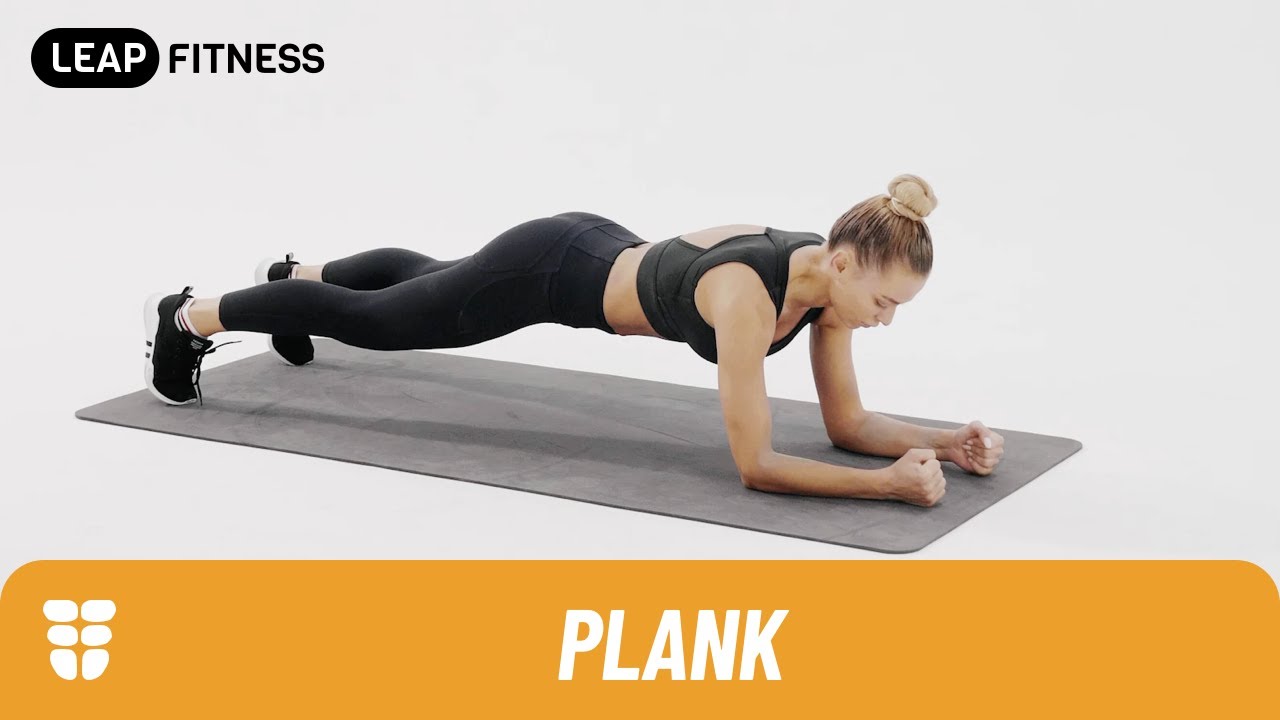
Time: 15-45sec
- Get on your hands and knees.
- Engage your core.
- Place your forearms on the mat, with your elbows directly underneath your shoulders.
- Step your feet behind you.
- Hold your body in a straight line from head to heels.
Trainer tips: Don’t allow your hips to sink or rise. Maintain a neutral spine and avoid any arching in the lower back. If you’re unable to keep correct form, drop your knees to the mat. You can also hold a wall plank or an elevated plank instead.
Shop resistance bands
