Forget crunches—these three exercises will strengthen your deep core without weights
And each can be progressed as your core gets stronger


Want to take your core training to the next level? But you’re not keen on adding more crunches or incorporating weights? I feel you.
I’ve been confused about how to progress my core workout. What I really need are core exercises that are targeted and scalable, and that I can do without weights or having to join the gym.
So I asked Melissa Worley, a personal trainer with over 25 years of experience and a member of the Mindbody Wellness Council, what I could do.
She recommends the following three core exercises, which can be progressed without equipment.
1. Dead bug
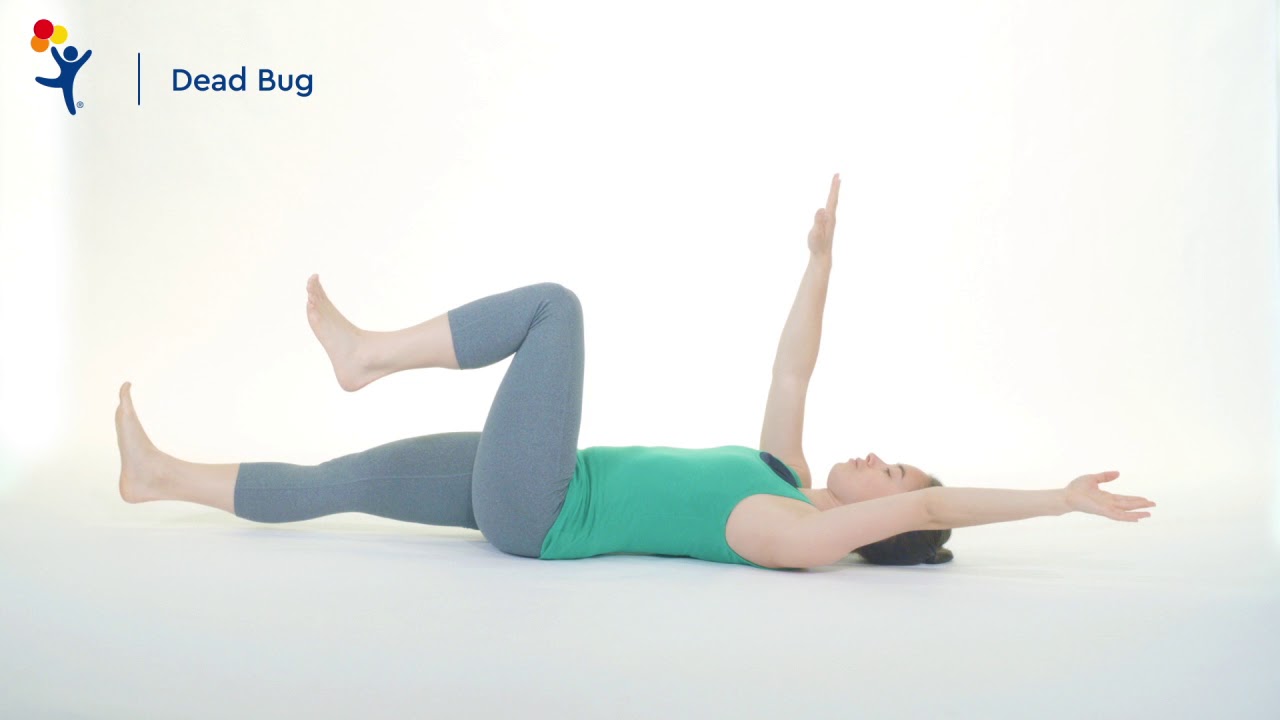
Sets: 3 Reps: 8-12 reps each side Rest: 45-60sec
Muscles targeted: Deep core, internal and external obliques, hip flexors and pelvic floor
Worley says: “Dead bugs are a great progression exercise because they train the core to resist spinal extension, which carries over to many everyday and athletic movements. They are also highly scalable.”
How to do it:
- Lie on your back with your arms extended straight up and your legs raised, knees bent to 90° and directly above your hips.
- Brace your core and press your lower back into the floor.
- Slowly lower your right arm and lower and extend your left leg until they are just above the floor.
- Return to the starting position and repeat on the opposite side, extending your left arm and right leg.
- Alternate sides with each rep.
Form tip: Be sure your lower back doesn’t arch off the floor.
Progressions:
- Double-leg dead bug: Start in the same position and extend both legs and arms simultaneously.
- Slow down: This keeps your muscles under tension for longer, working them harder.
- Pause: Add a pause at the base of the movement.
2. Forearm plank
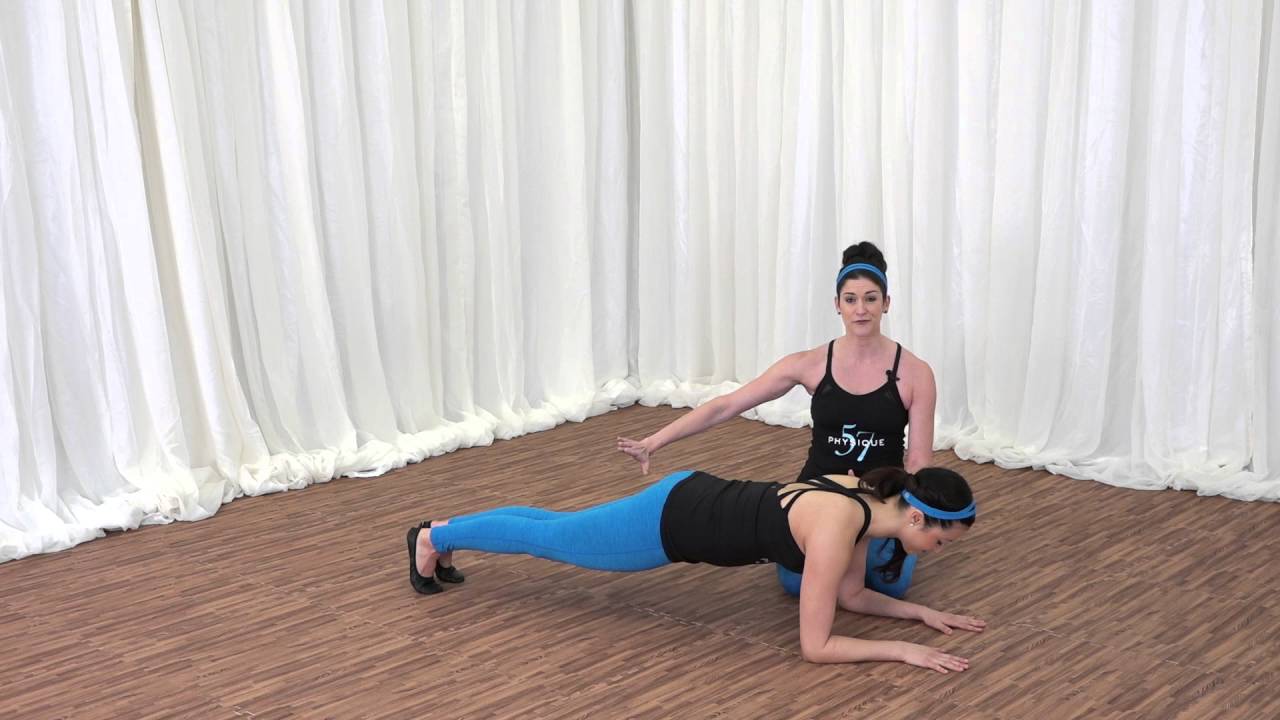
Sets: 3 Hold: 20-60sec Rest: 45-60sec
Muscles targeted: Transverse abdominis, internal and external obliques, lower back stabilizers, glutes and shoulders.
Worley says: “The plank is an effective exercise for developing anti-extension core strength, using the entire trunk to work together to maintain a neutral spine. It challenges your shoulders and glutes, making it a full-body exercise.”
How to do it:
- From all fours, place your forearms on the floor, positioning your elbows under your shoulders, and step your feet back so your body is in a straight line from your head to your heels.
- Brace your core and squeeze your glutes, holding the position for 20-60 seconds.
- Lower your knees and come up onto your hands to exit the hold.
Form tip: Avoid letting your hips sag or lift.
Progressions:
- Long-lever plank: Move your elbows several inches in front of your shoulders, increasing the demand on your abdominals.
- Plank shoulder taps: From a high plank (supported on your hands, not your elbows), alternate tapping each shoulder with the opposite hand while bracing your core to minimize hip rotation.
- Single-leg plank: Lift one foot off the floor for the duration of the hold. Repeat with the opposite leg.
3. Side plank
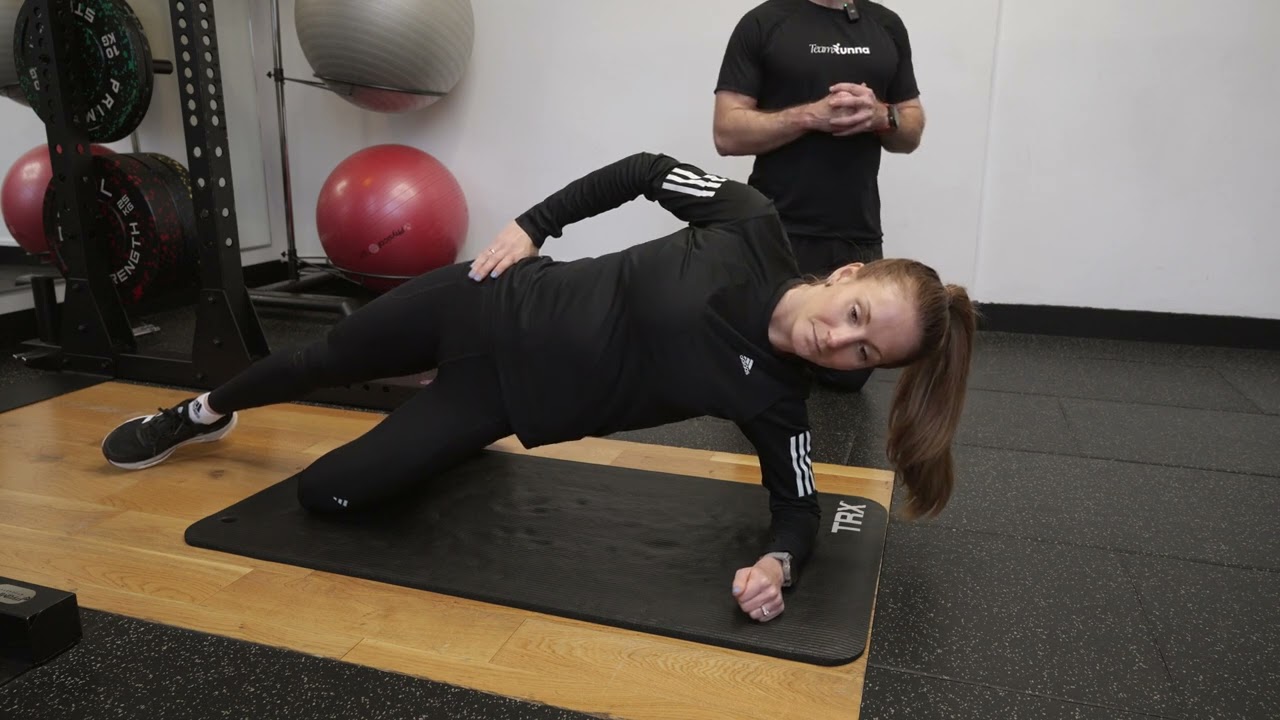
Sets: 3 Hold: 20-45sec each side Rest: 45-60sec
Muscles targeted: Obliques, deep core and shoulder stabilizers.
Worley says: “Side planks train a different core function than dead bugs and standard planks by focusing on lateral stability and resisting side bending.
“They activate the obliques and glute medius together, which is important for hip and trunk stability and can help with injury prevention in the hips, pelvis, and lower back.”
How to do it:
- Lie on one side propped up on your forearm with your elbow directly under your shoulder and one foot on top of the other.
- Brace your core and lift your hips until your body forms a straight line.
- Keep your ribs down and avoid rotating forward or backward.
- Hold for 20-45 seconds, then lower your hip to the floor.
Progressions:
- Top leg lift: While holding the plank, raise your top leg several inches.
- Star side plank: Lift your top arm and your top leg simultaneously.
- Thread-the-needle: Rotate your top arm and bring it under your torso and back again while maintaining hip height and stability

Melissa Worley is a member of the Mindbody Wellness Council, a group of Mindbody team members who are certified personal trainers or instructors in cycling, yoga, Pilates, and barre. She has been a personal trainer for more than 25 years and is NASM-certified, she focuses on injury prevention and performance.
