




Master the basics of Pilates with these five beginner-friendly moves that will teach you body awareness, flexibility and build your core strength
Want to try Pilates but not sure where to start? Here’s your roadmap


Pilates has developed a fearsome reputation in recent years, with the style of exercise credited for many a sculpted torso on social media, and the occasional muscle-bound man admitting to being humbled by their first encounter with a Pilates reformer.
But it would be a crying shame if this reputation put you off trying it, because it’s actually one of the most accessible forms of exercise out there and can improve the way you carry yourself in everyday life.
“Pilates is low-impact and focuses on controlled movement, breathing, posture, flexibility, and core strength,” says Michelle Standfast, a physical therapist assistant and Pilates instructor at ATI Physical Therapy.
“While many people associate Pilates with abdominal exercises, it is actually a full-body workout that emphasizes quality of movement rather than speed or intensity.”
Standfast tells Fit&Well that one of the reasons she particularly enjoys Pilates is that it can be adapted to suit almost anyone, at any fitness level.
“Whether someone is new to exercise, returning after an injury, or looking to supplement their current fitness routine, Pilates can help improve body awareness, balance, mobility and muscular endurance. It also requires minimal equipment, making it an accessible option for many people.”
With an emphasis on recruiting the right muscles and flawless form, Pilates is a type of exercise that is best taught in person so a teacher can assess and correct your alignment, but Standfast has shared five basic movements someone who has no existing injuries can safely practice at home.
1. Pelvic tilt
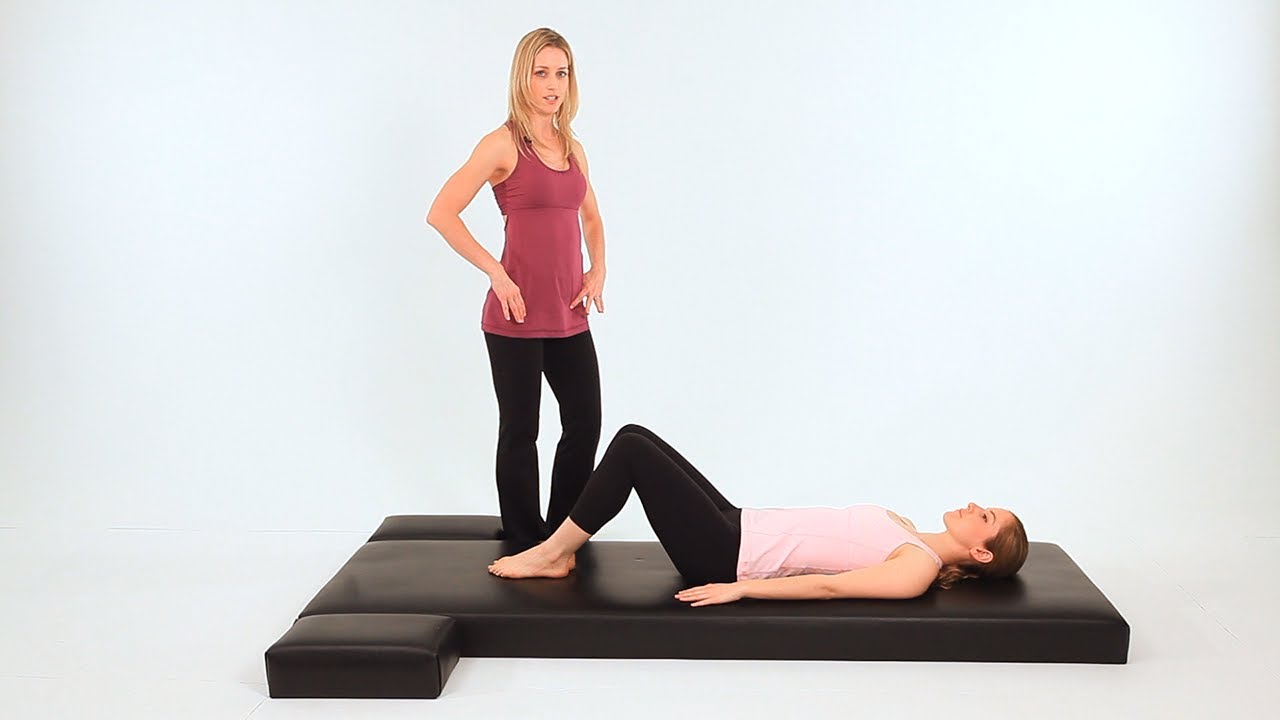
Sets: 2-3 Reps: 10-15 Rest: 30-45sec
What it does: “The pelvic tilt is one of the best beginner Pilates exercises because it teaches core engagement and spinal awareness,” says Standfast.
“It targets the deep abdominal muscles, pelvic floor muscles and lower back while helping individuals learn how to move their spine with control.”
How to do it:
- Lie on your back with your knees bent and your feet flat on the floor. Keep your shoulders relaxed and arms by your sides.
- Gently tighten your abdominal muscles and flatten your lower back into the floor, tilting your pelvis backward.
- Hold for 2-3 seconds, then return to the starting position with control.
2. Single-leg stretch

Sets: 2-3 Reps: 8 each side Rest: 30-60sec
What it does: “This is a classic Pilates exercise that helps build core strength, coordination, and body awareness,” says Standfast.
“This exercise works on both mobility and strength of the hips, as well as foundational core stability and control needed for more demanding Pilates exercises.”
“It will also train you to link your breath and movement, which is imperative for a strong Pilates practice.”
How to do it:
- Lie on your back with your head lifted off the floor and your chin tucked into your chest.
- Inhale and hug one knee to your chest, while you extend your other leg.
- Exhale as you swap legs.
3. Glute bridge

Sets: 2-3 Reps: 10-15 Rest: 30-45sec
What it does: “Many people spend long periods sitting throughout the day,” says Standfast.
“The glute bridge helps activate the gluteal muscles while improving core stability and hip mobility.”
How to do it:
- Lie on your back with your knees bent and your feet flat on the floor.
- Engage your core and press through your heels to lift your hips.
- Pause briefly at the top of the movement, then lower back to the floor with control.
4. Bird dog

Sets: 2-3 Reps: 8-10 each side Rest: 30-60sec
What it does: “The bird dog is excellent for improving balance, coordination, and core control,” says Standfast. “It teaches stability while moving the arms and legs independently.”
How to do it:
- Start on all fours with your hands under your shoulders and your knees under your hips. Maintain a neutral spine throughout the movement.
- Lift your right arm in front of you and extend and lift your left leg behind you. Pause briefly while maintaining balance.
- Return to the starting position and repeat on the opposite side.
5. The hundred (modified)

Sets: 1-2 Reps: 50-100 Rest: As needed
What it does: “The hundred is one of the most recognizable Pilates exercises. A modified version allows beginners to learn breathing patterns and core engagement without placing excessive strain on the neck or lower back.”
How to do it:
- Lie on your back with your knees bent and your feet on the floor.
- Lift your head and shoulders slightly off the floor.
- Extend your arms alongside your body and pump them up and down in small movements.
- Inhale for five arm pumps and exhale for five arm pumps.
- Continue for 50–100 pumps total, stopping when you feel you need to.
