“The huge difference is to use your core power instead of just arm strength”—a personal trainer shares how she finally conquered this classic bodyweight exercise
Even the pros struggle with some moves


Tatiana Schloessman is a certified Pilates instructor and the founder of Élan Pilates Studios in Westlake Village.
She's been training for more than 30 years—but it took a long time for her to perfect her push-ups.
“It's hard for both men and women, and especially difficult for those who haven't had as much exposure to upper-body strength training,” she says.
She explained that she could do a few push-ups in a row when she first started working out, but always wanted to get past 20.
“I'm now at about 50 push-ups and I was able to get more than double by realizing a push-up isn't an arm exercise; it's a full-body and mind exercise,” says Schloessman.
She tells Fit&Well that the change occurred when she learned to use core strength rather than relying solely on arm strength.
“I envision the [core] muscles engaging, bracing my abs and focusing on not letting my lower back collapse,” she says.
Here she breaks down exactly how she conquered the move.
Form cues for a traditional push-up
Every time she does a push-up, Schloessman gets into a high plank position and mentally follows these form cues:
- Imagine zipping up your abdominal muscles like a corset.
- Engage your glutes.
- Focus on actively using your chest, shoulders, triceps and back.
- Inhale as you lower and exhale to push up.
If you’re not ready to attack your first full push-up yet, Schloessman recommends starting with one of the regressions listed below.
“Focus on good technique,” she advises. “Proper technique builds strength; poor technique builds bad habits.”
She suggests the following two options, which can be done together or as a combination.
1. Incline push-up
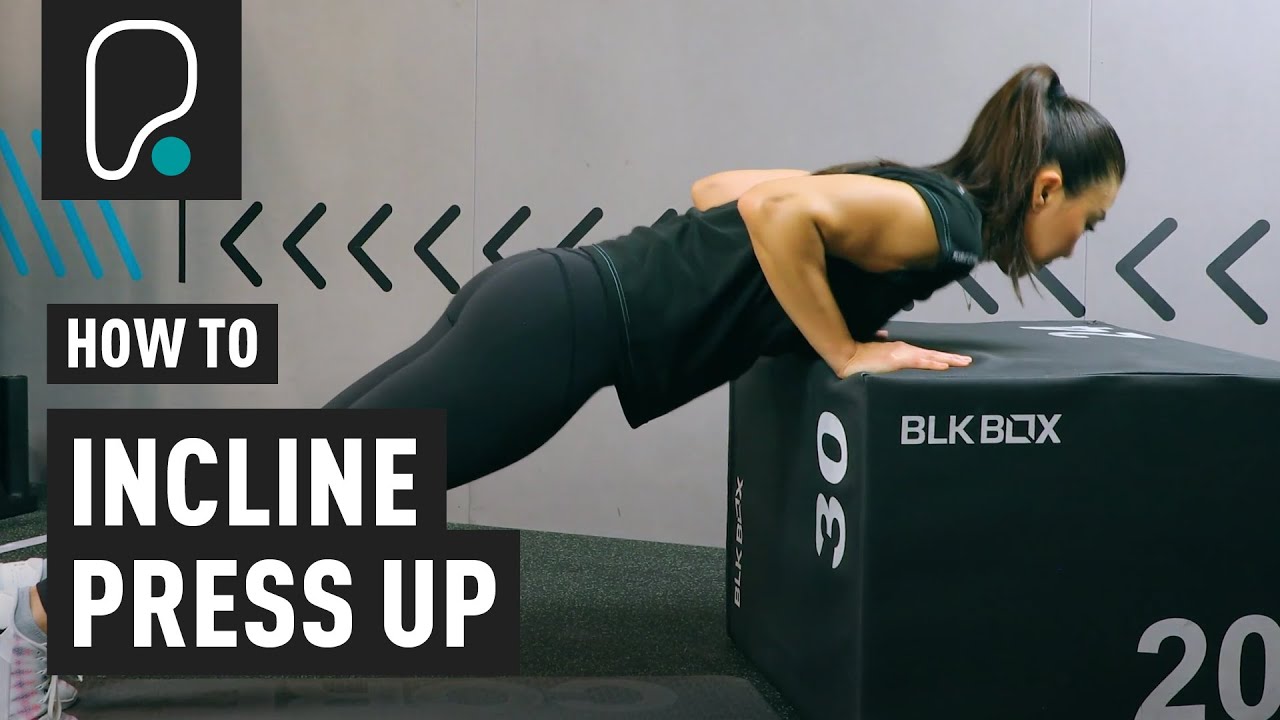
“This exercise is great because it works the same muscle groups as a traditional push-up,” says Schloessman.
“It is much more achievable because it reduces the percentage of body weight you're pushing.
“Most importantly, you learn proper alignment and you can focus on core engagement, total body focus and breathing.”
To progress, simply lower the height over time.
How to do it:
- Stand in front of a wall, counter, box or bench with your hands braced against it a little wider than shoulder-width apart.
- Step back so that your body forms a straight line from your head to your heels.
- Inhale, bend your elbows and lower your chest toward your chosen surface, keeping your upper arms tight to your torso.
- Exhale and press your chest away from your chosen surface until you return to the starting position.
2. Knee push-up
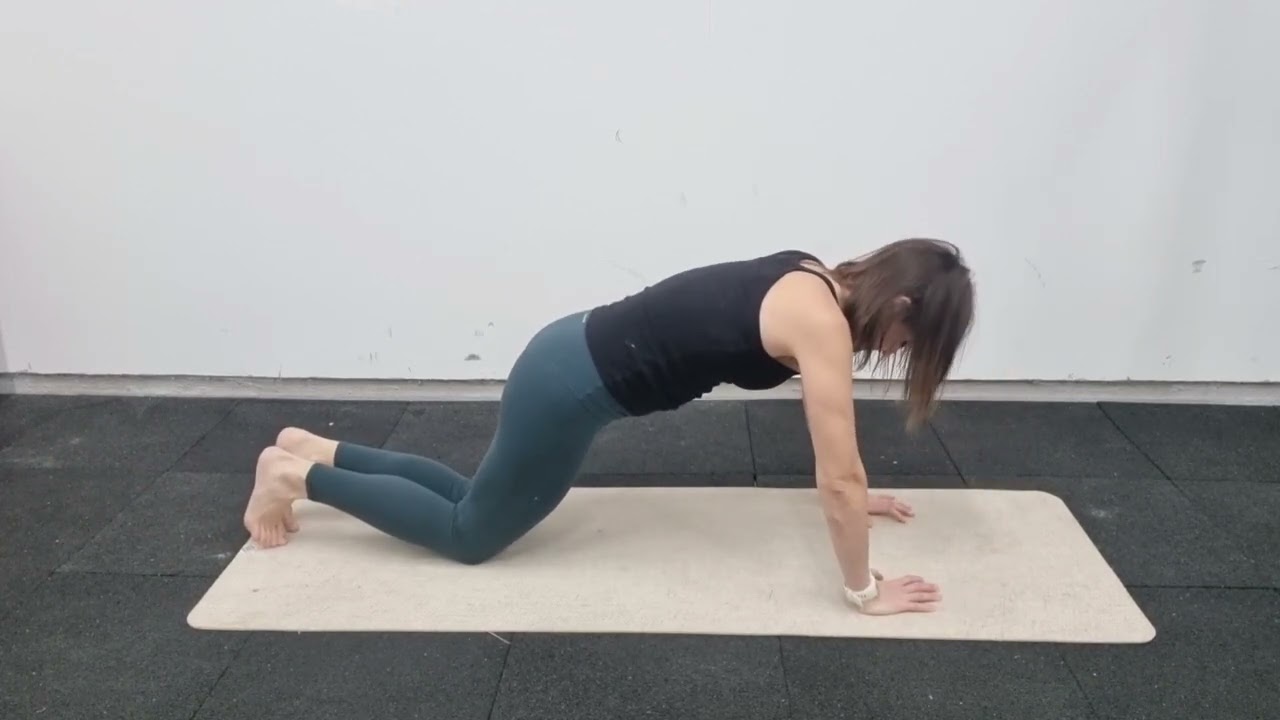
“This exercise is another great way to make progress, but only when done correctly,” says Schloessman.
“Just like the incline push-up, it works the same muscle groups as a traditional push-up and reduces the weight while allowing you to complete the exercise.”
She explains that for good form, you must ensure that your elbows stay slightly back and angled at 45° away from your body.
This will keep your hips low to the floor and prevent your back from caving.
How to do it:
- Start on your hands and knees with your hands slightly wider than shoulder-width apart..
- Move your knees back so that your torso is in a straight line.
- Shift your weight forward so you are resting on your upper knee, not directly on top of your kneecap.
- Inhale, bend your elbows and lower your chest.
- Exhale and press your chest away.

Tatiana Schloessman is the founder of Élan Pilates Studios in Westlake Village, CA. She has more than 30 years of fitness training under her belt and is a certified Pilates instructor.
