Boost power and stay injury-free with this four-move strength workout for runners
Suitable for the home or gym—all you need is a pair of dumbbells


It’s widely accepted that runners shouldn’t neglect resistance training if they want to run well, faster and injury-free—but where should you start?
There are hundreds of exercises you could use and dozens of workouts you could follow, but Pilates instructor Brittni Johnson says all you need is four strength moves.
A Bulgarian split squat, a Romanian deadlift, a calf raise and a side plank are her recommendations.
“These four exercises target what distance runners actually need: staying stable under fatigue, absorbing impact and pushing off with power,” the BetterMe trainer tells Fit&Well.
These moves, she insists, effectively mimic the demands of regular running.
The unilateral nature of the Bulgarian split squat will develop strength and length in your muscles, tendons and ligaments on each leg individually.
“This focus on single-leg movements is deliberate because running is essentially a series of single-leg landings,” says Johnson.
“Your body needs to be able to handle that repeatedly without breaking down.”
On every rep, Johnson says to pay extra attention to the lowering phase. So with the Bulgarian split squat, Romanian deadlift and calf raise, lower your weight slowly.
“That’s where you build the strength to handle the unforgiving nature of pounding the pavement, so take it slow and you’ll save yourself a lot of trouble down the road.”
How to do the workout
To support your running workouts, Johnson recommends using this routine once or twice per week—“ideally on your lighter run or rest days. If you’re limited on time to work out during the week, this can be paired on your longer run days, but just keep the weight a little bit lighter.”
1. Bulgarian split squat
Sets: 3 Reps: 8-10 each side Rest: 60-90sec
- Sit on a weights bench and extend your right leg, placing your right heel on the floor.
- Stand up and tip your right foot forward to it is flat on the floor.
- Place the top of your left foot on the bench behind you.
- Engage your core.
- Bend your right knee to 90° to lower, keeping your right shin vertical and your torso upright.
- Push through your right foot to extend your right leg.
Johnson says: “Training one leg at a time forces the stabilizers around your hip and knee to do their job, which stops the inward collapse that causes runner's knee.”
2. Romanian deadlift
Sets: 3 Reps: 10-12 Rest: 60-90sec
- Stand with your feet hip-width apart and a slight bend in your knees, holding dumbbells in front of your thighs, palms facing you.
- Engage your core.
- Keeping your back flat throughout, push your hips back and hinge forward to lower the dumbbells down your legs, until you feel a gentle stretch in your hamstrings.
- Squeeze your glutes and push your hips to stand upright.
Form tip: Lower your gaze toward the floor as you descend to avoid craning your neck.
Johnson says: “Most runners are quad-dominant. This move strengthens the pull phase of your stride through your hamstrings and glutes, where your power for hills and sprints actually comes from.”
3. Side plank
Sets: 3 Time: 30-45sec each side Rest: 60-90sec
- Lie on your side, propped up on your forearm with your feet together, or one in front of the other.
- Lift your hips so your body forms a straight line from your head to your feet.
- Hold this position, concentrating on keeping your hips still.
Johnson says: “Running demands lateral stability. A strong side core keeps your energy moving forward instead of leaking out through shifting hips or a twisting torso.”
4. Seated calf raise
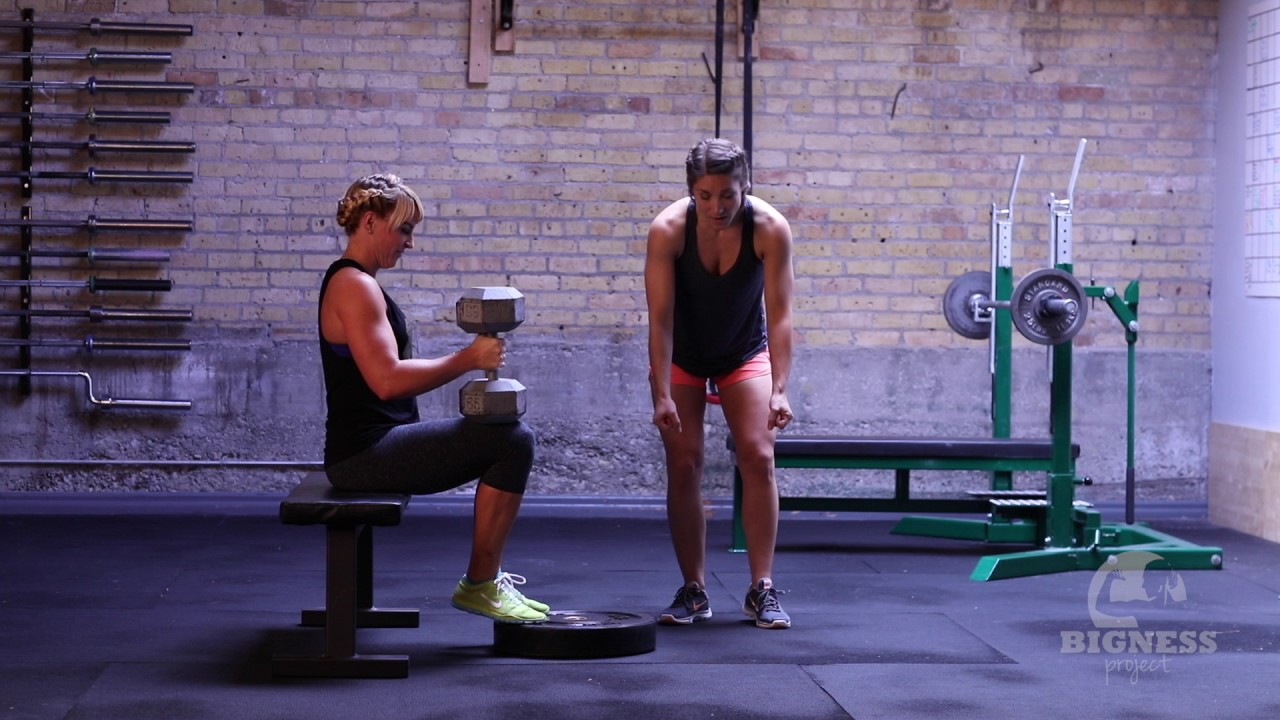
Sets: 3 Reps: 15-20 Rest: 60-90sec
This can also be performed using a calf raise machine in the gym, or standing.
- Sit with dumbbells on your knees and the balls of your feet on a yoga block or similar platform.
- Allow your heels to lower just below the platform, to feel a slight stretch in your calves—this is your starting position.
- Press into your toes to raise your heels.
- Lower your heels slowly to the starting position.
Johnson says: “The soleus [one of the main muscles in the calf] absorbs up to eight times your body weight per step. Keeping it strong is the most straightforward way to stay clear of Achilles tendonitis and shin splints.”
