


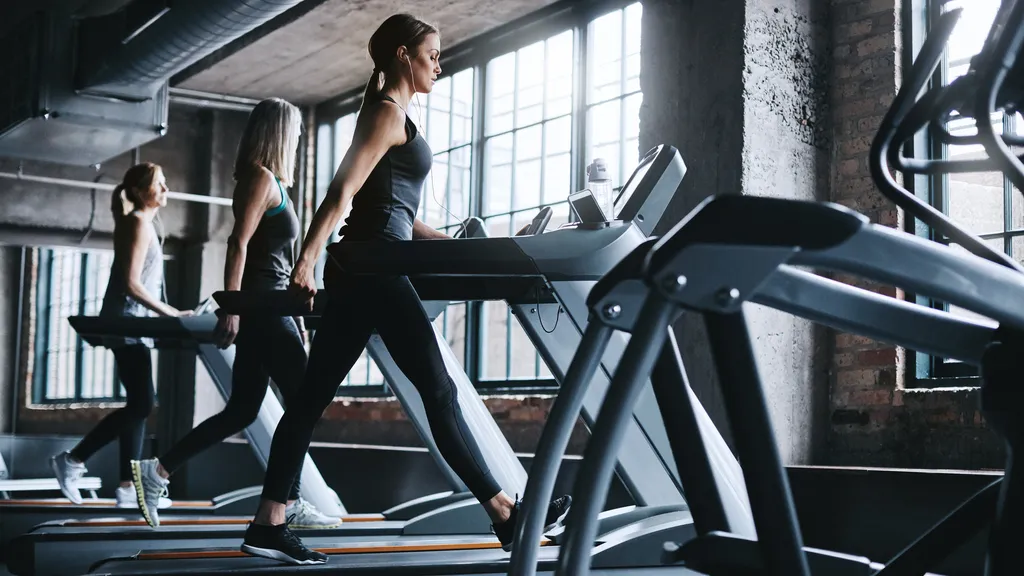


I’m a runner with a weak core—here are the five core moves a Pilates teacher recommends for building strength
No sit-ups or regular plank holds in sight


As a runner, it’s easy to neglect strength work in favor of building up time on your feet.
Throughout my half-marathon training, I was guilty skipping the gym and going for another speed session or long run instead.
And, you guessed it, I paid the price.
Aches and pains in the lead-up to race day, followed by glute and lower back pain when I crossed the finish line.
I learned the hard way that core work and strength training in general is essential for runners.
So I resolved not to make the same mistake again and sought advice from Claire Mills, physiotherapist, Pilates instructor and founder of Core LDN, who explained why developing a strong core is worth the investment of time and effort.
“It’s about creating a stable foundation that allows the arms and legs to move efficiently while controlling the forces traveling through the body,” Mills tells Fit&Well.
Every time your foot hits the ground when running, your body absorbs forces of around two to three times your body weight.
“Your core muscles—including the deep abdominal muscles, diaphragm, pelvic floor and muscles surrounding the spine—work together to stabilize the trunk and pelvis so these forces are managed effectively,” Mills explains.
“A strong, well-coordinated core helps runners maintain efficient mechanics throughout a run, rather than just during the first few miles.”
A strong core could also reduce your risk of injury.
“While no exercise program can completely prevent injuries, better lumbopelvic control may help reduce excessive movement that contributes to common running problems such as patellofemoral pain, iliotibial band syndrome, Achilles tendinopathy and lower back pain,” Mills says.
As I’m a runner who is guilty of skipping core work, I asked Mills to share her best core strengthening workout—and there isn’t a sit-up or regular plank hold in sight.
“My advice is to move away from thinking about endless sit-ups or planks held for several minutes,” Mills says. “The goal is functional strength that transfers into running.”
“Include exercises that challenge anti-rotation, anti-extension and lateral stability,” she says.
As well as the right selection of exercise, they must be done consistently, and Mills recommends runners do 15 to 20 minutes of core strength training two to three times per week.
“The key is consistency rather than intensity,” she says.
How to do the five-move core workout
Mills has created a workout that focuses on building core strength with five Pilates-inspired exercises—so be sure sure to focus on your breath.
“Coordinating your breathing with your deep abdominal muscles improves stability and control,” Mills explains.
The five exercises are:
- Dead bug
- Modified side plank with leg lift
- Bird dog
- Single-leg glute bridge
- Pallof press
1. Dead bug
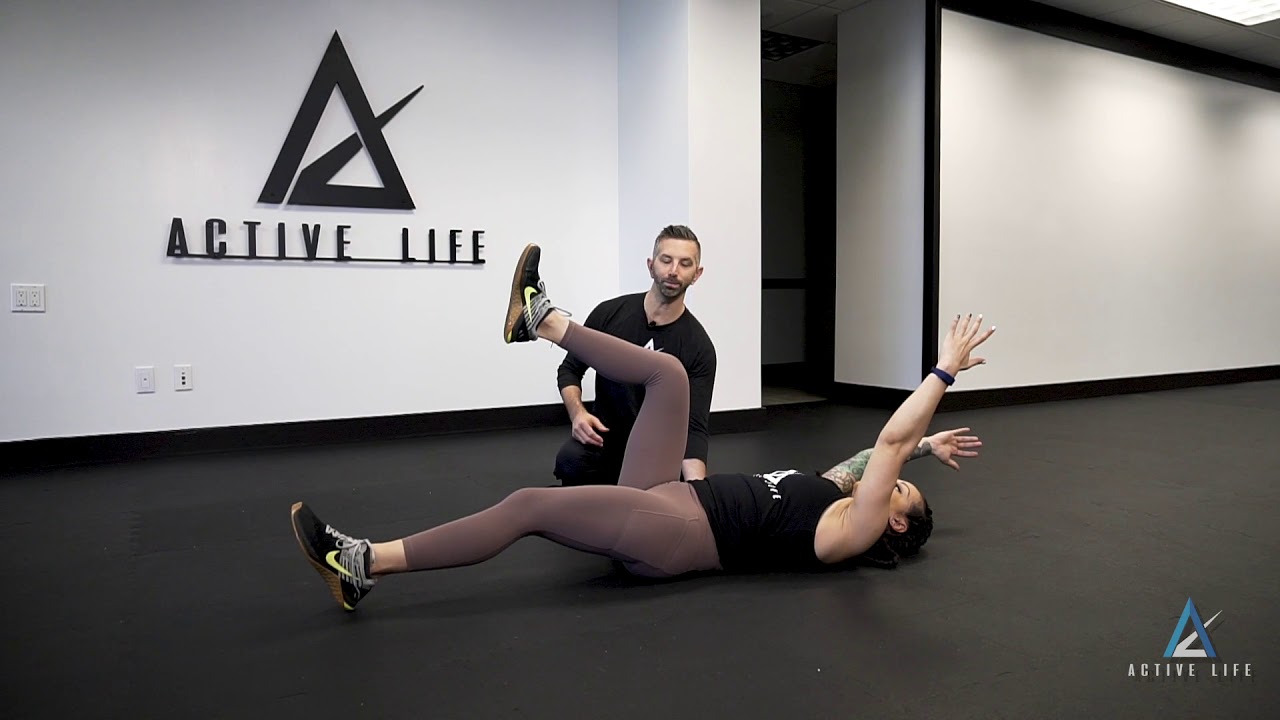
Sets: 2-3 Reps: 8-10 each side
How to do it:
- Lie on your back and lift your legs so your hips and knees are bent to 90°.
- Reach both arms straight up.
- Gently draw your lower ribs down and maintain a neutral spine, engaging your core.
- Exhale as you slowly lower one arm behind you and lower and extend the opposite leg until both are just above the floor.
- Inhale as you reverse the movements back to the starting position.
- Repeat with the opposite arm and leg.
- Continue, alternating sides with each rep.
Benefits: Improves deep core control, builds trunk stability while moving the limbs and reduces excessive movement through the lower back during running.
2. Modified side plank with leg lift
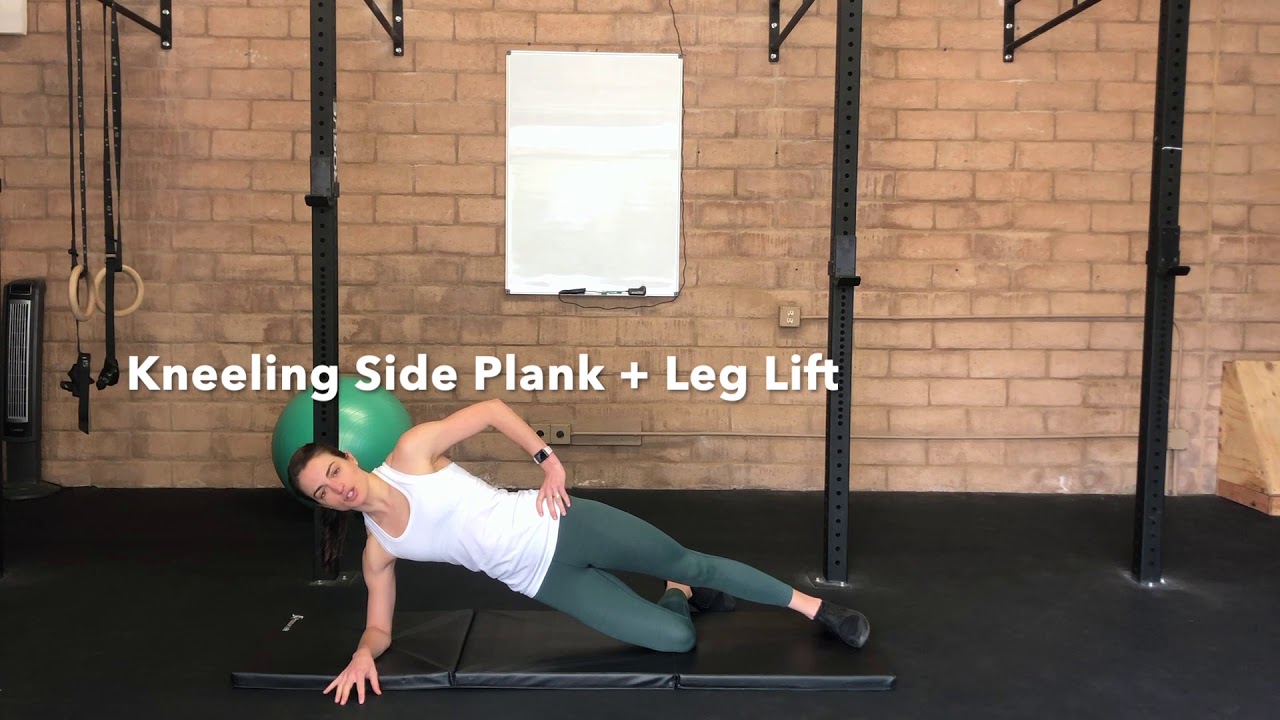
Sets: 2-3 Reps: 8-10 each side
How to do it:
- Lie on your side with your knees bent and legs together, propped up on your forearm, with your elbow directly under your shoulder.
- Exhale as you lift your hips until your body forms a straight line from your shoulder to knees.
- If you can, straighten the top leg and lift and lower it as you hold the side plank position.
Trainer tip: Keep your shoulders, hips and pelvis facing forward. Avoid letting your top hip rotate.
Benefits: Strengthens the oblique muscles and lateral hip stabilizers, improves pelvic control during single-leg stance and helps reduce excessive hip drop, which is common in runners.
3. Bird dog
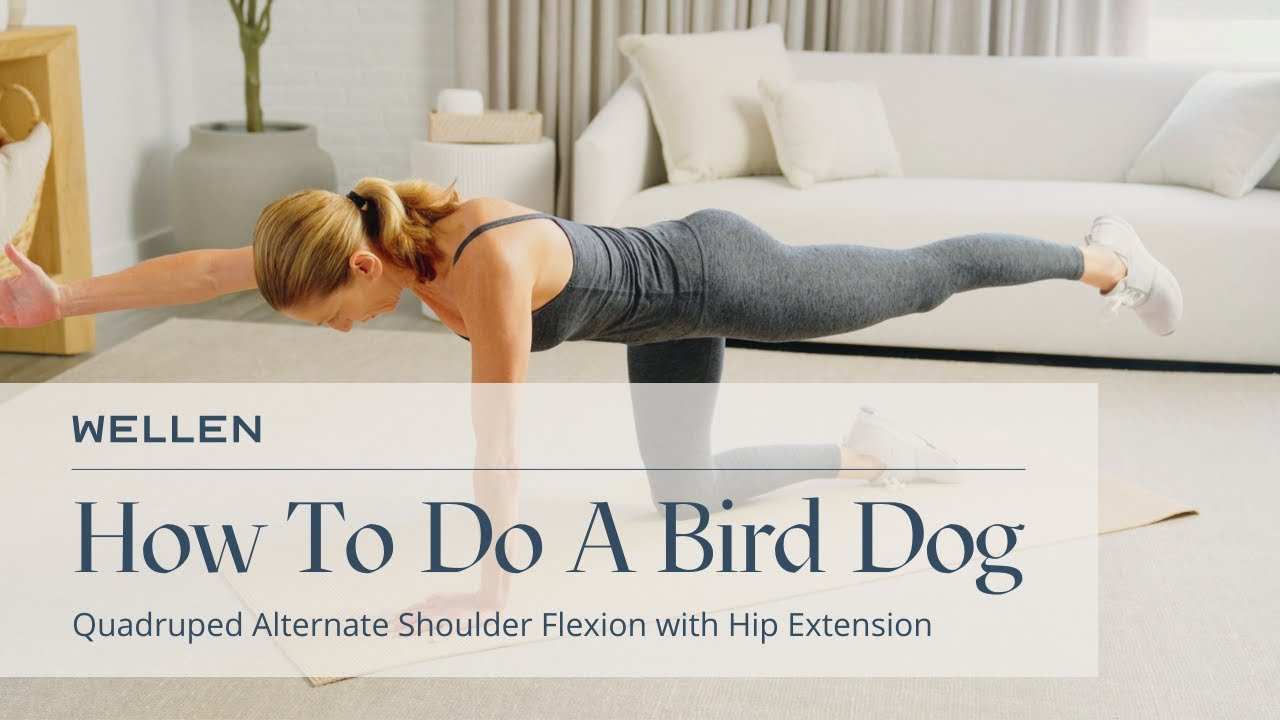
Sets: 2-3 Reps: 30sec each side
How to do it:
- Get on your hands and knees with your pelvis in a neutral position.
- Exhale as you engage your core and raise one arm in front of you and extend and raise the opposite leg behind you.
- Inhale as you reverse the movements back to the starting position.
- Repeat with the opposite arm and leg.
- Continue, alternating sides with each rep.
Benefits: Develops coordination between the trunk and limbs and posterior chain, improves spinal stability and reinforces efficient movement patterns that transfer well into running.
4. Single-leg glute bridge
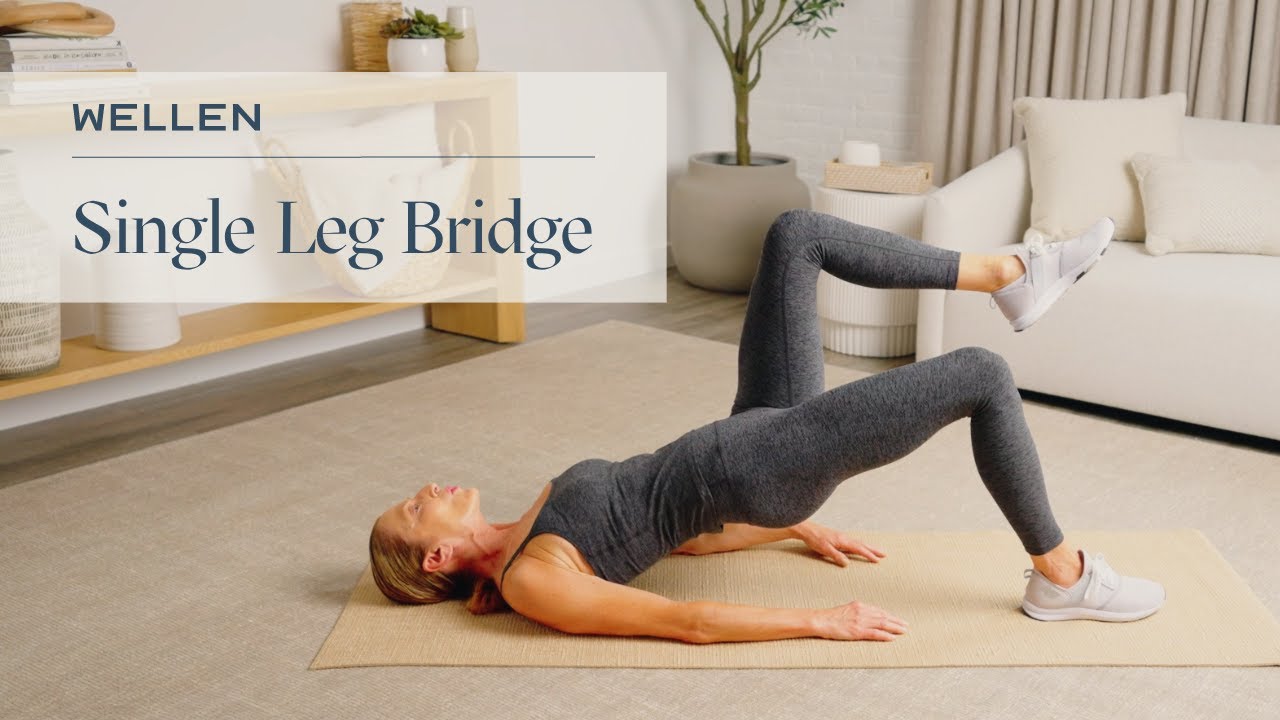
Sets: 2-3 Reps: 8-10 each side
How to do it:
- Lie on your back with your left knee bent and your left foot on the floor, and your right leg raised, knee bent and foot off the floor.
- Exhale as you push through your left heel to lift your hips, keeping your pelvis level throughout.
- Inhale as you lower slowly back to the start.
- Complete all the reps on one side, then switch sides.
Benefits: Strengthens the glutes while challenging core stability, improves pelvic control during running and helps reduce compensation through the lower back.
5. Pallof press
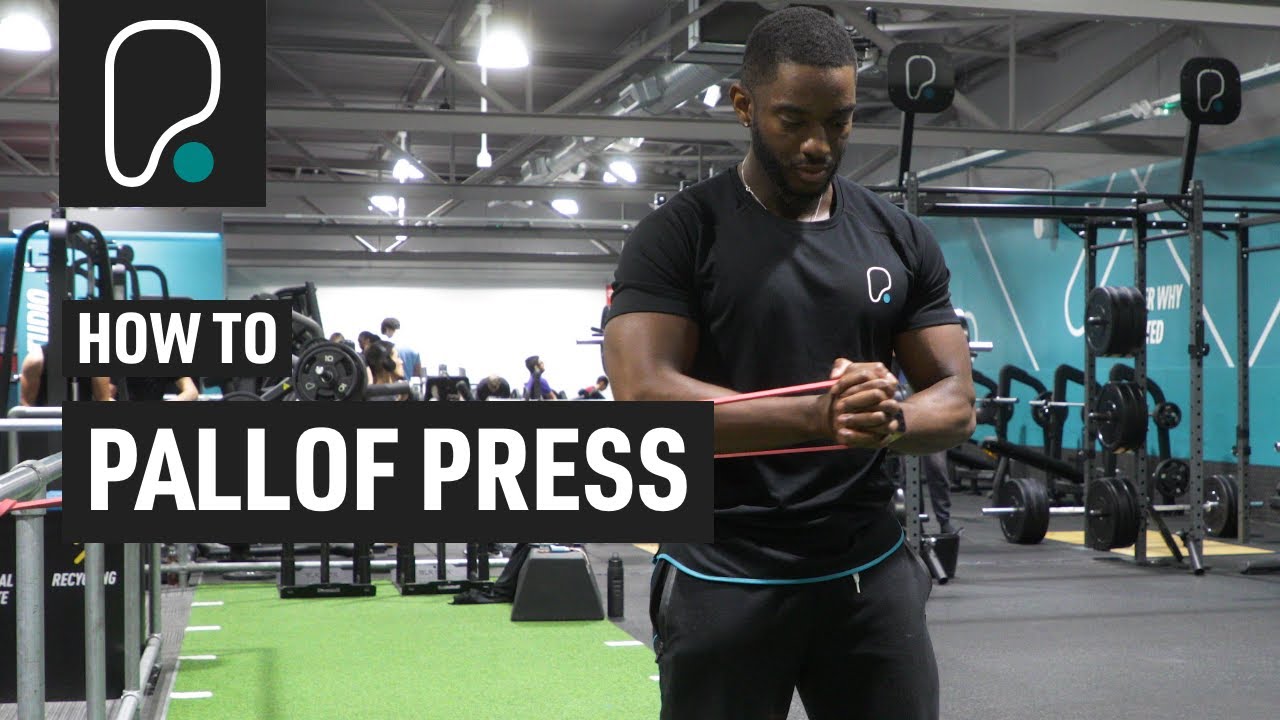
Sets: 2-3 Reps: 8-10 each side
How to do it:
- Stand side-on to an anchored resistance band or cable machine.
- Hold the handle, or end of the band, close to your chest.
- Exhale as you extend your arms in front of you, resisting the band pulling you to the side.
- Inhale as you bring your hands back to your chest.
- Complete all the reps on one side, then switch sides.
Trainer tip: Keep your torso facing forwards throughout and keep your rib cage over your pelvis.
Benefits: Builds anti-rotation strength, improves trunk control during arm and leg movement and enhances stability during faster running and hill work.
