




I asked an expert who works with seniors to recommend three exercises for the over-50s to build lifelong functional strength—here’s what he said
Getting older doesn't have to mean getting weaker


Many of us think that getting frail later in life is an inevitable part of growing old.
This couldn’t be further from the truth.
Phil Evans has spent much of his career trying to bust this myth. He is the author of Built to Last After 50 and a chartered physiotherapist in the U.K. (Broadly equivalent to a physical therapist in the U.S.)
“One of the biggest myths I hear is that getting older means getting weaker, and while we naturally lose muscle as we age, that doesn’t mean we have to accept becoming less capable,” he says.
“Our muscles remain remarkably adaptable throughout life when we continue to challenge them.
“You don’t need a gym full of equipment or hours of exercise. A few simple movements, performed consistently, can make a huge difference.”
While the best routine for you will, of course, be individual in nature, Evans has shared three go-tos from his practice.
Three strengthening exercises for the over-50s
“These are three of the exercises I prescribe most often,” says Evans, “because they strengthen the muscles we rely on every day and are suitable for almost anyone to start at home.”
- Sit-to-stand
- Wall push-up
- Step-up
“Done consistently, these three exercises can help you get stronger, move more confidently and make ordinary tasks feel that little bit easier,” says Evans.
“Strength training isn’t really about muscles: it’s about giving yourself the freedom to keep doing the things you enjoy.
“You don’t need to do everything. You just need to start somewhere, so pick one exercise, get confident with it and then build from there.”
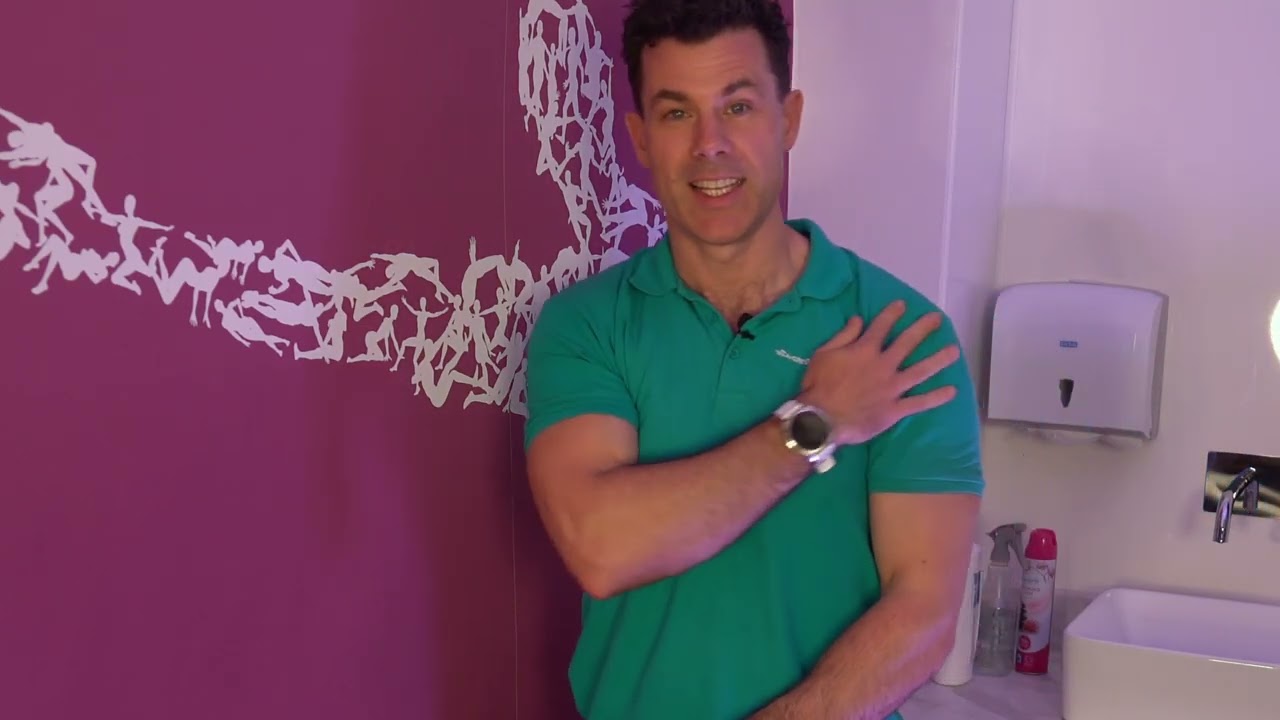
Watch Evans coach the three exercises for the over 50s
1. Sit-to-stand

Sets: 2-3 Reps: 8-12 Rest: 60-90sec
How to do it:
- Sit toward the front of a chair with your feet about shoulder-width apart.
- Position your feet underneath your knees and cross your arms over your chest if you can.
- Lean forward until your shoulders are over your feet and push through your heels to stand.
- Squeeze your glutes at the top of the movement.
- Push your hips back and bend your knees to slowly lower yourself into the chair, staying in control throughout the movement.
Form tip: Avoid dropping back into the chair. Try to control the movement all the way down.
Modification: If needed, use your hands to help you stand. As you become stronger, gradually rely more on your legs and less on your hands. “Don’t worry if you can only manage a few repetitions to begin with,” says Evans. “Start with what feels manageable, practice it regularly and build from there.”
Why it’s good for the over 50s: “Good leg strength makes daily tasks like getting out of a chair, climbing the stairs, getting on and off the toilet, carrying shopping and staying independent much easier,” says Evans.
“Most people focus on standing up, but I actually pay just as much attention to how they sit back down. Try taking three to five seconds to lower yourself into the chair rather than simply dropping into the seat.
“That controlled lowering phase makes your muscles work harder, helping build strength while also improving balance and control.
“Small improvements soon add up, and before long, you’ll often notice that everyday tasks like getting out of a chair or climbing the stairs start feeling easier.”
2. Wall push-up

Sets: 2-3 Reps: 8-12 Rest: 60-90sec
How to do it:
- Stand facing a wall with your feet hip-width apart.
- Place your hands on the wall at shoulder height, slightly wider than shoulder-width apart.
- Walk your feet backward and engage your core, making sure your body forms a straight line from your head to your heels.
- Move your shoulders back and down.
- Bend your elbows to lower your chest toward the wall over three to five seconds, lowering as far as feels comfortable.
- Push through your hands to return to the starting position.
Form tip: Keep your body in a straight line throughout the exercise and avoid letting your hips sag.
Why it’s good for the over 50s: “A simple exercise that strengthens your chest, shoulders and arms without asking you to get down onto the floor or perform a full push-up, and almost everyone can do it.”
Evans says that often people first notice their strength is getting limited when simple things start feeling harder than they used to.
“Whether it’s lifting shopping into the car, pushing yourself up from the floor or picking up and holding your grandchildren, good upper body strength makes those moments feel easier and more confident.
“Many people dismiss wall push-ups because they look too easy. The reality is that they’re one of the safest ways to build upper-body strength, especially if you’re just getting started or returning after a break.
“I encourage people to slow the lowering phase to around three to five seconds rather than rushing through each repetition. That extra control makes your muscles work harder while also improving shoulder stability and technique.
“Once you can comfortably complete your repetitions, simply move your feet a little further away from the wall to make the exercise more challenging.”
3. Step-up
Sets: 2-3 Reps: 8-12 each side Rest: 60-90sec
How to do it:
- Stand facing the bottom step of a staircase.
- Place one foot fully onto the step and push through your heel to lift yourself until your feet are level again.
- Step back down slowly, keeping the movement controlled.
- Complete all repetitions on one leg before changing sides.
Form tip: Keep your foot, knee and hip in line throughout the movement. Don’t let your working knee fall inwards.
Modification: Hold onto a handrail if you need extra support.
Why it’s good for the over 50s: “If climbing the stairs has started to feel harder than it used to, this is one of the first exercises I’d recommend,” says Evans.
“It’s also one of the best exercises for building confidence on one leg, which becomes increasingly important for balance as we get older.
He explains that step-ups mimic one of the most important movements we perform every day, making them an effective functional exercise.
“One of the biggest reasons people lose confidence as they get older is because everyday movements gradually start feeling more difficult, so they begin avoiding them,” says Evans.
“Step-ups allow you to practice one of those everyday movements in a safe and controlled way.
“I encourage people to focus on quality rather than speed. Push through the leg that’s on the step rather than pulling yourself up with the other leg, then lower yourself back down over three to five seconds.
“That controlled lowering phase makes your muscles work harder while also improving balance and confidence.”
“I like this exercise because it doesn’t just build strength. It also challenges your balance, coordination and confidence.
“The stronger and steadier you feel on one leg, the more confident you’ll often feel walking outdoors, climbing stairs and staying active.”

Evans has over 20 years of experience helping people over 50 move better, get stronger, and stay independent.
He began his career in elite sport, working with professional and Olympic athletes, before specializing in helping older people stay active and confident.
He owns Urban Body, a clinic in Solihull, U.K., which combines evidence-based physical therapy with advanced rehabilitation to help people take control of their health.
