A personal trainer says these are the five exercises you should start with if you’re new to working out
And they’re easy to do from home


If you want to start working out, you don’t need a gym. In fact, for some people, it can be a good idea to avoid the gym at first, because it can feel intimidating exercising next to people with more experience.
“One of the biggest misconceptions about fitness is that there’s a right way you’re supposed to feel or a specific number you’re supposed to hit,” says Renee Simms, a personal trainer and owner of Alida 126 in Chicago.
The trick is to trust your judgement. “The most effective way to build strength—especially as a beginner—is to listen to your body,” says Simms. “Some days you may feel strong and ready to push forward, while other days your body may need a step back. Both are part of the process.”
To help you get started, Simms has recommended five exercises you can do from the comfort of your home that are perfect for beginners. Each exercise is functional, accessible and easy to adjust as you progress.
1. Sit-to-stand squat
“The sit-to-stand squat is one of the most important movements you can train because it mirrors something you already do every day,” says Simms.
It works on your legs, glutes and core, while teaching your body how to move efficiently and safely.
How to do it:
- Sit on a chair, bench or couch, with your feet flat on the floor hip-width apart.
- Lean slightly forward, press through your heels, and stand up.
- Slowly lower yourself back down with control and repeat.
Make it harder: “As you gain strength and confidence, you can gradually lower the surface you sit on,” says Simms.
“The key is progression based on comfort. A lower seat requires more strength and stability, but there is no rush to get there.”
2. Step-up
“Step-ups are another highly functional exercise that builds leg strength while also improving balance and coordination,” says Simms.
How to do it:
- Stand in front of a staircase, a sturdy box or step.
- Place one foot onto the surface.
- Press through your front foot to stand up, bringing both feet together on the step.
- Step back down with control.
- Alternate your leading leg.
Trainer tip: If a step isn’t available, marching on the spot is an excellent alternative. Don’t worry if your balance feels stronger on one side, that’s completely normal. What matters is controlled movement and stability.
Make it harder: “As you become more comfortable, add a knee raise at the top of the movement and briefly pause to work on your balance before switching legs,” says Simms.
“Over time, progression may look like using a higher step, increasing the duration of the pause, or adding a light weight.”
3. Wall push-up
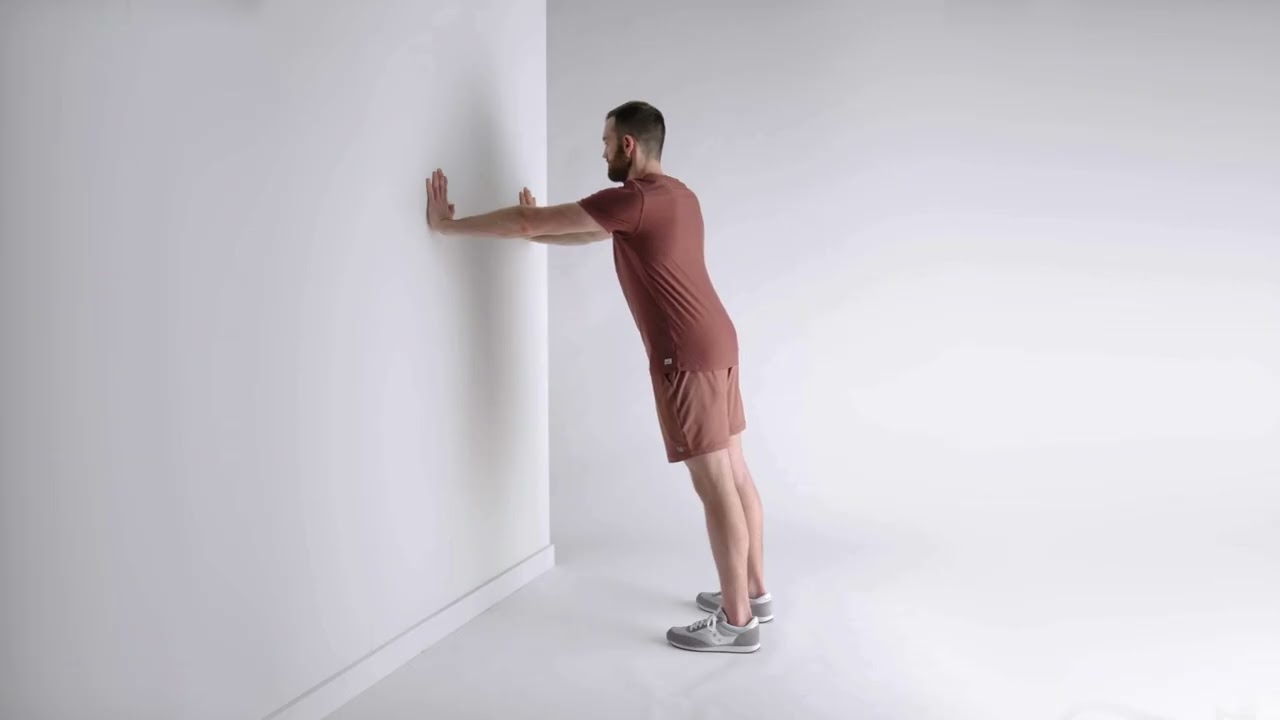
“Wall push-ups are a great way to build upper-body strength while maintaining proper alignment and balance between the front and back of the body,” says Simms.
How to do it:
- Stand facing a wall, and place your hands on the wall at chest level, shoulder-width apart.
- Squeeze your shoulder blades together then lower your chest toward the wall, engaging your upper back.
- Your heels can be slightly lifted, and pelvis tucked to support your core.
- Press back up to the starting position and repeat.
Make it harder: “You can make the exercise more challenging by moving your feet farther away from the wall or using a lower surface such as a counter or bench, eventually working your way to the floor,” says Simms.
“If you begin at a harder [lower] incline but can only complete a few repetitions, it’s perfectly okay to switch to something higher so you can finish the set with good form. Adjusting doesn’t mean you’re going backward—it means you’re training smart.”
4. Arm circle
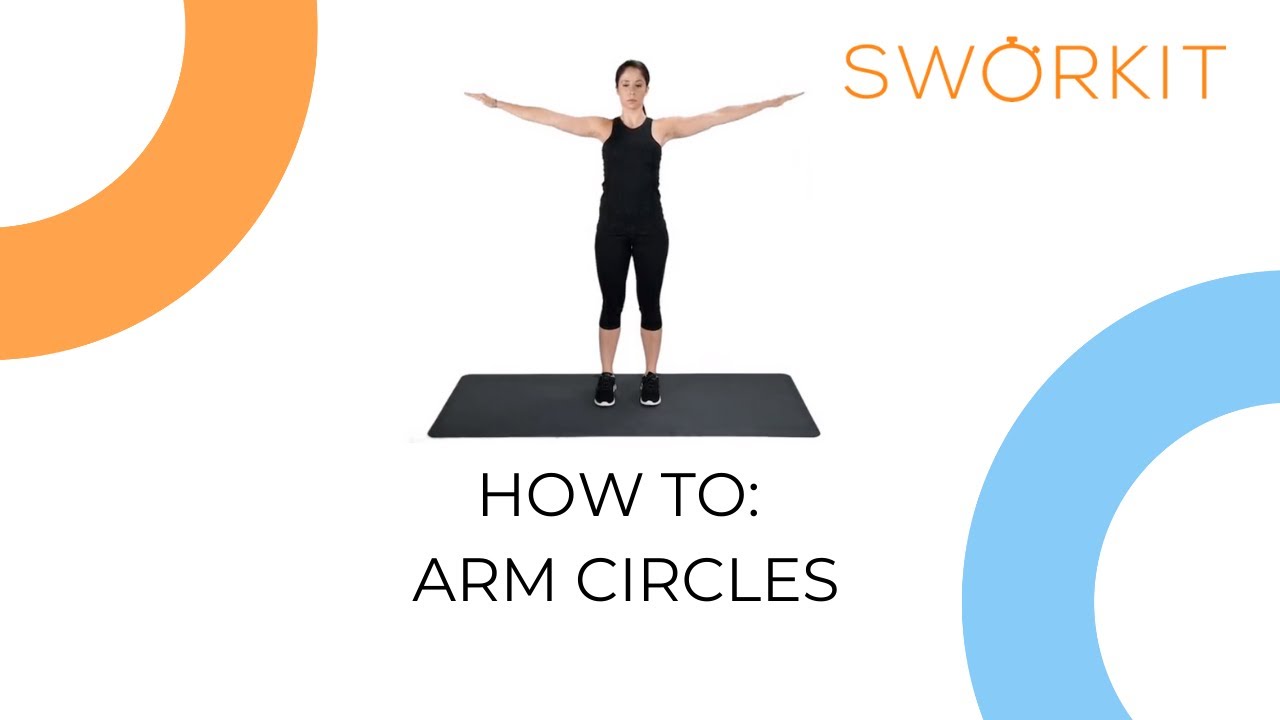
“Arm circles may look simple, but they are surprisingly effective for building shoulder endurance and improving mobility,” says Simms
- From standing, extend your arms out to the sides at shoulder-height.
- Make small controlled circles forward for 30 seconds.
- Reverse the movement and circle backward for 30 seconds.
Trainer tip: It’s common for one direction to feel easier than the other—that imbalance is normal.
Make it harder: “Start using only your bodyweight and focus on maintaining proper arm position,” says Simms. “As your endurance improves, you can increase the time or eventually add light weights to increase the challenge.”
5. Wall plank
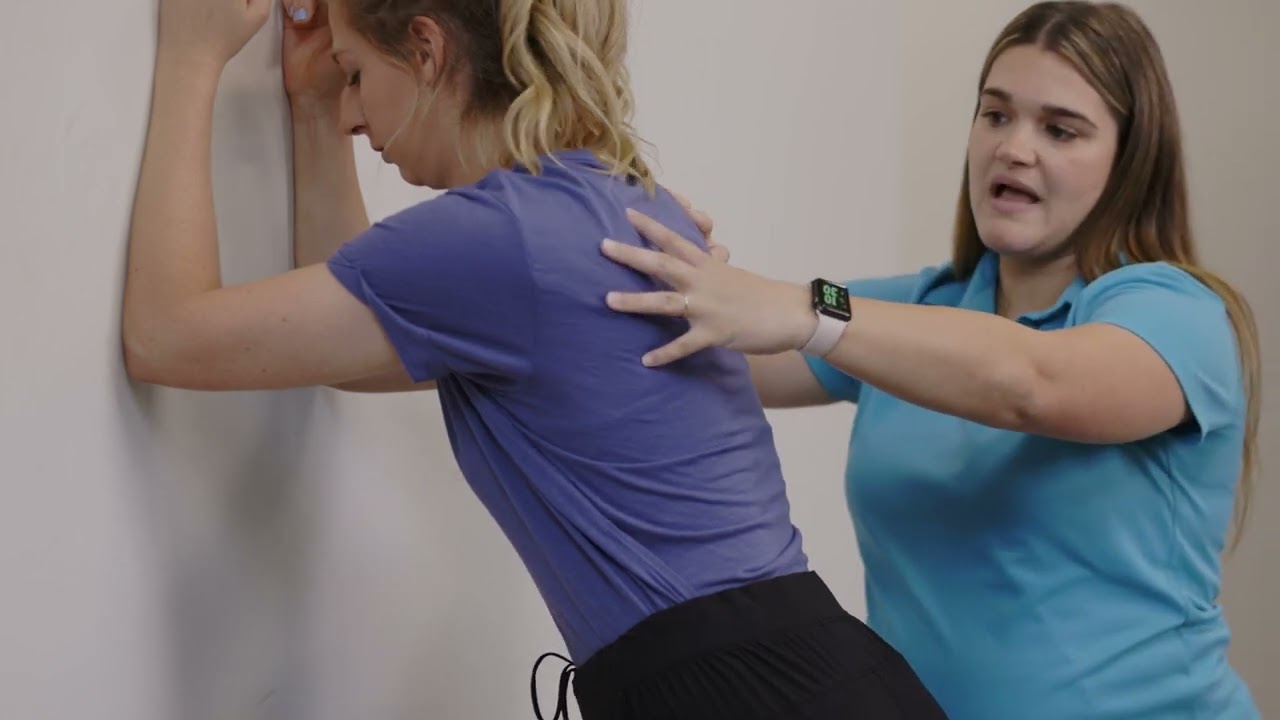
“Planks are an excellent way to build core strength to support your spine throughout daily movement,” says Simms. “The easiest way to begin is with a wall plank.”
How to do it:
- Stand facing a wall, and place your forearms or hands on the wall at chest-height roughly shoulder-width apart.
- Step back and lean forward to a 45° angle, forming a straight line from your head to your heels.
- Brace your core and hold the position for 30 seconds
- Step forward to come out of the position.
Make it harder: “As you build strength, you can progress to lower surfaces until you eventually reach the floor.”
