
You don’t need heavy weights to strengthen your lower body if you know this exercise trick
A strength and conditioning specialist shares how to get the most out of your light weights with these three lower-body exercises


A recent house move left me with just one weight: a 13lb (6kg) kettlebell—with the rest of my home gym equipment being placed in long-term storage.
Instead of giving up on strength training at home, I tried different techniques to create enough of a challenge with this one kettlebell to make working out worthwhile.
I tried a higher-rep count at first. While it worked, it made my workouts too long for my liking. Then I tried doing unilateral versions of my favorite exercises.
So my goblet squat became a Bulgarian split squat, and my deadlift turned into a single-leg Romanian deadlift.
Flush with success, I contacted Richard Bennett, a strength and conditioning coach and owner of Calibre Performance, to get an expert view on unilateral training, and a short routine readers could try at home.
Bennett agreed that unilateral exercises allow you to work with a lighter weight and still make progress, but he listed off plenty of other benefits.
- Unilateral exercises allow you to train each side independently, identifying and reducing muscle imbalances.
- They’re great for developing hip and trunk stability.
- For athletes, they are great for preparing for sports that rely on strength from the dominant side of the body (such as bowling, shotput, javelin).
- When you are injured, they allow you to continue working the unaffected limb.
He did flag that unilateral moves are not the quickest way to work out and stressed that, in most cases, fitness programs should contain both bilateral and unilateral exercises, which complement each other.
Unless you are injured or training for something specific, Bennett suggests approaching unilateral workouts by completing all reps on your weaker side first.
You can then match it with your stronger side to reduce muscle imbalances over time.
Bennett recommends the following three lower-body unilateral exercises, featuring some favorites he and I share.
1. Step-up
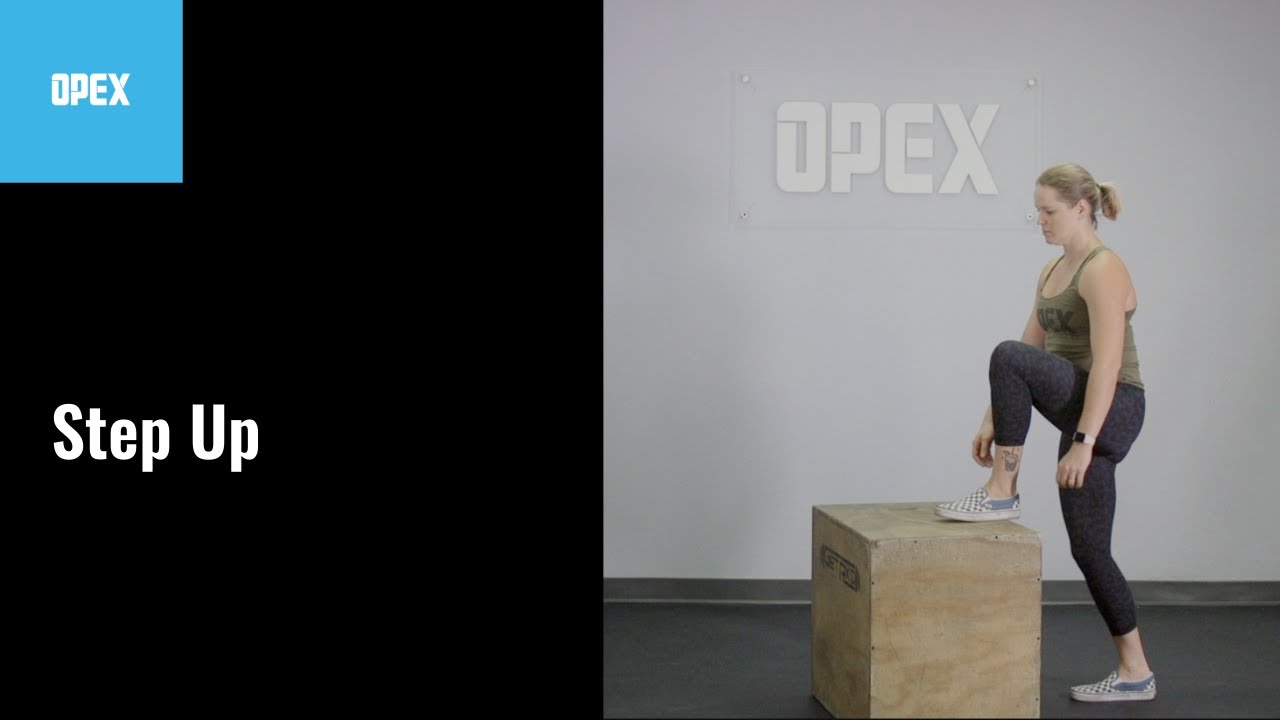
Sets: 3 Reps: 8-12 each side
How to do it:
- Stand in front of a box or other stable platform that allows you to place your whole foot securely on top without excessively rounding your lower back or rotating your pelvis.
- Engage your core.
- Place your left foot flat on the box, keeping your knee aligned over your toes.
- Push through your left foot to extend your knee and hip, lifting your right foot onto the box, maintaining a controlled and upright upper-body position throughout.
- Step down with control, leading with your right foot.
- Do all your reps on one leg, then switch legs.
Bennett says: “The step-up is simple, scalable and has a clear crossover to everyday tasks like climbing stairs. It also allows people to train one leg at a time without needing the flexibility or balance required for some more advanced single-leg exercises.
“It primarily trains the quadriceps and gluteus maximus, with contributions from the hamstrings and calves.”
2. Bulgarian split squat
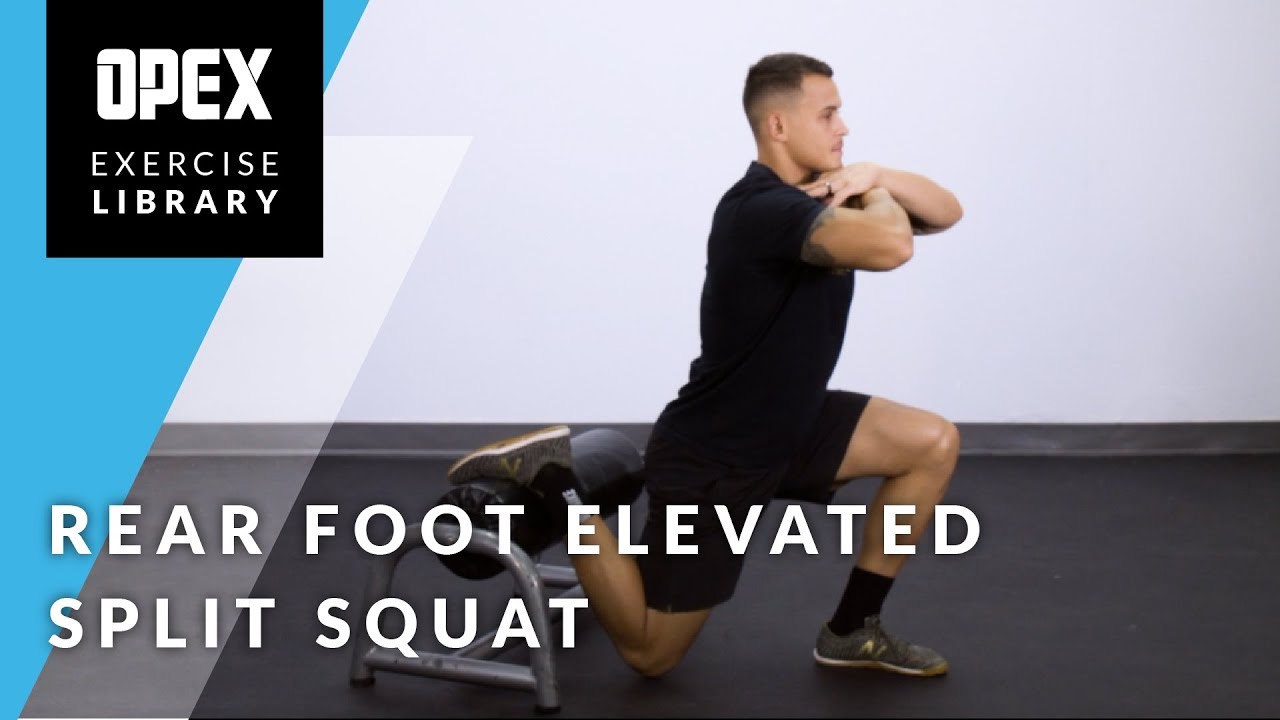
Sets: 3 Reps: 6-10 each side
How to do it:
- Stand with the top of your right foot resting on a bench behind you, and your left foot far enough forward that you can descend without losing balance or lifting your heel.
- Engage your core.
- Bend your left knee to lower, keeping your knee aligned above your foot and letting it travel forward naturally in line with your toes.
- Descend as far as you can while maintaining control, keeping a neutral spine and your left foot flat on the floor.
- Push through your left foot to return to the starting position.
- Do all your reps on one leg, then switch legs.
Bennett says: “This is one of my favorite unilateral strength exercises because it provides a substantial training stimulus without requiring the same total external load as a heavy bilateral squat.
“It is easy to progress using dumbbells, kettlebells or a barbell, but can also be regressed to a bodyweight or supported version. Small adjustments to torso position and stride length can also make it slightly more knee (quad) or hip (glute) dominant.
“The main muscles involved are the quadriceps and gluteus maximus, with assistance from the hamstrings, adductors, calves and core muscles—responsible for stabilizing the hip and trunk.”
3. Single-leg Romanian deadlift
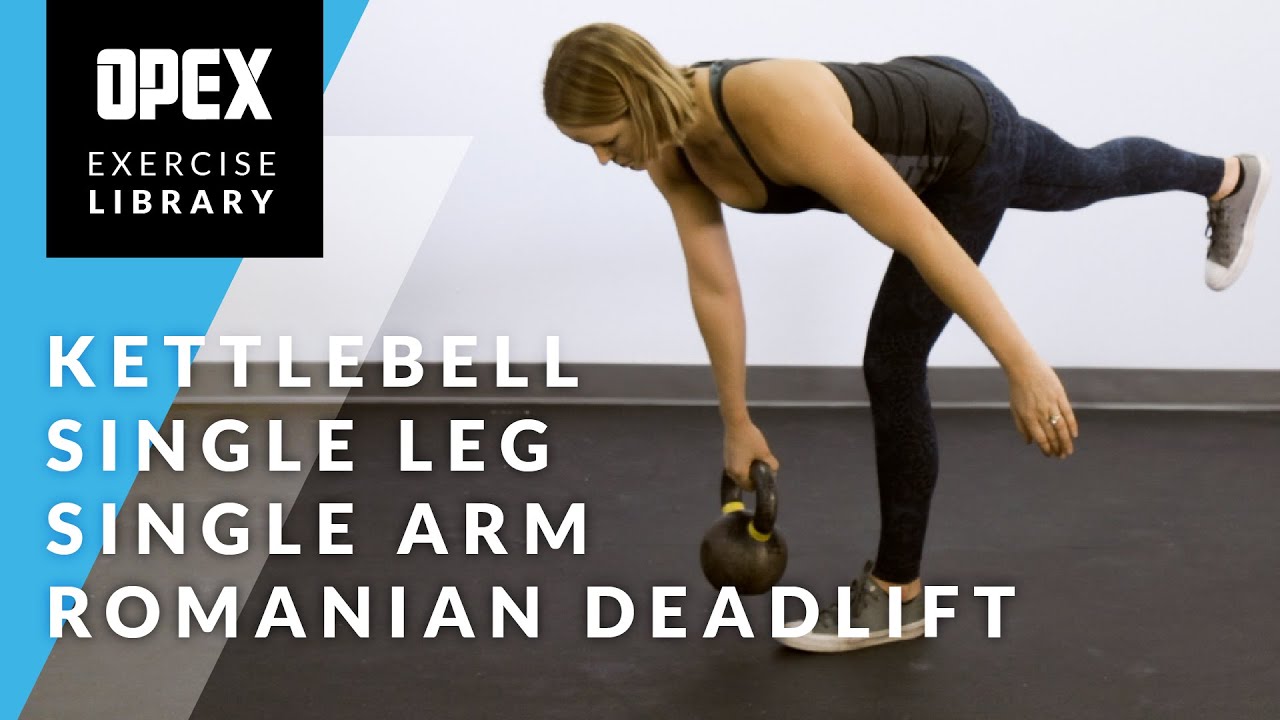
Sets: 3 Reps: 6-10 each side
How to do it:
- Stand holding a dumbbell or kettlebell in your right hand by your right side.
- Shift your weight into your left foot so you are ready to stand on your left leg, and bend your left knee slightly.
- Engage your core.
- Push your hips backward and hinge your torso forward, lowering the weight and lifting your right leg behind you as a counterbalance, keeping your keep your hips and shoulders square to the floor.
- Stop when you reach the end of your available hamstring range, or before your pelvis begins to rotate or your back rounds.
- Contract your glutes and drive your hips forward to return to standing.
- Avoid leaning backward or excessively extending your spine at the top of the movement.
- Do all your reps on one leg, then switch legs.
Make it easier: “For people struggling with balance, I usually regress to a kickstand variation or allow them to hold the wall lightly for support,” says Bennett. “Balance should not prevent the target muscles from receiving an effective stimulus.”
Bennett says: “Many programs include plenty of knee-dominant, single-leg work but neglect unilateral hip-dominant strength.
“The single-leg RDL develops the posterior chain [the muscles that run down the back of the body] while also challenging control of the pelvis, hip, foot and trunk. Holding the weight in the opposite hand creates an additional anti-rotation demand.
“This predominantly trains the hamstrings and gluteus maximus. The spinal erectors, adductors, foot and ankle muscles, and lateral hip stabilizers also contribute.”

Richard Bennett is a CIMSPA-recognized level four strength and conditioning coach and level three personal trainer based in Redditch, Worcestershire, UK. He has more than 14 years of coaching experience and works with a range of clients, from beginners to experienced athletes.
