


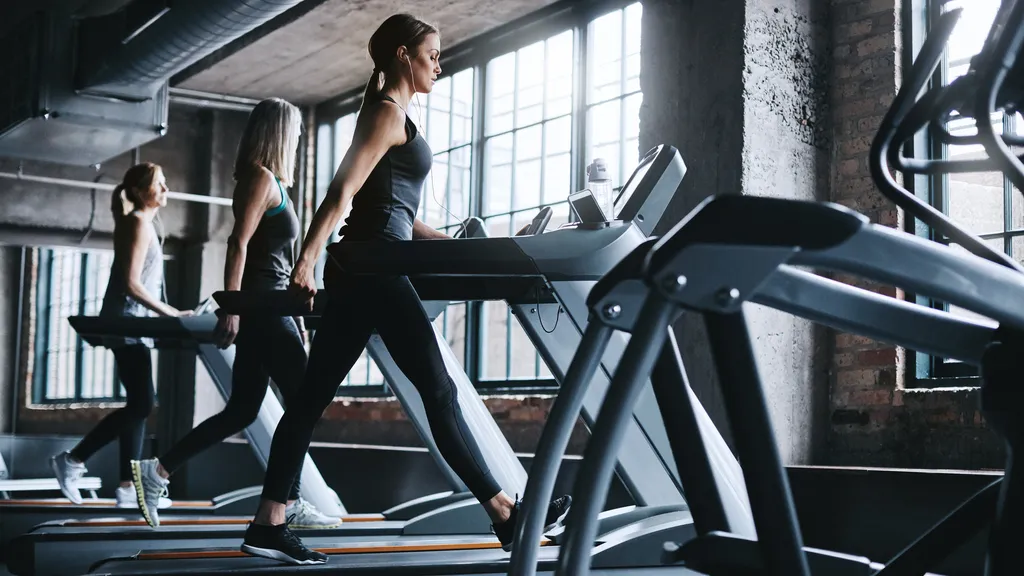


Don’t let calf pain ruin your walk or hike—do these four exercises to improve mobility in your tight calves
A physical therapist breaks it down


Calf pain is one of the worst parts of stopping during a hike. Or worse still, once you’ve returned home and relaxed, only to get up and feel the intense tightness in your lower legs.
I find it particularly bothersome when I try to start walking again after stopping for lunch. I stand up and discover my calves feel tight, and then it takes at least a mile to shake off the feeling.
When I hike, I usually cover a much longer distance than my regular walks, which results in muscle usage that my body isn’t used to, and this could be the reason for the pain in my calves, according to physical therapist Cullen Johnson.
“Calf pain commonly occurs when muscles have been overused,” says Johnson of ATI Physical Therapy.
“Sudden increases in activity, inadequate warm-ups, muscle strains or limited ankle mobility can all be culprits, too.”
I asked Johnson what to do about my tight calves on the trail, and the subsequent soreness I tend to wake up with the day after the trek.
He recommends the following four exercises, which will loosen and stretch calf muscles and improve mobility.
Our expert advises individuals to seek medical attention if they experience severe pain, significant swelling, redness, warmth, difficulty walking, or symptoms that persist or worsen over time, as these could indicate a serious condition.
1. Heel raise hold
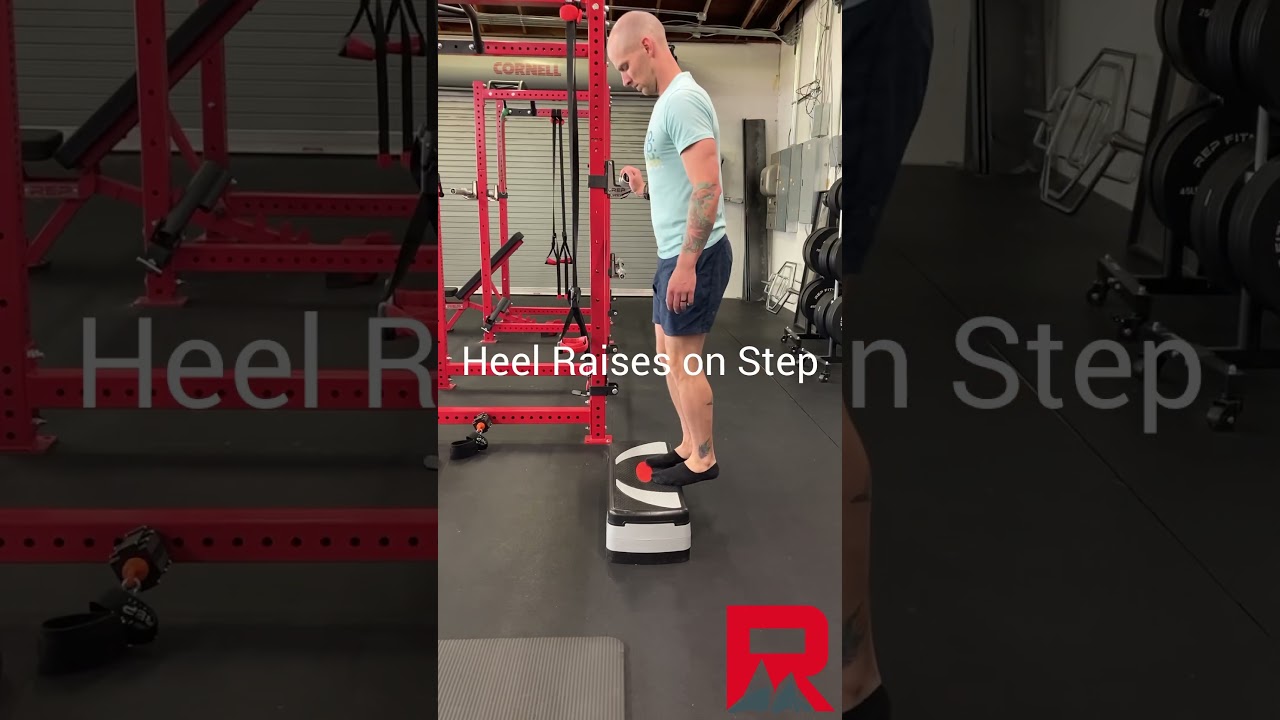
Sets: 2 Reps: 10 Time: 10sec
- Stand on a step with a straight back and your heels hanging off the edge. If you struggle with balance, hold onto a banister or wall.
- Shift your weight onto your toes and raise your heels in the air.
- Hold in this position for 10 seconds before coming back to the starting position with control.
Progression: To make the exercise more challenging, hold a weight, or wear a weighted backpack as your calf strength improves.
“This exercise helps build calf strength and endurance while placing a controlled load on the muscles and tendons,” says Johnson. “Holding the position can also help reduce discomfort and improve the calf's ability to handle everyday activities like walking, climbing stairs, and exercise.”
2. Heel raise with tennis ball
Sets: 3 Reps: 12
- Stand on a flat surface with your back straight and a tennis ball held between your heels. Keep the ball just below your inner ankle bones.
- Slowly rise onto your toes, keeping the ball stable between your heels with a light squeeze.
- Slowly lower to the starting position, and repeat.
“This exercise strengthens the muscles that support the arch of the foot and stabilizes the ankle,” says Johnson.
“Better ankle stability can help reduce stress on the calf muscles during walking, running, and other daily activities.”
3. Ankle mobility exercise
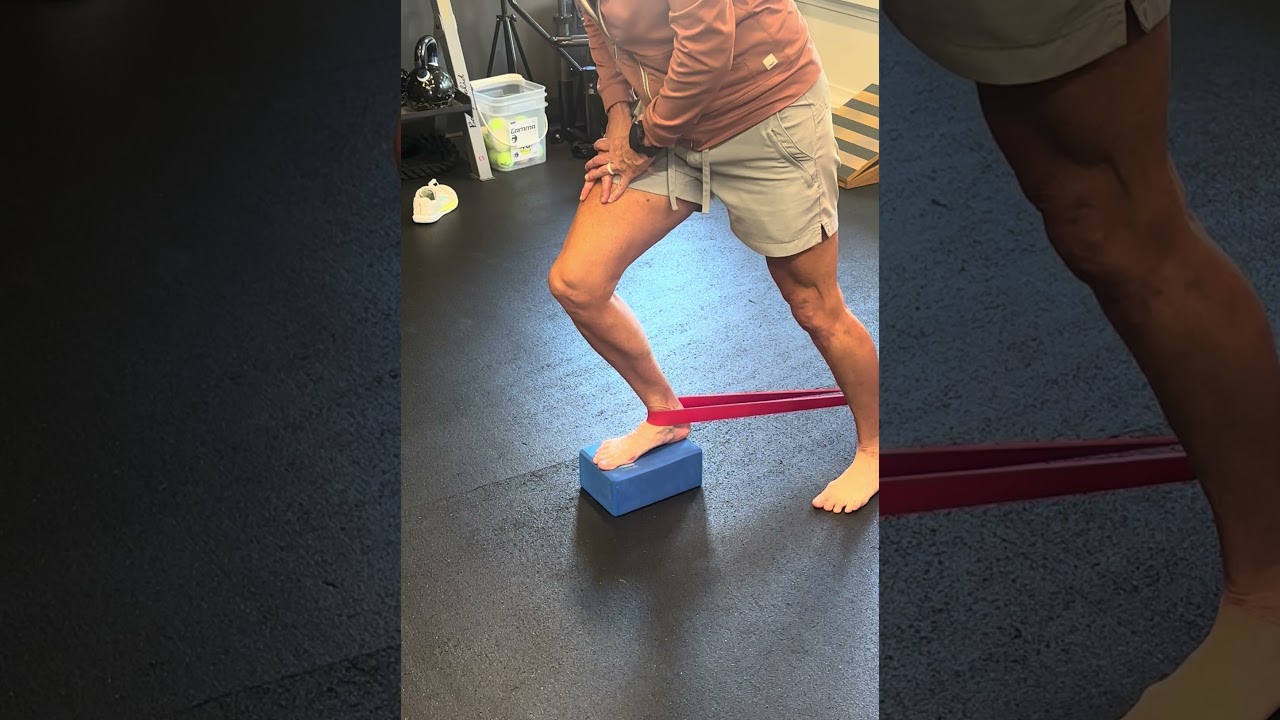
Sets: 2 Reps: 15 each side
- Secure one end of a thick looped resistance band around a secure anchor point.
- With your back to the anchor point, place the other end of the band around your left ankle, just above the foot.
- Place this foot on a shallow step or yoga block.
- Your right foot should remain behind the block, so you are in a staggered stance—this is your starting position.
- Bend your left knee, bringing your weight forward until your knee is over the toes of your elevated foot. You should feel the resistance band pull your foot backward slightly.
- Extend your left knee to return to the start.
- Do all your reps on one side, then switch sides.
“This exercise helps improve ankle mobility, which is important for walking, squatting, running, and climbing stairs,” says Johnson.
“Limited ankle mobility can place extra strain on the calf muscles and Achilles tendon, contributing to soreness over time.”
4. Calf roll-out
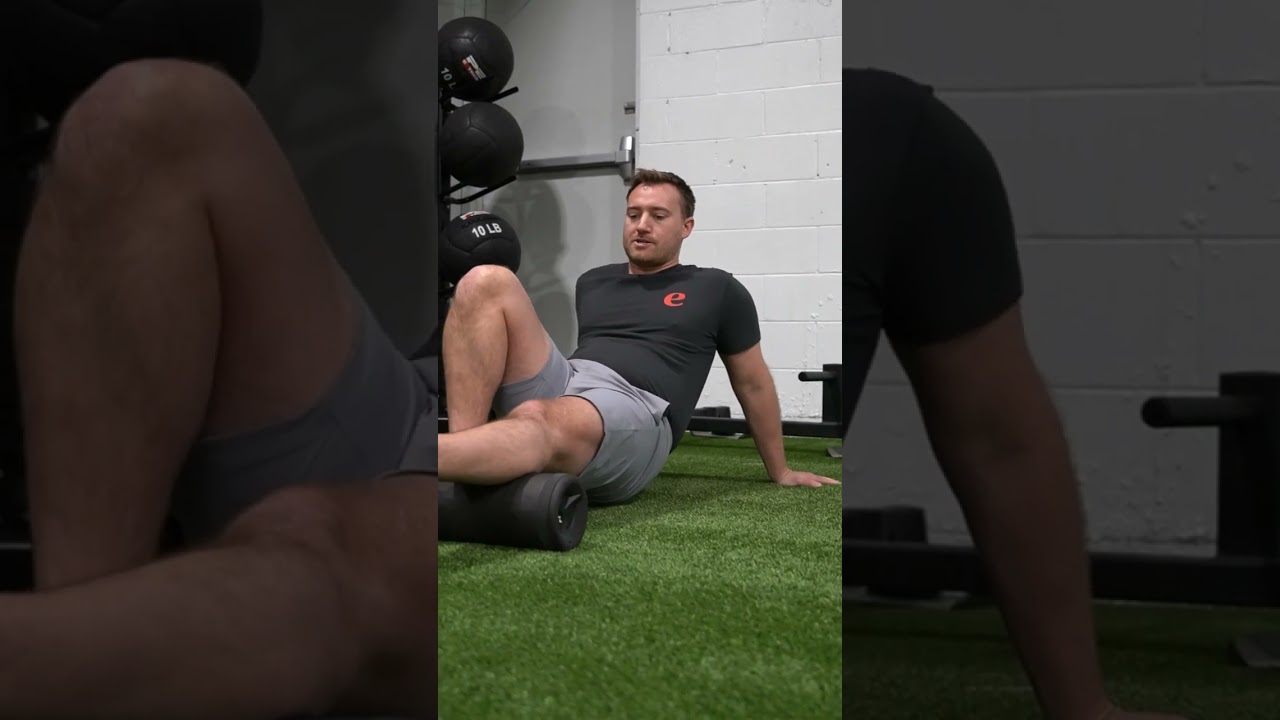
Time: 2min each side
- You will need a foam roller, massage ball, or similar firm object.
- Sit on the floor with your spine straight and your legs extended. Place your roller under the middle of your calf.
- Move your leg up and down the roller with moderate pressure. If you experience pain, you are pressing too hard.
- Repeat the movement for two minutes per side, noting where you feel the most tension.
“Foam rolling or self-massage can help reduce muscle tightness and improve circulation to the area. It can also be a helpful part of a warm-up routine before exercise or physical activity,” says Johnson.
