




Three moves to support your knees and alleviate joint pain, recommended by an orthopedic physical therapist
These exercises address three common causes of knee pain: tight hip flexors, tight inner thigh muscles and restricted ankle mobility


Knee pain is difficult to ignore. Every time you take a step, there it is.
It’s a widespread occurrence too. Orthopedic physical therapist Dr Andrew Gorecki, fellow of Applied Functional Science (AFS) through the Gray Institute, tells Fit&Well that knee pain is one of the most common problems he sees at his clinic, Superior Physical Therapy.
But knee pain may not indicate a problem with the knee itself. The AFS approach looks at the joints in the context of the rest of the body. Gorecki explains that the knee is part of a kinetic chain—a system that works together to create motion.
“The femur (thigh bone) connects the knee to the hip above, the tibia (shin bone) connects the knee to the foot and ankle below. The knee itself is a hinge—it’s not designed to rotate or translate side-to-side.
“When the hip above or the ankle below stop moving the way they should, the knee absorbs motion it was never built to absorb. That’s when pain starts.
“Fix the hip and the ankle, and most knee pain resolves on its own.”
Addressing tight hip flexors, tight inner thigh muscles and restricted ankle mobility—the three most common causes of knee pain— is vital. Gorecki suggests the three moves below to do that.
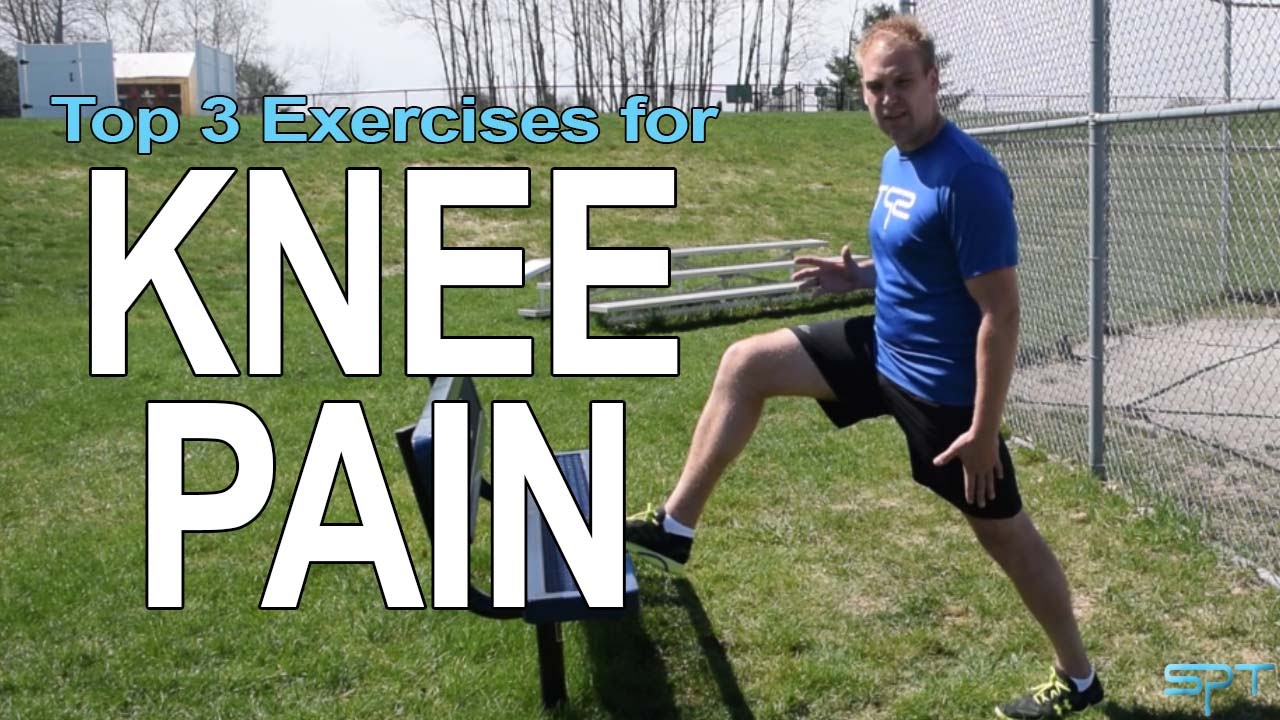
Watch Dr Andrew Gorecki demonstrate his top three exercises for knee pain
Our expert shared the following clinical note. “If this routine isn't helping after two weeks of consistent practice (twice a day), don’t give up hope. It just means the specific driver of your knee pain may be different and warrants a hands-on assessment.” Contact your health care provider before undertaking these exercises if you have concerns.
1. Hip flexor stretch
Sets: 1 Time: 30sec per plane of motion, per leg
Targets: Hip flexors: psoas and rectus femoris
“Tight hip flexors are a primary driver of knee pain because they pull the femur into a forward position that throws off knee tracking,” says Gorecki.
“Working this muscle in all three planes restores how the hip actually has to move during walking, stairs, and athletic activity.”
How to do it:
- Face a sturdy chair or bench. Turn your right foot in slightly and place your left foot on the bench. Keep your right leg straight and your right foot flat on the floor.
- Front-to-back: Carefully move your hips forward toward the bench, then back, going back and forth for 30 seconds. You should feel a stretch in the front of your right hip.
- Side-to-side: From the same position, move your hips side to side for 30 seconds.
- Rotation: Slowly circle your hips for 15 seconds in each direction.
- Switch legs and repeat the full sequence on the other side.
2. Adductor stretch
Sets: 1 Time: 30sec per plane of motion, per leg
Targets: Adductors: the inner thigh and groin muscles
“When the adductors stay tight, the femur rotates inward and the knee tracks poorly,” says Gorecki. “This is a major contributor to patellofemoral pain (kneecap pain) and medial knee pain. Restoring three-plane adductor mobility lets the knee track straight again.”
How to do it:
- Stand with a sturdy chair on your left side. Place your left foot on the chair, so the inside of your leg faces forward. Keep your right leg straight with your knee locked.
- Side-to-side: Carefully move your hips toward the chair and back for 30 seconds. You should feel a stretch in the inner thigh of your left leg.
- Front-to-back: From the same position, shift your hips forward and back for 30 seconds.
- Rotation: Slowly circle your hips for 15 seconds in each direction
- Switch legs and repeat.
3. Calf stretch
Sets: 1-2 Reps: 10 per plane of motion, per leg
Targets: Calf muscles (gastrocnemius and soleus) and the ankle joint
“Restricted ankle dorsiflexion (lifting toes toward shin) is one of the most under-recognized drivers of knee pain,” says Gorecki.
“When the ankle can't bend forward enough during walking or stairs, the knee compensates by collapsing inward or absorbing rotational stress.
“Mobilizing the calf and ankle in all three planes is often the single change that resolves long-standing knee pain.”
How to do it:
- Stand facing a wall with your hands resting on it at shoulder height, or higher.
- Step your right leg behind you, with your right leg extended and foot flat on the floor.
- Front-to-back: Lift your left leg, keeping your knee bent, and move it forward and back for 10 slow, controlled reps. You should feel a stretch in your right calf.
- Side-to-side: From the same position, move your left leg from side-to-side for 10 reps.
- Rotation: Rotate your left leg from the hip to the left and right for 10 slow reps in each direction.
- Switch legs and repeat the full sequence.
Form tip: Keep your back heel flat on the floor at all times.

Gorecki develops and implements Remote Therapeutic Monitoring (RTM) solutions to improve patient engagement and adherence to home exercise programs. He is also the owner of Superior Physical Therapy, an outpatient orthopedic private practice in Northern Michigan, and the founder of MovementRx, a digital health platform designed to enhance clinical efficiency and patient outcomes in physical therapy.
