My osteopath told me to do this one type of daily movement to strengthen my glutes, loosen my hips and protect my lower back from prolonged sitting
Here are three ways to introduce the mighty hip hinge into your day


Face down on my osteopath's treatment table after a long, sedentary day in the office, I recently asked if anything can be done to offset the harm caused by prolonged sitting.
Without hesitation, associate osteopath Andy McIntyre BOst MSc from The Livewell Clinic in London, fired back: "Hip hinge, hip hinge, hip hinge—all day long."
Mastering this simple movement, the kind of pivoting motion involved in bowing forward then returning to an upright position with a flat back, “will undo a lot of the damage caused by sitting,” he tells Fit&Well.
“When seated for long stretches, our hip flexors can become very tight as they get used to holding us in that 90˚ posture,” McIntyre explains.
“At the same time, our glutes get very long and very weak.”
As a consequence, when we need to perform hinging movements, like lifting something off the floor, we can end up using our back too much or, when squatting, straining our knees.
Often, McIntyre finds, when people present in his clinic with lower back or knee pain, the culprit is inadequate support from the glutes and hips, causing these other body parts to pick up the slack.
“Fundamentally [prolonged sitting] deconditions the major hinge point in our body—the mechanics we've evolved to use to propel ourselves around the world,” he says.
“Working on the hip-hinge mechanics in any way that you can is going to undo a lot of that damage.”
Three ways to introduce more hip-hinges into your day
McIntyre says people who regularly groove their hip-hinge mechanics, like yoga instructors or professional athletes, make hinge movements like heavy deadlifts look easy.
“You’d be shocked at how effortless they can make it look, how smooth it is,” he says.
Conversely, people tied to their desks or who have to endure long car commutes often struggle.
“They will get to about 45˚ and their back is going to start to round, their knees are going to start to bend and they’ve just got no strength and no depth in that range at all.”
The solution is to introduce more hip hinge movements into your day with these three options.
1. Unweighted good morning
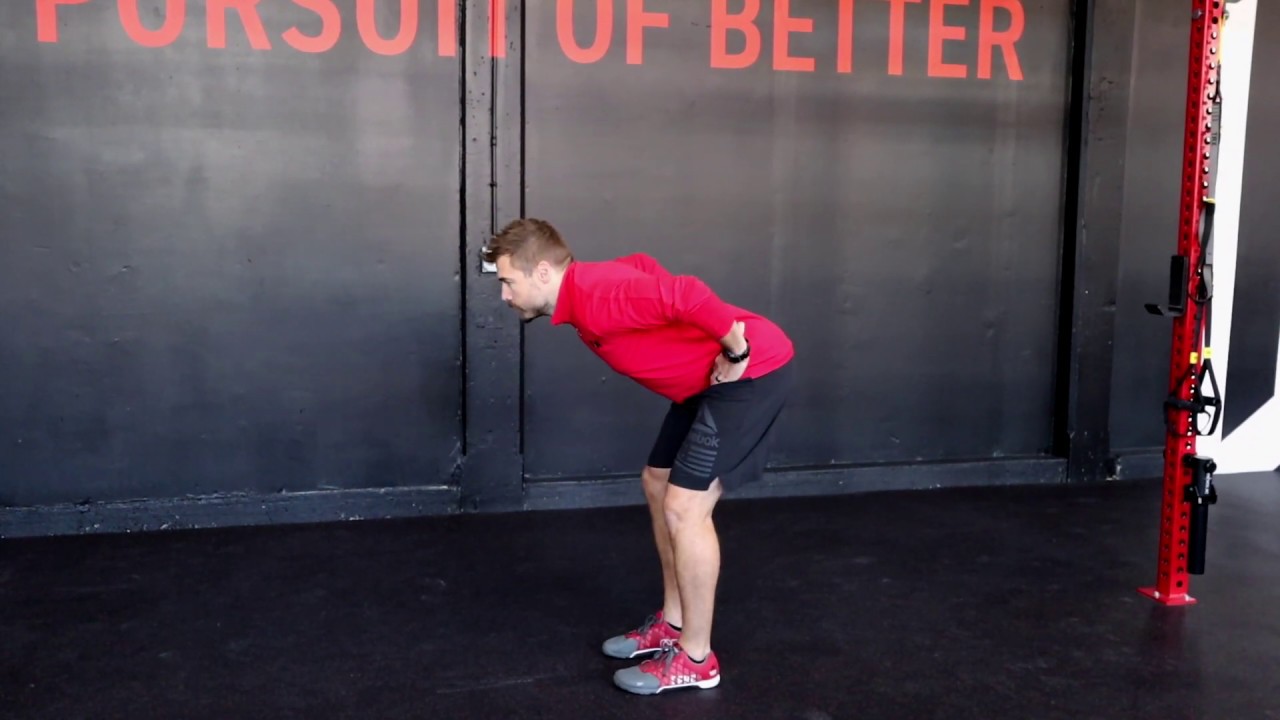
Reps: 10-12 or Time: 1min
- Stand tall with your feet hip-width apart.
- Lightly engage your core.
- Push your hips back as you fold forward.
- Keep your back straight and gaze toward the floor.
- You should feel the back of your hamstrings—rather than your lower back—take the strain.
- Hinge to a comfortable depth while keeping your back flat, then push your hips forward to straighten up.
2. Romanian deadlift
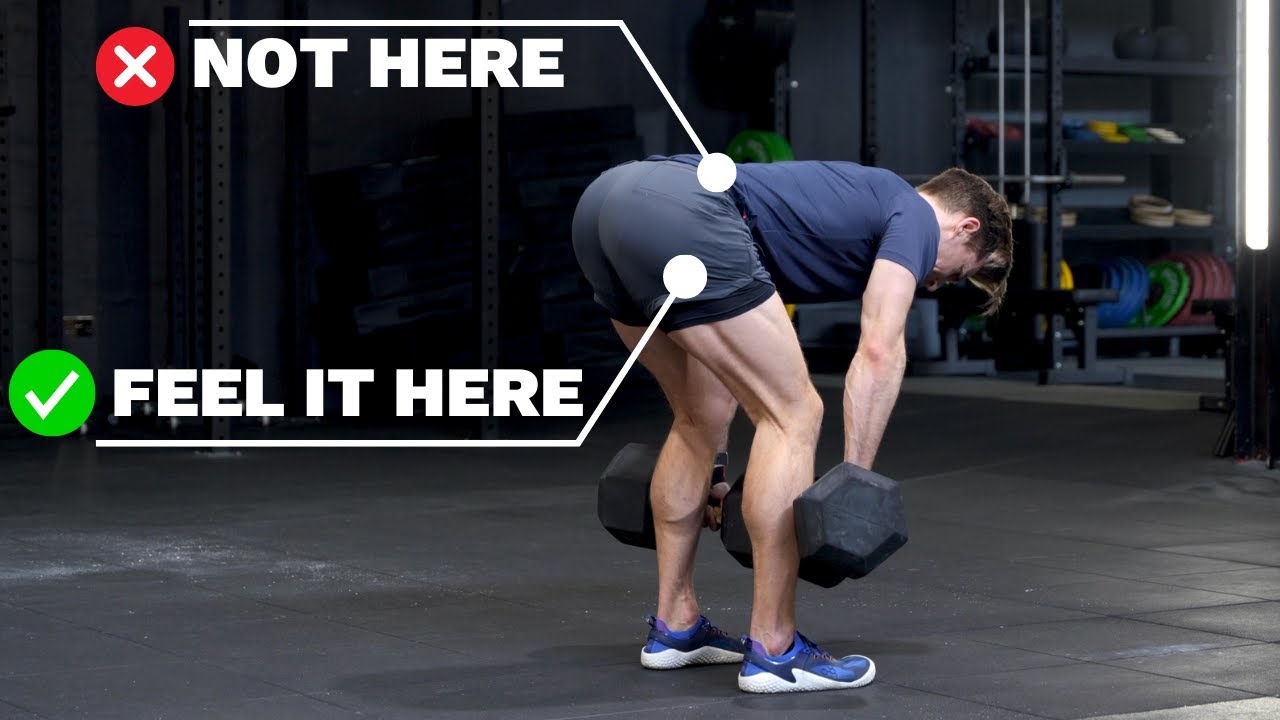
Sets: 3 Reps: 10-12
- Hold a pair of dumbbells or a light barbell in front of your thighs with your palms facing you.
- Mimic the same technique as the bodyweight good morning exercise, sitting your hips back with your core engaged to fold forward, while keeping your spine neutral from your tail bone to your head.
- Lower the weight to a comfortable level, keeping them close to your shins.
- Drive your hips forward to straighten up, squeezing your glutes at the top of the lift.
3. Sprinter knee-drive hip hinge
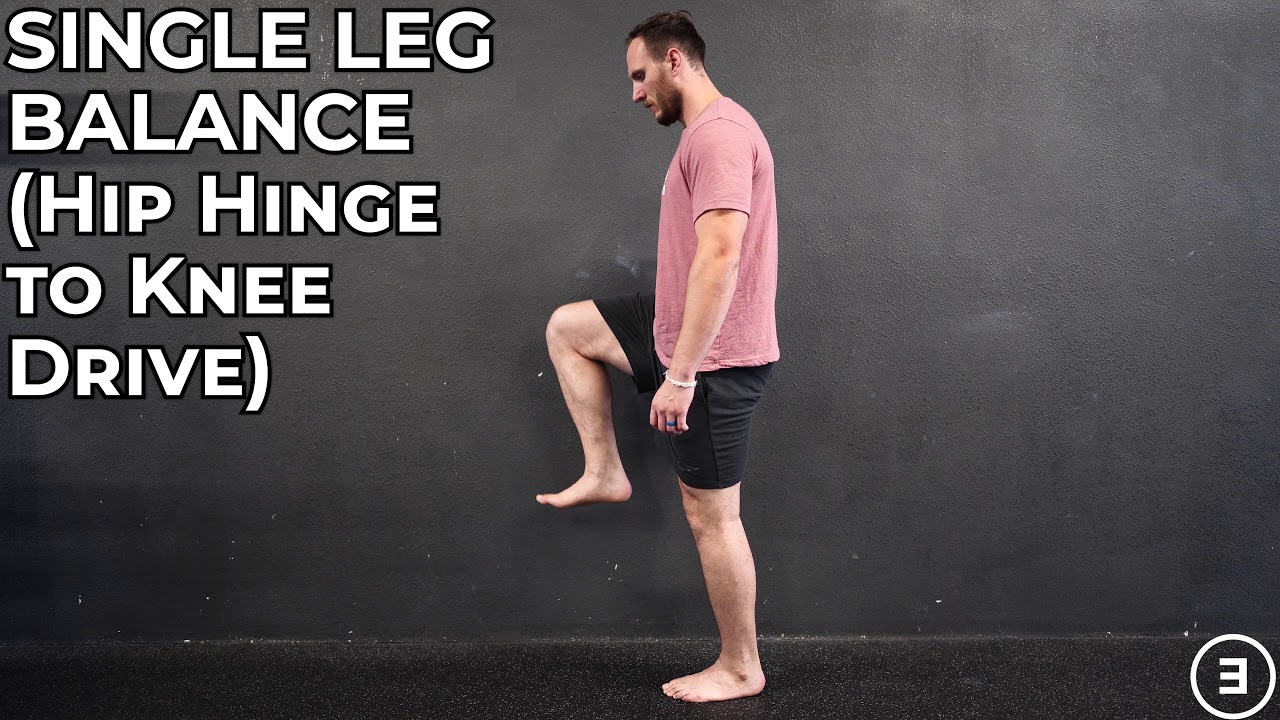
McIntyre recommends this dynamic hip-hinge stretch before running.
Sets: 2-3 Reps: 10-12 each side
- Stand tall with one leg lifted off the floor, knee at hip height and bent at 90˚. You can mimic a sprinter’s stance with your arms or let them hang by your sides.
- Sit your hips back to hinge your torso forward and move your raised leg behind you.
- In the above video the trainer keeps his back leg slightly bent (you can keep it fully bent too), but McIntyre says you can alternatively extend your leg behind you to touch the floor to help maintain your balance.
- As with the above two exercises, you should feel the back of the thigh on your standing leg load up as you hinge forward.
- Drive your hips forward to return to the start position.
- Complete all your reps on one side, then switch sides.

Andy McIntyre B.Ost (Bachelors of Osteopathy) is an osteopath registered with the General Osteopathic Council, who works at The Livewell Clinic in Clapham Junction, London. Having originally worked as a software developer, he changed his career towards sports massage and osteopathy, training at the London School of Osteopathy, and has since explored further training in 3D movement analysis and postural assessment to better assist his clients. He works with the generally desk-bound public as well as more highly-trained athletes to help get them out of pain and into better movement patterns.
