Struggling with perimenopausal hip pain? These four expert-backed moves can help
Ease stiffness and increase mobility and flexibility


More than 70% of women will experience musculoskeletal symptoms during perimenopause, according to research, with hip pain being one of those symptoms.
This is largely influenced by hormonal shifts—specifically changes in estrogen levels—as well as muscle imbalances and increased stress to the joints, explains physical therapist Denise Smith, founder of Smith Physical Therapy+.
“Periomenopause can be a rollercoaster of physical and emotional symptoms,” she tells Fit&Well. “From hot flashes to forgetfulness, symptoms can be quick in their onset and unexplainable in their consistency.
“Joint pain is one of these physical symptoms, with increased stiffness to key joints like the knuckles, shoulders, low back, knees and hips.
“Focusing on easing hip stiffness can help areas like the knee and hips as the entire system is connected. Remember that old song lyric: ‘The knee bone is connected to the hip bone?’—it is so true!”
She advises that combining dedicated stretching, regular stability and mobility work, and strength training is a good formula for addressing hormonal hip pain.
“But more importantly, it can help prevent the symptoms from worsening,” she says.
“Focusing on how strong or mobile your hip joint is can result in decreased pain, allowing a feeling of empowerment that you are in control of your body.”
Here’s how to do Smith’s four moves to improve strength, mobility and flexibility.
Exercises for perimenopausal hip pain
“These are some of my favorite exercises to keep your hips mobile, and to help the muscles that insert into the hip stay strong, flexible and stable,” Williams says. “There’s a goal for each move, be that mobility, flexibility or strengthening and stability.
“Mobility refers to how much a joint can move through its range of motion; flexibility is how well muscles can stretch; and stability is a joint’s ability to stay controlled during the move when supported by the strength of surrounding muscles.
“Building strength acts as a form of armor, helping to protect both joints and muscles as the body changes during perimenopause. It is never too late to start working on these hip exercises, so do not be intimidated—just give them a try.”
1. Hip extension Romanian deadlift
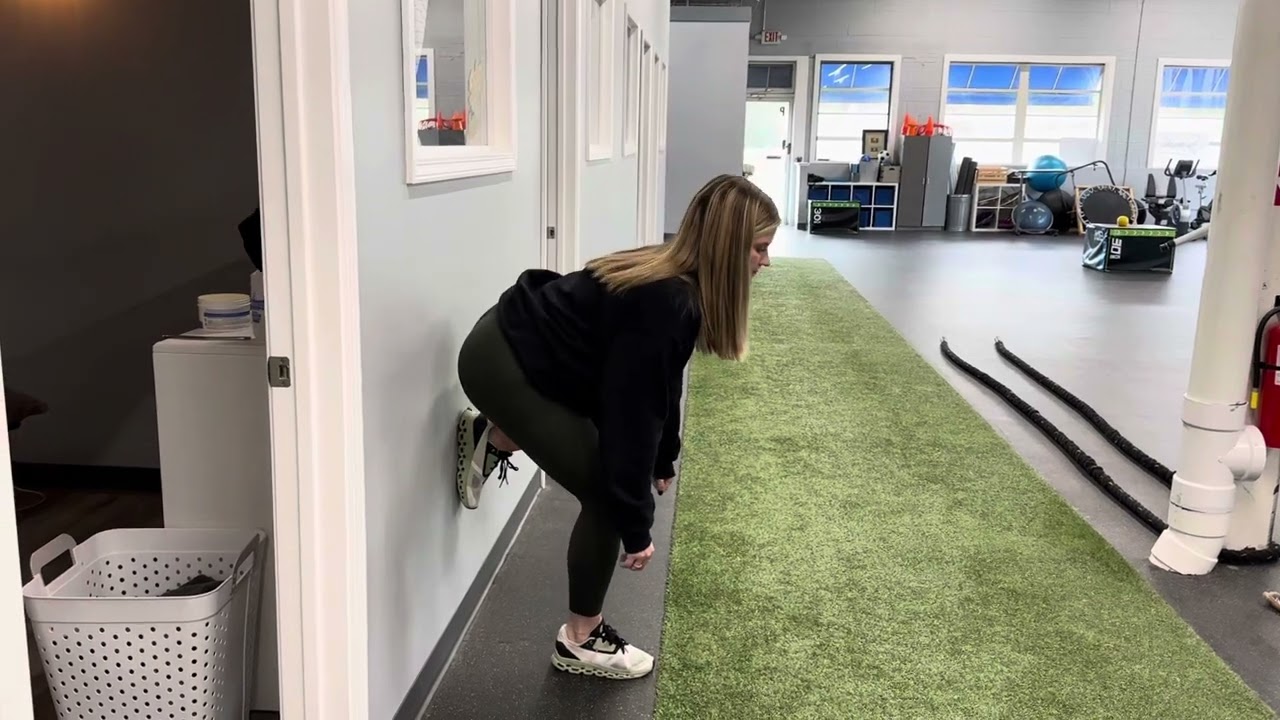
Sets: 3 Reps: 15 each side
Goal: hip strength and stability
How to do it:
- Stand with your back to a wall, and take a step forward.
- Press your left foot flat against the wall at knee height, keeping your hands by your sides.
- Push your butt back toward the wall, hinging your torso forward and lowering your arms down your legs.
- Pause at the bottom for a second or two, then push your hips forward to stand back up.
- Do all your reps on one side, then swap sides.
2. Supine butterfly stretch
Sets: 3 Time: 30sec (or three deep breaths)
Goal: hip flexibility
How to do it:
- Lie on your back with your knees bent and feet flat on the floor.
- Lower your knees gently out to the sides and bring the soles of your feet together.
- Hold for 30 seconds or three deep breaths.
3. Bridge on wall
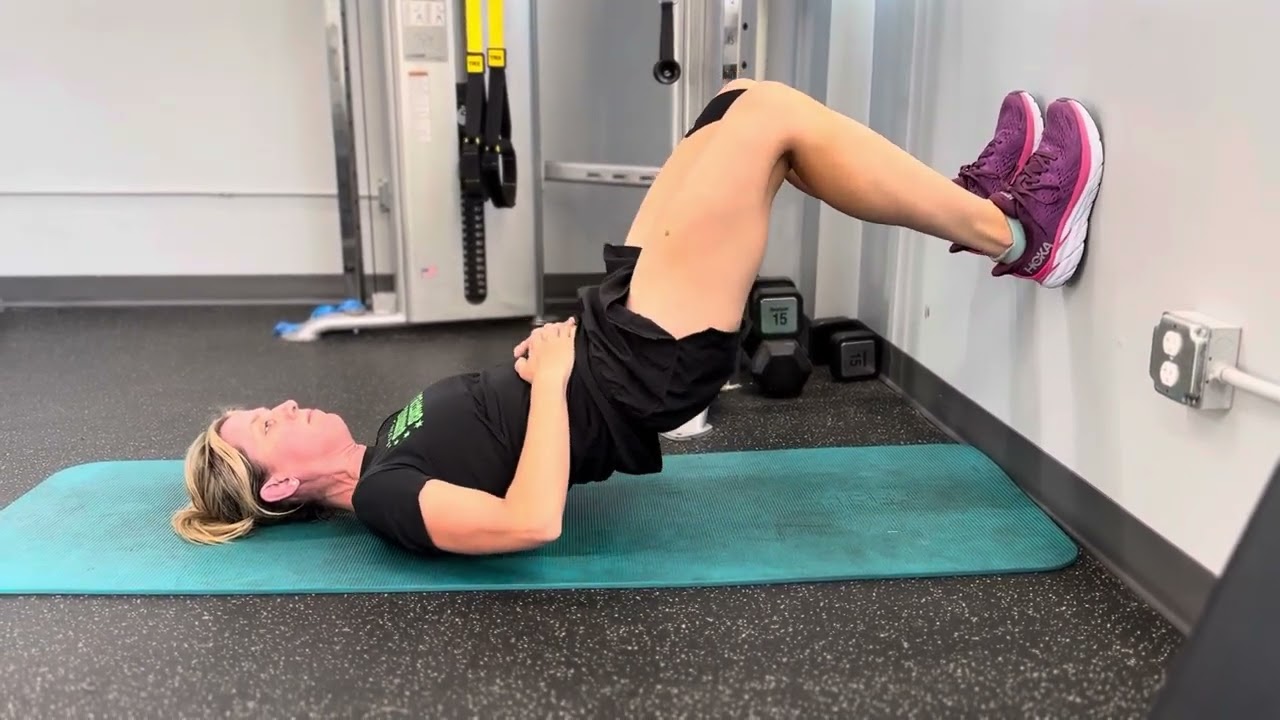
Sets: 3 Reps: 15 each leg
Goal: hip strength and stability
How to do it:
- Lie on your back with your feet near a wall.
- Place your feet flat on the wall at knee height then adjust your position so there is a 90° bend in your knees.
- Squeeze your glutes and push through the heels to lift your hips until your body forms a straight line from your shoulders to your knees.
- Pause, then slowly your butt to the floor with control.
4. Mermaid
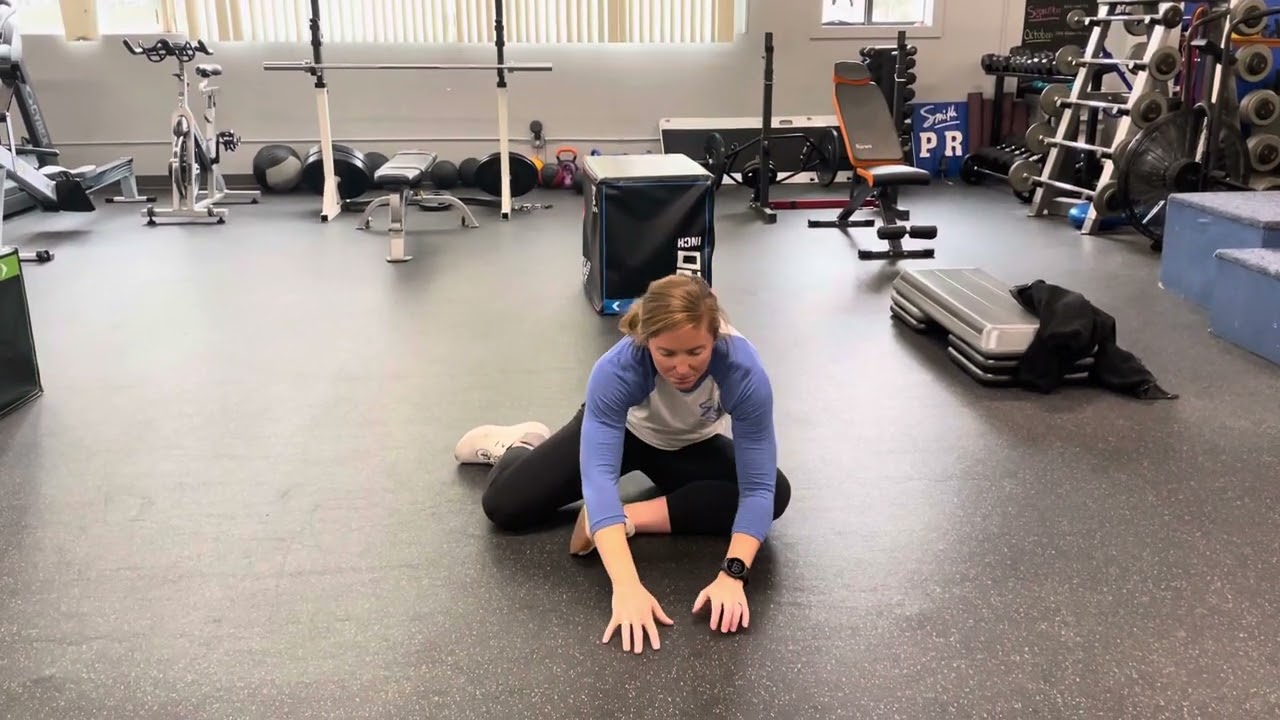
Sets: 3 Reps: 10 each side
Goal: stability
How to do it:
- Sit cross-legged on the floor.
- Move your right leg behind you, keeping your right knee bent. This is your starting position.
- Extend your spine, then reach your left arm overhead to the right.
- Return to the start, then reach your right arm overhead to your left.
- Return to the start, then lean forward, placing your hands in front of you on the floor, walking them forward as far as you can comfortably reach.
- Return to the start, then lean backward, placing your hands behind you on the floor, walking them back as far as you can comfortably reach.
- Return to the start to complete one rep.
- Do all your reps on one side, then swap the position of your legs and repeat.

the Runner and triathlete Denise Smith is a physical therapist with a wealth of advanced training qualifications. She is founder of Smith Physical Therapy+, which has three clinics in the Chicago suburbs.
She is a consultant for the Russian Olympic/National Triathlon Team and teaches courses in kinesiology at McHenry County College in Crystal Lake, Illinois. She regularly travels the US as part of the Pose Method education team with a lecture series on injury prevention and treatment.
“The musculoskeletal syndrome of menopause” in Climacteric
