




Pilates is a brilliant low-impact workout that strengthens your core, mobility, balance and coordination. But if you’re new to the practice, an expert recommends against jumping straight into a class, especially if it’s mixed ability.
Form and control are essential to Pilates, both for reducing the risk of injury and maximizing the benefits of your workout, so Complete Pilates instructor Helen O’Leary says developing your mind-body awareness should be your first step.
“We all develop movement patterns over the lifespan completely unconsciously and these movement patterns can sometimes lead to less efficient or less effective movement,” explains O’Leary.
“This can sometimes contribute to aches, pains and injuries. Or it may simply mean that we don’t feel an exercise in the intended muscle group, as we are compensating with other muscles that tend to dominate,” she says.
O’Leary has shared five moves that she believes anyone new to Pilates should learn before trying a class, to help you become aware of your form and activate mind to muscle connection.
Five foundational Pilates moves for beginners
1. Pelvic clock
When you hear a Pilates instructor talk about a neutral pelvic floor, this exercise will help you find that position and realize its importance.
“Understanding the pelvic clock movement is one of the most foundational things you can do before beginning Pilates,” says O’Leary. “Most of the time, we are simply not aware of the pelvis, let alone how it moves.”
According to O’Leary, practicing this move will help you develop pelvic floor awareness. “This can make all the difference in terms of getting the most out of an exercise, or preventing pain,” she says.
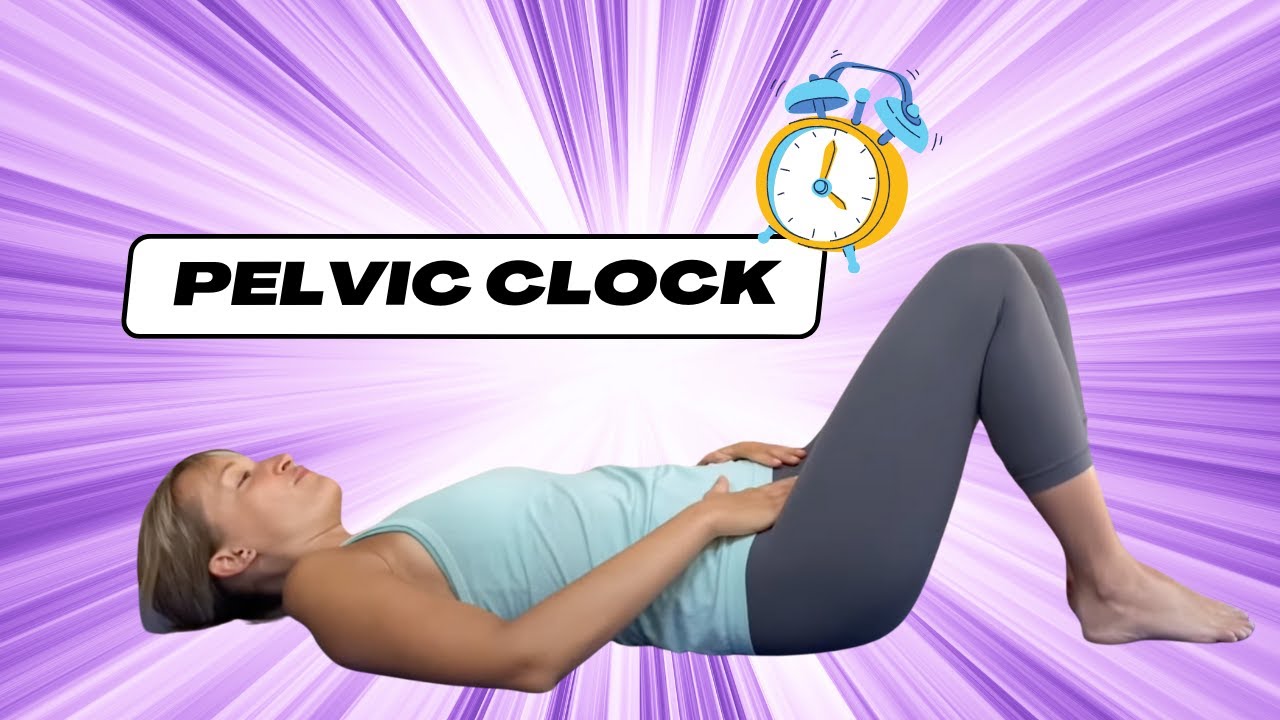
Imagine a clock face on the front of your lower belly, which you'll work your way around as you perform this move. Picture your belly button as 12 on the clock, your pubic bone is six o’clock, and the bony bits on either side of the front of your pelvis are your three and nine o’clock.
“There may be a little gap between your back and the floor, or your lower back is resting very lightly,” O'Leary says, explaining how the neutral position should feel.
How to do it:
Reps: 5 each direction
- Lie on your back with your knees bent and feet flat on the floor.
- Close your eyes and notice the weight of your body on the floor.
- Slowly start to rock your pelvis back, so that your lower back gently meets the floor, and you are tilting towards the 12 on the clock. Then tilt forwards to six o’clock. Repeat five times.
- Then tilt the clock from three to nine and repeat five times.
- Finally, do a full loop of the clock. Start by tilting towards 12 then move clockwise back to 12, then repeat in an anti-clockwise direction.
2. Bent knee opening
“While this exercise appears simple, it takes concentration and body awareness,” says O’Leary.
“The purpose of this exercise is to teach something called ‘hip dissociation’, which refers to the ability to move your leg independently of the pelvis.
“The ability to isolate one body part from another is a sign of good movement control and body awareness.”
How to do it:
Reps: 10 each side
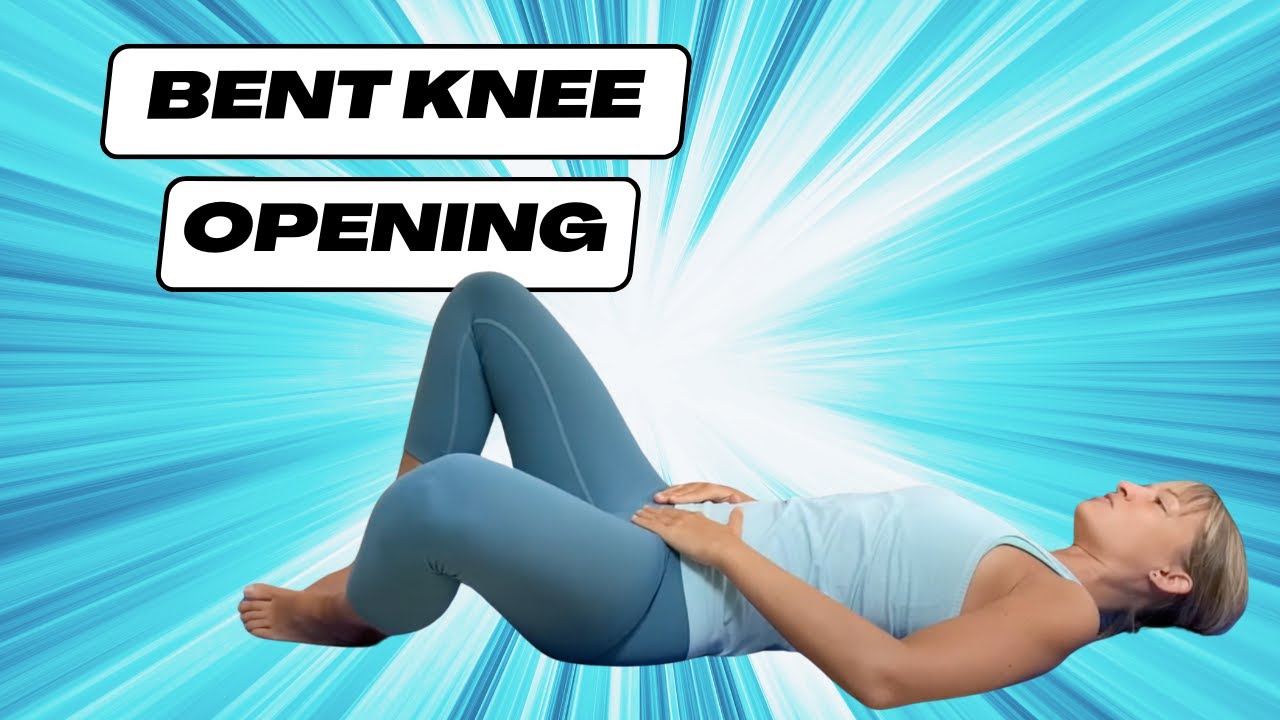
- Lie on your back with your knees bent, feet flat on the floor and your pelvis in neutral.
- Slowly lower your left knee to the side as far as you can without your pelvis moving, rolling onto the outside of your left foot.
- Reverse the movement back to the start then repeat on the other side.
- Continue, alternating sides with each rep and keeping the movement smooth and controlled. Close your eyes to help you focus on the movement.
3. Femur arc
This move will help you learn how to engage your core.
“If you can do this without your abdominals bulging up, holding your breath, and without pain, then this is a good sign that you are ready for more intermediate or advanced exercises,” O’Leary says.
“If you experience any back pain during this exercise, then you may want to stick to exercises where one or both feet are on the floor until you develop more strength.”
How to do it:
Reps: 5 each side
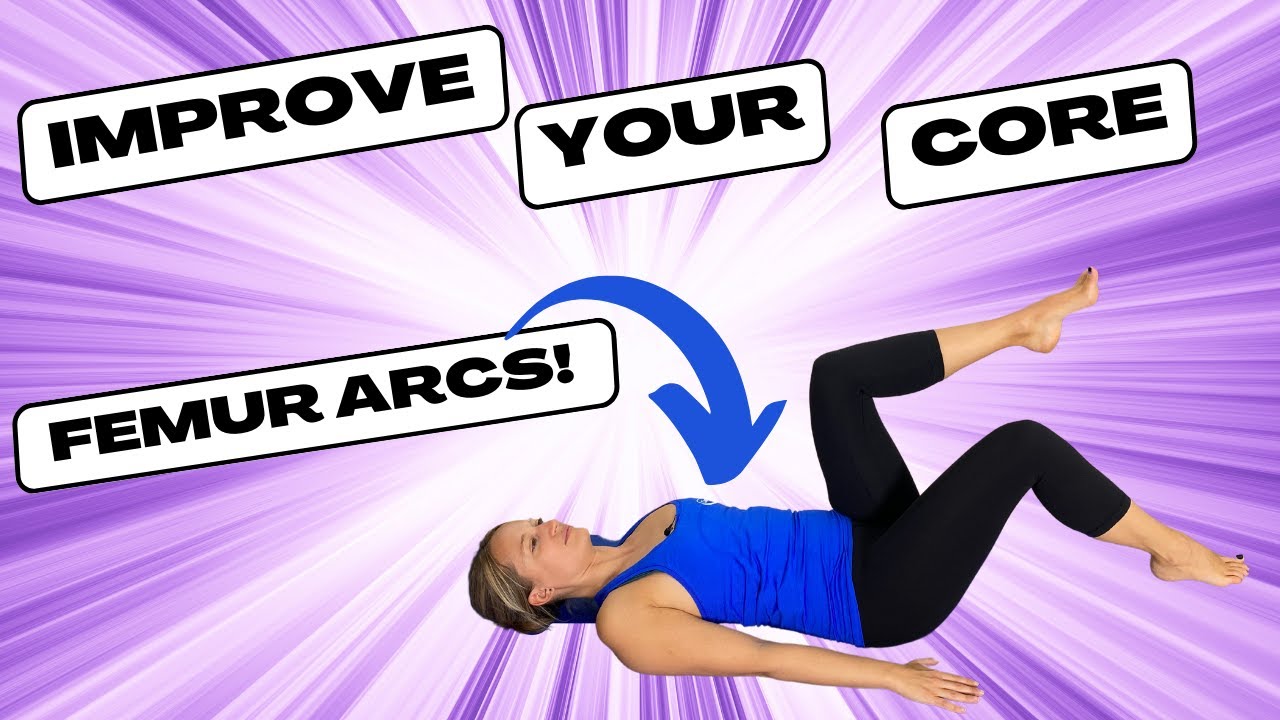
- Lie on your back with your knees bent and your feet flat on the floor.
- Slowly raise one leg until your knee is directly above your hip, bend your knee to 90° so your shin is parallel to the floor.
- Slowly raise your other leg to the same position—this is called the double tabletop position.
- Slowly lower your first leg back to the floor to tap it lightly, then raise it back to the double tabletop.
- Repeat on the other side, alternating legs until you’ve completed five reps on each side.
4. Bridging
“This is a great exercise for working on your spinal mobility and leg strength, especially the posterior chain, which are the muscles down the back of your body,” O’Leary says, explaining that they’re generally weaker than the muscles along the front of your body.
How to do it:
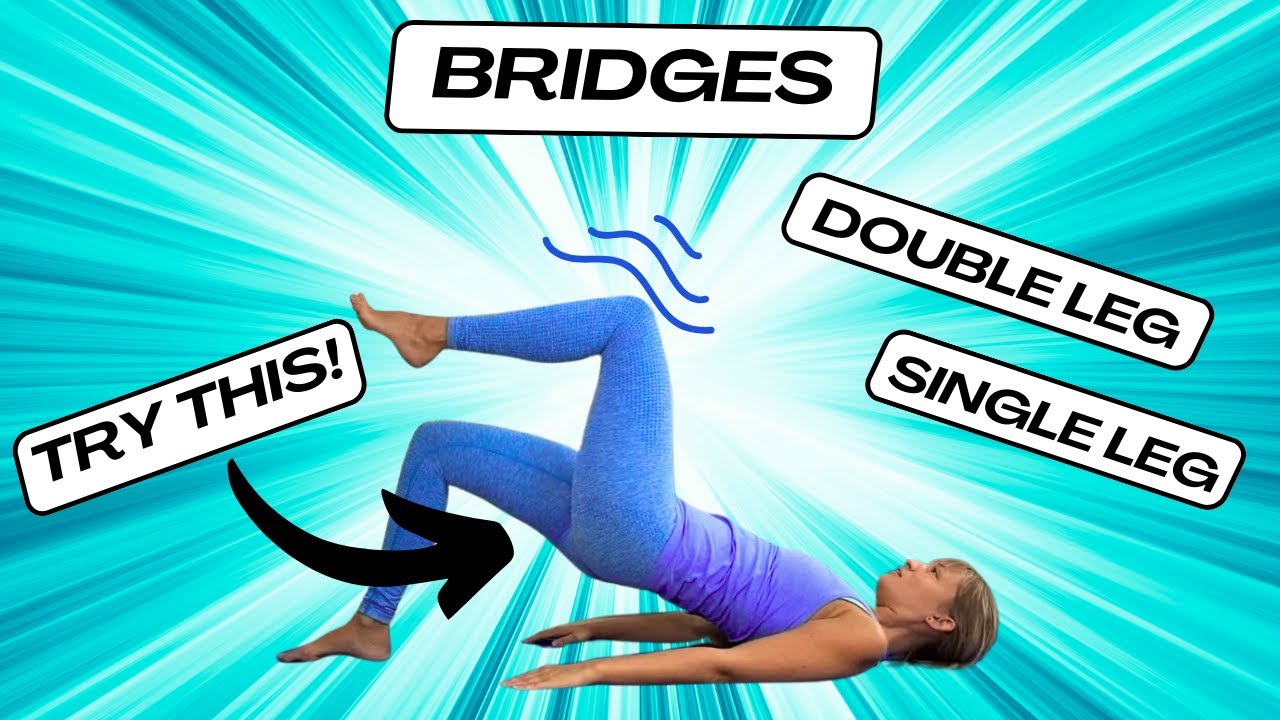
Reps: 12
- Lie on your back with your knees bent, feet flat on the floor and your heels close to your buttocks.
- Rest your arms by your sides, reaching your fingertips toward your heels.
- Press your feet into the floor to raise your hips while pushing gently forward into your knees.
- Inhale at the top of the movement, then exhale with a sigh as you lower your hips back to the floor.
Trainer tip: The sighing as you exhale helps your body soften, which will help you work on your spinal mobility.
5. Superman
"The quadruped is a great foundational exercise that can tell us a lot about the way that your whole body is moving as well as your upper-body strength," O'Leary says.
How to do it:

Reps: 5 each side
- Start on your hands and knees with your hips over your knees and your shoulders over your wrists.
- Shift your weight back so that 70% of your weight is in your lower body and 30% in your arms.
- Find your neutral spine position by rounding, then arching your back a couple of times, then pausing in the middle.
- Slowly extend one leg, sliding your foot back along the floor, then raise it to hip height, maintaining a neutral spinal position, without letting your lower back sag or your pelvis rotate.
- Slowly lower and slide the leg back in. Repeat five times on each side.
- Keeping your legs still, lift one arm in front of you to shoulder height without rotating or shifting your body weight to one side. Repeat five times on each arm.
- Now combine the movements. Reach one arm forward and your opposite leg back, maintaining your balance, hip stability and neutral spine position. Repeat five times on each side.
Trainer tip: Aim to avoid any weight shifts from side to side during any part of the movement.