




You might assume that jumping exercises are something you should avoid as you get older, but you’d be mistaken.
Although low-impact workouts are great for helping you build strength, recover from injury and protect sensitive joints, incorporating some high-impact moves into your routines could also support your body, particularly for women.
“Jump training can improve bone health, balance, and your ability to perform all kinds of activities from walking up the stairs to catching yourself if you step off a curb,” says Dr Elizabeth Knight, who researches women's health at menopause wellness platform Respin.
“These are all key areas for long-term health, and midlife is the time when these indicators can start to decline, often slowly, so you might not notice until you’ve lost a lot,” she says.
According to Knight, a solid workout routine includes strength, cardio, mobility and impact exercises—such as jumping movements.
“Adding exercises like jump training to your routine before you experience falls, fractures and weakness is the goal,” she explains. “This is a proactive and evidence-based approach to longevity: keep it, so you don’t have to try to rebuild it later on.”
Want to get in on the jumping action? Respin Health have partnered with fitness company Peloton to create workouts and programmes designed specifically for midlife women navigating perimenopause and menopause.
Below, Peloton trainer Katie Wang has shared a 10-minute jumping workout you can try at home.
The 10-minute jumping workout for midlife women
The routine that Wang has shared doesn’t require any equipment and can be done from home.
Even though it might look like a lower-body workout, Wang says you should be engaging your upper body too. “Don’t forget to leverage your arms when you’re getting into jump training,” she advises.
“Focus on your body positioning to avoid injury. In general, think about starting and landing your jump in the same position, with full hip extension at the peak of your jump.”
The workout starts with a single round of warm-up exercises to perform back-to-back. Rest for 30 seconds then move onto the jump section of the workout.
Perform two rounds of the three jump exercises. Do each move for 60 seconds, taking a 15-second rest before moving onto the next exercise.
If this is too challenging, shorten the exercise time and extend the rest time. For instance, work for 45 seconds and rest for 30 seconds.
The warm-up and workout time is just under 10 minutes in total.
Warm-up
1. Alternating knee lift
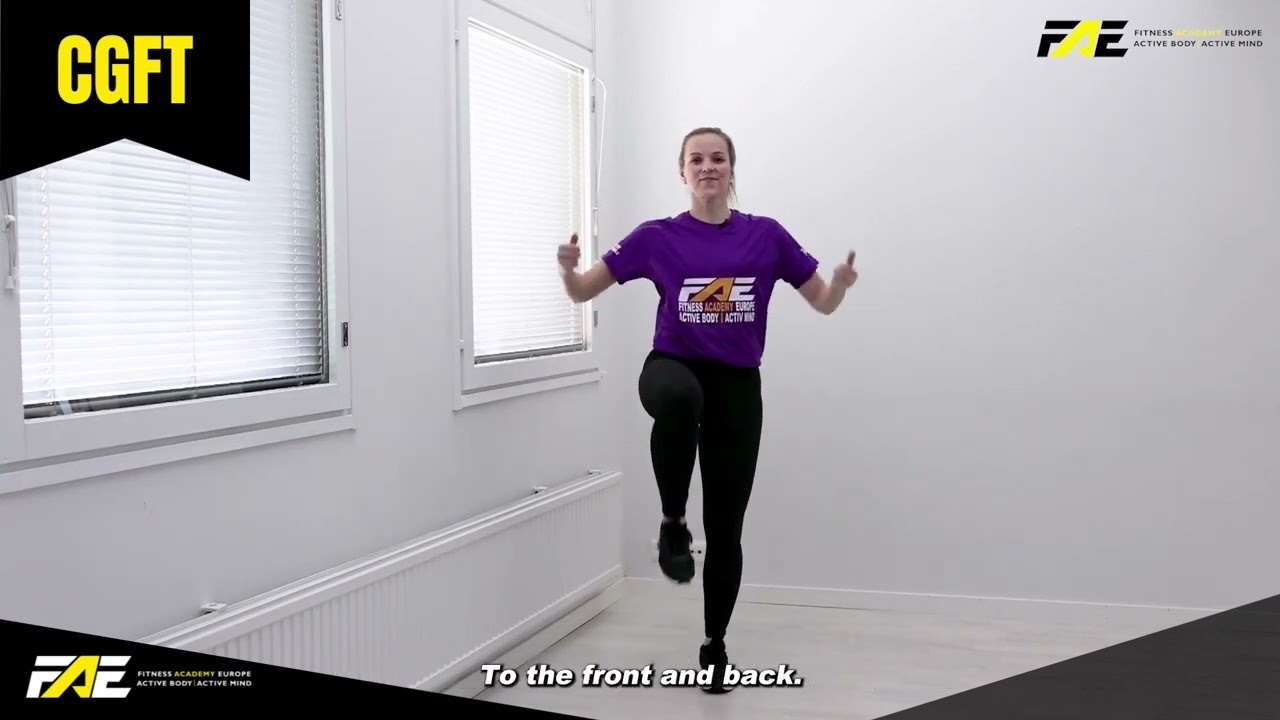
Time: 30sec Rest: 0sec
- Stand with your feet hip-distance apart and arms by your sides (or with your hands on your hips to aid balance), and engage your core.
- Lift one knee to hip height, keeping your core engaged and your chest facing forward.
- Repeat on the other side.
- Continue at a steady pace, alternating sides with each rep.
2. Unweighted squat
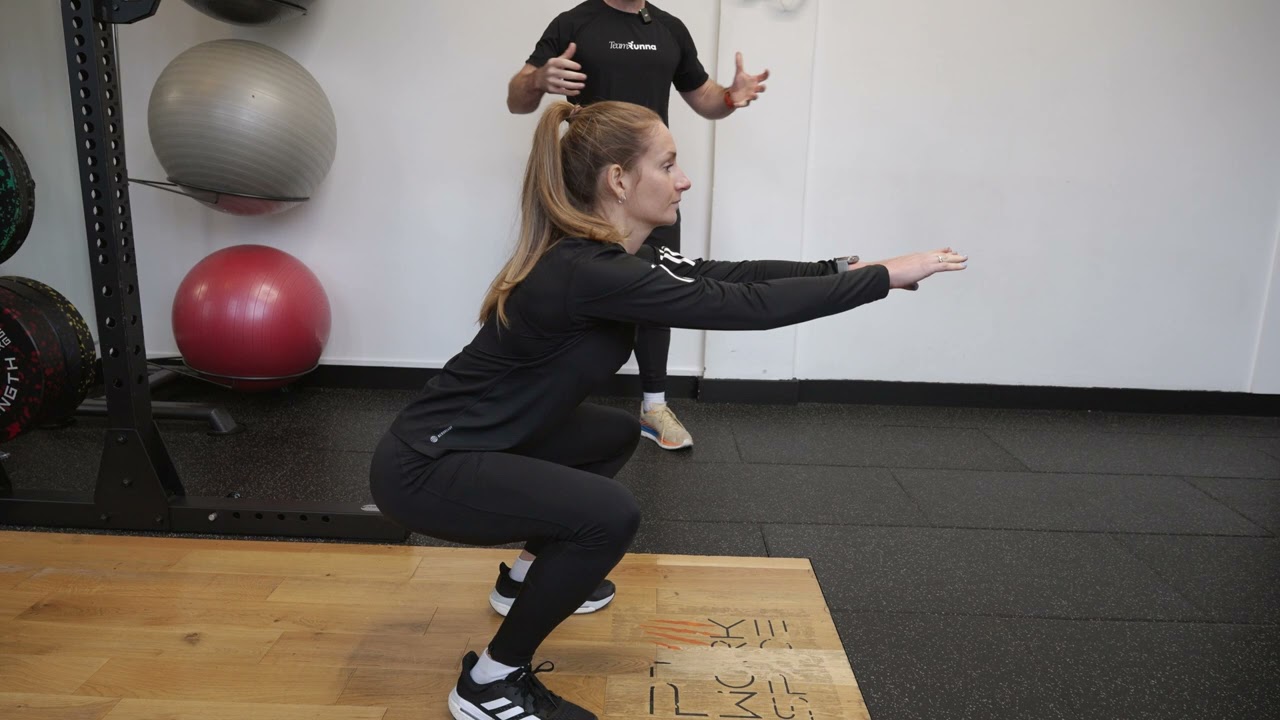
Time: 30sec Rest: 0sec
- Stand with your feet just wider than hip-distance apart with your toes pointed slightly out.
- Push your hips back and bend your knees to lower, keeping your chest up, until your hips are at knee height, or as close as your mobility allows.
- Push through your heels to stand back up.
3. Unweighted squat to calf raise
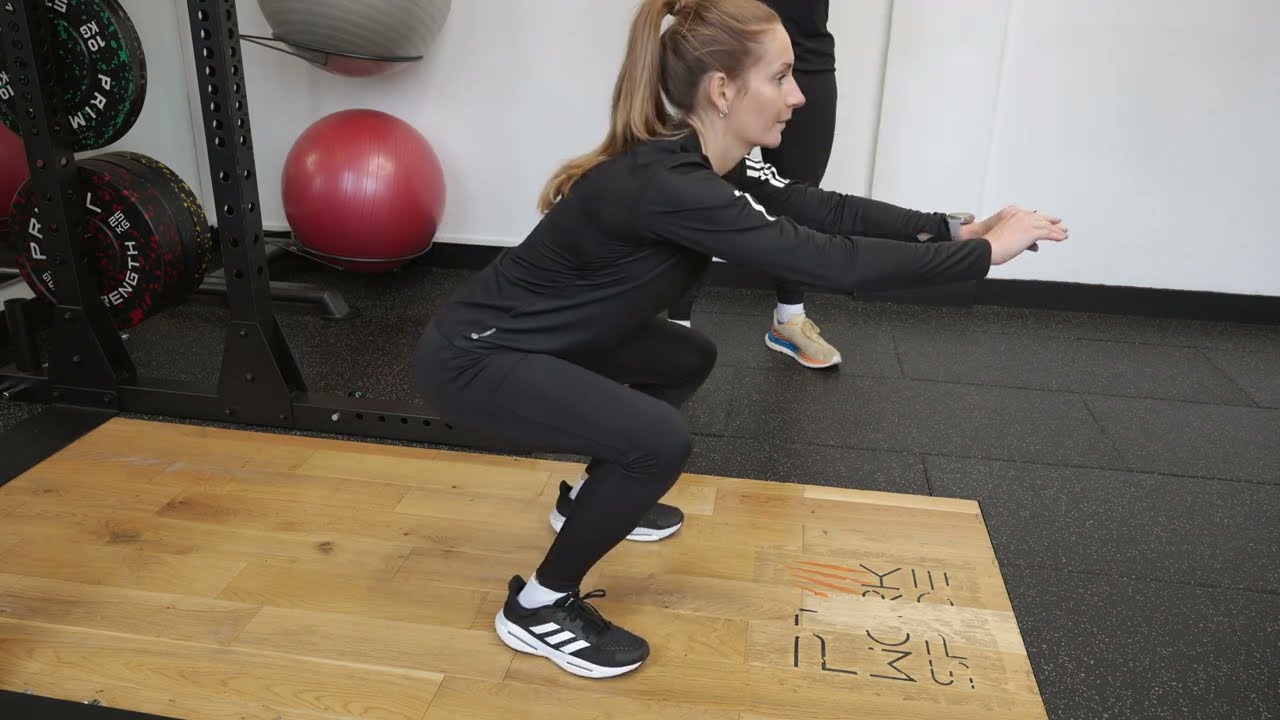
Time: 30sec Rest: 30sec
- Stand with your feet just wider than hip-distance apart with your toes pointed slightly out.
- Push your hips back and bend your knees to lower, keeping your chest up, until your hips are at knee height, or as close as your mobility allows.
- Push through your heels to stand back up and lift your heels.
- Pause on your tiptoes momentarily, then lower your heels to the floor with control.
Workout
Complete two rounds of the following exercises.
1. Front-to-back hop
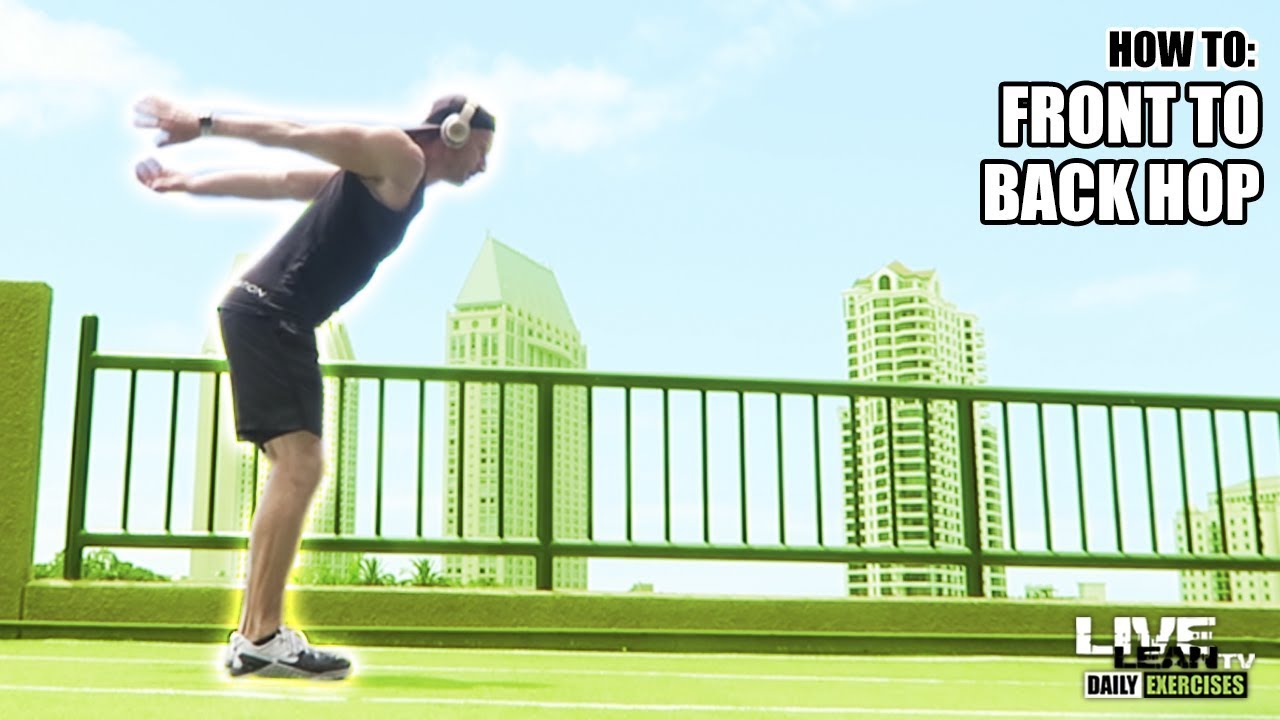
Time: 60sec Rest: 15sec
- Stand with your feet hip-distance apart and your toes pointing forward.
- Bend your knees slightly and swing your arms behind you.
- Jump forward by about one or two feet, swinging your arms overhead to aid momentum.
- Jump backward to your original position, again swinging your arms.
- Stay light on your feet and keep the jumps small and quick.
2. Side-to-side hop
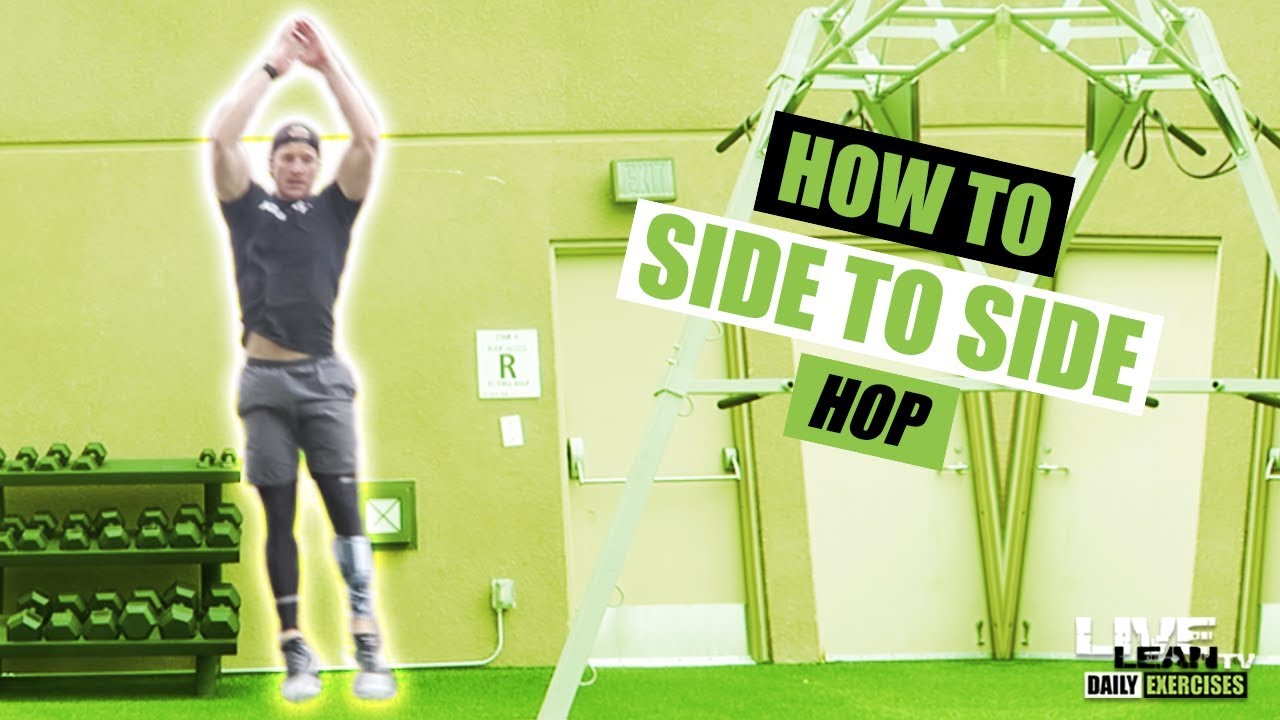
Time: 60sec Rest: 15 sec
- Stand with your feet hip-distance apart and your toes pointing forward.
- Bend your knees slightly and swing your arms behind you.
- Jump to the side by about one or two feet, swinging your arms overhead to aid momentum.
- Jump back to your original position, again swinging your arms.
- Stay light on your feet and keep the jumps small and quick.
3. Broad jump
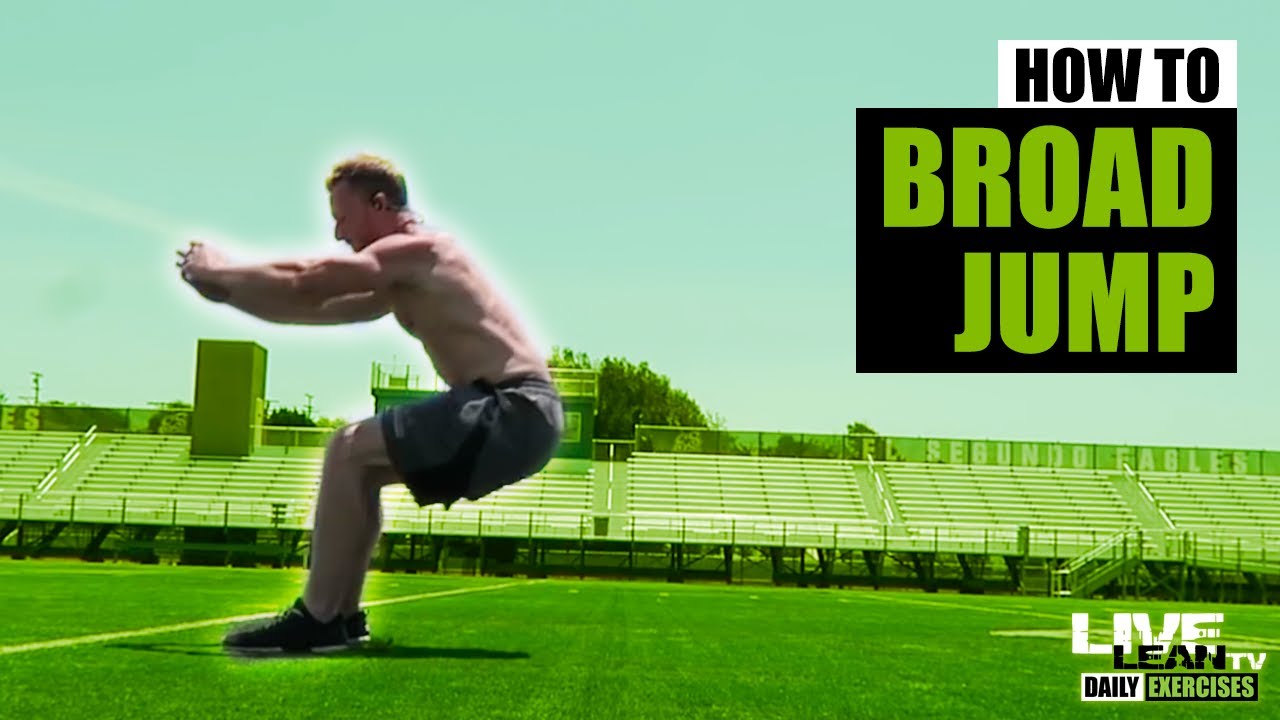
Time: 60sec Rest: 15 sec
- Stand with your feet slightly wider than hip-width apart.
- Push your hips back and bend your knees to lower until your hips are at knee height and swing your arms behind you.
- Jump forward as far as you can, swinging your arms forward to help generate momentum.
- Land softly with your knees bent, absorbing the impact.
- Stand, turn around and reset your stance, before repeating the movements to jump back to the start position.
- This move is more about controlled explosive power than speed, so take your time to jump as far as you can.
How to add jump training into your exercise routine
It’s important to start small with jump training and give your body time to recover after a jump workout. But, equally, it’s important to start. A 10-minute workout like this, which spends time warming up your joints, is an ideal starting point.
Perhaps you've been wary of high-impact exercises previously, but Knight says there's no need to be. “I think a lot of people in midlife (or older) worry it might cause injury, but jump training is safer than many people think,” she says.
“Most people can safely start adding jumping in place to their routine, even people with low bone density.”
However, Knight warns that there are a few injuries and issues that don’t respond well to jump training. “If you’ve had a vertebral compression fracture, have a current foot or lower leg injury, have severe balance difficulties, or have pelvic organ prolapse, you should chat with your healthcare team to find a plan that’s safe for you,” she advises.
“Often, with the right plan, you’ll still be able to progress to impact training, it just might take a little extra time and care.”