“Simple activities are usually the most effective”—a doctor of physical therapy says these seven daily exercises will help maintain independence as you age
Boost balance, mobility, strength and endurance with these daily exercises designed for beginners and older adults


We all know that staying active is essential to aging well and maintaining independence.
The challenge is knowing what to do, where to start or how to do it without risking injury.
"In clinical practice, I work with many individuals who want to stay active but are unsure how to do so safely," Dr Corbin B. Skinner, a doctor of physical therapy at Houston Methodist in Texas, tells Fit&Well.
The solution, he says, is short, accessible routines that focus on balance, mobility, strength and endurance while minimizing risk of injury.
"I often recommend a simple routine that can be done most days of the week and focuses on controlled, repeatable movements rather than intensity," Skinner continues.
You don’t even need a gym. Just a chair, wall or counter for support, plus an optional pair of light dumbbells or a resistance band.
This workout has proven effective, Skinner says, because it "rebuilds confidence by breaking movements into manageable steps and allowing people to succeed before progressing".
Over time, those small wins restore trust in your body.
How to do the workout
Skinner is keen to stress that the exercises he has recommended below are for general informational purposes only—they are not intended as a personalized exercise prescription.
If you have a history of falls, underlying medical conditions, or any concerns regarding how to do the moves safely, you should consult a physician or licensed physical therapist before starting.
Modifications may be necessary to ensure they are safe and appropriate for you, he adds.
1. Tandem stance
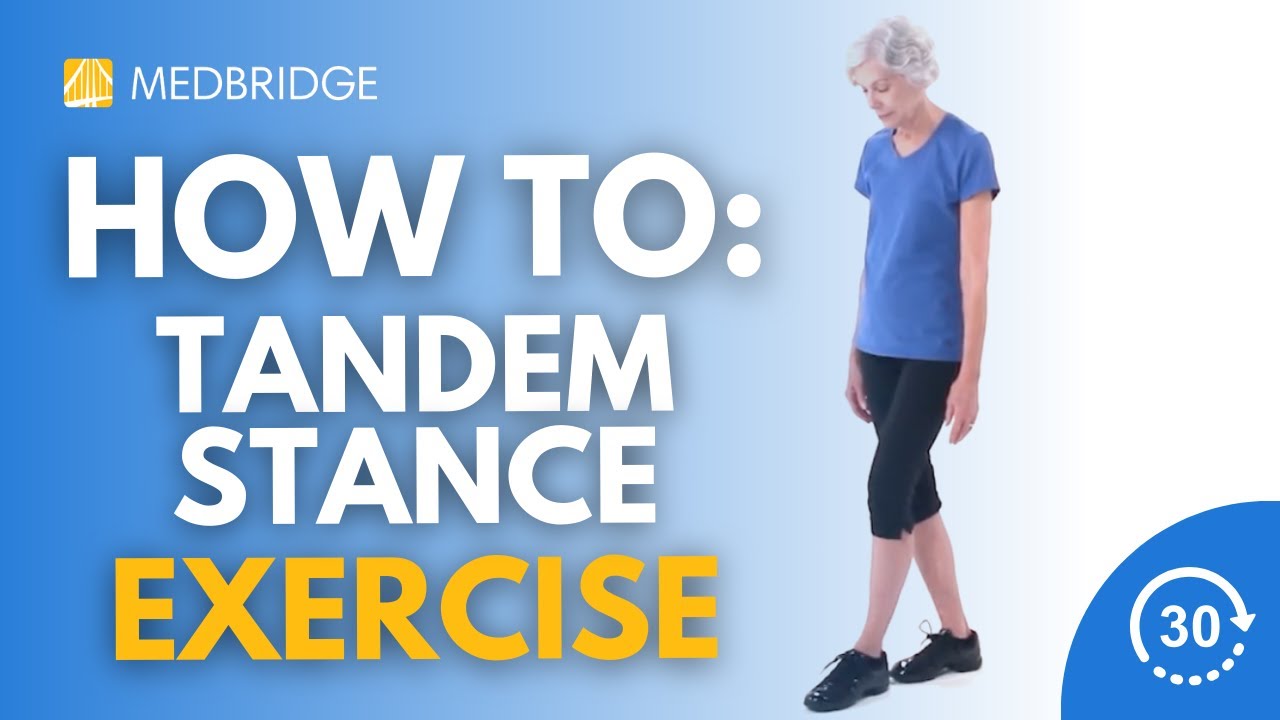
Sets: 1 Time: 30-60sec each side
- Stand facing a counter or wall for support.
- Place one foot directly in front of the other as though on a tightrope.
- Hold this position for 30-60 seconds.
- Switch feet and repeat.
Skinner says: "This is a very functional position that demands full core control. By simply stacking one foot in front of the other and holding the position, it challenges most individuals beyond what they expect. It can be progressed from holding onto a stable surface in front, to one on the side, to eventually not holding onto anything. Being able to hold this position in either of the variations for 30-60 seconds is a strong starting point."
2. Child's pose
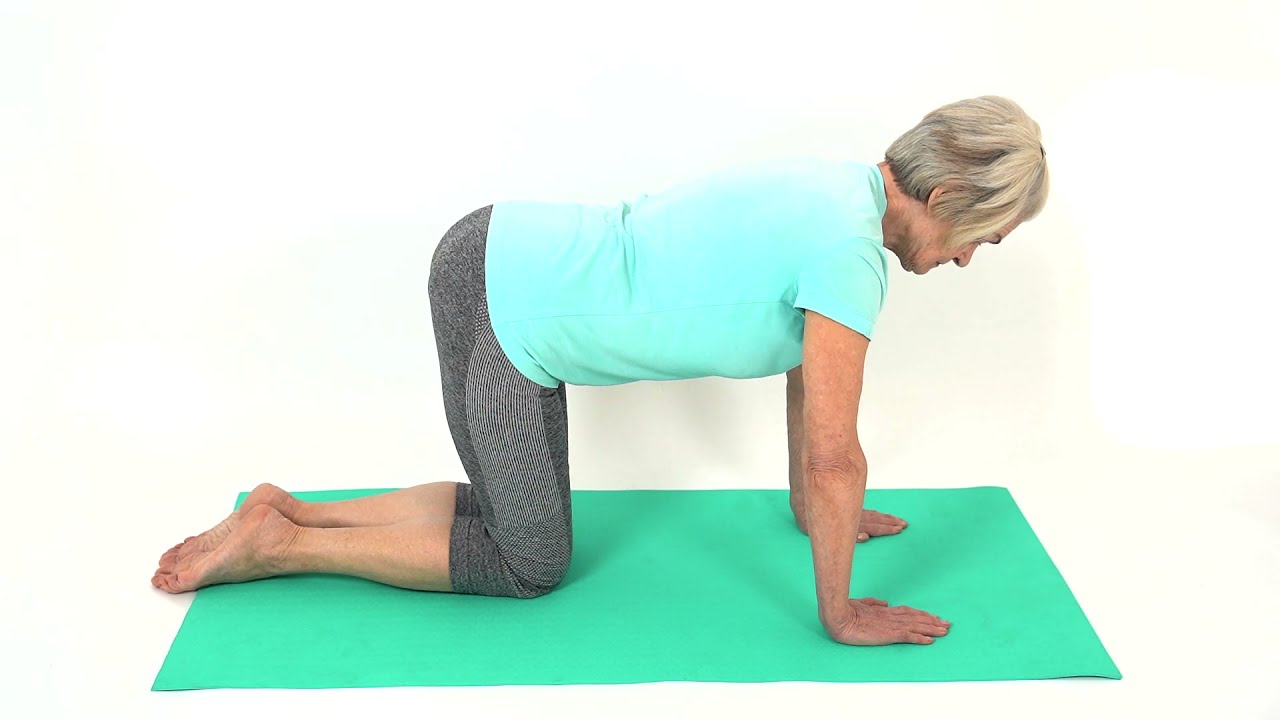
Sets: 1 Time: 30-60sec
- Kneel with your toes together and knees hip- or shoulder-width apart.
- Sit your buttocks back onto your heels and lower your forehead toward the floor.
- Stretch your arms along the floor in front and relax into the stretch.
- If your forehead can’t reach the floor, rest it on your stacked hands.
Skinner says: "This is a very common and easy exercise that helps with knee, hip and low back mobility. The pose can be held for minutes at a time or you can work in and out of it with small oscillations [back and forth movement] if desired."
3. Seated hip stretch
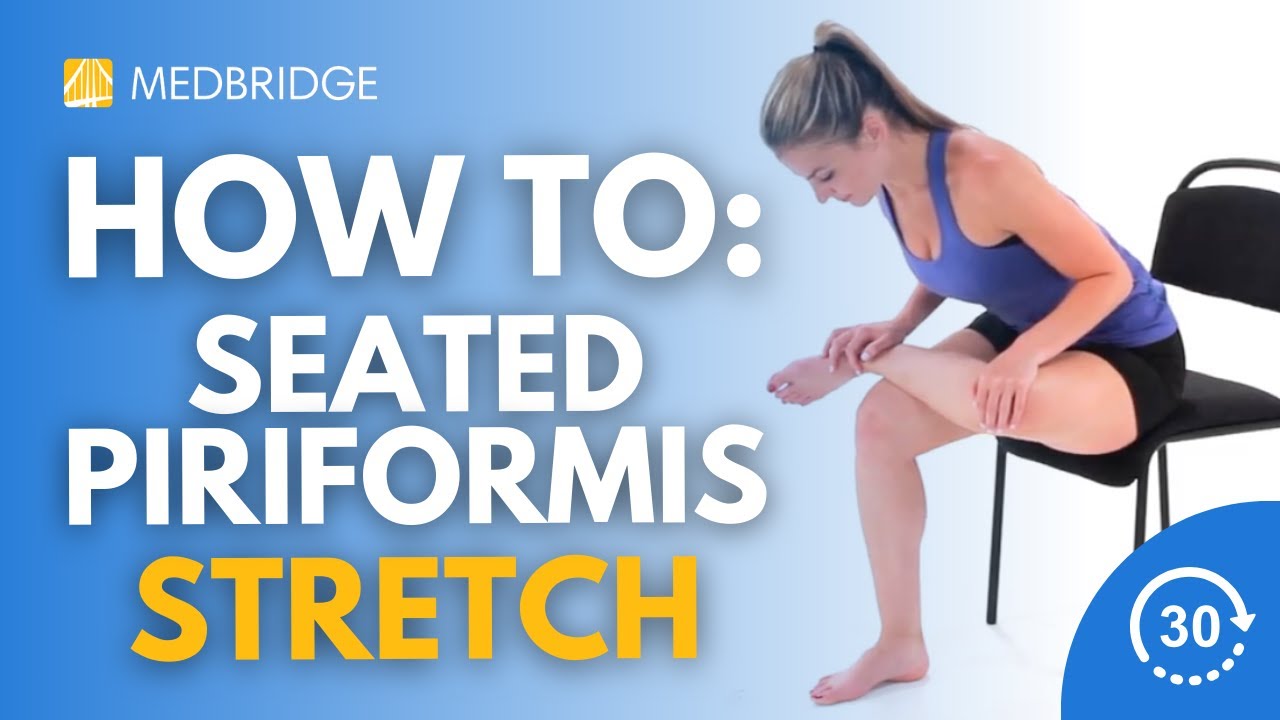
Sets: 3 Time: 30-60sec each side
- Sit in a stable chair and cross one foot over your other knee.
- Apply a light pressure on your bent knee to increase the stretch in the outside of your hip on the same side.
- Keep your foot flexed to help protect your knee joint.
- Hold, then swap sides.
Skinner says: "A highly practical exercise, it can be used at home, in the office or when out and about. By crossing one leg over the other and applying a slight pressure on your knee, you can create a gentle stretch in your hip joint. Striving to hold for 30-60 seconds for three sets each side is a moderate starting point.”
4. Supine bridge
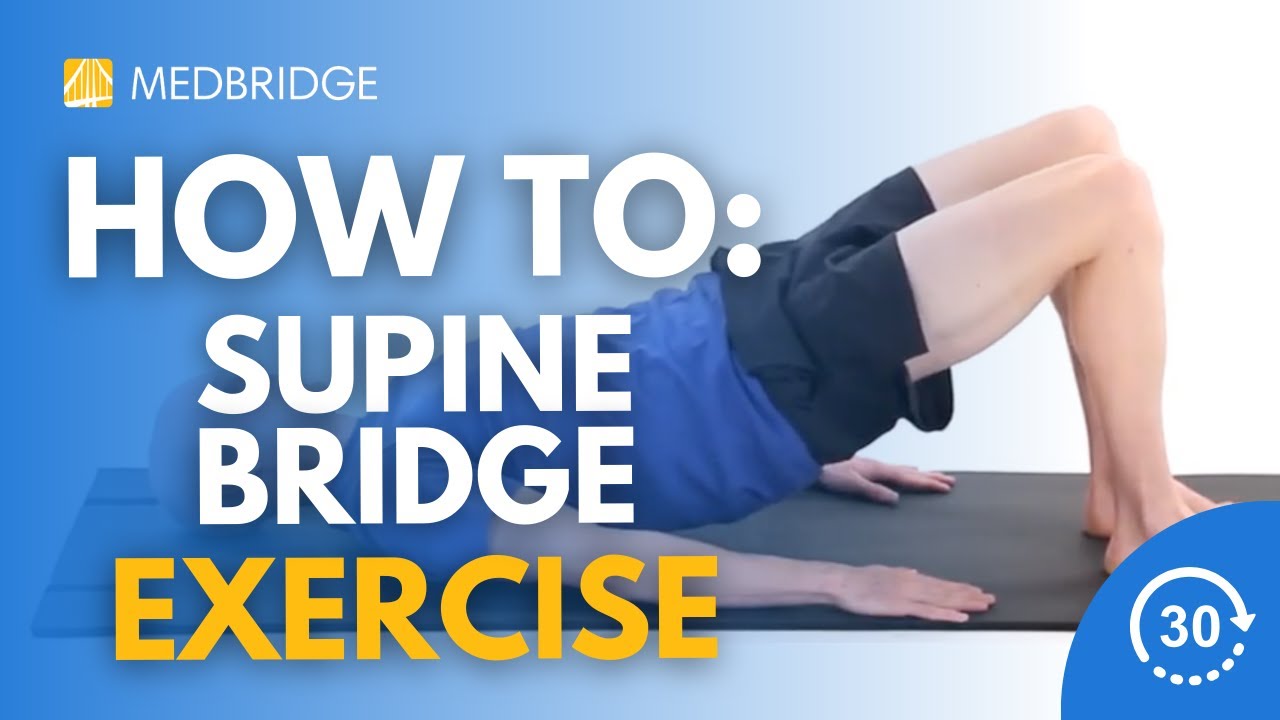
Sets: 3 Reps: 15-20
- Lie on your back with your knees bent and feet flat on the floor close to your buttocks, hip-width apart.
- Place your hands palms down on the floor by your sides for stability.
- Push through your heels to raise your hips until your body forms a straight line from your shoulders to your knees.
- Pause at the top, then lower with control.
Skinner says: "Your glutes are a large and important muscle group that is often ignored but key for any tasks requiring you to squat or lower to the floor. The bridge is a simple exercise that can be done on your bed, couch or floor. Starting on your back and lifting your hips into the air activates the all-important glutes."
5. Sit to stand
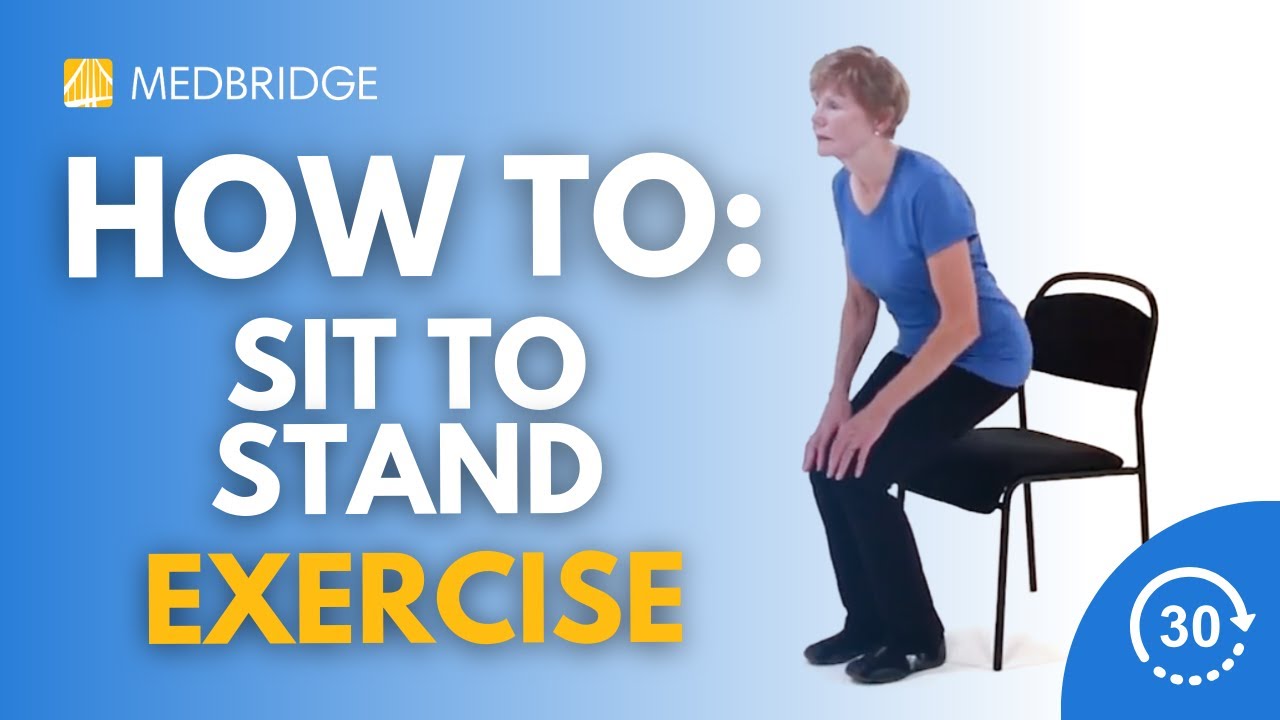
Sets: 3 Reps: 10
- Sit on a sturdy chair with your feet flat on the floor, hip-width apart, and the back rest of another chair in front of you that you can reach toward.
- Press through your feet to stand, reaching toward the chair in front.
- Push your hips back and bend your knees to lower back onto the seat with control.
Skinner says: "Building upon the bridge, simply standing up from a chair and sitting back down with control can be a very effective strengthening exercise. The key to a safe and effective performance is making sure there is a stable surface in front of you. With this configuration you will instinctively reach forward and mimic the natural motion of a squat."
6. Marching in place
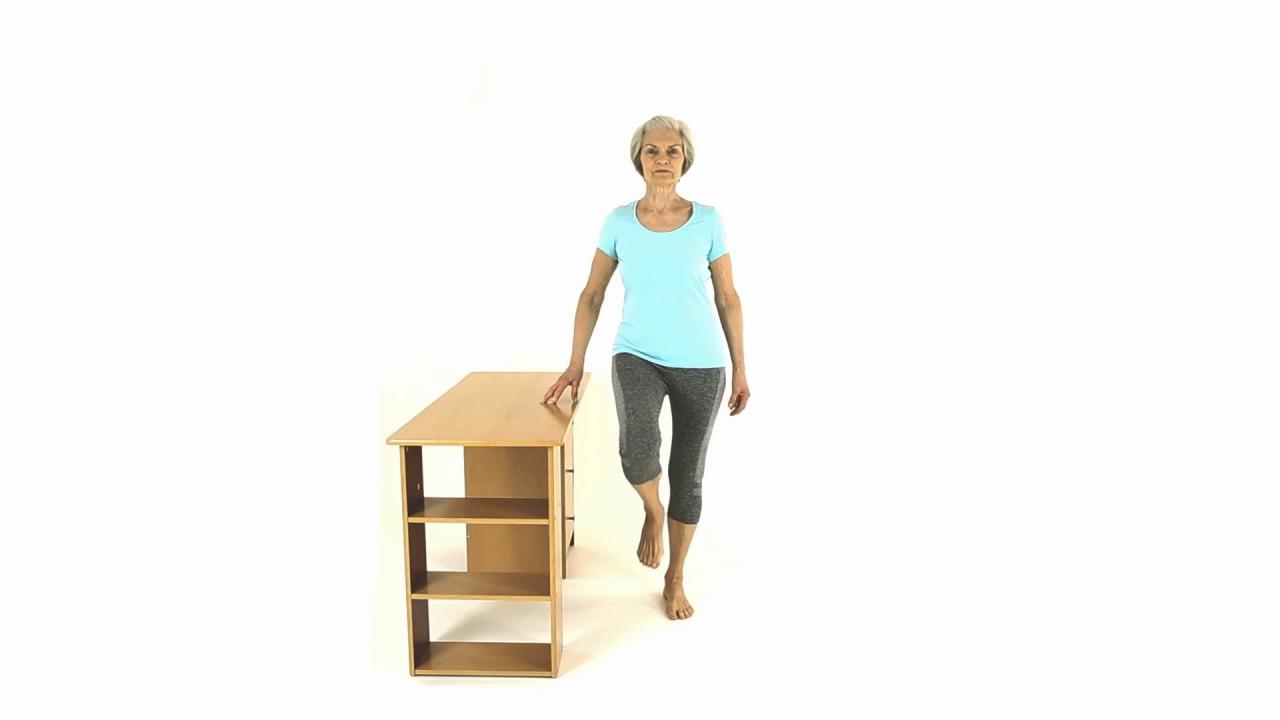
Sets: 1 Time: 60sec
- Stand in front of a counter or wall for support.
- Lift and lower each foot alternately on the spot.
- To progress, perform without a support and aim to raise your knees until they’re parallel with your hips.
Skinner says: "Combining the foundations of balance with movement, marching in place in front of a stable surface can be a safe and effective way to improve endurance and balance. Not only can this be done in most places of your home, but it can also easily be progressed by removing one hand to increase the challenge and demand."
7. Walking
Sets: 1 Time: 15-20min
- Walk, allowing your arms to swing by your sides.
- To progress, increase your pace or walk on different terrain to make it more challenging.
Skinner says: "Walking may seem basic but simple activities are usually the most effective. For beginners, cardiovascular improvement is driven by consistency more than intensity. Brisk walking, light cycling, or similar activities for 15-20 minutes several days per week can gradually improve endurance and heart health without overwhelming the body."
Dr Corbin B. Skinner PT, DPT, MBA, OCS, FAAOMPT is a licensed physical therapist with a Doctor of Physical Therapy degree from the University of Southern California and over 10 years of clinical experience. Board-certified in orthopedics, he works daily with exercise beginners and older adults recovering from injury, surgery or inactivity in an outpatient clinical setting at Houston Methodist in Houston, Texas. Throughout his career, he’s worked with a wide range of individuals from young athletes to older adults, and from highly active individuals to those just beginning their health and fitness journey. That spectrum has helped shape how he approaches movement: it should be safe, progressive and tailored to build confidence over time.
