





I swapped dumbbell rows for resistance band rows for two weeks, and my back feels completely changed
Ditching the dumbbells for a while improved my strength gains


Dumbbells are one of my favorite pieces of fitness kit for building strength and I use them regularly both for my clients’ and my own workouts—until recently, that is.
After taking an extended break from exercise after having a baby, returning has been a challenge. I’ve been consistently doing prone, single-arm dumbbell rows on a bench since I returned, but my back strength hasn’t improved as quickly as other areas.
Wanting to switch things up, I decided to ditch the dumbbells for upright resistance band rows for two weeks to see what difference it would make.
How to do a resistance band row
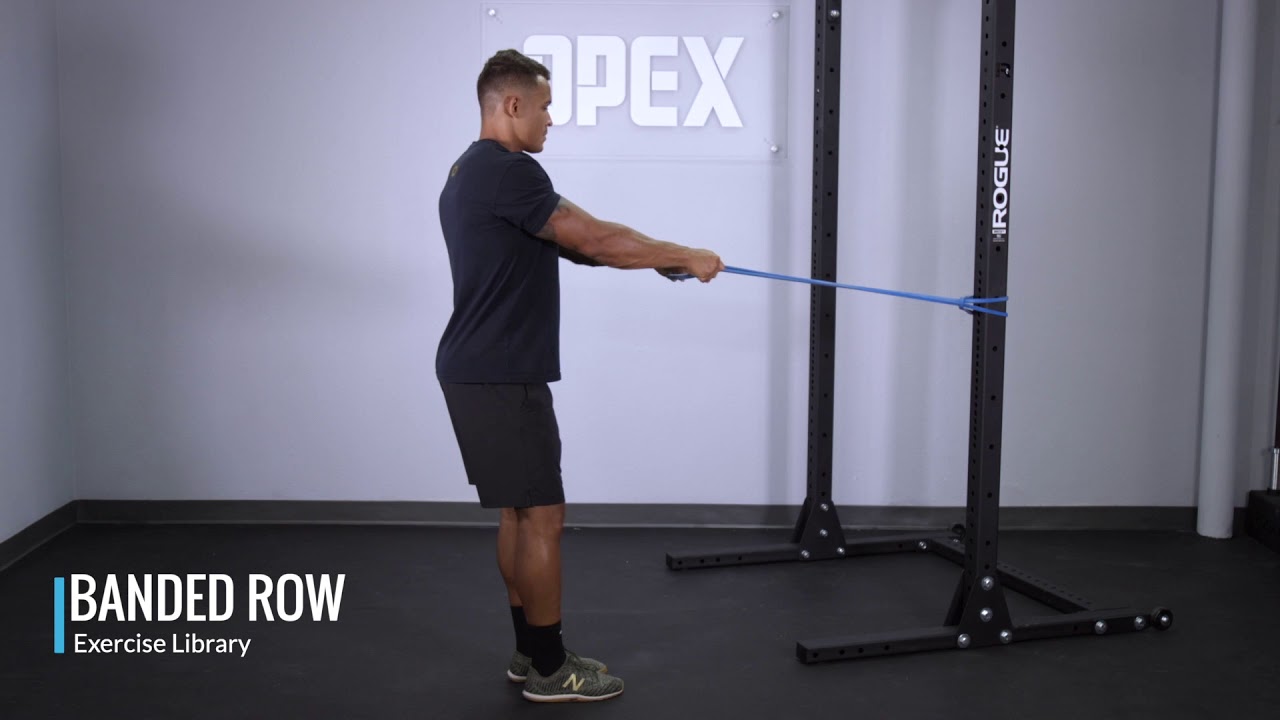
You’ll need a moderately-heavy long-loop resistance band and a secure anchor point for this exercise.
- Loop a resistance band around an anchor point, like a stair railing.
- Hold the end of the resistance band in both hands.
- Step back until the band is taut.
- Engage your core and set your shoulders back and down.
- Pull the band toward you with both hands, bending your elbows and moving them past your torso, and bringing your hands to either side of your chest.
- Pause briefly, then reverse the movement with control.
I began the two-week period with one set of 15 repetitions using a 30lb resistance band, which works out to roughly 15lb per arm. This is slightly easier than the 20lb dumbbells I had been using for each arm on my dumbbell bench rows.
Halfway through, I increased my sets to two and switched to a heavier 40lb resistance band. By day 14, I was doing three sets of 15 repetitions with a 50lb band.
Here’s what I discovered.
I could feel my back working
Rows have always been challenging for me, even with relatively light dumbbells. I find my biceps and shoulders take over, preventing my lats, rhomboids and trapezius muscles from doing their work.
Admittedly, I had let my ego take over instead of selecting a lighter weight and working on improving my form. I was starting the exercise by compensating with overactive muscle groups that had been (wrongly) conditioned to do the movement.
Switching to a resistance band allowed me to really focus on engaging the right muscles. Resistance bands differ from dumbbells in that its resistance is variable—the resistance is lighter at the beginning of a movement and heavier at the end of the movement, whereas a dumbbell’s “resistance” (or weight) is relatively constant throughout.
Because of this, I could properly activate my back when the resistance was light, and continue to use those muscles correctly as the tension increased.
After a few days of banded rows, my mid back and lats actually felt a little sore. While soreness is not an indicator of a good workout, in this case, the soreness indicated that I was using the correct muscle groups.
Other upper-body exercises felt easier
After about a week, I noticed that other exercises seemed easier than usual. I was even able to increase my weight on barbell bench presses, the triceps dip machine, and dumbbell lateral raises.
I reached out to Dr Luis Arriaza, DPT, a physical therapist with the Centers for Advanced Orthopaedics, and asked why resistance band rows had translated to strength gains in other exercises.
“Dumbbells are gravity-loaded. Bands are skill-loaded,” he said. “In a row, the band gets heavier as you pull, so the hardest work happens at the finish, where your shoulder blade should set and your mid-back should own the position. That ramping tension keeps the target muscles working longer (more time under tension) and trains scapular control and shoulder stability, not just brute force. When that control improves, your lats, rotator cuff and upper back transfer it into stronger presses, pull-ups and overhead work with better mechanics and less wasted effort.”
Additionally, contracting the correct muscles in my resistance band row under the lighter resistance helped to reinforce my mind-muscle connection elsewhere. I noticed that I’d begin these other exercises with a greater awareness and engagement of the prime movers (like the pecs, triceps and lateral deltoid), and my back felt more stable and supportive during each movement.
I could lift heavier when I returned to dumbbells
Once the two weeks were up, I tested whether my resistance band rows would translate to better performance on dumbbell rows.
Not only could I feel my back muscles working properly, but I was also able to stabilize my whole body a lot better than before. I tested with 25lb dumbbells—5lb heavier than my usual choice—and while I had to do fewer reps, the entire set felt strong and controlled. That made sense based on Arriaza’s explanation.
WhileI may not use resistance band rows in the main part of my upper-body program, I’ll be keeping them in for my warm-ups.

Dr Luis Arriaza attended George Mason University, earning a B.S. in athletic training. Luis then graduated from the University of Maryland-Baltimore with his Doctorate in Physical Therapy (DPT).
His passion for rehabilitation and interest in the athletic population grew as he got the opportunity to work as an athletic trainer in multiple sports medicine settings that ranged from recreational sports to division 1 collegiate athletes.
