A physical therapist says everyone who sits for long periods should be doing these three stretches to combat tight hips
If you work at a desk or drive for a living, these exercises are for you


Hip immobility is a common issue in this day and age, often worsening with age—or working sedentary jobs—if not corrected.
Joseph R. Hribick, a clinical assistant professor of physical therapy at Lebanon Valley College, explains further.
“Hip immobility often stems from being sedentary throughout the day, muscle imbalances and age-related stiffness,” he says.
“Sitting for long periods causes our hip flexor muscles to become tight by being placed in a shortened position. In addition, prolonged sitting can weaken our gluteal muscles.
“This imbalance in flexibility and strength of our hip muscles can lead to stiffness and limited motion of our hips, especially in hip extension.”
Hribick tells Fit&Well that to help prevent hip immobility, everyone should aim to break up their sitting time. Daily walking, taking breaks to do unweighted squats, or doing stretches like the ones below three to four times a week are all great ways to do this.
“If you notice that your hips continue to tighten up, it’s wise to consult a physical therapist for further evaluation and treatment,” he says.
1. Hip flexor stretch

Sets: 3 Time: 30sec each side
How to do it:
- From kneeling (on a cushion or pillow, if preferred), step your right foot in front of you, with your right knee bent to 90° and your knee directly above your right ankle.
- Engage your core and, keeping your torso upright, carefully shift your weight forward until you feel a stretch along the front of your left hip and thigh.
- Avoid arching your lower back and keep your core engaged.
- You can also squeeze your glutes, the muscles in your butt, during the stretch to help further relax your hip flexors.
- Hold for time, then switch sides.
Why Hribick recommends this stretch: “Prolonged sitting throughout the day shortens (tightens) the hip flexor muscles, such as the iliopsoas and rectus femoris,” he says. “This tightness can limit hip extension range of motion and contribute to both hip and lower back stiffness.”
2. Piriformis pull stretch
Sets: 3 Time: 30sec each side
How to do it:
- Lie on your back with your knees bent and your feet flat on the floor.
- Cross your right ankle over your left thigh just above the knee.
- Reach behind your right thigh (just above your knee) and gently pull it toward your left shoulder until you feel a stretch in your right buttock region and outer hip.
- Hold for time, then switch sides.
Why Hribick recommends this stretch: This exercise targets the piriformis and deep gluteal muscles, which tighten with sitting or repetitive activity and can restrict the rotation of the hip.
3. Figure four stretch
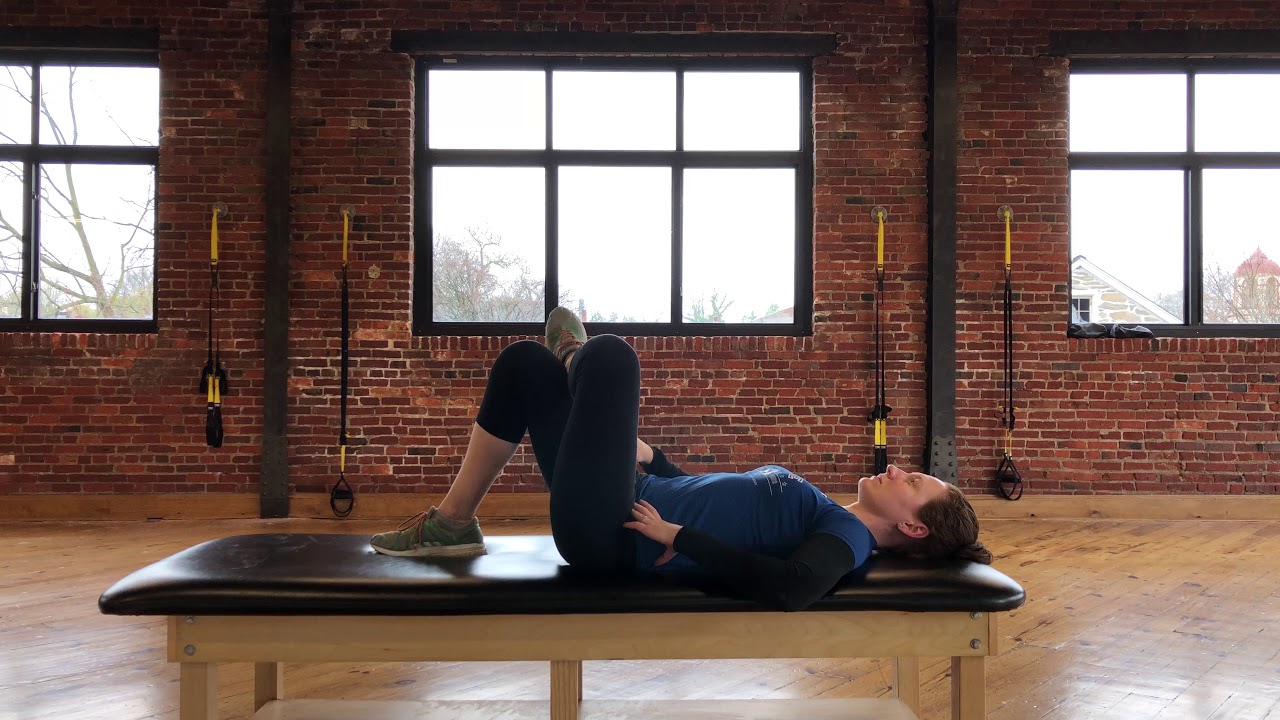
Sets: 3 Time: 30sec each side
How to do it:
- Lie on your back with your knees bent and your feet flat on the floor.
- Place your right ankle on your left thigh just above the knee.
- Gently push into your right thigh just above the knee with your hands until your feel a stretch in the outside of your right hip.
- Hold for time, then switch sides.
Why Hribick recommends this stretch: Hribick explains that this exercise targets the hip joint capsule and deep posterior and lateral hip rotator muscles. These often tighten with sitting or following repetitive lower-body activities and can restrict external rotation.

Hribick is a certified orthopedic manual therapist, a fellow of the American Academy of Orthopedic Manual Physical Therapy and a clinical assistant professor of physical therapy at Lebanon Valley College.
