I asked a physical therapist why my heels don't stay on the floor when I squat—here's what he had to say
Troubleshooting this common problem


I love to squat. Weighted goblet squats are one of my favorite exercises and form a central part of every workout I do.
However, I’ve noticed that when I try to deep squat—with or without weights—my heels lift off the floor.
I’ve subsequently discovered this is a common problem, so I went hunting for an explanation to understand why it happens and whether I should be worried about it.
“If your heels lift off the floor when you squat, it’s a sign of limited ankle dorsiflexion, which is the action of the knees moving forward over the toes,” explains physical therapist and owner of More 4 Life, Dave Candy.
“Limited dorsiflexion can be caused by either mobility limitations in the ankle joint and/or calf stiffness, specifically in the soleus muscle.”
“If the heels lift off the floor when doing a bodyweight squat, that’s not necessarily a problem, as long as it doesn't cause pain,” says Candy.
“However, if the heels leave the floor, it can increase pressure behind the kneecaps, which increases the likelihood of developing pain over time.”
He adds that if you are doing weighted squats, the pressure behind your kneecaps increases with the weight you lift, so you want to keep your heels on the floor while squatting with weights, which you achieve by either wearing weightlifting shoes with raised heels, or putting weight plates under your heels.

You can also modify the movement by leaning your trunk forward more. This brings your center of mass over your feet without requiring as much ankle dorsiflexion. Just be aware that it creates a more glute-dominant squat than a quad-dominant squat. That's neither good nor bad; it just depends on your goal for the exercise.
Candy has also shared two movements that improve your ankle’s ability to dorsiflex.
How to improve your ankle flexibility
1. Partial lunge
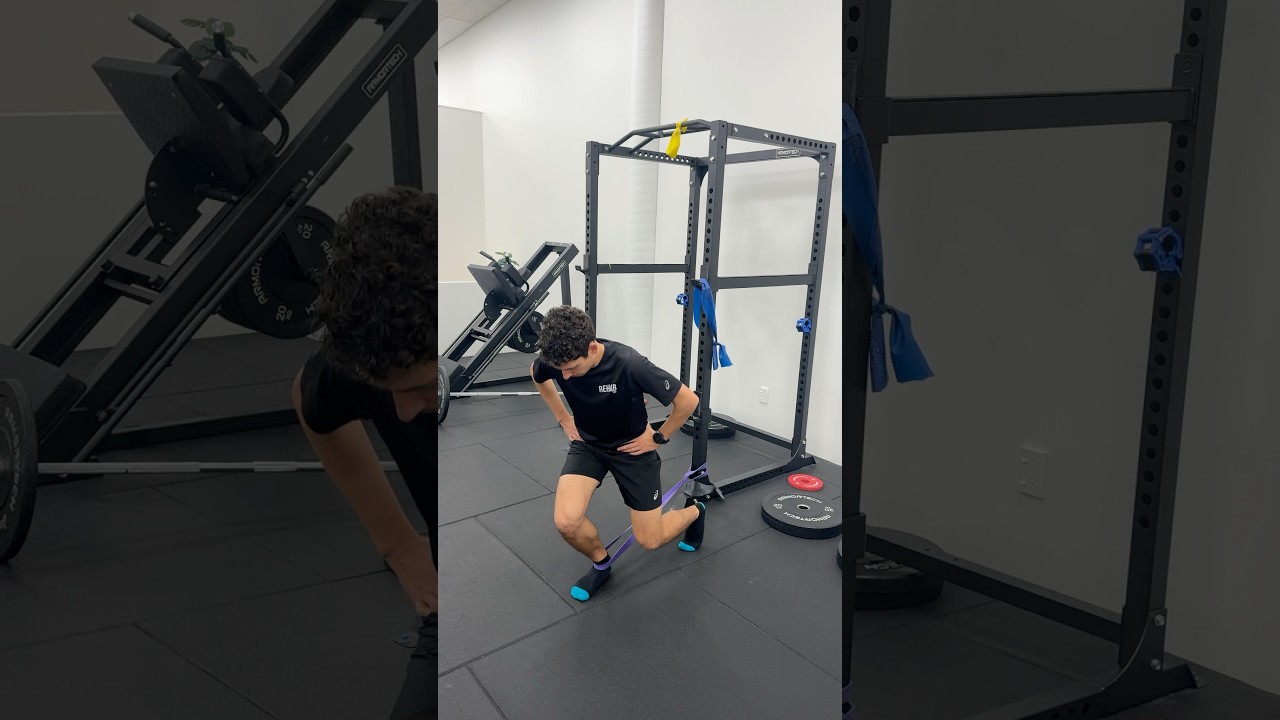
Time: 1min each side
- Secure one end of the band behind you and loop the other end around your ankle.
- Walk forward until the band is pulling back the front of your ankle.
- Then do a partial lunge by bringing your knee over your toe while keeping your heel on the floor.
- Move back and forth through this range of motion for about a minute, then repeat on the other side.
- If this is too painful, try placing your front foot on an elevated surface, such as a step, weight bench or chair.
2. Resting squat
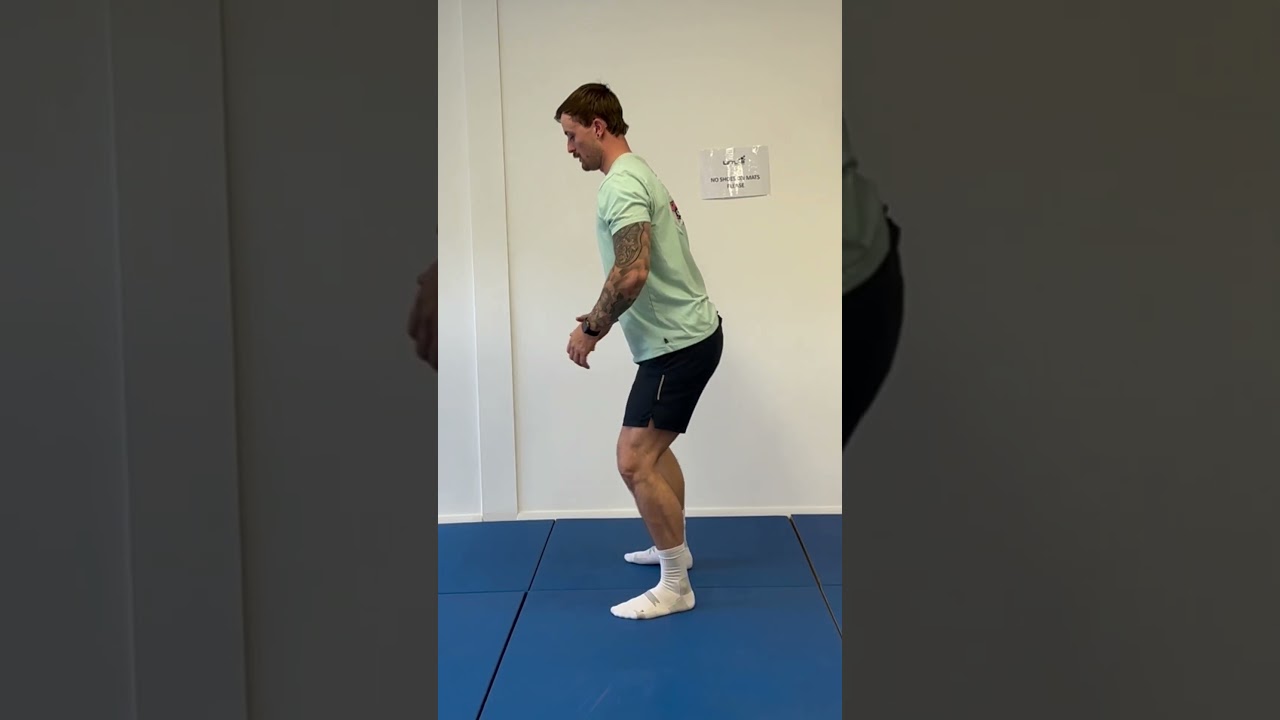
Time: 1min (working up to 5min)
- Stand with your feet shoulder-width apart and your toes pointing slightly outward.
- Hinge at your hips and bend your knees, as though sitting on a chair. Lower until your hips are below your knees if possible.
- Keep your back straight and don’t round your back or slump your shoulders.
- Prop your heels up slightly as needed, or allow your heels to lift slightly, but keep them as flat as you can.

Dave Candy is a board-certified orthopedic physical therapy specialist and a fellow of the American Academy of Orthopedic Manual Physical Therapists. He owns a physical therapy practice in St. Louis, MO, called More 4 Life.
