This simple three-move routine can build upper-body strength at home for years to come
These three strengthening moves hit all the major muscles and can be scaled up without equipment


If you enjoy working out, then there is no end of exercises and techniques to help you build muscle. If that’s you, we salute you, but politely suggest the following won’t be of interest (perhaps you’d like to read about myo-reps instead).
For those of us who want the benefits of strength training, but don’t have the mental bandwidth to follow complicated plans, I have just the thing: a simple three-move home upper-body workout, courtesy of Denise Chakoian, a certified fitness trainer and owner of Core Cycle and Fitness LaGree.
“Together, these movements provide a balanced upper-body workout by training both pushing and pulling patterns,” she says.
“They target the chest, shoulders, back and arms while also requiring core engagement.”
The beauty of this routine is that Chakoian has also shared several options to scale up each exercise, so as you get stronger, you just increase the challenge.
“I like these exercises because they are accessible for most fitness levels and can continue to challenge people for years simply by changing leverage, tempo and stability rather than relying on heavier weights,” says Chakoian.
1. Push-up
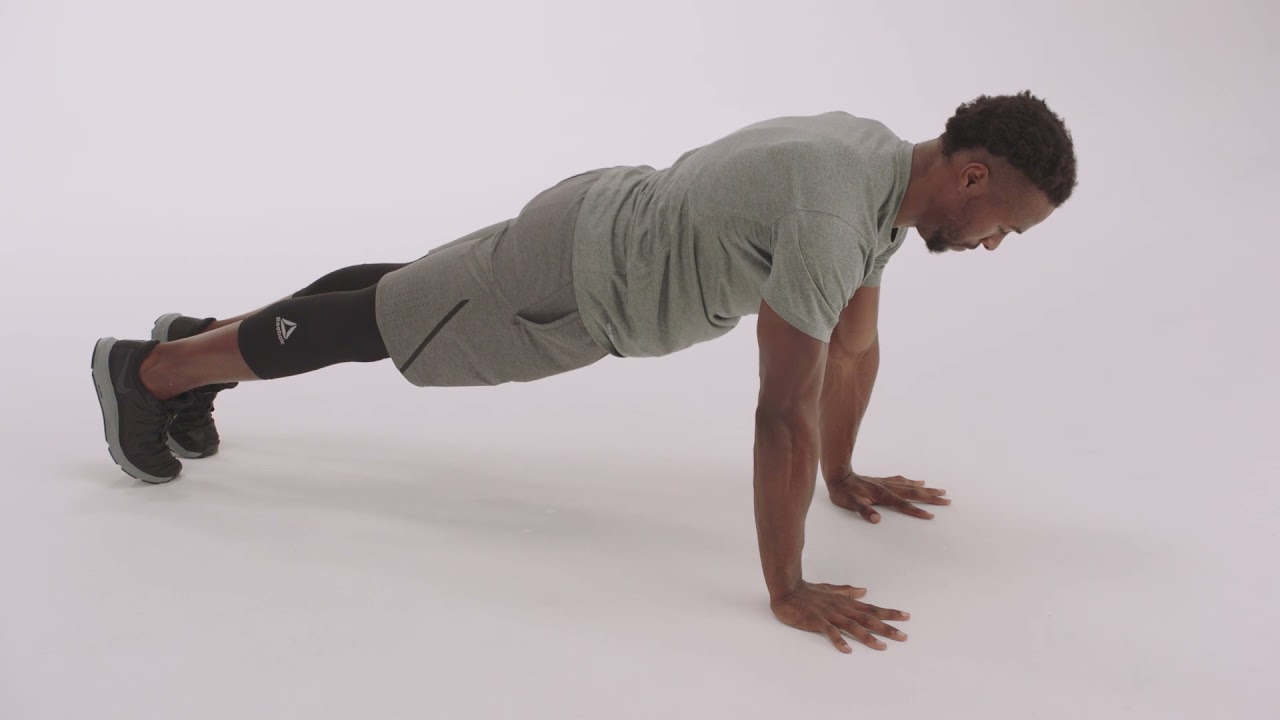
Sets: 3-4 Reps: 8-15
“I chose this because push-ups are one of the most effective upper-body exercises because they train multiple muscle groups at once while also challenging core stability,” says Chakoian.
“Small changes in leverage can make them significantly harder without adding weight.”
How to do a push-up:
- Get on your hands and knees with your hands slightly wider than shoulder-width apart.
- Step your feet back so your body in a straight line from your head to your heels.
- Engage your core—this is your starting position.
- Bend your elbows to lower your chest toward the floor with control.
- Pause when your elbows are bent to 90°.
- Press through your hands to lift yourself back to the starting position.
Make it easier:
Possible modified push-ups include:
- Placing your hands on a wall for wall push-ups.
- Placing your hands on a bench for incline push-ups, the lower the platform, the harder it is.
- Performing push-ups on your knees.
- Performing just the lowering part of a full push-up, called a negative push-up.
Make it harder:
- Slow down the lowering phase, taking three to five seconds.
- Add a pause at the bottom before pushing up.
- Elevate your feet on a step or bench.
- Perform staggered-hand push-ups.
- Progress to one-arm push-ups.
2. Pike push-up
Sets: 3-4 Reps: 6-12
“I chose this because many people overlook vertical pushing strength when training without equipment,” says Chakoian.
“Pike push-ups are excellent for developing shoulder strength and can eventually lead to more advanced bodyweight movements.”
How to do a pike push-up:
- Begin with your hands on the floor and your hips lifted, so your body forms an inverted V shape. Keep your legs straight or, if your mobility is limited, slightly bend your knees.
- Bend your elbows to lower your head, keeping your elbows angled slightly backward as you descend.
- Once your head gently taps the floor, press through your palms to extend your arms and return to the starting position.
Make it easier:
- Place your hands on a raised platform and lower your head to the platform.
Make it harder:
- Slow the lowering phase.
- Increase the range of motion by elevating your hands on books or yoga blocks, allowing your head to go below your hands.
- Elevate your feet on a chair or step.
- Pause and hold at the bottom of the movement.
- Progress toward wall-supported handstand push-ups.
3. Inverted row
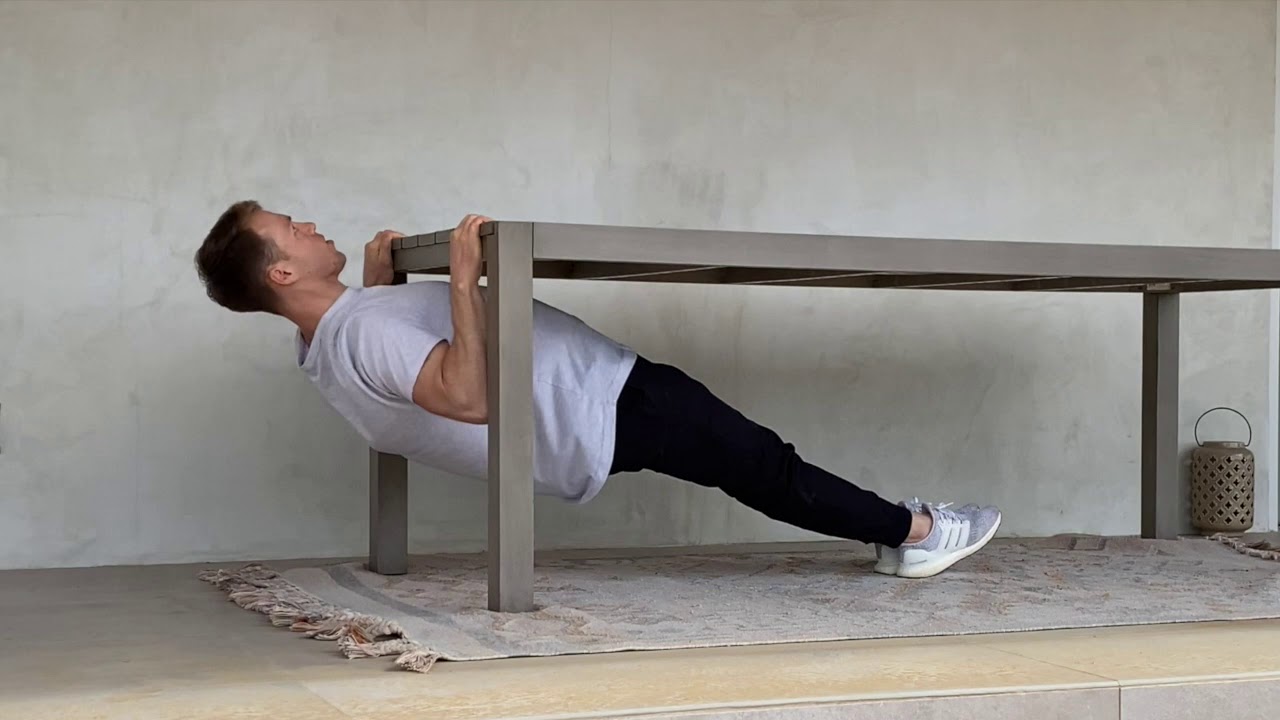
Sets: 3-4 Reps: 8-15
“I chose this exercise because pulling movements are often neglected in equipment-free workouts, yet they’re essential for posture, shoulder health, and balanced upper-body strength,” says Chakoian.
“Rows help strengthen the muscles that counteract hours of sitting and computer work.”
How to do an inverted row:
- Lie on your back under a sturdy table.
- Grasp the edge of the surface with your hands slightly wider than shoulder-width apart.
- Engage your core and make sure your body is straight from head to heels—this is your starting position.
- Pull your chest toward your hands, squeezing your shoulder blades together.
- Lower yourself slowly back to the starting position.
Ensure the table is sturdy enough to support your weight and not tip over. You may wish to invest in a telescopic doorway pull-up bar or suspension trainer if this routine becomes a staple of your training.
Make it easier:
- Bend your knees and place your feet flat on the floor.
Make it harder:
- Slow the lowering phase.
- Pause at the top of the movement for two or three seconds.
- Elevate your feet to make your body horizontal.
- Perform single-leg variations.

Follow Fit&Well on Google News and add us as a preferred source to see all our workout ideas and wellbeing advice in your feeds.
