Resistance bands are this trainer’s favorite piece of equipment—here’s why he loves them and three exercises to try
Activate your muscles without putting pressure on your joints


Just because resistance bands cost less than free weights, that doesn’t mean bands are the poor man’s dumbbells.
“Resistance bands are easily one of the most versatile tools in the gym,” says Nick Streby, a NASM-certified personal trainer and instructor at Sundrop Pilates in Denver, CO.
He enjoys working with them because the elastic resistance means there are no dead zones during a movement. “Your muscles stay under constant tension through the entire exercise,” he says.
This also makes it easier to train on different planes of movement.
“Free weights limit you to up-and-down movements because gravity only pulls vertically,” explains Streby.
“Bands allow you to defy gravity by anchoring them to pull horizontally, diagonally, or rotationally, making them unmatched for training core power, hip stability, and functional, real-world movement patterns.”
Finally, Streby explains that with bands you don’t have some of the downsides of lifting heavy weights.
“Bands don't require momentum, which makes them incredibly gentle on your joints and connective tissues while still highly activating the target muscles,” he says.
He shared his top three resistance band exercises with Fit&Well.
You will need a long-loop band and a short-loop band for these movements.
1. Band-assisted chin-up
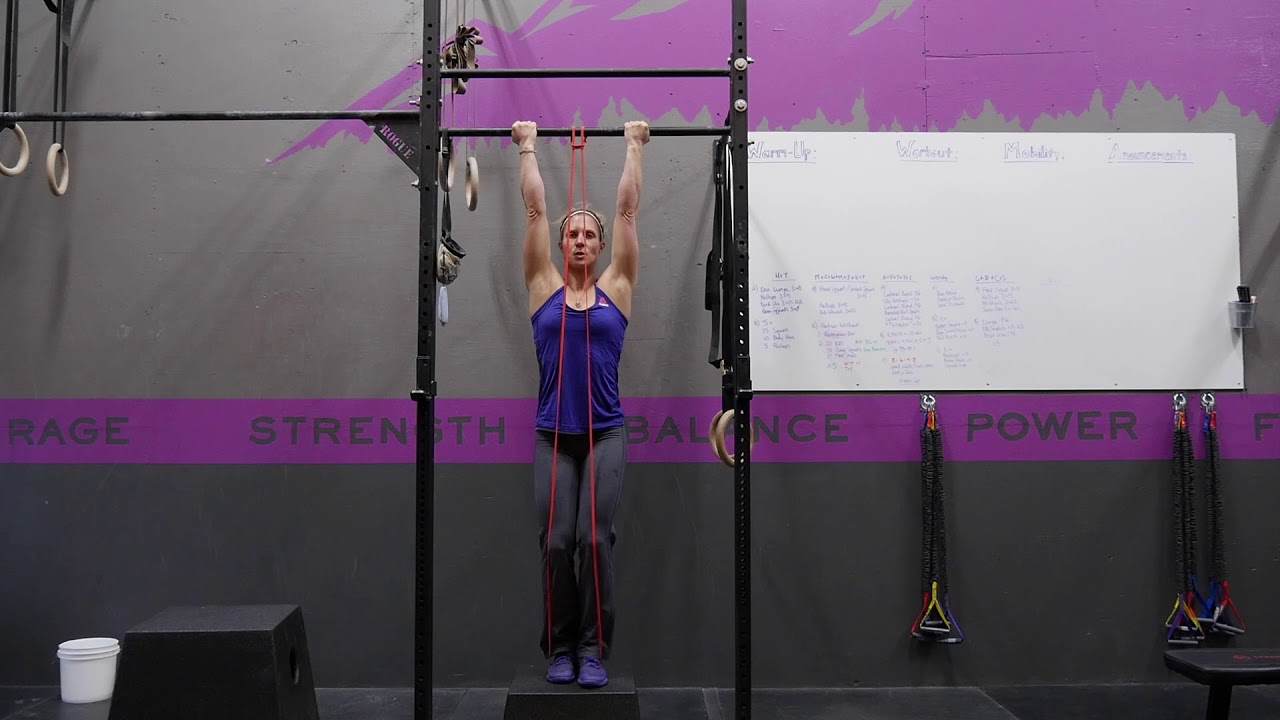
“This is a variation of the traditional chin-up that uses a long-loop resistance band anchored to the bar,” says Streby.
“By stepping into the bottom of the band, a portion of the client’s body weight is offset, reducing the resistance at the bottom of the movement. This makes the vertical pull highly accessible, scalable, and achievable for all bodies,” he adds.
“This is one of my favorites because an unassisted chin is unachievable for most clients, especially beginners. The band makes it doable.”
How to do it
Sets: 4 Reps: 4-8 Rest: 30-60sec
- Attach a long loop resistance band to a pull-up bar (here’s a YouTube video demo).
- Grasp the bar with your palms facing you and place one foot (or both feet for extra support) on the band.
- Set your shoulders back and down and brace your core.
- Use your arms to pull your body up, aiming to bring your collarbones level with the bar. Squeeze your shoulders together at the top of the movement.
- Lower slowly with control.
2. Banded Y-raise
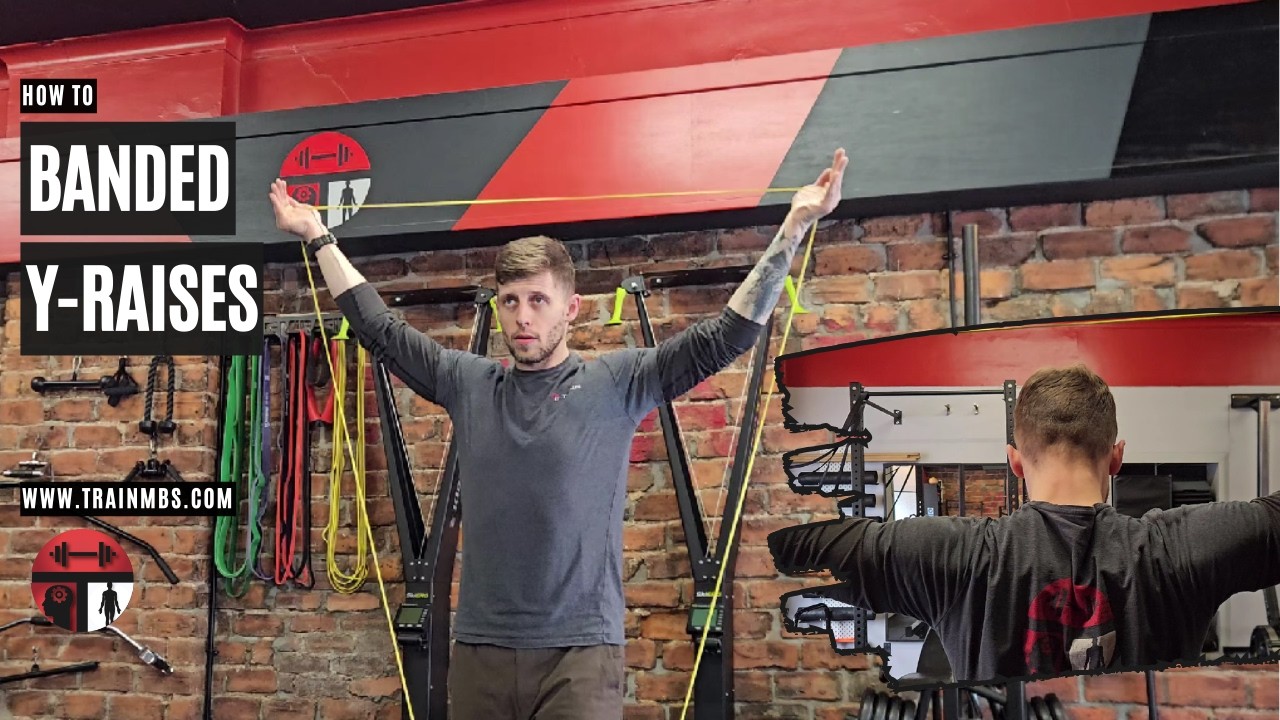
“This is a targeted shoulder and upper-back exercise designed to strengthen the lower traps and improve scapular stability,” says Streby.
“These are one of my favorites because they’re incredibly kind to the joints.
“I like to use this with clients with shoulder or rotator cuff injuries. It feels much safer and better controlled, whereas weights can feel unstable and somewhat straining.”
How to do it
Sets: 4 Reps: 10-12 Rest: 30-60sec
- Place a long loop band under both your feet and bend your knees slightly.
- Twist it once so the band crosses over itself in the middle, and hold the other end of the band with your hands shoulder-width apart.
- Lift your arms in front of you to shoulder height—this is your starting point.
- Lift your arms up and out to the sides, finishing with your arms in a Y shape.
- Pause briefly at the top of the movement, then slowly lower your arms. Resist the tension on the way down and maintain a controlled descent.
Form tip: Ensure you keep your shoulders down and away from your ears to isolate your upper back.
3. Banded donkey kick
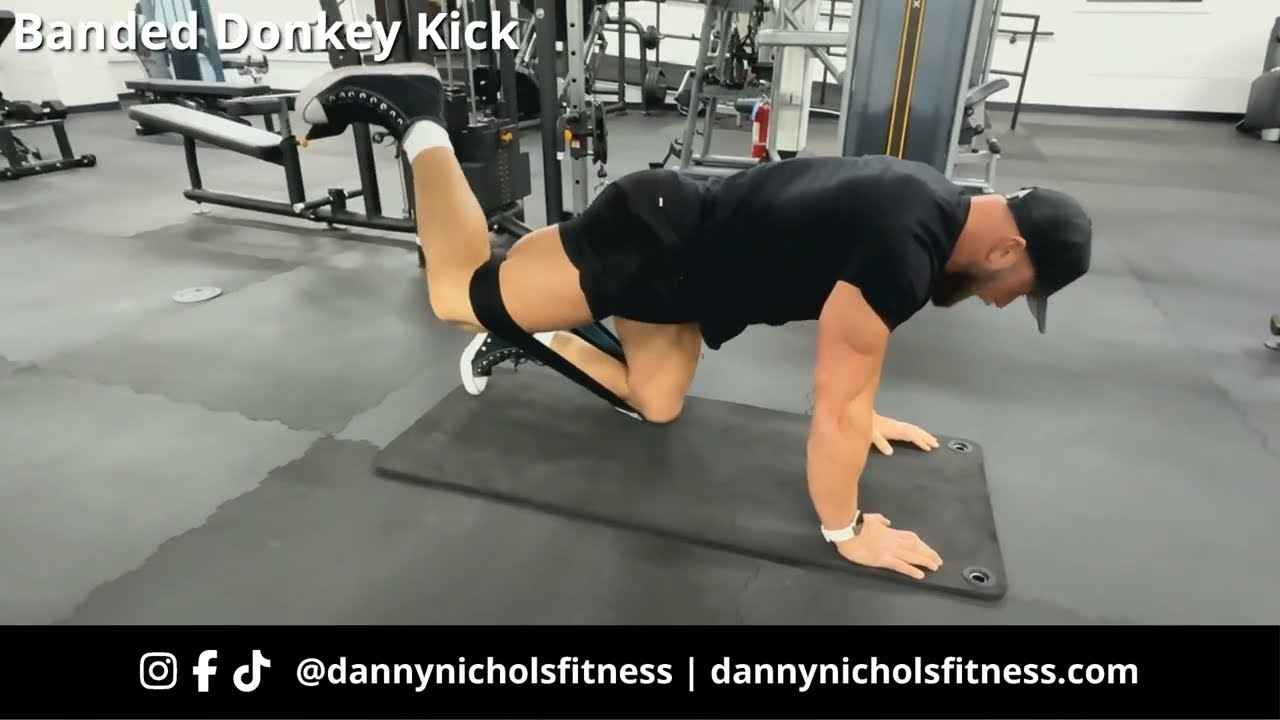
“As a Pilates and sculpt instructor, this is one of my favorite exercises to do during class,” says Streby.
He explains that the most efficient way to do this exercise is to stack different variations back-to-back.
“Start with full-range lifts, then tiny pulses and finish with a static hold until the working muscle is completely fatigued.
“I love these because your stationary side has to work overtime to keep you balanced.”
“You will feel a deep muscular burn in both glutes simultaneously. It is an incredibly efficient way to build lower-body strength and hip stability using only your body weight and a mini band.”
How to do it
Sets: 2 Time: 45sec Pulse: 15sec Hold: 15sec each side
- Get on your hands and knees with your shoulders over your wrists and your hips over your knees. Loop a short-loop resistance band around your lower thighs, anchoring it under your right knee.
- Flex your left foot and squeeze your glutes, as you lift your left leg behind you to hip height, working against the resistance of the band.
- Lower with control.
- Do the full movement for 45 seconds, then pulse at the top of the movement for 15 seconds, lifting and lowering your leg a few inches, then hold in the top position for a further 15 seconds.
- Repeat on the other side.
Shop resistance bands
Nick Streby is a NASM-certified personal trainer with over four years of experience. He holds specialized certifications in Spin, mat Pilates and the Versaclimber.
