An exercise physiologist says these are the three upper-body medicine ball exercises you should do to build functional strength
Swap your dumbbells and kettlebells for this underused piece of equipment and train for strength, power, coordination and stability


You might have noticed a rack of weighted balls languishing in the corner of the gym, gathering dust while people work out with dumbbells and kettlebells instead.
They’re called medicine balls and personally, I think they’re an underrated tool. I’ve been using them for a while, and they offer a challenge that other weights don’t.
Karly Mendez, a human performance specialist, sports biomechanist and exercise physiologist at Houston’s largest healthcare system, Memorial Hermann, is a fan of the medicine ball too.
“Medicine balls are versatile because you can use them to train strength, power, coordination and stability with one piece of equipment,” she says.
“Kettlebells or dumbbells are great, however, a medicine ball can help improve your balance and encourage you to move through multiple planes of motion to make sure you maintain control throughout the exercise.”
I find the medicine ball especially useful for upper-body work. Keeping the ball under control when lifting challenges your grip strength in a different way, the ball can also help provide an extra challenge for balance with floor-based exercises.
Mendez agrees: “You don't have an easy grip (like on a dumbbell), so you have to squeeze the medicine ball, activating your full body.”
As few of the heavy things in life have convenient handles, medicine balls provide a functional upper-body challenge that is more akin to those you will face in everyday life.
“Therefore, this improves strength along with functional movement patterns,” says Mendez.
Want to give it a try? Mendez has built the below three-move upper-body workout using just a medicine ball.
1. Close-grip medicine ball push-up
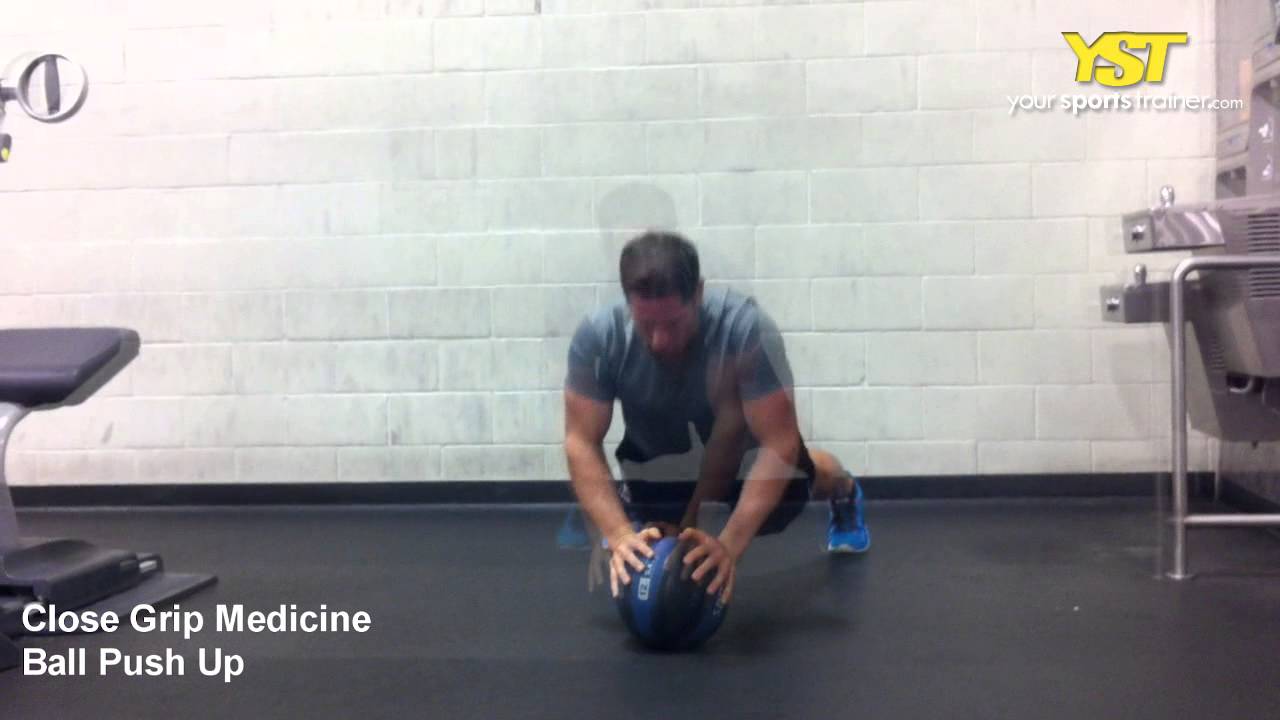
“This exercise targets the chest, shoulders and arms—increasing strength and power,” says Mendez.
“Performing your exercise on something unstable like a ball helps activate and strengthen the core.”
Use a softer ball with a grippy rubber coating to avoid slipping and drop to your knees if you feel as though the ball might roll away.
How to do it:
Sets: 3-4 Reps: 10-15
- Place your medicine ball on the floor. Get into a high plank position by placing both hands close together on the ball and then extending your legs behind you in a straight line.
- Bend your elbows to lower your chest to the ball.
- Pause at the bottom of the movement, then push yourself back to the starting position.
Form tips:
- Keep your body in a straight line and engage your core to prevent your hips from sagging
- Keep your elbows against your ribcage throughout the movement.
Modification: "Modifying to a kneeling position is a good way to regress," says Mendez. "Lowering the knees reduces the amount of body weight being lifted, allowing beginners to focus on managing the balance on the ball."
2. Medicine ball biceps curl
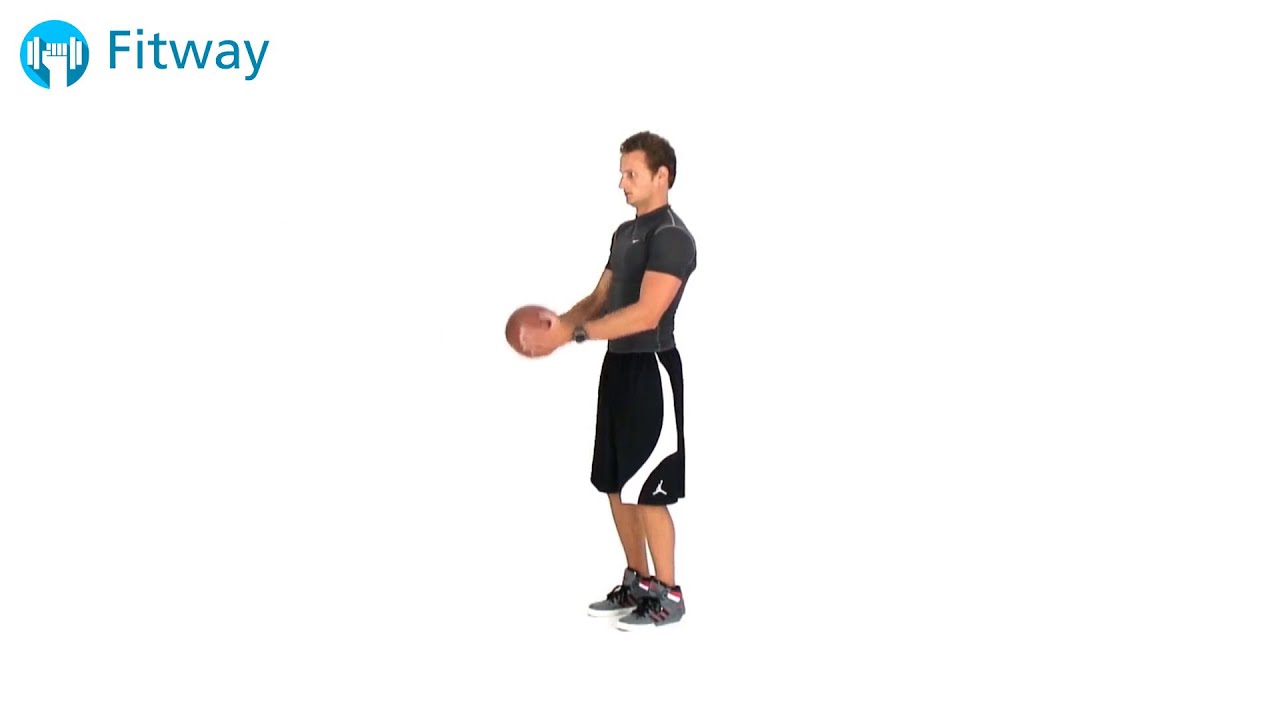
“This exercise targets the biceps brachii, anterior deltoids and core muscles. It helps to build arm strength while also improving core stability,” explains Mendez.
How to do it:
Sets: 3-4 Reps: 10-15
- Stand with your feet shoulder-width apart and engage your core.
- Hold the medicine ball in front of your thighs with your arms extended and your palms facing.
- Bend your elbows, keeping your upper arms pressed against your torso, to lift the medicine ball to your chest.
- Slowly reverse the movement back to the starting position.
Form tip: Don’t use momentum to swing the ball to your chest. Perform the movement slowly and with control.
3. Medicine ball triceps extension
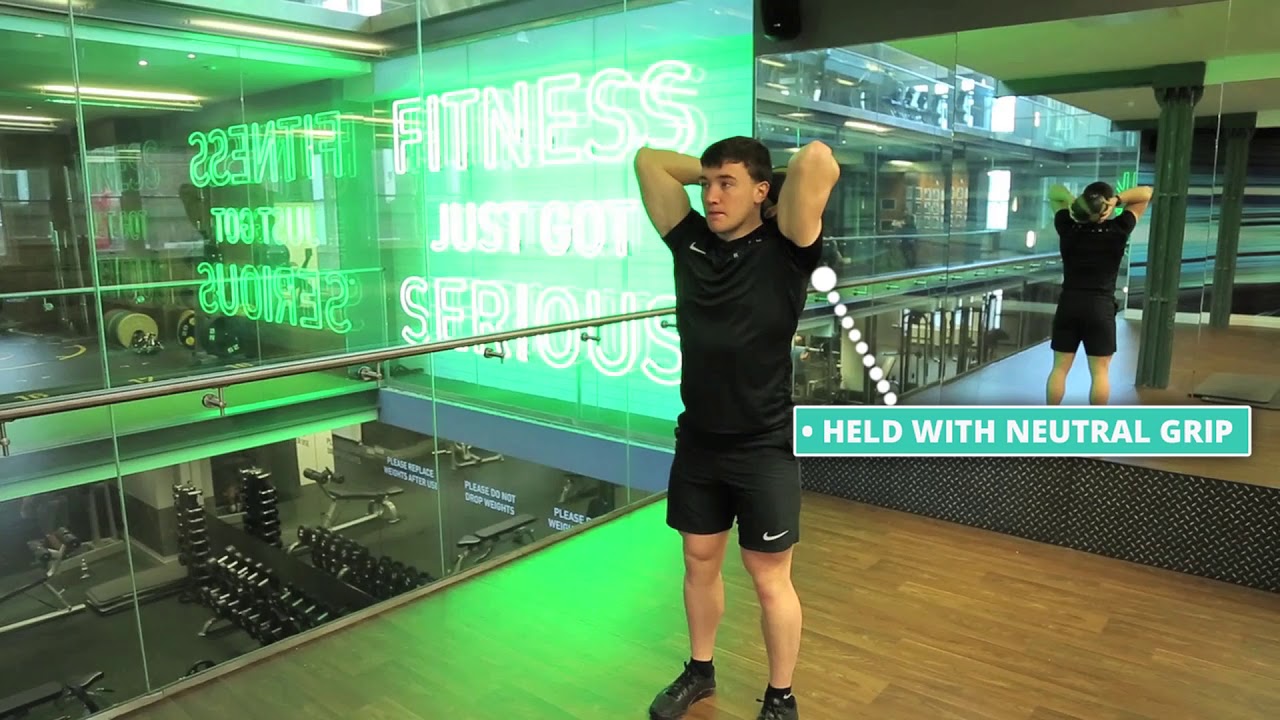
“This exercise targets the triceps brachii. It helps to build upper-body strength and enhances core strength and stability,” says Mendez.
How to do it:
Sets: 3-4 Reps: 10-15
- Stand with your feet hip-width apart holding a medicine ball in both hands.
- Lift the ball overhead, with your arms extended.
- Bend your elbows to lower the ball behind your head, keeping your upper arms close to your ears.
- Extend your arms to lift the ball back overhead.
Form tip: Make sure to keep your arms still and tuck your elbows next to your ears throughout the whole movement.
Karly Mendez is a senior human performance specialist at the Memorial Hermann Rockets Sports Medicine Institute.
She completed her PHD in exercise science at CSP Global in fall 2025. She specializes in biomechanics, exercise physiology and athlete performance testing, with expertise in force-plate assessment and movement analysis.
Her work supports injury prevention, return-to-sport decision-making, and performance optimization across clinical and athletic populations.
She also represents the Human Performance team on the Education Committee, helping advance evidence-based practice throughout the organization.
