A physical therapist thinks resistance bands belong in every workout routine—here are three exercises she loves
Add extra resistance to your workout without weights


Resistance bands may sound like they belong in your stationery drawer next to rubber bands, but they’re a useful training tool.
In some cases, they may be even better suited to your training needs than weights.
Jessi Heinsohn, a physical therapist and the clinical director at ATI Physical Therapy, explains why you might occasionally want to swap your dumbbells for a resistance band.
“Unlike dumbbells or barbells, resistance bands are not gravity-reliant,” she says.
“This allows individuals more freedom in positioning (sitting, standing, etc.) for any type of exercise.”
Heinsohn uses bands with her physical therapy clients for endurance training and rehabilitation.
She tells Fit&Well that they are a vital tool for patients who must relearn movement patterns and rebuild the endurance of a muscle group that has atrophied.
They’re also a great way to add extra resistance to your usual workout, especially if you don’t have access to weights.
If you’re curious about resistance bands, Heinsohn recommends trying the following three exercises to get a taste for how they work.
1. Shoulder external rotation with scapular retraction
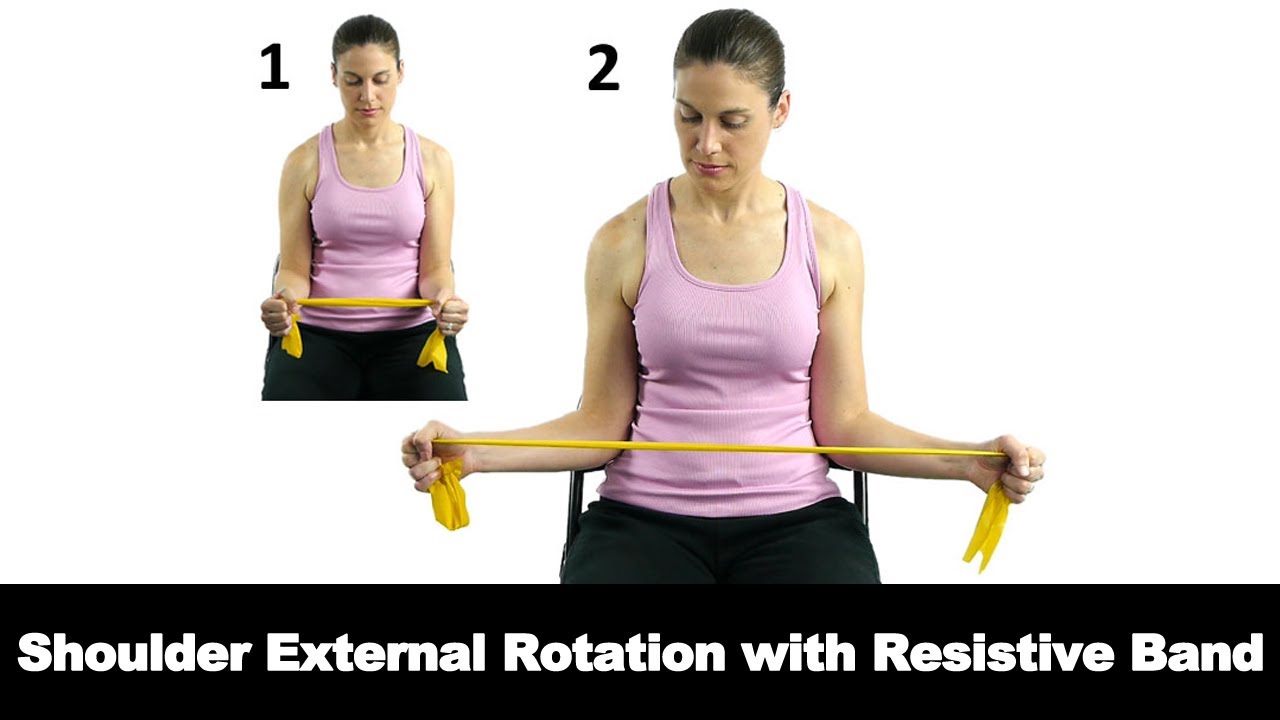
Sets: 3 Reps: 20
How to do it:
- Hold a resistance band with your hands shoulder-width apart, your upper arms pinned against your torso and your elbows bent to 90°.
- Keeping your upper arms stationary, slowly rotate your forearms out to the sides, pulling the band apart as far as you can.
- Pause and squeeze your shoulder blades together.
- Slowly return to the starting position with control.
“This exercise is great for engaging both your middle and low trapezius and the external rotators in your shoulders,” says Heinsohn.
“This helps condition your postural muscles responsible for appropriate upper torso and neck positioning throughout the day and can be especially helpful with a variety of aches and pains that result from tech neck.”
2. Wall walk
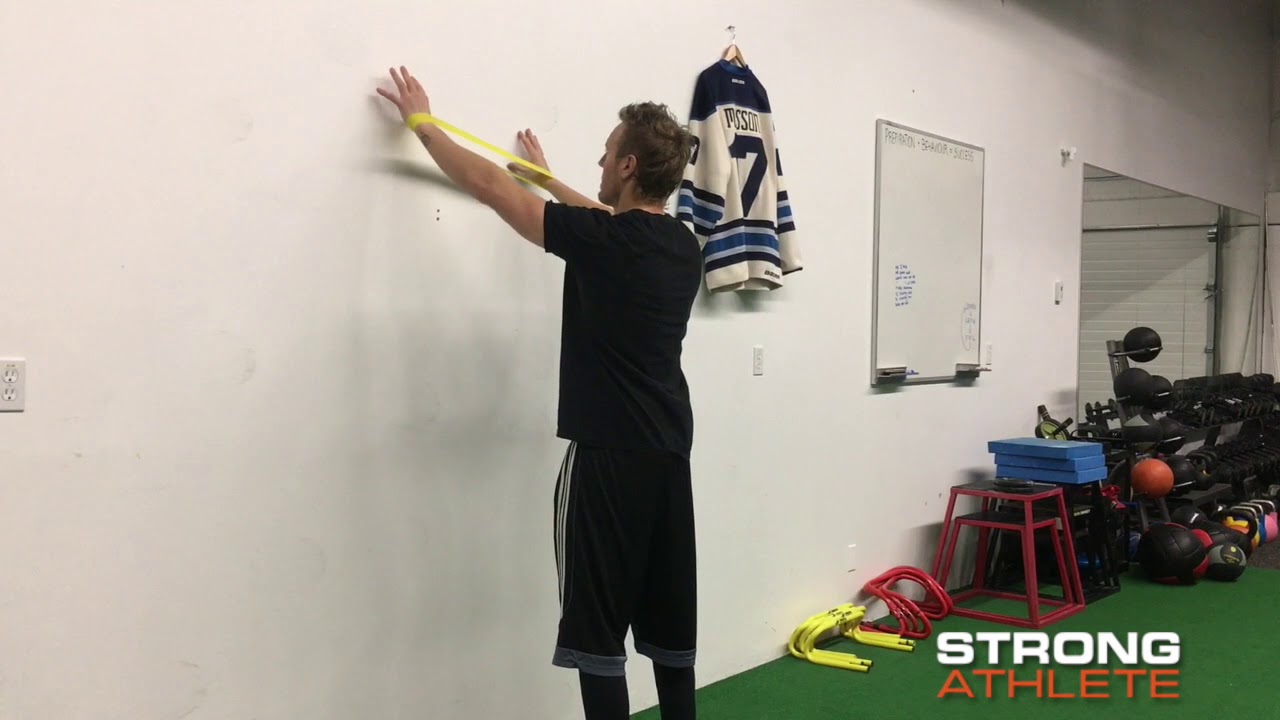
Sets: 3 Reps: 20
How to do it:
- Place a small loop band around both of your wrists and place your fingertips on the wall. Your elbows can be partially bent at this point.
- Press your wrists outward against the band. You should feel the muscles on the sides of your shoulders and between your shoulder blades engage.
- Maintain that outward pressure and start walking your hands up the wall.
- Keep your hands the same distance apart from each other the entirety of this movement.
- Stop before your shoulders begin to lift and walk your hands back down to the starting position while still pressing your wrists outward.
- Relax your arms when you get to the starting position.
“This exercise is again great for engaging postural muscles,” says Heinsohn, and “will help improve general upper-body movement patterns.”
3. Monster walk
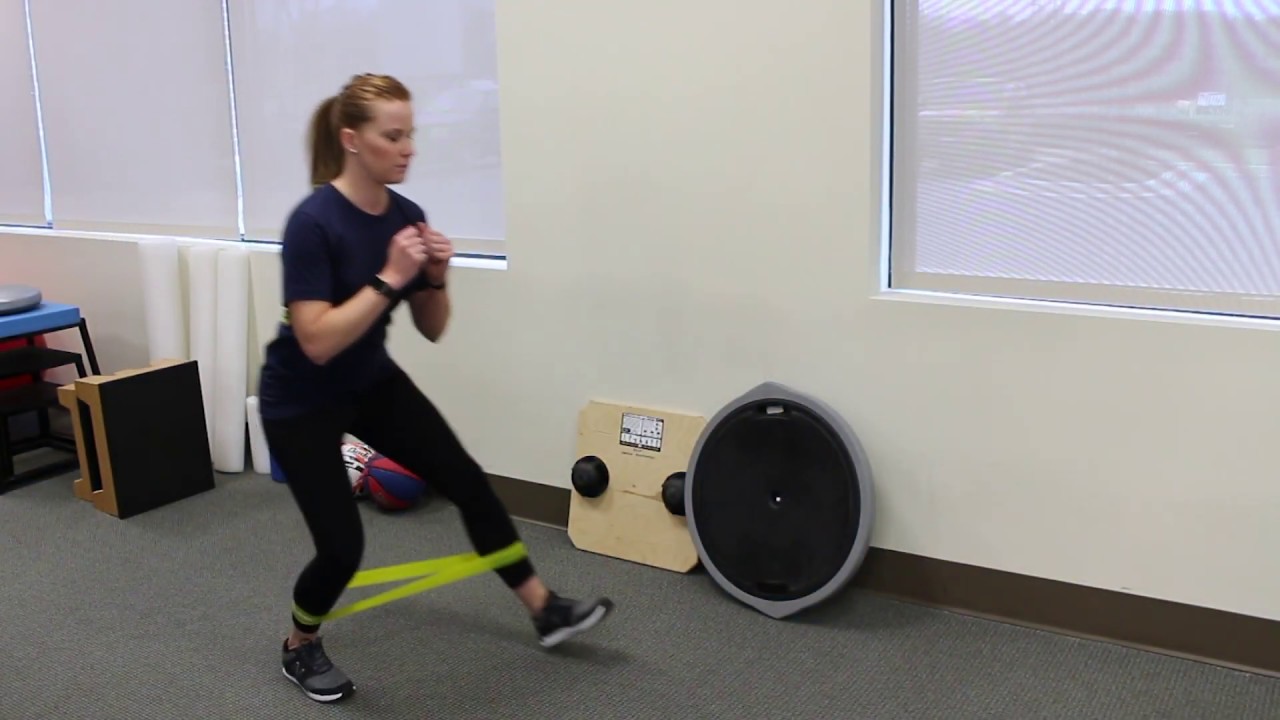
Sets: 3 Reps: 50 steps
How to do it:
- Stand with a band wrapped around your ankles.
- Bend slightly at your hips and knees and press your heels into the floor.
- Slowly step one foot forward and out to the side, keeping the band taut.
- Repeat on the other side, walking forward, changing direction when needed.
“This exercise primarily engages the hip abductors, but the hip and knee extensors will also be active,” says Heinsohn.
“Monster walks are great to get the glutes fired and active after sitting all day, for warming up before squatting at the gym, or before going for a run.
“The glutes are a muscle group that many have trouble targeting, so this exercise can specifically be used to build glute endurance or as a supplement to improve other exercises you perform.”
Why expert Jessi Heinsohn thinks you should use resistance bands
1. Postural correction
Heinsohn likes to use resistance bands for what she calls keyboard warriors, or people who work at desks.
“I frequently prescribe resistance band training for individuals who come into the clinic to help build neuromuscular control and endurance of postural muscles,” she says.
“This is great for both improving the appearance of one’s posture and also for alleviating pain or joint degeneration that is frequently associated with long-term postural dysfunction.”
Heinsohn herself uses resistance bands to stretch after a long day in front of a computer.
2. You’re short of space
“The greatest advantage of resistance bands is their portability,” says Heinsohn.
“They can be tossed into your backpack for work or into your suitcase when you travel, giving you the opportunity for some mindful movement wherever you may be.”
3. Muscle activation
“I am an avid powerlifter and will often personally use resistance bands to activate certain muscle groups, then perform a specific compound lift (squat, deadlift, split squat),” says Heinsohn.
4. Mind-muscle connection
“Resistance bands are extremely helpful for building neuromuscular control, otherwise known as mind-muscle connection,” says Heinsohn.
“The bands add progressive resistance as you go through the movement pattern, creating peak muscular contraction at the end range of the movement.”
5. Building balance and coordination
“The unstable nature of the bands causes maintained engagement of your stabilizer muscles, which can increase both balance and functional coordination,” says Heinsohn.

Jessi Heinsohn is a physical therapist based in Austin and is the clinical director of ATI Physical Therapy. She graduated from Tarleton State University with her Bachelor of Science in biomedical sciences in 2017, and from the University of the Incarnate Word with her Doctor of Physical Therapy in 2020. She treats patients in the outpatient orthopedic setting, where she sees a variety of cases ranging from sports injuries to chronic pain and from migraines to jaw dysfunction.
