Doing these three exercises daily can help stabilize your shoulders and prevent neck pain, according to a doctor of physical therapy
Help to prevent neck pain by paying attention to your shoulders


Neck pain is widely experienced, affecting up to half of the population in any given year—though for most, it isn’t severe enough to limit daily activities. Unfortunately, more than half of those will experience a recurrence of their neck pain.
Many things can contribute to neck pain, but shoulder instability is one of them, and that’s something I see in my personal training clients.
To help strengthen your shoulders to support your neck, I often recommend a daily practice of banded rows, overhead pull-aparts and banded external rotations. These improve your range of motion and can prevent neck pain before it sets in.
“Banded rows, overhead pull-aparts and banded external rotations can be a great foundation for building shoulder blade stability, back muscle activation and rotator cuff activation,” says Dr Matt Brown, DPT, a physical therapist at Corrective Physical Therapy.
“Doing these three exercises daily will help build endurance in these main muscle groups, teach you how to properly activate and use these muscles, and build a good foundation for your shoulders and neck.”
If you have a resistance band to hand, give these exercises a go to keep your shoulders and neck happy and healthy.
How to do the exercises
You’ll need a light resistance band like one of these and make sure you know how to engage your core before starting.
Perform each exercise for 10 to 12 reps. When 12 reps feels easy, increase to 15 to 20 reps. If you’re unable to perform at least 10 reps with good form, work with a lighter band or practice the movement without a band. If you can do 20 reps without feeling fatigued, work with a heavier band.
Do these exercises three to five times a week, then gradually add days as your comfort level allows, working up to five times per week, or even daily.
Before starting any new workout, check in with your medical team for clearance. If you’re a beginner it’s best to work with a certified personal trainer to ensure your exercise form is correct. “If you recently had shoulder or neck surgery, do not perform exercises unless your doctor clears you,” says Brown. He adds that “people with severe shoulder or neck pain should not attempt these exercises until a professional clears them.”
1. Banded row
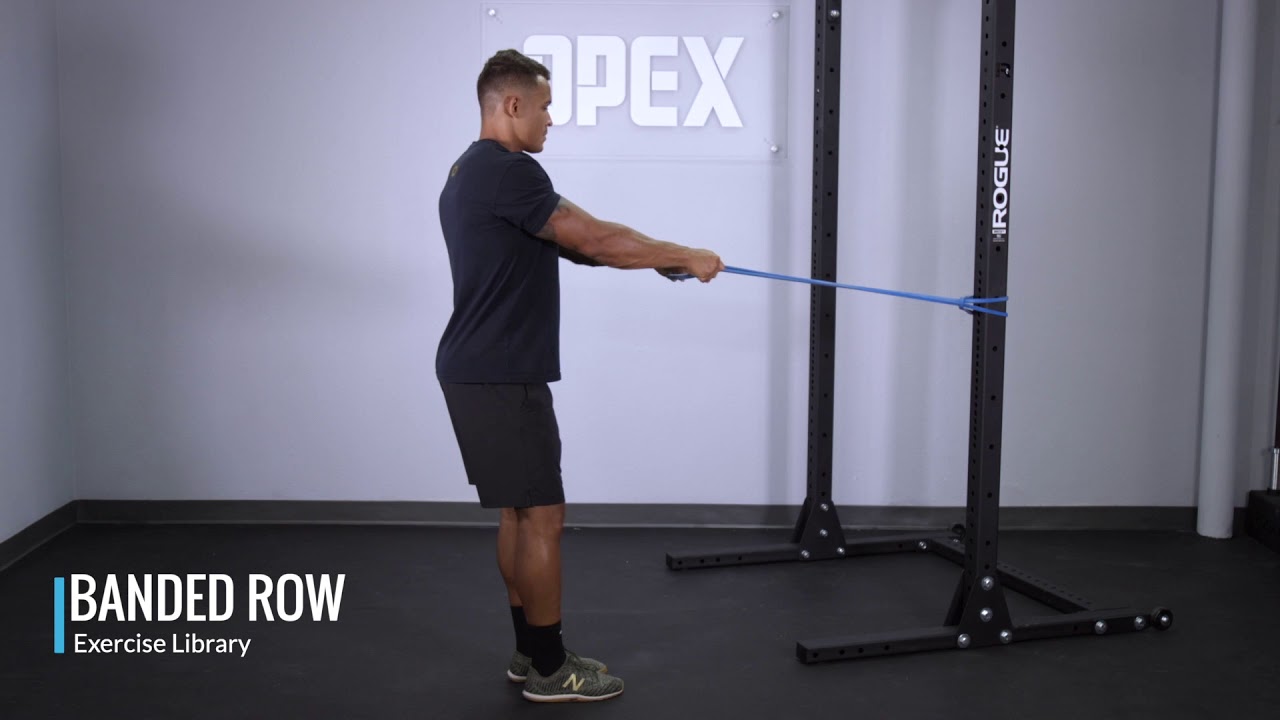
Reps: 10-20
- Loop a resistance band around a strong anchor point in front of you.
- Hold the ends of the band and step back from the anchor point until the band is taut with your arms extended in front of you.
- Engage your core, squeeze your shoulder blades together and pull the ends of the band toward you, bending your elbows and drawing them past your torso.
- Pause briefly, then return your arms to the starting position with control.
Trainer tips: Keep your shoulders relaxed and down throughout—avoid shrugging them up toward your ears as you pull the band. Avoid any excessive arching in your lower back.
2. Overhead band pull-apart
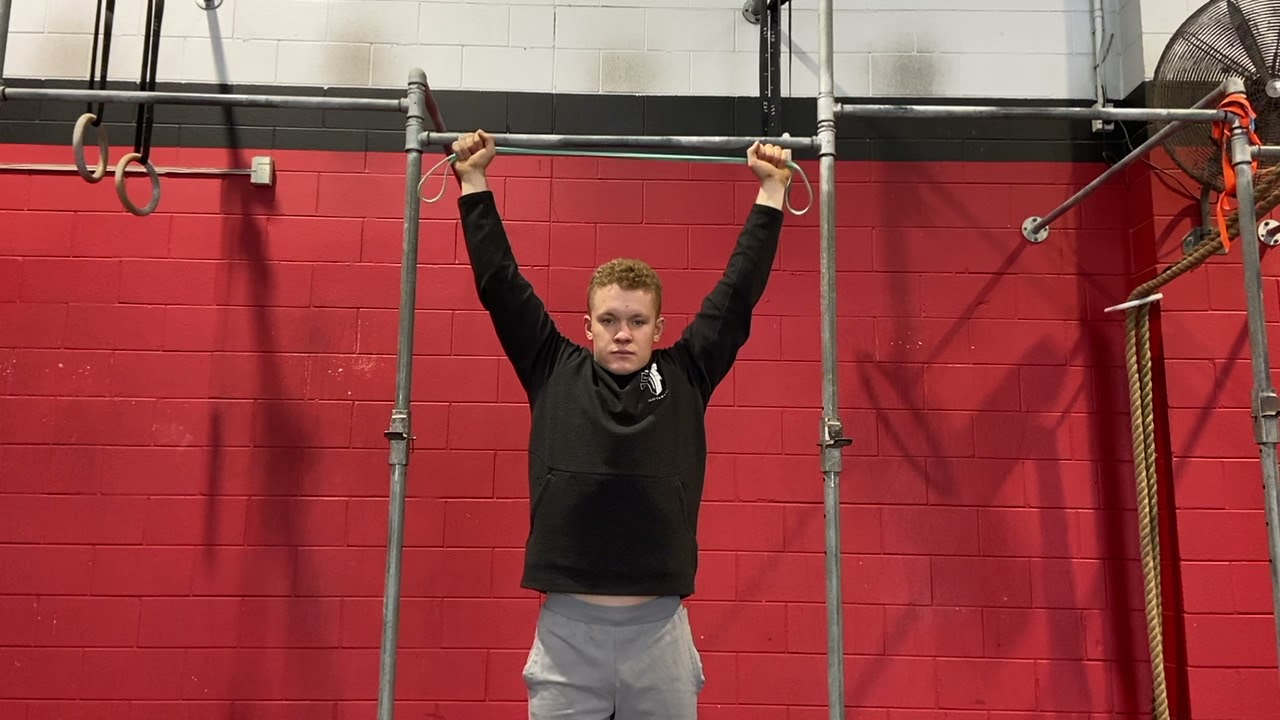
Reps: 10-20
- Stand with your feet hip-width apart, holding a resistance band by its ends.
- Engage your core.
- Raise the band to just behind your head.
- Squeeze your shoulder blades together and pull the ends of the band.
- Pause briefly at the end of the pull.
Trainer tips: Roll your shoulders back and keep your chest upright. Avoid tensing your neck as you pull the band and avoid your lower back arching excessively. Keep your ribs down and maintain a neutral spine.
3. Banded external rotation
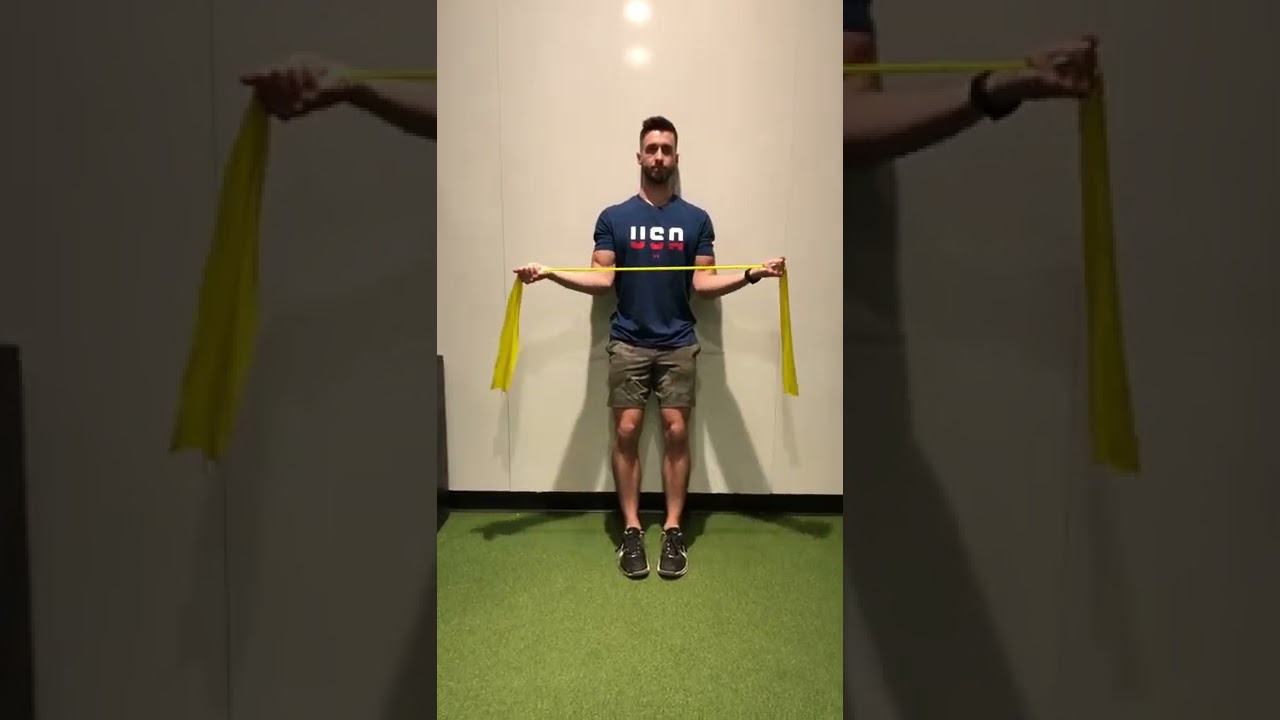
Reps: 10-20
- Stand holding the ends of a resistance band in front of your waist, with your palms facing up, and elbows bent and close to your sides.
- Engage your core.
- Pull the ends of the band out to the sides, keeping your elbows pinned to your torso.
- Pause briefly, then return to the starting position with control.
Trainer tips: Roll your shoulders back before beginning the movement, avoid tensing your neck and maintain a neutral spine throughout. If you can’t keep your elbows connected to your sides, place a towel in between your elbows and your torso.
Why these exercises can help prevent neck pain
“Your rotator cuff, shoulder blades and back muscles are extremely important for shoulder health, helping to keep tension and force away from your neck,” says Brown.
“These exercises can be great for everyone, but especially if you have a desk job where you are sitting frequently, or have a very active job with lots of lifting overhead. Weightlifters need to keep these smaller muscles working well, as well as anyone who has been experiencing some shoulder pain or neck pain.”
“The Burden and Determinants of Neck Pain in the General Population” in Spine
Dr Matt Brown is from Arizona. He received his kinesiology degree from Arizona State University in 2014 and then attended Midwestern University to complete his Doctorate in Physical Therapy. After attending a Sports Residency program in Tucson, he opened Corrective Physical Therapy in 2023.
