I’m a personal trainer and I’ve been doing this one move daily to help improve my squats
Ankle wall mobilizations have led to better form and strength gains


Squats are one of my favorite exercises.
They’re functional, work a variety of important muscle groups at the same time, and are easy to modify or progress to match my fitness level.
Although I’ve been doing squats for decades, after my son was born I started to notice some issues with my form.
My range of motion was limited, my knees were caving inward, and the last few reps of each set started to feel shaky.
When my usual tricks of hip stretching and leg swings didn’t work, I tried a strategy that I’ve used with countless personal training clients: incorporating ankle wall mobilizations into my warm-ups.
After just a few weeks of daily ankle wall mobilizations, my squats were back to feeling comfortable. I was even able to use heavier weights for a few sets.
Why ankle mobilizations improve
“During a squat, your knee needs to move forward over your foot while your heel stays on the ground,” says Dr Camryn Gessner PT, DPT, AIB-VR/CON, a physical therapist with Spear Physical Therapy.
“If ankle mobility is limited, people often compensate by lifting their heels, leaning forward, or allowing their knees to cave inward.
“Ankle wall mobilizations improve ankle dorsiflexion by restoring normal ankle movement.
“Improving ankle mobility can help you squat deeper with better form, keep your heels down, and move more efficiently—resulting in a stronger and more stable squat.”
Ankle mobility is not only crucial for good squats, but also for daily activities like walking, climbing stairs, or getting up from a seated position. Almost everyone can benefit from adding ankle wall mobilizations into their routine.
How to do ankle wall mobilizations
Before attempting any new exercise, speak with your doctor or physical therapist. “I would avoid or modify this exercise for anyone with an acute ankle injury, a recent fracture, post-operative restrictions, or another condition where the tissues are still healing or inflamed,” cautions Gessner.
Beginners should consider working with a certified personal trainer or physical therapist to learn proper exercise form. A trainer or therapist can also provide proper modifications and suggest additional exercises to improve mobility and strength.
You will need a section of bare wall and a yoga mat for this exercise.
Start by doing three sets of 10 reps, three to four times per week. As your mobility improves, you can do this exercise five to seven times a week, or as part of your workout warm-ups.
Form guide
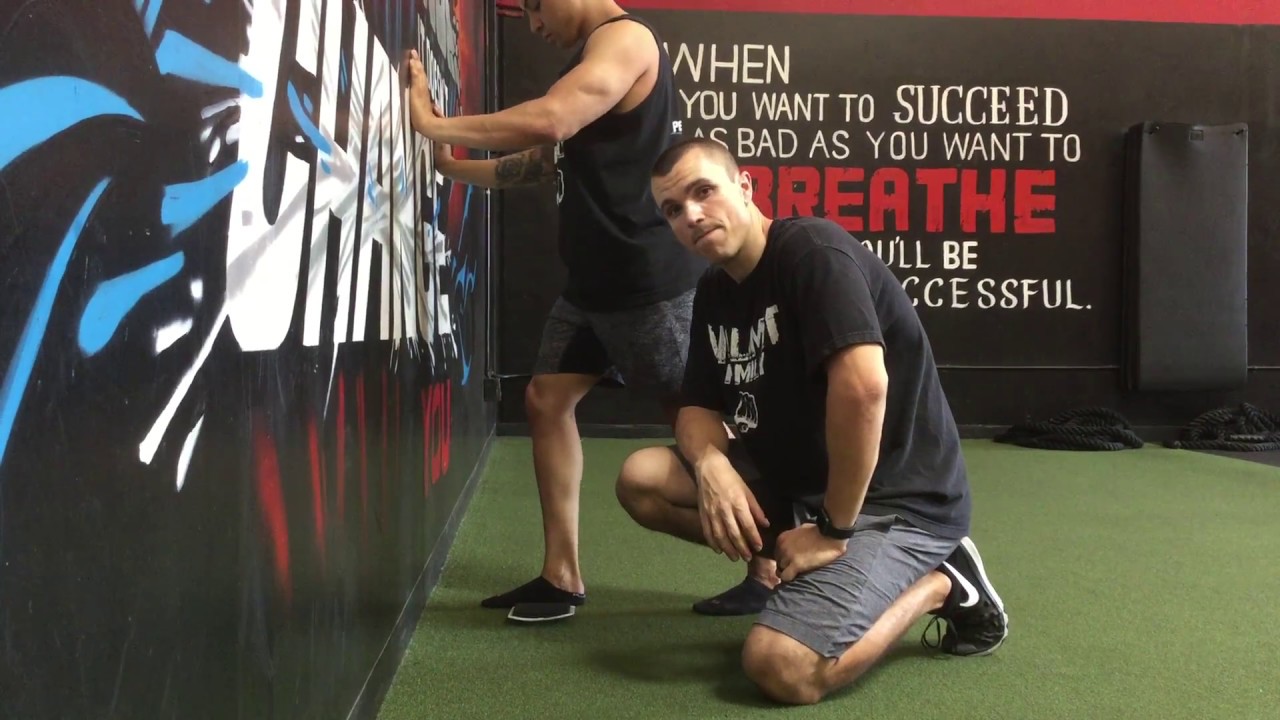
- Stand about three inches away from a wall.
- Step your right foot behind you and place your hands on the wall.
- Keeping your left foot flat on the floor, shift your weight forward and try to touch your left knee to the wall.
- Once you’ve reached the end of your range, hold for five seconds.
- Return to the starting position.
- Do all your reps on your left leg, then repeat with the other leg.
Tips: Gessner says to ensure that you’re driving the knee over your second toe without letting your foot collapse inward.
“The movement should come from your ankle, not your foot,” she says. “You should feel a gentle stretch or mild stiffness, but never pain.
“Perform slow, controlled repetitions. This helps improve true ankle mobility instead of letting other parts of your body compensate for a stiff ankle.”

Camryn Gessner, PT, DPT, AIB-VR/CON, is a physical therapist at Spear Physical Therapy specializing in orthopedic rehabilitation and evidence-based patient care. She combines manual therapy, therapeutic exercise, and patient education to help people recover from injury, improve function, and return to the activities they enjoy most.
