




I’m a personal trainer and this is the one exercise I don’t see enough people doing
The Pallof press strengthens deep core muscles, improves balance and can prevent injury


Most of us understand the importance of strengthening the core, but not enough of us are aware that the types of core exercises matter too.
The Pallof press is a core exercise that should be a lot more popular than it is. Named after the physical therapist who developed the exercise, this movement is an anti-rotational exercise, meaning that your deep core muscles have to resist rotational forces to keep your body in a neutral, upright position.
When your deep core is trained in this way, your balance improves and you’re better protected against injury.
Pallof presses can be done with various pieces of equipment, are appropriate for most fitness levels, and are safe to do every day.
Benefits of the Pallof press
When doing a Pallof press, your core muscles have to work against the pull of the resistance band to keep your body in a neutral position.
This improves their ability to stabilize your entire body during movement, which in turn can reduce lower back pain, sharpen your balance and make everyday tasks easier.
The Pallof press can also improve rotational power for activities like swinging a golf club or tennis racket.
Aside from strengthening your core muscles, this exercise targets your shoulders and glutes, contributing to better posture and lower-body strength.
How to do the Pallof press
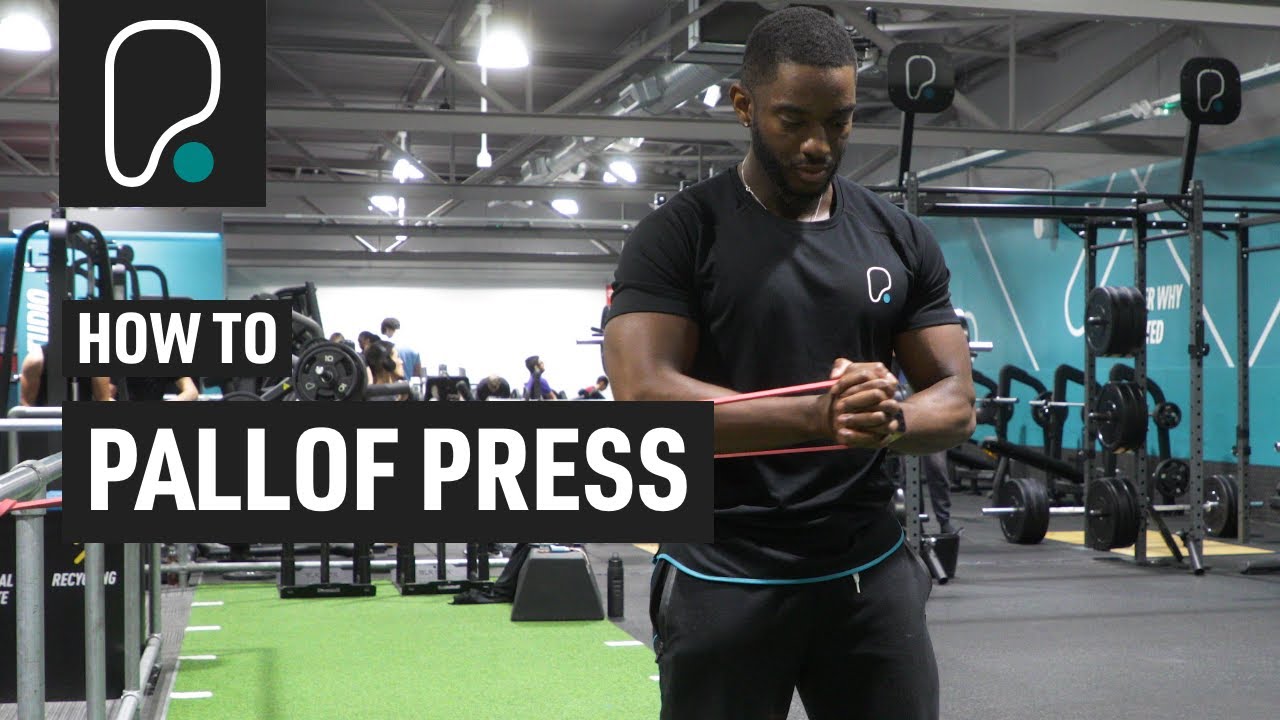
While the Pallof press is an effective core exercise for most people, check in with your doctor before trying it.
It’s a relatively easy exercise to do, but getting feedback from a personal trainer can be incredibly helpful, especially if you’re a beginner.
For this version, you’ll just need a 10-35lb resistance band for the Pallof press. You’ll also want to be sure you know how to engage your core.
How to do it:
- Loop a resistance band around a solid structure, like a stair railing.
- Hold the end of the resistance band and step away from the anchor point.
- Turn and face right.
- Stand with your feet hip-width apart.
- Engage your core and bring the band to your chest.
- Slowly extend your arms in front of you, resisting the pull to your left.
- Pause briefly.
- Slowly bring the band back to your chest.
- Continue for your chosen reps, then repeat facing the other side.
Trainer tips: As you extend the band in front of you, keep your body square—don’t allow your hips, shoulders or hands to rotate towards the anchor point. Avoid any arching in your lower back and keep your spine extended. Your shoulders should stay relaxed throughout the movement.
How often should you perform the Pallof press? Beginners should start by doing one set of eight to 10 reps, aiming for two or three times a week.
Once you’ve built up some strength, try 12-15 reps for two to three sets.
Gradually work your way up to doing Pallof presses four to five times a week, or even every day if desired.
You can also incorporate Pallof presses into your existing core routine, or as a part of your warm-up for other workouts.
How to modify the Pallof press
The basic Pallof press is an accessible exercise for almost everyone, regardless of experience or injury. However, there are a few ways to modify the movement to suit different abilities and needs.
The easiest way to modify the exercise is by reducing the band’s resistance. You can work with a lighter resistance band, or step closer to the band’s anchor point to reduce tension.
Using a light dumbbell in place of the resistance band will challenge your core, but it won’t provide the same rotational pull that a band does. If you’re finding it hard to keep your hips or shoulders from twisting, try practicing the Pallof press with a 3-5lb dumbbell to build the necessary core strength.
Finally, you can do the Pallof press while seated. Be sure to keep your spine tall, shoulders rolled back and core engaged while performing the exercise.
How to make the Pallof press more challenging
If the basic Pallof press starts to feel too easy, there are several ways to increase the difficulty.
First, you can use a heavier resistance band, which intensifies the rotational forces that your core has to work against. You can also achieve a greater rotational pull by stepping further away from the anchor point, creating more tension in the band.
You can also do the Pallof press in a split stance position. This forces your body to work over a narrow base of support, requiring even more stabilization effort from your core and glutes.
The most challenging progression is adding an overhead reach. Raising your hands overhead moves the band even further away from the anchor point, making it more challenging to maintain a neutral position.
Shop resistance bands
