





This is the one exercise you should do to safeguard your stability and balance, according to a personal trainer who works with seniors
Bird dog helps build deep core strength, which is vital for good balance


Balance is a major concern among my senior personal training clients, so when I work with the over-60s, I focus on strengthening the muscles that keep them stable and upright.
But you don’t need to wait until you reach your 60s to work on your balance. As the saying goes: an ounce of prevention is worth a pound of cure.
If you start training for better balance before you reach your senior years, you’ll be less likely to experience significant instability—or serious falls—as you get older.
One of my favorite exercises to protect and improve your balance is the bird dog—I get all my clients to do variations of it.
Bird dog targets the deepest muscles in our core, those responsible for supporting the pelvis and spine, and stabilizing the entire body during movement.
This move doesn’t require any equipment outside of a yoga mat, it can be easily modified for those with mobility issues or injuries, and can also be progressed once the standard movement starts feeling too easy.
Give the bird dog exercise a try during your next workout.
How to do bird dog
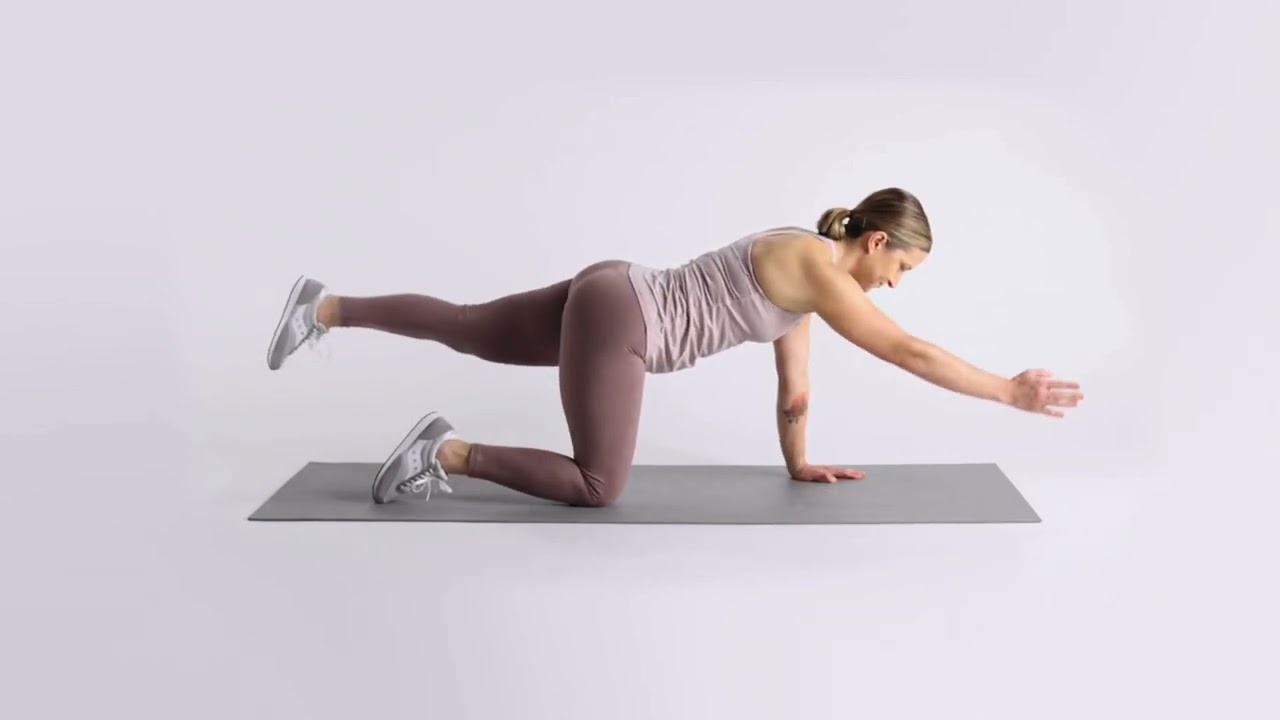
The move can be beneficial for total beginners, experienced athletes, and everyone in between. However, you should always pass any new activity by your doctor before getting started.
While bird dog is doable for most, it’s quite common to struggle with form issues. Beginners should consider meeting with a trainer to ensure correct execution.
You should know how to engage your core before trying this exercise.
How to do it:
- Get on your hands and knees with your hands under your shoulders and your knees under your hips.
- Engage your core.
- Extend and lift your left leg behind you to hip height and lift your right arm in front of you to shoulder height.
- Hold in this position for a few seconds.
- Return to the starting position, bringing your left knee and right hand back to the mat.
- Repeat with the opposite limbs.
- Continue, alternating sides with each rep.
Start by doing one set of bird dogs for eight to 10 reps on each side. Aim for two or three times a week as you build strength. Gradually increase to two or three sets of 12-15 reps, and increase to three to five times per week.
Bird dogs also make a great addition to your warm-ups. If you’ve already got a solid fitness routine in place, consider doing a set of 10-12 bird dogs before getting started with your workout.
Trainer tips: Avoid rounding your spine or arching your lower back. Keep your hips square to the floor as you’re lifting your arms and legs. Place a pillow or rolled towel underneath your knees for additional cushioning, if needed. If you’re unable to get onto the floor, try this exercise on your bed or couch, or opt for one of the modifications listed below.
How to modify bird dog
Those with certain injuries, mobility concerns, or severe balance issues may need to modify bird dogs.
Try this exercise one side at a time if you struggle to keep the correct form. Challenge yourself to hold in the extended position for up to 10 seconds until you can achieve better stability. Once you feel strong enough, you can try alternating between the two sides.
If doing the exercise one side at a time still feels too difficult, you can lift the legs and the arms separately, and tap your toe behind you instead of lifting your leg.
Those who can’t get down onto the floor can try a standing bird dog. Be sure to avoid any twisting in the hips and keep your spine in a neutral position at all times.
You can further modify standing bird dog by using a chair for additional balance support.
How to progress bird dog
When the standard bird dog becomes easy, consider trying one of these progression options.
Perform the exercise while holding a pair of light dumbbells, start with between 1lb and 3lb in each hand. This will increase the load on your core muscles and make it more difficult to maintain a neutral spine.
Instead of placing your hand and knee back onto the mat between each rep, drive your elbow towards your knee, meeting underneath the belly button. This activates the surface-level core muscles, like your rectus abdominis, and forces you to maintain balance on one side for a longer period of time.
For very experienced exercisers, try the bird dog while in a bear plank position, hovering your knees above the mat. This requires a lot of core strength to do correctly, so only attempt it after you’ve mastered the standard form and all other progressions.
