Want to start walking regularly? A personal trainer recommends doing these three moves before lacing up your sneakers
These exercises can keep your walks pain-free


Walking has a ton of health and fitness benefits: it’s an accessible form of exercise for most people, it doesn’t require any equipment beyond well-fitting shoes, it can improve your endurance and muscle strength, and may even lighten your mood.
When my personal training clients ask what they should do outside of our sessions, walking is usually the first thing I recommend. But before hitting the outdoors, a proper warm-up is essential—especially if you’ve just started regular exercise.
The following three exercises will prime your walking muscles, increase blood flow, activate your stability and mobility, and mobilize tight joints. Doing them before your walk can reduce your chances of discomfort or injury.
How to do the walking warm-up
This routine is only meant to warm up your lower body so you just need one set of each exercise.
Perform 10 to 15 repetitions of the fire hydrant and donkey kicks, and three to five repetitions in each direction of the hip rotations (also known as controlled articular rotations, or CARs). If you’re a beginner, start on the lower end of the rep range and work your way up as your strength improves.
The moves don’t require any equipment, but use an exercise mat if you need extra cushioning for your knees.
Always check with your doctor before starting any new exercise regime. If you need support in how to do these exercises correctly, consider working with a certified personal trainer or physical therapist.
1. Hip rotation
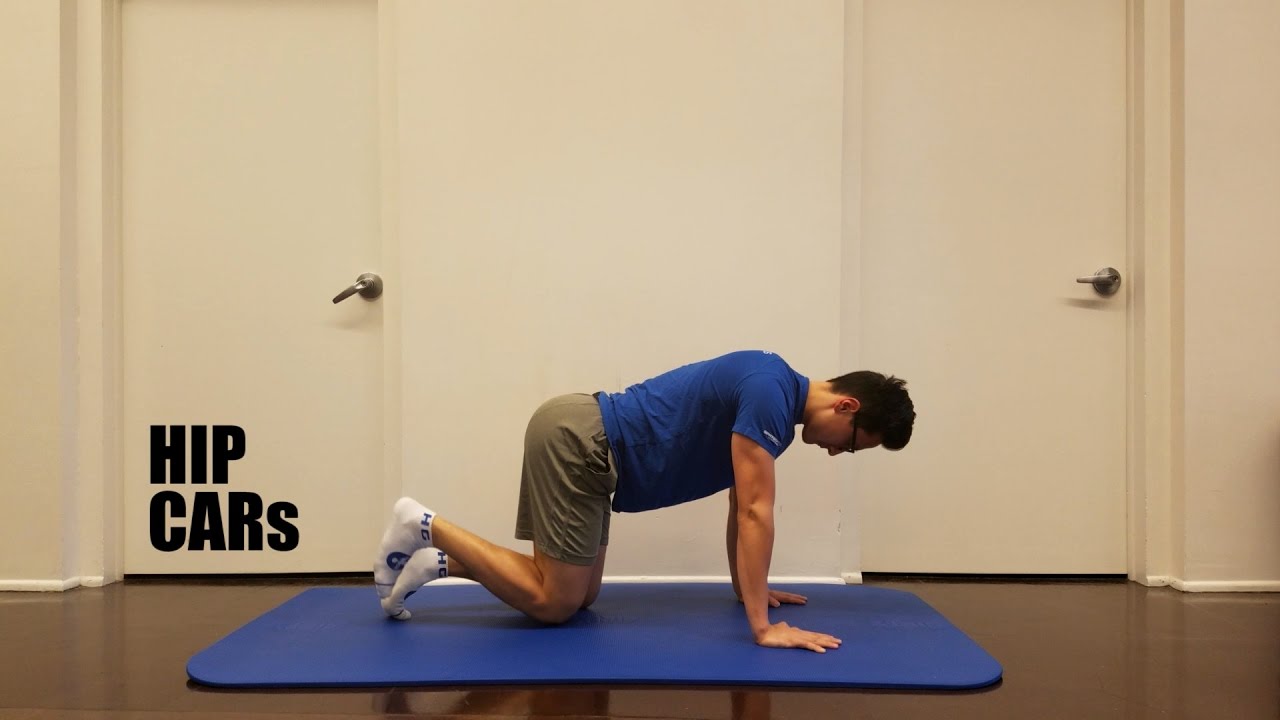
Reps: 3-5 each direction, on each side
- Get on your hands and knees, with your hands under your shoulders and knees directly under your hips.
- Maintaining a 90° bend in your knee and moving slowly thoughout, move your right knee toward your right elbow.
- Raise your right knee out to the side.
- Move your right knee behind you so your thigh is parallel to the floor.
- Lower your right knee back to the starting position.
- After completing your reps, repeat in the opposite direction, then repeat on the other side.
Trainer tips: Maintain a slow and controlled tempo throughout. Aim to draw a circle with your knee. Avoid shifting your body from side to side and any excessive arching in your lower back.
If you struggle to perform this move on the floor, try standing hip rotations. Use a steady surface for support if needed.
2. Fire hydrant
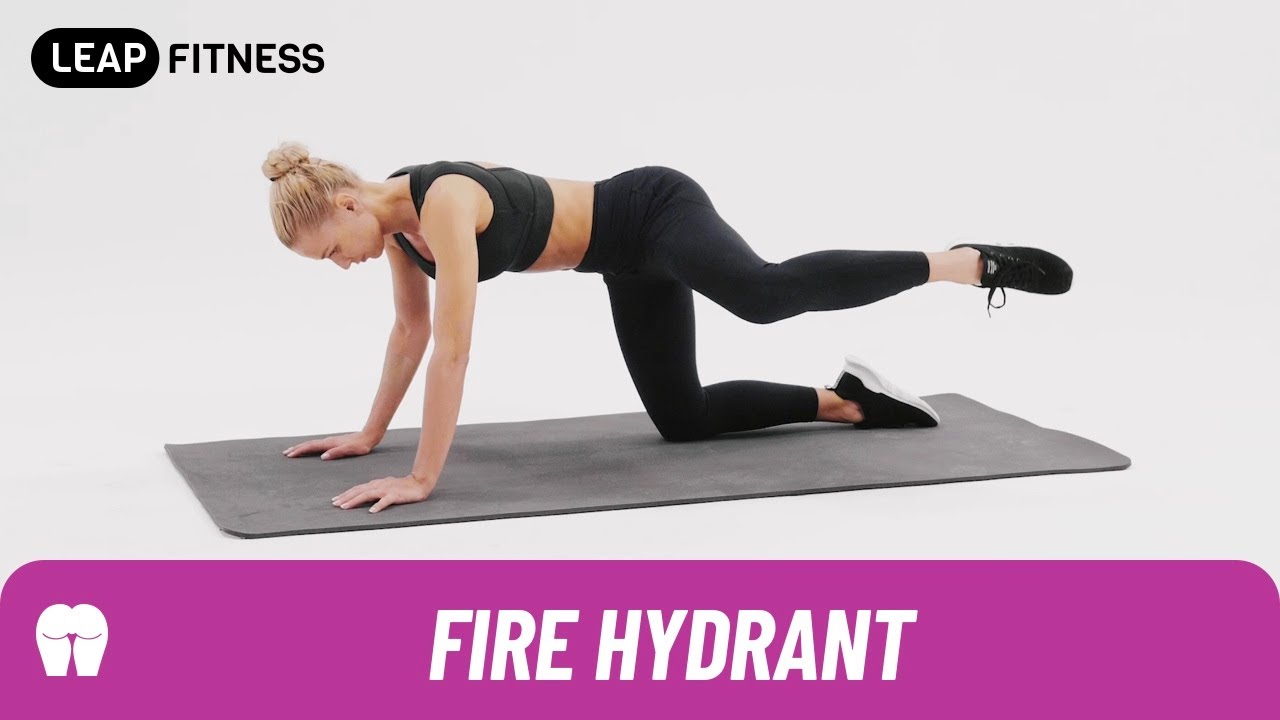
- Get on your hands and knees, with your hands under your shoulders and knees directly under your hips.
- Maintaining a 90° bend throughout, raise your right knee out to the side, keeping your hips square to the floor.
- Pause when you reach the end of your range, then slowly lower your knee back to the floor.
- Do all your reps on one side, then switch sides.
Trainer tips: Avoid rotating your hips to lift your knee higher. Maintain a neutral spine and avoid excessive arching in your lower back. You should feel the muscles in the outside of your hip engage to lift the leg.
If you struggle to perform this move on the floor, try standing fire hydrants. Use a steady surface for support if needed.
3. Donkey kick
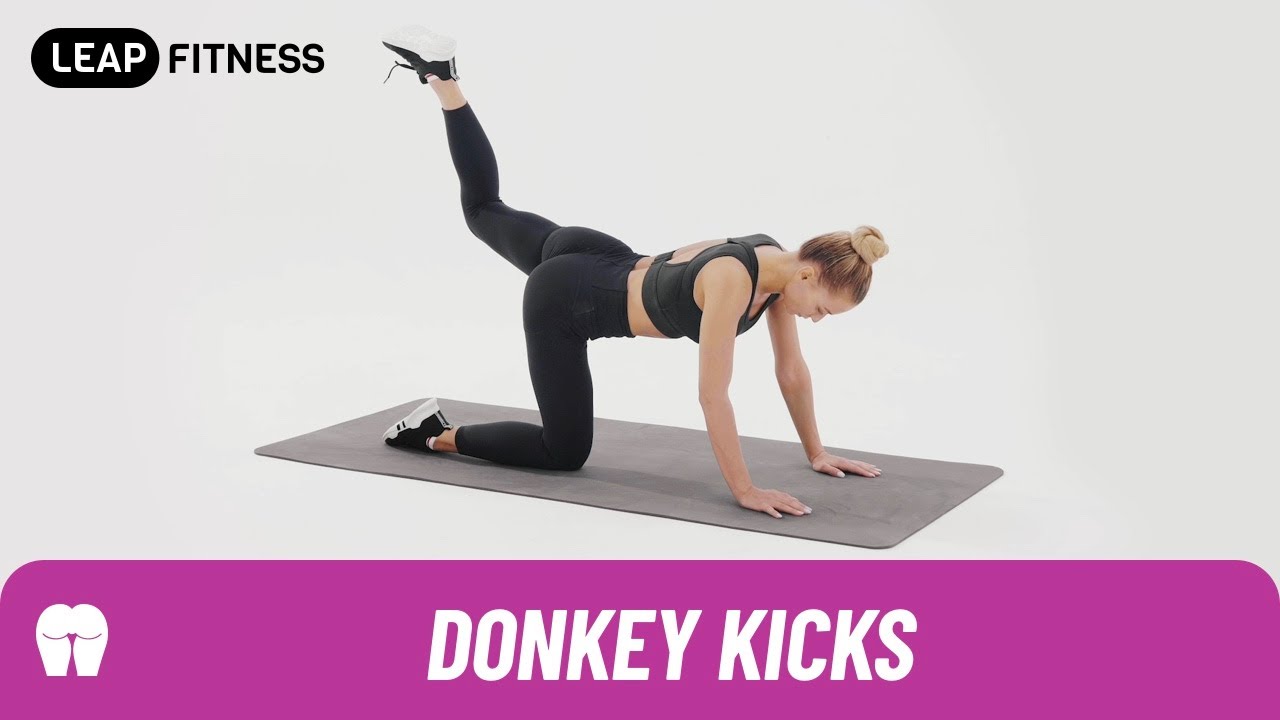
- Get on your hands and knees, with your hands under your shoulders and knees directly under your hips.
- Maintaining a 90° bend, raise your right knee behind you.
- Pause when you reach the end of your range, then slowly lower your knee back to the floor.
- Do all your reps on one side, then switch sides.
Trainer tips: Maintain a slow and controlled tempo throughout—avoid using momentum to raise your leg. Maintain a neutral spine and avoid excessive arching in your lower back.
If you struggle to perform this move on the floor, try standing glute kickbacks. Use a steady surface for support if needed.
